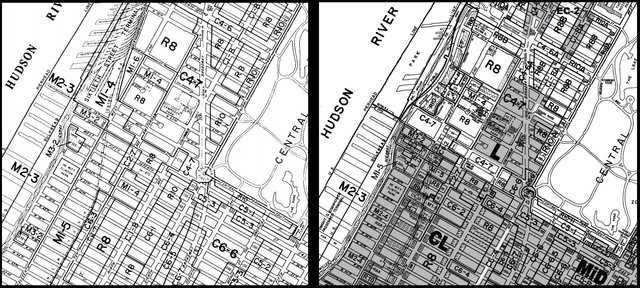
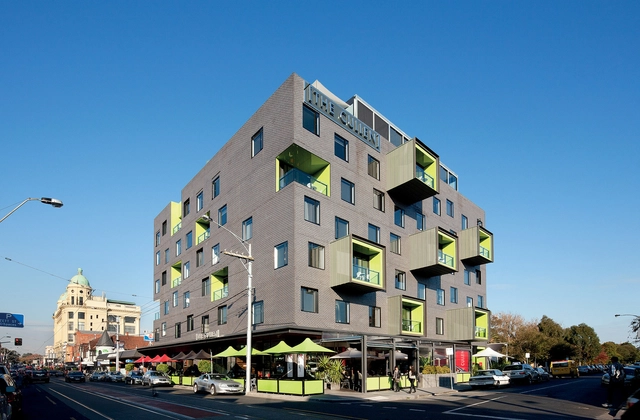
Let’s dump the word “zoning,” as in zoning ordinances that govern how land is developed and how buildings often are designed. Land-use regulation is still needed, but zoning increasingly has become a conceptually inappropriate term, an obsolete characterization of how we plan and shape growth. - Roger K. Lewis
Zoning, just over a century old concept, is already becoming an outdated system by which the government regulates development and growth. Exceptions and loopholes within current zoning legislation prove that city planning is pushing a zoning transformation to reflect the goals and needs of city building today and in the future. To determine how zoning and land use need to change we must first assess the intentions of future city building. Planners and architects, legislators and community activists have already begun establishing guidelines and ordinances that approach the goals of sustainability and liveability. The AIA has established Local Leaders: Healthier Communities through Design and has made a commitment to the Decade of Design: Global Solutions Challenge. NYC has come up with Active Design Guidelines: Promoting Physical Activity and Health in Design and its Zone Green initiative in regards to updating its zoning resolution. Philadelphia has augmented its zoning to include urban farms and community gardens. It is safe to assume that many other cities will follow this precedent.
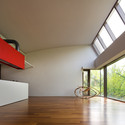
Two Izu retirees hired architects Yoshiharu Tsukamoto and Momoyo Kaijima to design them a home equipped with a neighborhood bookshop and cafe. The Japanese practice stepped up to the challenge and constructed an elegant, curved structure whose white walls and wooden ceiling hug the hundred degree undulating street on which its located and embraces the wooded forest it backs to. The home - which features two bedrooms, a kitchen, cafe, bookshop and atelier - is accessed beneath a bridged part of the structure and organized as a sequence. Take a tour through this interesting space with this short video made by JA+U Magazine.
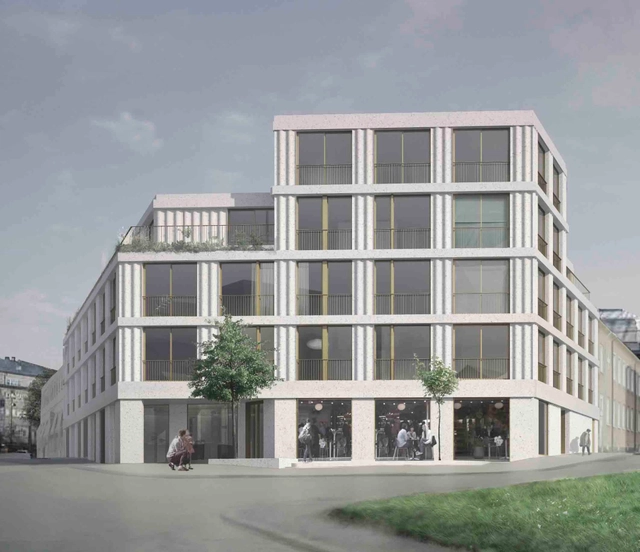
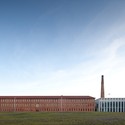
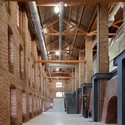
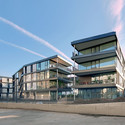
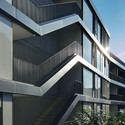
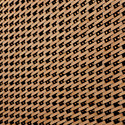
ETAT Architects + Spridd Architectsrecently won the first prize in an invited competition for a mixed-use building of housing and commercial space. Located in the centre of Norrköping, on the fringe of the historic 19th century textile industry area of Sweden, the exterior architecture interprets certain characteristic themes in the historic industrial area. These include elements such as large windows, local towers, repetitive and rationally organised fenestration, an emphasis on vertical elements in the façade, and exposed building material of stone. More images and architects’ description after the break.
One thing about a recession is that it accelerates the demise of dying trends and struggling establishments. In this case, it is America’s beloved shopping malls, which have been slowly in decline since its peak popularity in 1990. Now, in the wake of the 2008 economic catastrophe, American cities are riddled with these abandoned shopping meccas, from the mall to big box stores and shopping strips, whose oversize parking lots are equally as useless as the spaces themselves. The question is, how can we effectively repurpose these spaces?
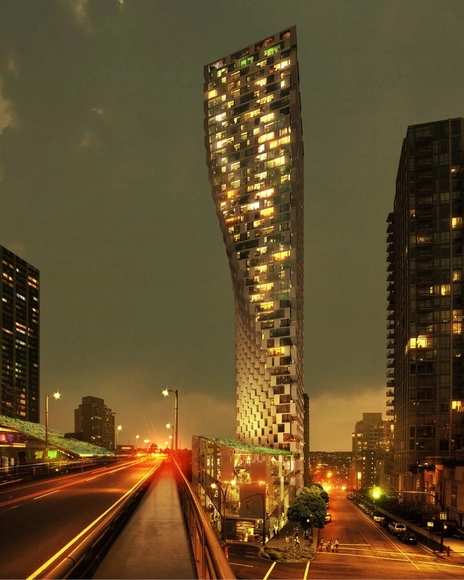
Commissioned by Canada’s real estate mogul Ian Gillespie of Westbank, the Bjarke Ingle Group-designed tower promises to add a foreign twist to Vancouver’s skyline and create a new identity for an undefined section of town at the fringe of the city's residential area. The 700,000 square foot complex - which contains shopping, social housing and market rental apartments - was praised by the panel for anchoring itself on a nine-story podium that occupies the disused, interstitial spaces found between the Granville Street Bridge’s entry and exit ramps.
With the aim to create a new and contemporary urban space. the Nanjing Road Mixed Use Area proposal by RTA-Office distributes the volumes on the parcel in order to get an open public space and an intimate one simultaneously. The many passages throughout the 200,000 square-meter project offers walk paths for residents and visitors as it occupies an entire block of the city of Qingdao. More images and architects’ description after the break.
The Transalley Technopole is a metropolitan scientific and technological project of an international dimension, dedicated to transportation and mobility, located on a strategic site of the Valenciennes urban area. The competition proposal by Mikou Design Studio aims to be a real ecosystem of innovation, and it will host the Institut des Transports Durables (Sustainable Transport Institute), the Institut International de Management, and the head office of IRT Railenium, which will be a major research and development center dedicated to railway infrastructure. More images and architects’ description after the break.
Witteveen+Bos, OKRA, and ZJA have recently won the integral design for the Jaarbeursplein Utrecht and the underground parking. Their vision focuses on the realization of the perfect parking concept, with a comfortable, lively, and socially safe city square on top of it. Forming the face of the new Utrecht, their vital and highly dynamic proposal becomes a place where inhabitants and visitors can have a taste of the new city. More images and architects’ description after the break.
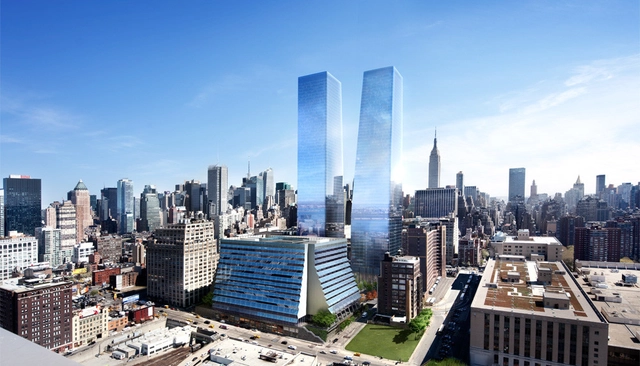
Manhattan West; Courtesy of Brookfield Development
New York City's Midtown West will be experiencing a large makeover over the coming years. Shortly after Hudson Yards broke ground in late 2012, Brookfield Properties initiated the first phase of its 5.4 million-square-foot master plan for Manhattan Weston the corner of 33rd Street and 9th Ave. Hovering over Penn Station's Railroad tracks, an engineering feat will support two 60-story towers that will encompass residential and commercial functions,as well as public and community space.
Synthesis Design + Architecture Inc. and Shenzhen General Institute of Architectural Design and Research Co. Ltd have been awarded first place in the invited international design competition for the Shanghai Wuzhou International Plaza. Their scheme, entitled “Urban Canyon”, embodies the energy and vibrancy of the cities distinct urban environment. Inspired by traditional Chinese concepts of Yin and Yang, the project is organized as two nested rock-like volumes which have been broken apart to reveal a flowing canyon condition which connects the project to the urban fabric of the city. More images and architects’ description after the break.
Designed by Aflalo & Gasperini Arquitetos, the Trump Towers is an innovative project that will contribute to the development of the port area of Rio de Janeiro, the future home of the 2016 Olympic Games. Defined as five rather slender towers, with broad front to Francisco Bicalho Avenue, they are similar, equal in height and in geometrically tessellated form. This development is carefully arranged creating a sinuous line suggested by gardens occurring at different heights in each tower. This language gives a sense of order that connects with the landscape and stimulate diversity. More images and architects’ description after the break.