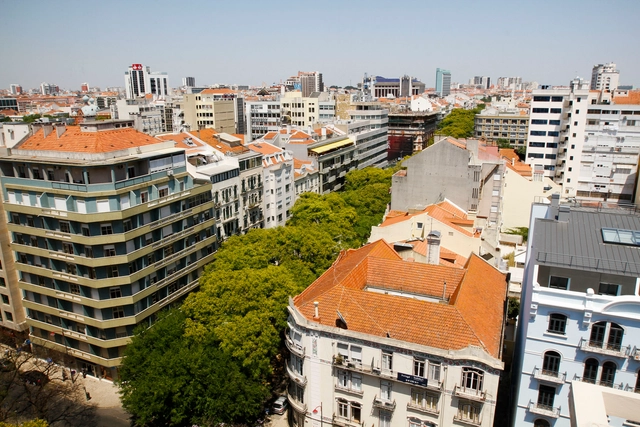
Contrary to some beliefs, climate change is not simply some unidentifiable threat perpetually on the horizon, but a phenomenon that has already had real impact on real world places. To illustrate the effects of our changing environment, the New York Times has launched a new multi-media series called “Changing Climate, Changing Cities,” written by architecture critic Michael Kimmelman, that aims to expose how climate change is “challenging the world’s urban centers.
The first installment takes a look Mexico City, where environmental issues that have already wreaked havoc for centuries, such as water shortage and ground subsidence, are beginning to see their effects multiplied by the city’s changing climate. The piece explains the root of these problems, and their effect of an already fragile infrastructure and social fabric.
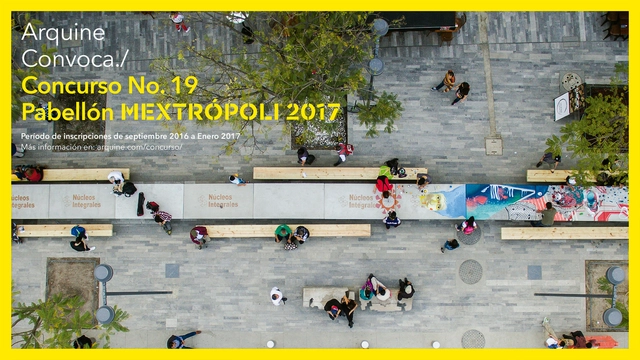
The MEXTRÓPOLI Pavilion will become a public space that is activated to promote reflection of key issues for the city, a pavilion with social vocation, which is recyclable and reusable, contemplating relocation and achieve incorporated as a recreational device, information carrier and knowledge to a space currently demands the city. Participants must design a structure that complies with the requirements that specify the rules of this competition in terms of time, cost and characteristics; considered as a fundamental part to evaluate the proposal on thematic approach should be discussions within the structure will be carried out, this way the MEXTRÓPOLI Pavilion will become a traveling purposeful device that every year open global space competition from generating ideas that revolve around the development process of architecture and the city, which in turn will become the benchmark per se of each edition of the Festival of Architecture and City.
Now in its eighth edition, Design Week Mexico, in collaboration with Museo Tamayo, has unveiled the design for a major public architectural pavilion designed by leading German architects Nikolaus Hirsch and Michel Müller. Until Spring 2017, the installation will be a cultural attraction at Chapultepec Park, Mexico City’s largest public park.
I want you to let me do all the ideas I still have in my head.
In the latest installment of the In Residence series, NOWNESS visits the last house designed by legendary Mexican architect Luis Barragán, Casa Gilardi. By the time current homeowner Martin Luque and advertising agency partner Pancho Gilardi approached Barragán to ask for a house design in 1975, the architect had already formally retired. He originally declined to take on the project – until he made a visit the site, where he was captivated by a remarkably beautiful jacaranda tree. Changing his mind, Barragán remarked, “Don’t chop down this tree, because the house will be built around it.”
Check out the video to learn the rest of the story behind the masterwork and to see the vibrant house as it stands today.
Since 2009, Mario Carvajal has captured amazing panoramic photographs from his hometown in Colombia as well as top destination spots around the globe. He has climbed the Empire State Building in New York and Colpatria Tower in Bogota, Colombia. Carvajal has captured the geographical beauty of Iceland as well as the intensity of Paris at night.
As Carvajal mentioned in an interview with ArchDaily, images in 360 degrees "allow the viewer to dive into an attractive and interesting 'virtual world' to experience immersive sensations". Of course, with the new surge in popularity these types of pictures have experienced with the hardware becoming more readily available and these images being shared more and more every day through Facebook, Carvajal's work reaches new levels, allowing thousands of people to see the world from above.
Below, we invite you to see his best shots of iconic buildings and landscapes around the world. For a complete experience, we recommend using Google Cardboard.
From Yaba in Lagos to the suburb of Bandra in Mumbai, Metropolis Magazine provides a scenic tour around the world’s “most creative” neighborhoods. Spread across ten rapidly growing cities like Cape Town and Turin, the article provides a comprehensive glimpse into these lesser discussed hubs of creativity.







.jpg?1480286538&format=webp&width=640&height=580)
.jpg?1480286763 "© Luis Gordoa")
.jpg?1480286774 "© Luis Gordoa")
.jpg?1480286629 "© Luis Gordoa")
.jpg?1480286676 "© Luis Gordoa")
.jpg?1480286538)



















_Alberto_Jurtega_(6).jpg?1476413575&format=webp&width=640&height=580)
_Alberto_Jurtega_(9).jpg?1476413605 "Courtesy of Design Week Mexico")
_Alberto_Jurtega_(8).jpg?1476413595 "Courtesy of Design Week Mexico")
_Alberto_Jurtega_(7).jpg?1476413585 "Courtesy of Design Week Mexico")
_Alberto_Jurtega_(3).jpg?1476413544 "Courtesy of Design Week Mexico")
_Alberto_Jurtega_(6).jpg?1476413575)