This article was originally published by Autodesk's Redshift publication as "Haresh Lalvani on Biomimicry and Architecture That Designs Itself."


This article was originally published by Autodesk's Redshift publication as "Haresh Lalvani on Biomimicry and Architecture That Designs Itself."
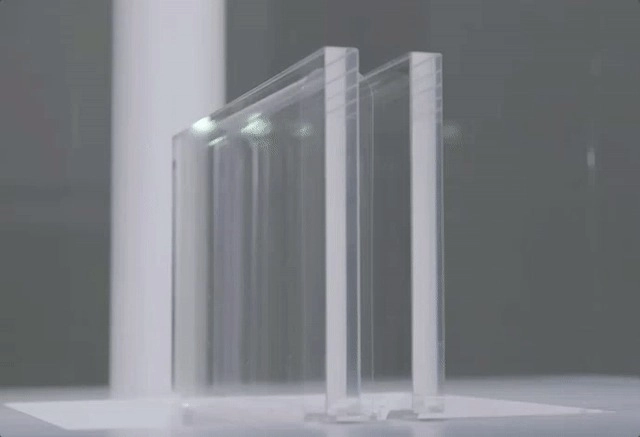
Superthin, flexible glass sounds like something out of a fantasy world – but in fact, it’s something many of us already use everyday as screens for our smartphones and watches. In this video from the Science Channel’s How It’s Made, the intricate process for creating this material, produced by glass manufacturer Schott, is revealed. Watch as the components of the glass are carefully measured out and blended before being melted and reformed into ultrathin sheets.
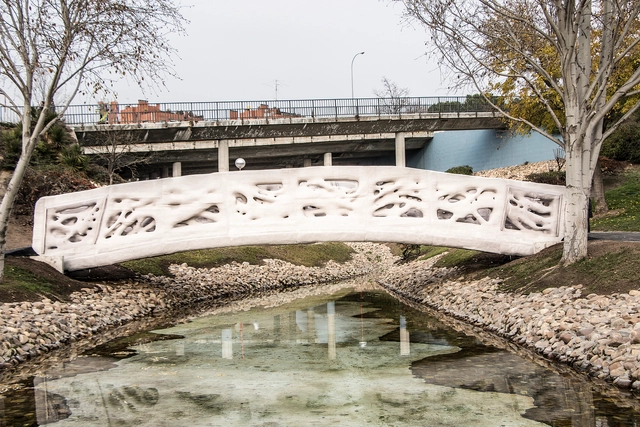
The first 3D printed pedestrian bridge in the world opened to the public on December 14 in Madrid. Led by the Institute of Advanced Architecture of Catalonia (IAAC) in a process that took a year and a half from its conception, the structure crosses a stream in Castilla-La Mancha Park in Alcobendas, Madrid.
.jpg?1485891056&format=webp&width=640&height=580)
At Autodesk's 2016 conference in Las Vegas, a team from Autodesk's BUILD Space led by principal research engineer Andrew Payne collaborated with manufacturer Quarra Stone, engineers Simpson Gumpertz and Heger, and University of Michigan assistant professor Sean Ahlquist to unveil its new Generative Design Pavilion. The project is an exploration of materiality, with stalagmite stone forms that rise up from geometric floor panels to meet fabric that stretches down from a canopy above. The junction of textile and stone aims to emphasize the distinct behaviors of the two materials.
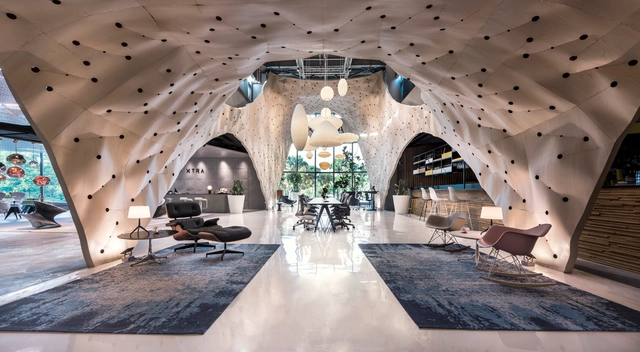
Furniture and design retailer XTRA's new flagship store in Singapore's Marina Square includes a Herman Miller "Shop-in-Shop" that draws inspiration from the furniture it showcases. Encircling the space is a 20-meter arched structure that, from a distance, gives the appearance of tufted fabric pulled taught over a frame. But in fact, this structure is built from a plywood "skin" that designer Pan Yicheng of PRODUCE Workshop has dubbed "fabricwood."
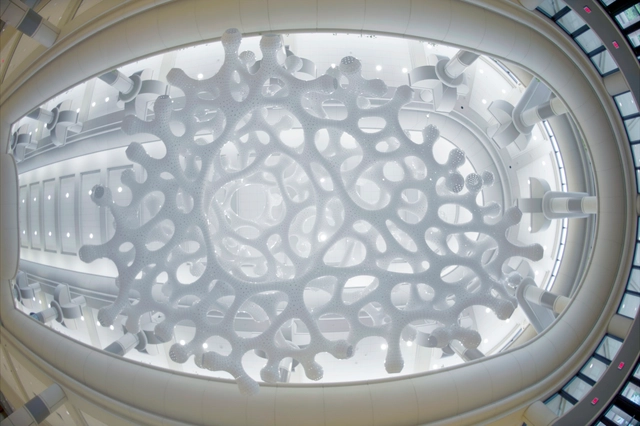
A giant, smooth coral? A cloud-like barnacle? A woman's floral swimming cap?”
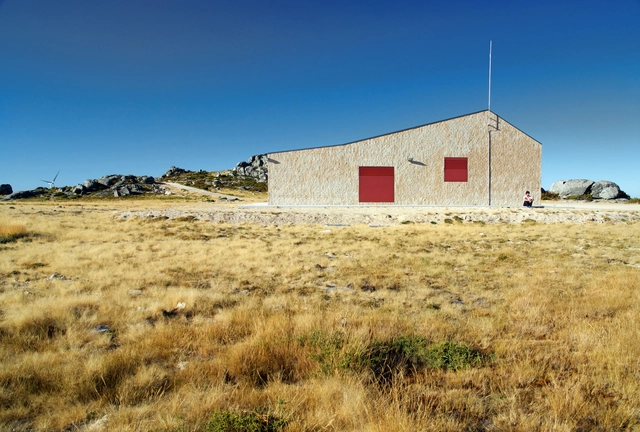
This article is part of our new series "Material in Focus", where we ask architects to share with us their creative process through the choice of materials that define important parts of the construction of their buildings.
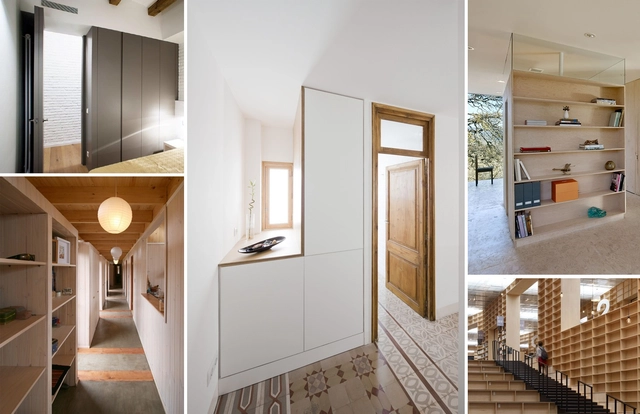
One of the hallmarks of architectural sensibility is a clean, clutter-free space – "a place for everything and everything in its place." Every project requires some element where things can be neatly stored away, whether it be books, kitchen appliances, or entire furniture pieces. Solutions for these storage needs can range from invisible and out of the way, to stunning, textural centerpieces – either way adding necessary functionality to our most-used spaces.
.jpg?1484934632&format=webp&width=640&height=580)
Employing the latest in aluminum and metals innovation, Ben van Berkel and UNStudio have erected the ALPOLIC fair stand at BAU 2017, the world’s leading trade fair for architecture, materials and systems. Emphasizing the inherent strength of the ultra-light material, the parametric design utilizes geometric principles to create a self-supporting semi-private stand for gathering and the display of products.
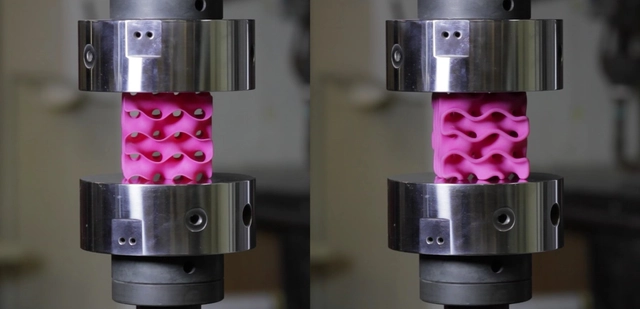
Known for its light weight and high strength properties, graphene has been promised to us as the material of the future for quite some time now. But difficulties in translating its 2D strength into 3-dimensional applications have so far held it back from common use. Now, thanks to new research by the Massachusetts Institute of Technology (MIT), that future may now be closer than ever before. In the school’s latest experiment, researchers have discovered how the material could be shaped into to sponge-like form to resist forces 10 times greater than steel.
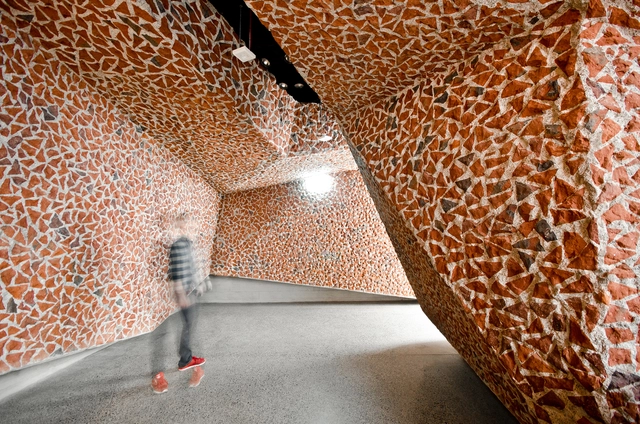
This article is part of our new "Material Focus" series, which asks architects to elaborate on the thought process behind their material choices and sheds light on the steps required to get buildings actually built.
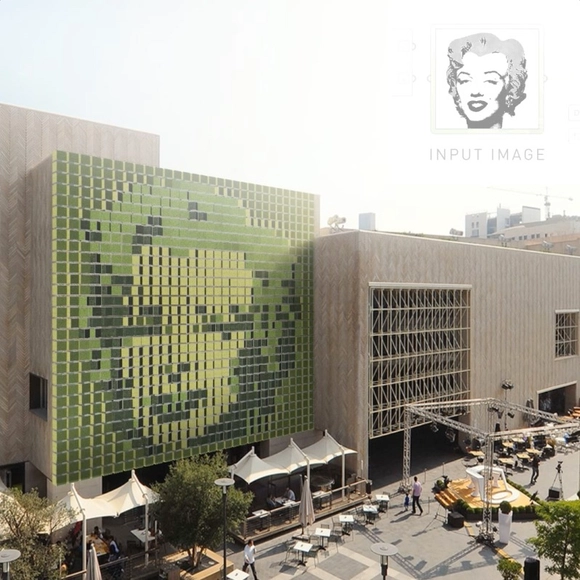
BAD. Built by Associative Data’s Associative Data Research has collaborated with Green Studios to create Kinetic Green Canvas, a prototype Green-Art Installation for building façades.

Following last year’s introduction of MultiFab, a multi-material 3D printer, researchers at MIT’s Computer Science and Artificial Intelligence Laboratory has pioneered a system for designing multi-material objects. The new interface, Foundry, is meant to be accessible to non-programmers, whereas multi-material 3D printing technology has historically been prohibitive both with respect to cost and user-friendliness.
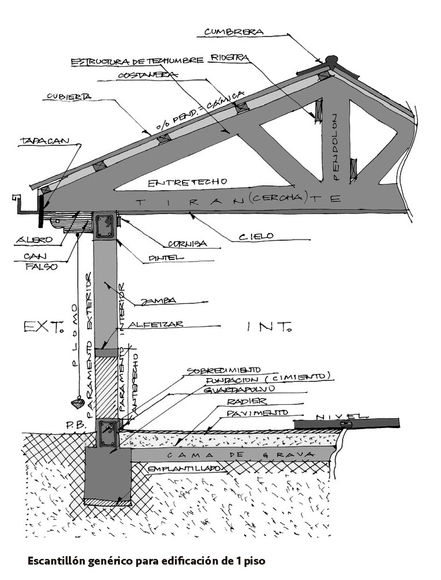
Earlier this year, Chilean architects and professors Luis Pablo Barros and Gustavo Sarabia from the Federico Santa María University released a book (in Spanish) titled "Sistemas Constructivos Básicos" (Basic Construction Systems)." The book aims to be a tool to help architects translate their plan diagrams into tangible architectural works, as well as to help students learn the knowledge necessary to build what they plan.
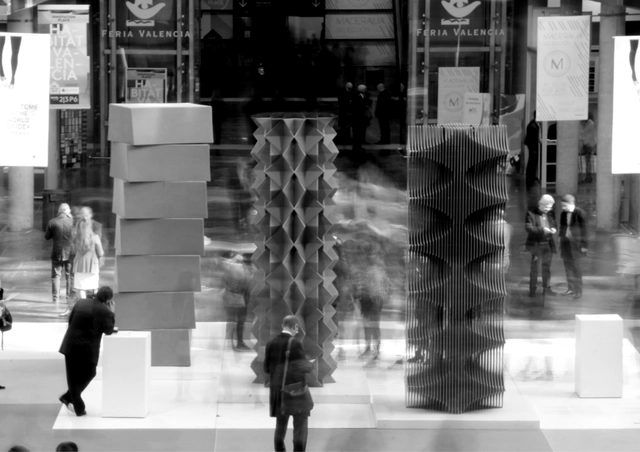
With "Protoceramics," the Material Processes and Systems Group at the Harvard Graduate School of Design (MaP+S) sought to investigate the architectural possibilities of a material that might often be overlooked: thin, large-format ceramic tiles designed to act as interior finishes or exterior cladding. Instead of accepting the tiles' designation as a surface finish, the team investigated three ways to use them as a self-supporting structural component as part of their ongoing experiment to produce "novel material formations with a special interest in tectonic performance." The three techniques employed focused on the acts of cutting, folding and bending.
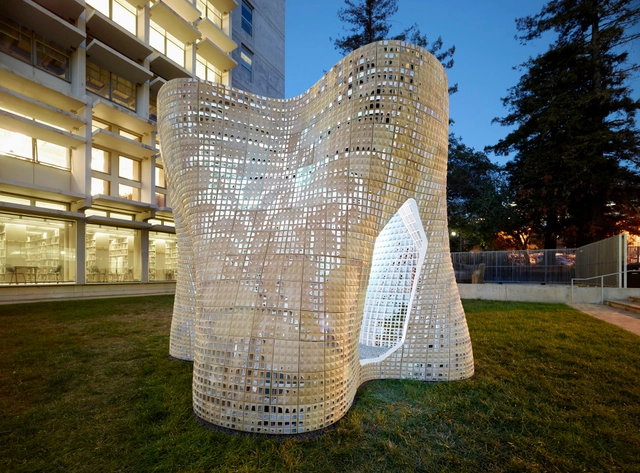
Following on from other experiments in 3-D Printing including a proposal for a house printed from salt and an earthquake resistant column inspired by Incan masonry, the California-based Emerging Objects team has created Bloom, a pavilion constructed from 840 unique blocks 3-D printed from portland cement.
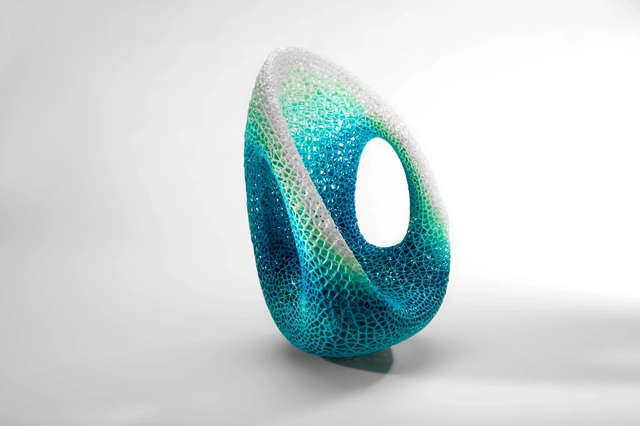
Los Angeles-based practice Synthesis Design + Architecture has created a 3-D printed chair which uses the latest gradient 3-D printing technology to apply different material properties to different parts of the chair. Originally asked by leading 3-D printing company Stratasys to design a piece that would not be possible without utilizing 3-D printing, Synthesis Design + Architecture chose to go one better, designing a chair that would not be possible without the Stratasys Objet 500 Connex3, which is capable of combining a range of material properties into a single print run.
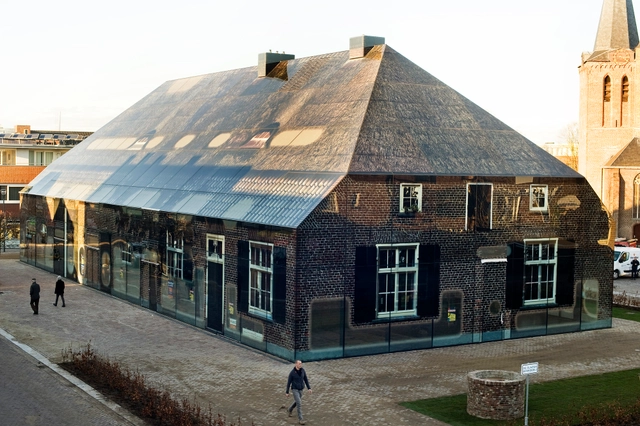
If you search the web for information on MVRDV's Glass Farm, you'll find plenty of people writing about the project's 33-year history, and about its context in the small town of Schijndel. You'll even find plenty of people theorizing on the nature of those glass walls, and the relationships between image and authenticity and between modern technology and modest tradition. But strangely, you'll find almost no information on how the project made use of Digital Ceramic Printing, a relatively new process which was able to handle the many colors, variable transparency and fine tolerances required to display an entire farmhouse facade across a thousand glass panels.