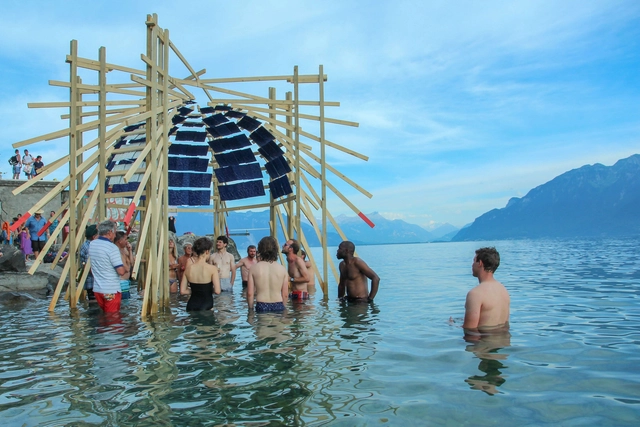
The Pavilion d’Eau, designed by EPFL architecture student Alexander Wolhoff, was constructed in Lake Geneva, Switzerland. The pavilion is a product of six months of research, prototyping, and coordination with different local and academic organizations done in conjunction with LHT3 labs. The exterior of the octagon pavilion has a structural aesthetic, while the interior -- only accessed by wading in the water -- is ornamental, clad in handmade ceramic tiles.
https://www.archdaily.com/880537/temporary-porcelain-clad-pavilion-addresses-the-notion-of-ornamentation-in-architectureAD Editorial Team
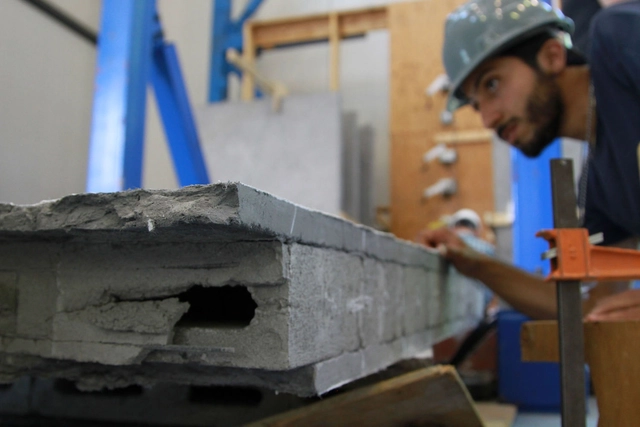
Researchers from the university of British Columbia have developed a new fiber-reinforced concrete treatment that can “dramatically [enhance] the earthquake resistance of seismically vulnerable [structures].”
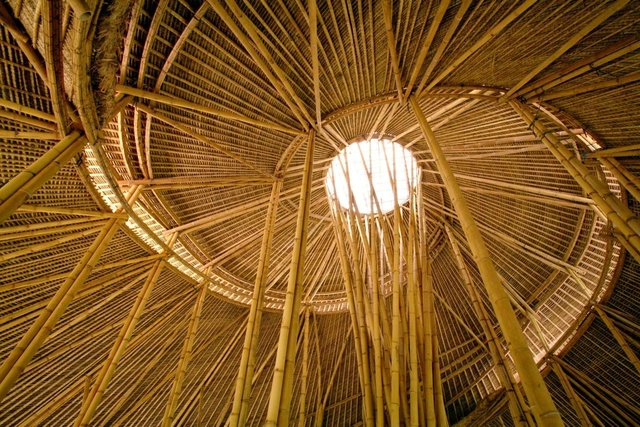
Bamboo has been used by man as a construction material since ancient times. The amazing thing about bamboo, besides being a totally natural material, is that it is sustainable, lightweight, flexible, and inexpensive. Although not widely used in the construction world (at least not when compared to materials like timber), the use of Bamboo enables original and attractive results. This week we have made a selection of 17 photos from well-known photographers such as Julien Lanoo, John Gollings, and Pasi Aalto.
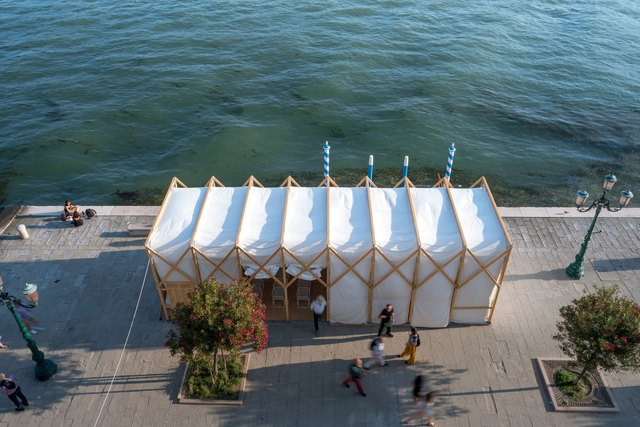
Designed for the V-A-C Foundation, Venice-Based Israeli architect Omri Revesz’s adjustable Street Cinema rests lightly next to a canal in Venice, Italy, expanding, contracting, opening, and closing as its program changes.
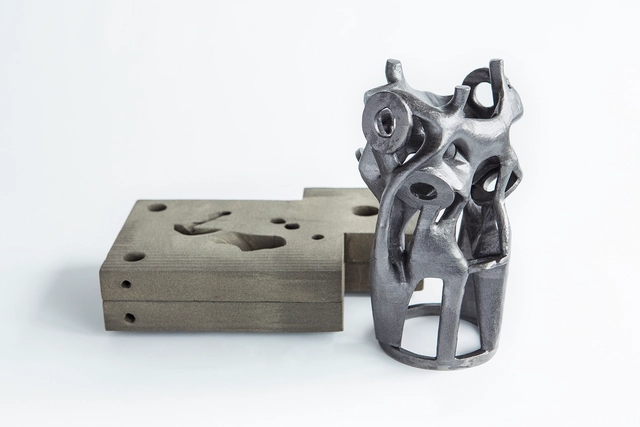
Arup's’ research into alternative production techniques and materials has focused on the potential of 3D printing metal in the construction sector. Complex and individually designed steel structural elements can be efficiently produced “resulting in endless possibilities in mass customisation, weight reduction, product integration and more.”
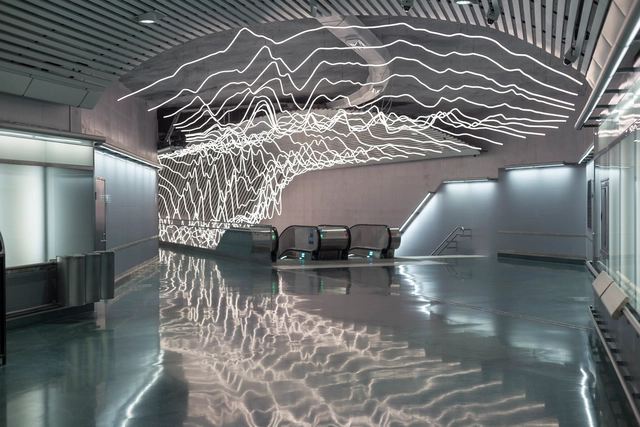
Designed by David Svensson, a total of 400 meters of a neon resembled warm white LED from GE is a work of art representing the pulse of city life in busy Stockholm station.
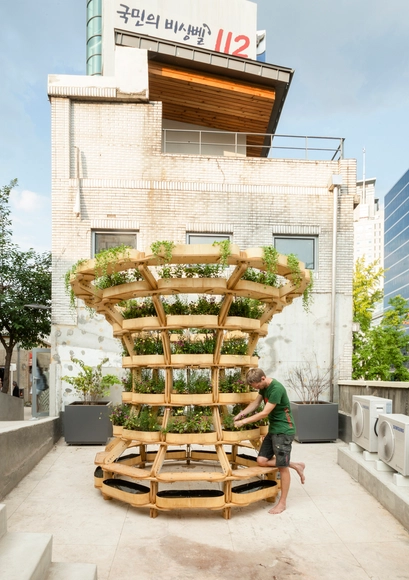
As a response to the fast-paced city life, GrowMore is an urban gardening modular design with endless configurations to suit even the most unexpected of spaces. Designed by Sine Lindholm and Mads-Ulrik Husum, the modular building kit provides an opportunity for social interaction and locally grown vegetation, reminding people to pause and connect with nature.
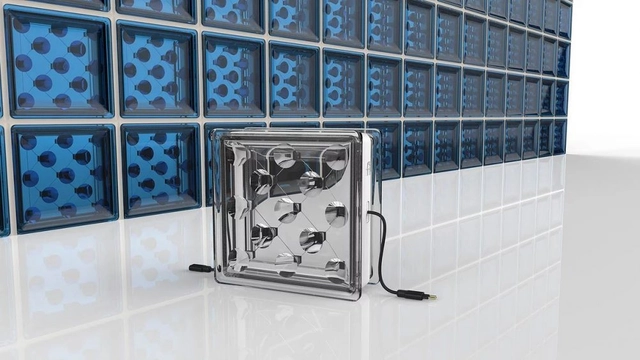
Renewable energy experts from the University of Exeter in England have developed a glass block with built-in solar cells. The idea is that with the spread of technology, it is possible to build a house or a whole building's facade using blocks that generate energy.
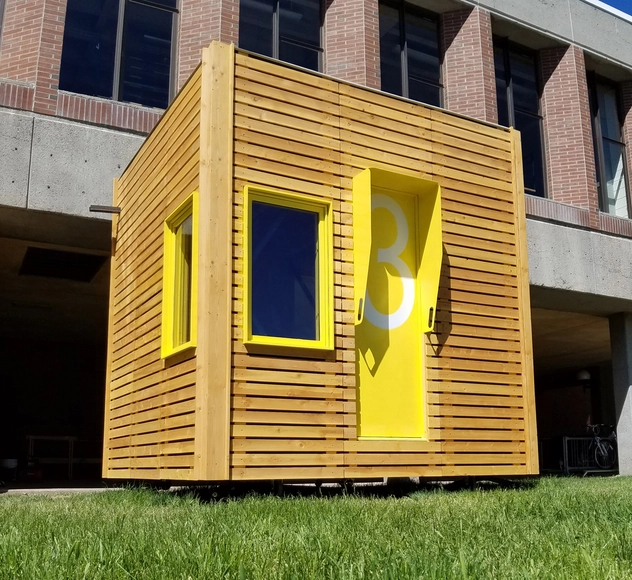
Three M. Arch. candidates at Montana State University, Jonathan Chavez, Kimball Kaiser and Adam Shilling, won an Undergraduate Scholars Programresearch grant which they used to fund their design-build project: B.O.B., the Backyard Office Box. B.O.B. is a kit of parts which, when put together, create a 150-square-foot dwelling space. The design team, also known as Tr3s, wanted their project to be adaptable to a variety of sites and users. B.O.B. can function as an additional space to already existing projects or standalone as a temporary shelter.
What are the best construction materials and products on the market? Which are the most popular? Thanks to the activities of our readers, we're beginning to find some answers to these questions. Combining the use of two ArchDaily tools, many of our readers have saved their favorite architectural materials and products—directly from our catalog—into their personalized My ArchDaily folders.
https://www.archdaily.com/879228/the-15-most-popular-architectural-materials-and-products-of-2017AD Editorial Team
Stone construction is a simple technique that has been used since the earliest human civilizations. These days, stone is regaining popularity in contemporary architecture thanks to the diversity of results that can be achieved by the union of stone pieces. Whether it's the size, the type of cut, or the color of the material, the truth is that the use of stone can add incredible textures to architectural designs. Read on for a selection of 13 photos that allow us to marvel at stone's beauty and expressiveness, created by renowned photographers such as Erieta Attali, Kyungsub Shin and Dimitris Kleanthis.
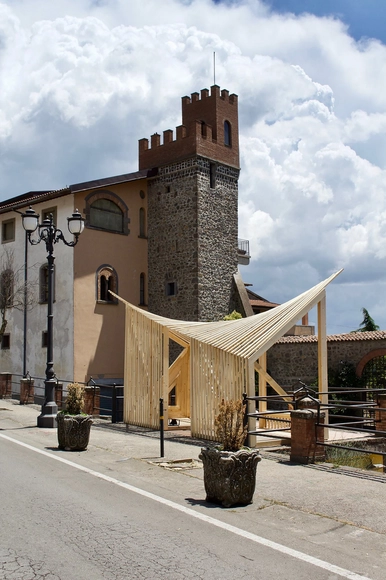
With the common goal across their portfolio of enhancing the landscape, Camposaz has designed a tourist information pavilion in Roccamonfina, Italy. The wood pavilion is sited just off of a pedestrian path, overlooking the adjacent public park with stunning views of the nearby mountains, a driver in the design.
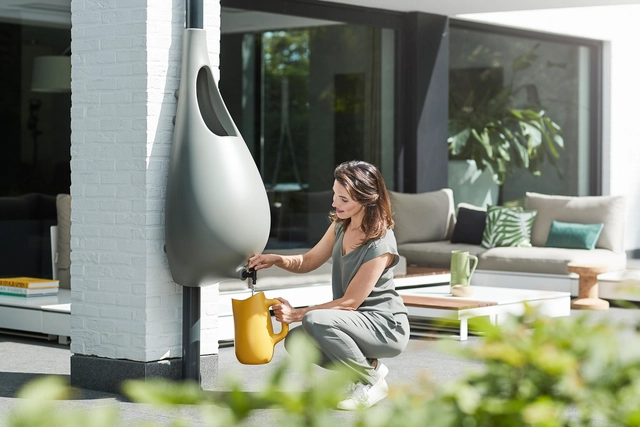
Earlier this month, Studio Bas van der Veer, the Dutch product design studio, unveiled its design for a rain barrel at the three-day fair, spoga+gafa 2017, in Cologne. Van der Veer, a graduate of the Design Academy Eindhoven, initially designed the product – then titled ‘A Drop of Water’ – as part of his thesis in 2009, for which he not only won the prestigious René Smeets Award for best project at the school’s Graduate Galleries exhibition but was also shortlisted for the Melkweg Award. Over the years, the design won numerous accolades, including the Journées des Collections Jardin - Innovation Award, and the Tuinidee Award.
https://www.archdaily.com/879288/small-scale-rainwater-harvesting-made-simpler-by-studio-bas-van-der-veerZoya Gul Hasan
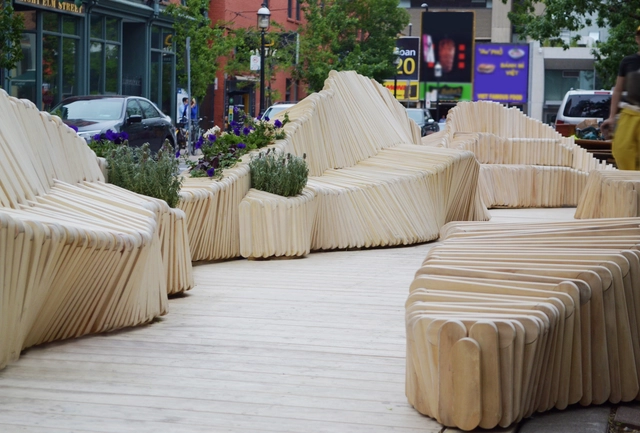
This modular design developed by the students of the Department of Architecture Sciences at Ryerson University proposes a public space to sit and relax that works as an extension of the walkway, appropriating and giving a new meaning to the parking spaces in the streets of Toronto.
High strength, ease of transport, and simplicity of assembly are among the many major advantages of steel. But while utilitarian steel structures tend to be hidden by architects, working with exposed steel can lead to attractive results. Steel not only brings lightness to a design, but can also offer different expressions of color and texture, depending on the treatment of the material. Below we present a selection of 14 photos of steel architecture from well-known photographers such as Adrien Williams, Imagen Subliminal, and Sergio Pirrone.
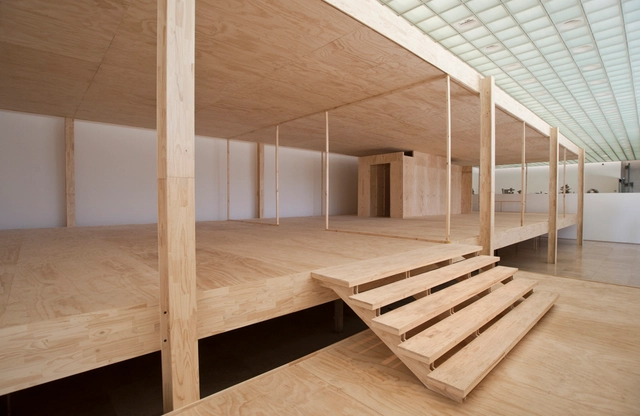
In December 2010, Manuel Peralta Lorca completed the work "Welcome Less Is More," a wooden reconstruction of Mies van der Rohe's Farnsworth House that was installed inside the Patricia Ready Gallery in Santiago, Chile. This September, a new version of this work will be mounted in the hall of Santiago's Museum of Contemporary Art, under the name "Home Less is More."
In the following story, the artist tells us about the process of reinterpreting this icon of modern architecture in wood and how a team of carpenters—who agreed to immerse themselves in the philosophy of Mies—was fundamental to completing the challenge.
https://www.archdaily.com/878665/how-an-artist-constructed-a-wooden-replica-of-mies-farnsworth-housePola Mora
This investigation by Kuan-Ting Lai, developed as part of his thesis on Reconfigurable Systems of Tensegrity at the University of Stuttgart, is an exploration of the capabilities of structural principles in creating transformable architectural structures.
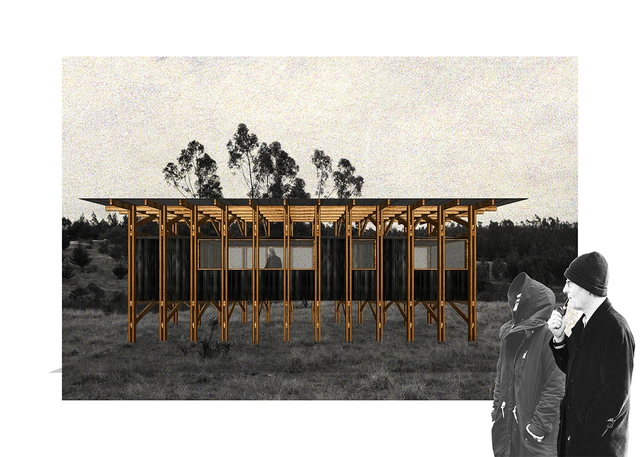
Seeking to connect the traditions of carpentry and the prefabrication industry, Chilean practice abarca+palma have developed a modular house proposal made up of 10 different types of module, capable of forming 5 different house layouts.