Comfort & Sustainability in Architecture: Trends 2021

Just before the global lockdowns began in response to the spread of the widely discussed COVID-19, we met with Saint Gobain experts at their new headquarters in Paris to discuss an extensive investigation conducted in 2019, with the aim of understanding the transformations that architecture and construction have experienced in recent years. After an interesting exchange of ideas, we chose the most relevant topics to be analyzed in depth by our team of editors, resulting in a series of articles that combined the trends identified with the unexpected events that occurred during 2020, connecting them directly to architectural design.
The More You Understand How Materials Fit and Work, The Better Your Architecture Will Be

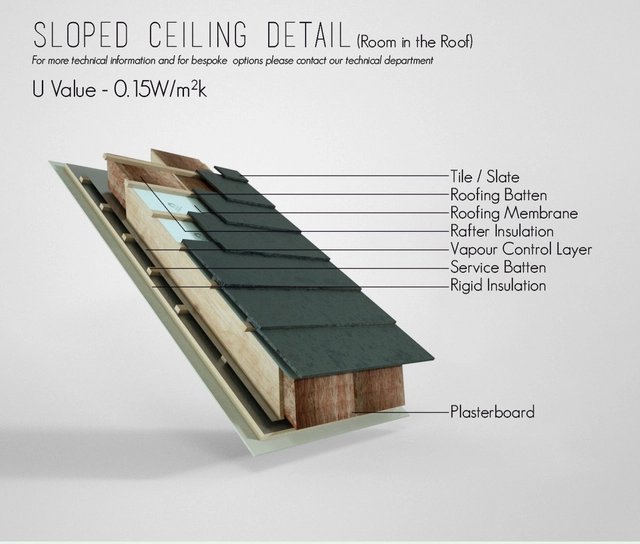
Incredible lighting, shining finishes, healthy trees, and properly positioned human figures seem to be the perfect kit for a good and traditional image of architecture, which, however, is not always representative of reality or context. We are accustomed to thinking of renderings as visions of future buildings, occupied and in use, which serve to sell or convince customers of the worth of a project. But what if rendered images also helped us understand the construction, systems, and functioning of some parts of the building? We talked to two professionals who have developed images that are both beautiful and explanatory.

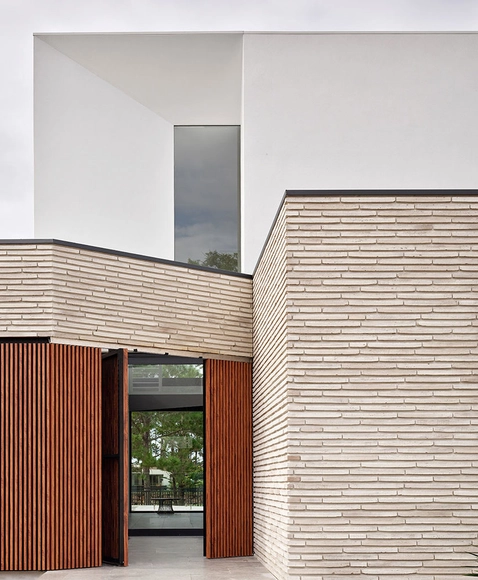
The Versatility and Structural Integrity of Extra-Long Brick Finish

 | Sponsored Content

When creating a contemporary atmosphere for living, many factors come into play. The surrounding environment, its climate, use of materials, spatial organization, and the attention to detail in both the interior and exterior design, all impact the quality of the design as a whole.

BIM and Digital Design: A Closer Look at How Mass Timber goes from Factory to Building Site

Subscriber Access | 

Le Corbusier's fascination with the automobile is evident in the architect's various photographic records of him posing proudly next to a car in front of his architectural work. According to the Franco-Swiss architect, in addition to enabling more efficient and economical construction, the industrialization of architecture could form the basis of improved aesthetic results in the same way the modern car chassis supports the creative and modern design of the automobile body. Yet, while vehicles have experienced impressive changes since the 1930s, it can be said that architecture has been slower to adopt the advances of other industries.

“The Tree that Escaped the Crowded Forest”: Lessons from Frank Lloyd Wright’s Price Tower

Subscriber Access | 

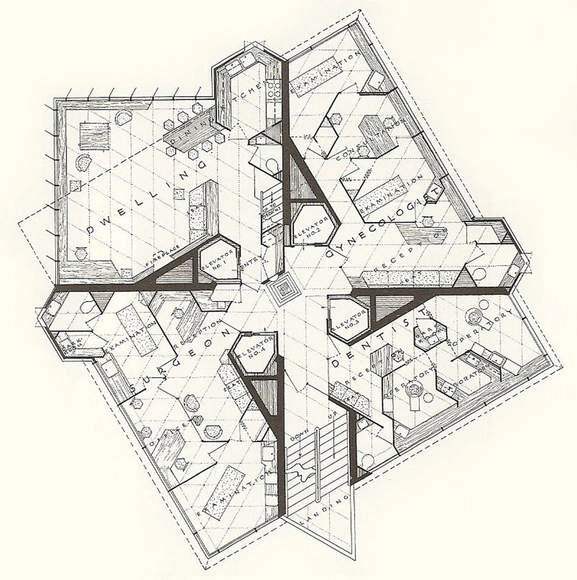
Frank Lloyd Wright’s Price Tower is the famous American architect’s only realized high-rise building and one of his only extant vertically-oriented designs. Located in the plains of Bartlesville, Oklahoma and commissioned by the local oil and chemical firm H. C. Price Company, the mixed-use tower is significant not only for its singularity within Wright’s oeuvre, but because of its unique materials and structural design. Some of Wright’s innovations, which were novel in the mid-twentieth century, remain useful even today.

Zero Kilometer Materials: Preserving the Environment and Local Cultures

Subscriber Access | 

Along with concerns about our environment, new movements, words, concepts, and terms related to these issues constantly emerge, which require us to always remain up to date. The word sustainability itself faced some resistance until it was incorporated into common vocabulary and used widely in the most diverse contexts. Currently, much discussion surrounds the terms circular economy, resilience, the 4 Rs, urban mining, and others. In addition, there are some sustainability-related movements that have been incorporated from activism in other fields, showing the fluidity of such issues. One such initiative is the 0 kilometer materials movement, which has been featured in manifestos and some projects, albeit timidly, in recent times.

Glass Bricks in Argentine Houses: Achieving Natural Light and Privacy with Translucent Blocks

Subscriber Access | 

When designing a space, architects across the board tout the importance, and even necessity, of incorporating natural light into interiors. This means taking measures to control the quantity of light being let in and its distribution throughout the space.

In the case of residential spaces, where privacy plays a larger role than in public spaces like offices, restaurants, and stores, opaque materials like screens, tinted glass, and other barriers are the go-tos for providing protection and privacy from the outside; however, the privacy that these methods provide often comes at the cost of the space's natural lighting, forcing designers to seek alternative materials that allow for both light and privacy.

Translucency & Raw Materials: A Brief Analysis of Lacaton & Vassal's Solutions

Subscriber Access | 

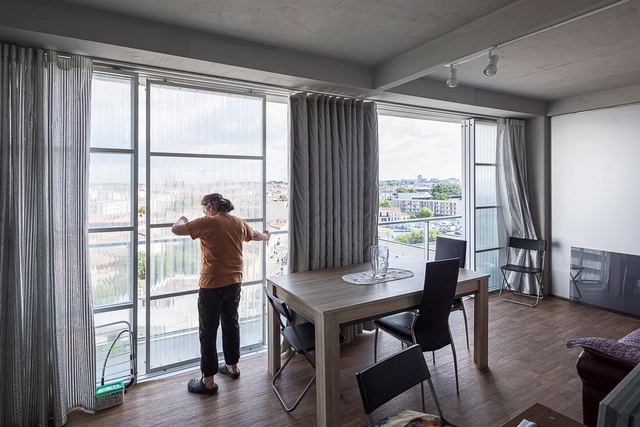
Paulo Mendes da Rocha often says that the function of architecture is nothing more than ‘supporting the unpredictability of life’. Spaces stand everyday life, meetings, landscape, art. Something like a frame, which is often also considered a supporting element of a work of art, since it highlights and, mainly, directs the viewer's gaze to the main object. The phrase of the Brazilian architect combines well with the way that the Lacaton & Vassal office works. The French couple's award raises some questions about how accurate their choices are for the current moment in the world. This includes the philosophy of their work, the design solutions adopted and the material palette generally adopted.

Hong Kong Architects Convert Plastic Waste into Public Benches to Combat Pollution

Subscriber Access | 

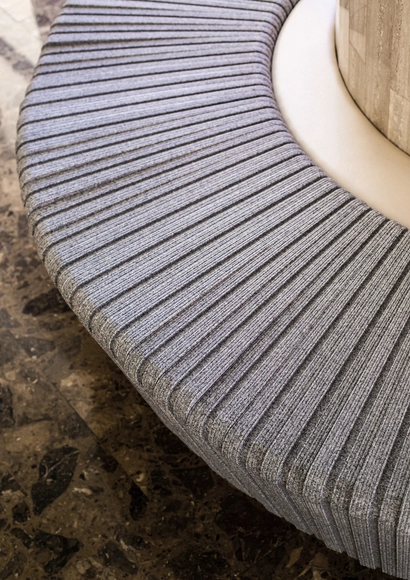
The Shing Mun River in Sha Tin, a residential town in Hong Kong, has struggled with plastic waste pollution for years. Household waste that is not properly recycled will either end up in landfills or floating in the river. In 2018 almost 17 million plastic items, or 40,000 items daily, were found to be drained into the ocean via the Shing Mun River, mostly being food packaging, cutleries, and household plastic bottles. This quantity of plastic pollution in the river and surrounding environment could eventually jeopardize the natural ecosystem irreversibly.

How To Take Advantage of High Ceilings in Renovations

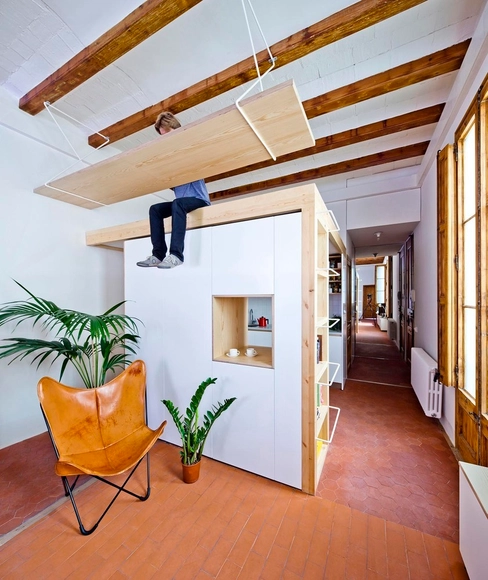
The height of the ceiling of a space heavily influences our perception of it. Generally, local building codes regulate the minimum dimensions for ceiling height, which are calculated to ensure adequate quality of life in the environment. But the exact height of the ceilings is often defined by the dimensions of other materials that make up the building, the height of the constitutive slabs, or even by rounding the dimensions of the stair steps. It is common, with the densification of cities aimed at increasing profitability, for entrepreneurs to design with minimum ceiling heights in houses and offices, reducing construction costs. On the other hand, in older structures, more generous ceilings can be observed, which generally enable a greater degree of design freedom. But how can architects make the most of these spaces?

The Psycho-Geography of the Cretto di Burri

Subscriber Access | 

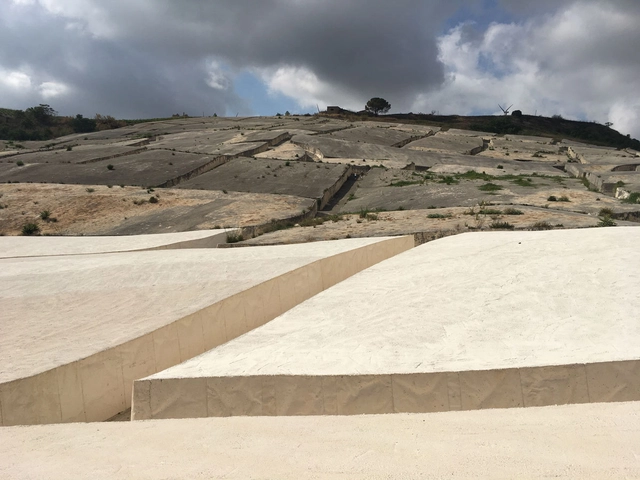
In 1968, the small town of Gibellina in Sicily was flattened by the colossal Belice earthquake, a magnitude 5.5 quake that killed hundreds and left 100,000 homeless. Planners were unable to rebuild Gibellina at its original site, so the new city—Gibellina Nuova—was constructed 11 kilometers (7 miles) away instead. In anticipation of the design and construction of Gibellina Nuova, and in the wake of the Belice earthquake tragedy, the mayor of Gibellina called on several artists to submit proposals for projects to decorate the new city. One of the artists was the prolific “polymaterialist” Italian painter and sculptor Alberto Burri (1915-1995).

Circular Openings: From Boats to Contemporary Architecture

Subscriber Access | 

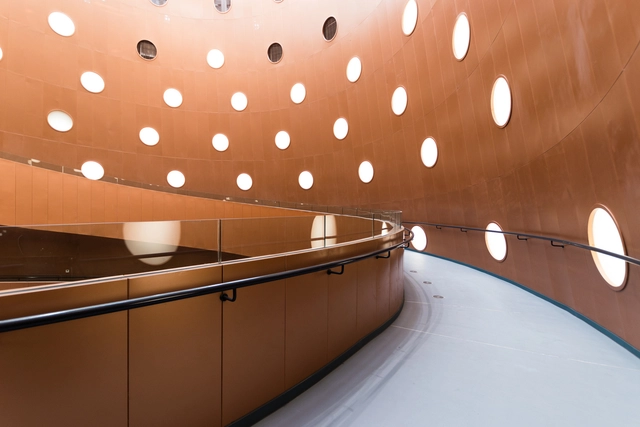
There are two main reasons why boat windows are round. They are easier to seal and, above all, more resistant to the high pressure that water exerts on them. This is because living corners are places where tensions are naturally concentrated, weakening the structure as a whole. This is also why aircraft windows are small and round; high pressures are better distributed in curved shapes, reducing the likelihood of cracks or breaks.

Is It Time To Start Thinking About Wooden Industrial Buildings?

Subscriber Access | 

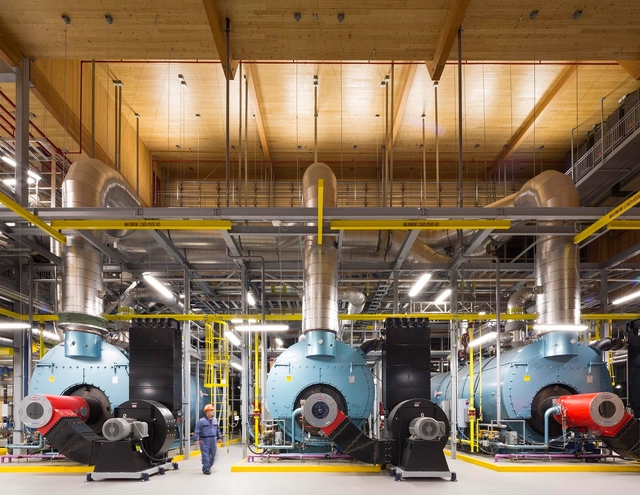
Industrial buildings are among the best examples of Louis Sullivan's famous phrase "form follows function." Generally, they are functional, efficient buildings, quick to build and unornamented. That is why, when we study the industrial heritage of different cities and countries, we are able to understand local materials, technologies, and traditional construction methods of the time. England's red brick factories come to mind, as well as the roof lanterns used to provide natural light to factories and other typical construction elements. Metallic and precast concrete structures are currently the most commonly used due to a combination of construction efficiency, cost, the possibility of expansive spans, and the unawareness of the benefits of other materials, such as wood. Often, these industrial warehouses are also characterized by being cold and impersonal, in addition to having a considerable carbon footprint. But Canada's experience in recent years is noteworthy, where there have been an increasing number of wooden buildings constructed for industrial programs.

How to Structure Buildings as Bridges

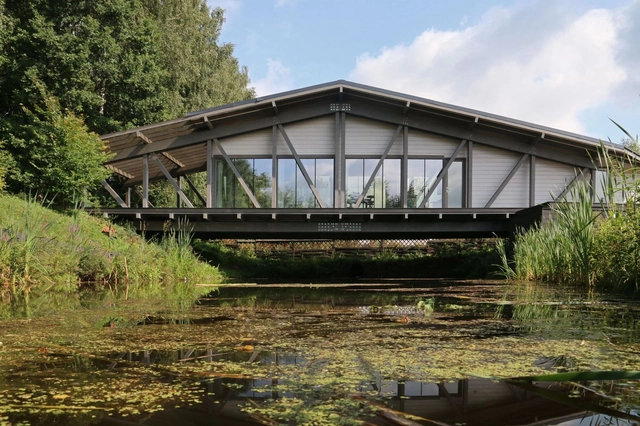
Metaphorically, building bridges equates to creating new opportunities, connections, and paths. The first bridges likely formed naturally with logs falling across rivers and natural depressions, though humans have also been building rudimentary structures to overcome obstacles since prehistory. Today, technological advances have made it possible to erect bridges that are both impressive and sculptural, playing a key role in transportation and connectivity. Usually needing to overcome large spans, with few points of support, bridges can be quite difficult to structure. But when is the bridge more than a connection between two points, instead resembling a building with a complex program? How can these 'bridge houses' be structured?

Timber Tutorial: How to Build Taller with Wood

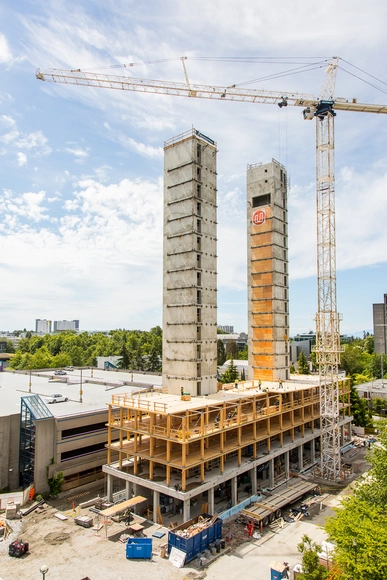
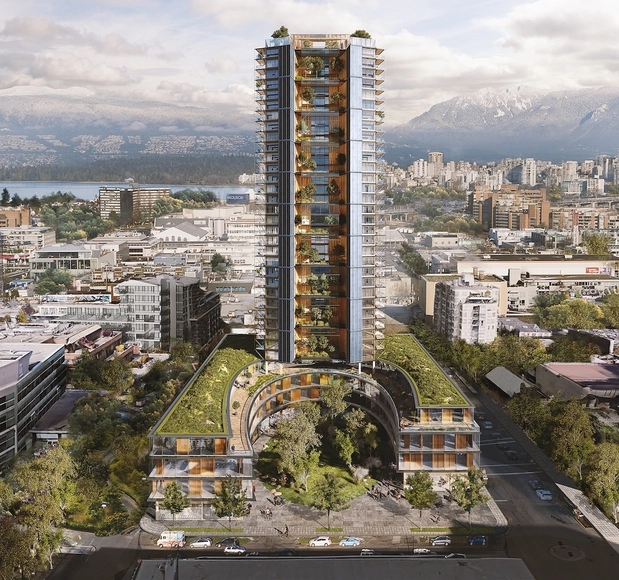
Tall timber buildings are on the rise. Design teams around the world are taking advantage of ever-evolving mass timber technologies, resulting in taller and taller structures. Building off our recent article exploring the future of high-rise buildings, we’re taking a deeper dive into new emerging timber technologies and the advantages of building taller with wood. This tutorial explores how to make tall timber structures a reality.

The Possibilities of Pigmented Concrete: 20 Buildings Infused With Color

Subscriber Access | 

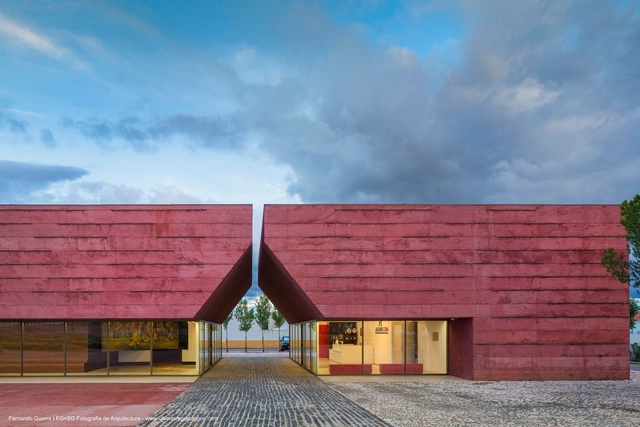
When we think of concrete, the color gray generally comes to mind. The traditional mixture of concrete, which comprises cement, gravel, sand, and water may vary in color depending on elements and admixtures but naturally varies from light to dark gray. However, compounds that add pigment to the mixture are becoming increasingly prevalent and popular,  as they infuse the concrete with hues more stable than paint. These shades result from the addition of oxides:  yellow, red and their derivations (eg. brown) are obtained with the addition of iron oxide; chromium and cobalt oxide create the greens and blues, respectively. For black concrete, it is common to use black iron oxide and carbon oxide combined with pozzolanic cement.

Lightweight & Detachable Solutions: Buildings as a Reserve of Materials for the Future

At the 2016 Venice Architecture Biennale, curator Alejandro Aravena decided to reuse 100 tons of material discarded by the previous Art Biennale to create the new exhibition halls. Besides preserving 10,000 m² of plasterboard and 14 km of metallic structures, the initiative intended to give value, through design, to something that would otherwise be discarded as waste. The project also shed light on another observation: as architects, we generally restrict ourselves to thinking about buildings during the design process, construction phase, and at most through the use phase. We hardly think of what will become of them when they are demolished at the end of their useful life, an issue that should urgently become part of the conversation.

Round Houses of Raw Earth: 3D Printing Sustainable Homes in 200 Hours

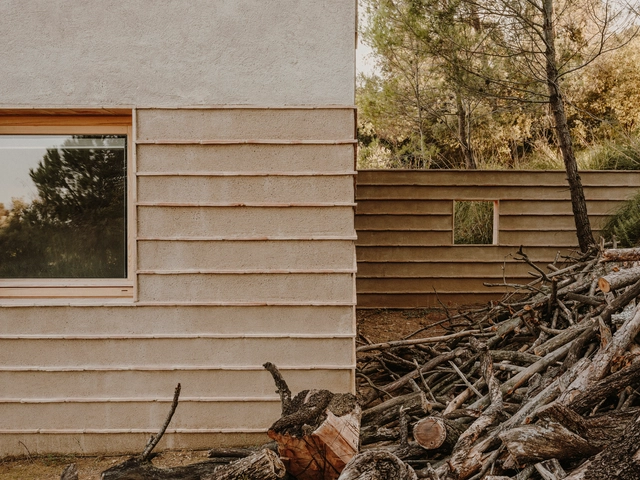
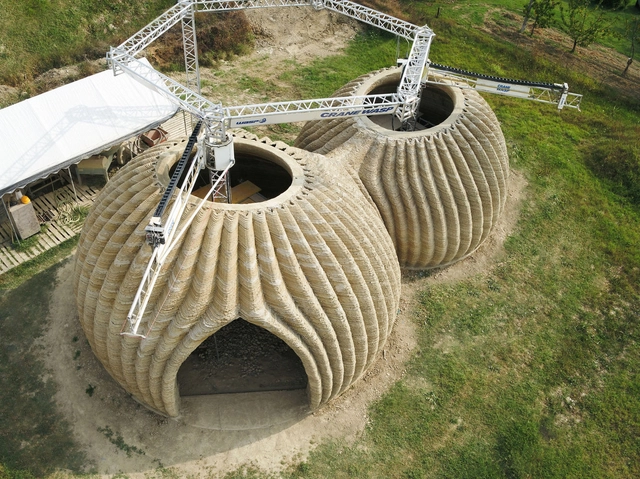
A recent collaboration between the team of Mario Cucinella Architects (MC A) and WASP, specialists in 3D Printing in Italy, has resulted in the first 3D-printed construction of a fully natural, recyclable, and carbon-neutral material: raw earth. The circular housing prototype is called TECLA and it was built in Massa Lombarda (Ravenna, Italy) using multiple 3D printers synchronized to work at the same time.