For a small child, understanding the concept of time and its passage is very difficult. As a result, children are often impatient when expecting something or confused when trying to remember something from the past. They live in the present, and learn the notion of time only little by little. But accepting the passage of time, and the reality of aging, is something that plagues us even as adults. The lucrative cosmetic and plastic surgery industries show how humanity seeks to control or deny the passage of time, an urge that has proved to be relentless.
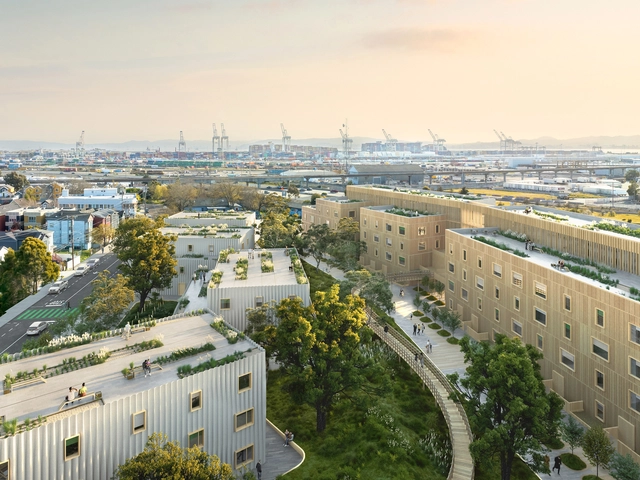
Decolonizing Suburbia. Image Courtesy of Centro de Arquitectura
One of the most important challenges in architecture, when it comes to creating spaces that work for everyone, is the diversity that exists in people, their needs, and how to integrate them into a design. Disabilities are more than a condition; they are a way of living according to human diversity that requires architectural solutions of equivalent multiplicity.
https://www.archdaily.com/998667/how-can-buildings-work-for-everyone-the-future-of-inclusivity-and-accessibility-in-architectureEnrique Tovar
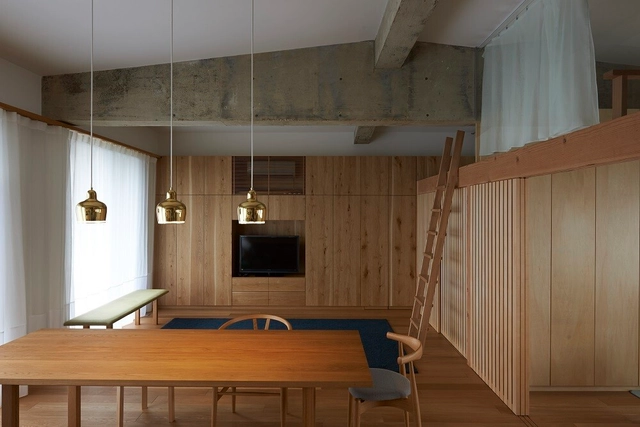
Contemporary Japanese interiors incorporate elements both of tradition and modernity to embody the country's innovative spirit while maintaining a profound respect for its history and cultural heritage. Though traditional materials like wood, paper, and bamboo continue to hold significance, modern Japanese interiors also often feature a fusion of glass, steel, concrete, and metals. The juxtaposition of smoother, sleeker textures and finishes with warmer and more organic ones reflects a dynamic synthesis of old and new, and results in visually striking and functional spaces that honor the essence of the country's design principles.
One of the most essential aspects of interior design is lighting – an element that can make or break an interior space of any size or material. Yet good lighting can be especially important for smaller or more crowded spaces, making them feel larger and more open even when their literal dimensions haven’t changed. In turn, larger spaces with poor lighting may feel smaller and less welcoming than they have the potential to be. To make interiors feel aptly large and well lit, designers can rely on several tried and true methods that make the most of a space, from using the right shades and types of lights to placing them in the best locations to integrating other elements that best complement existing lighting. These strategies, as well as several examples of their application, are listed below.
https://www.archdaily.com/947631/how-to-virtually-enlarge-spaces-using-good-lightingLilly Cao
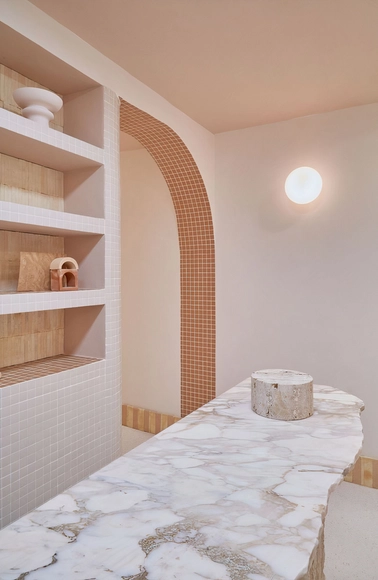
Aiming to balance the calm and uniformity of minimalism with the tactile appeal of raw, textured materials, ceramics emerge as a versatile medium to bridge the gap between sterile spaces and those that might become overwhelming. Whether incorporating large formats or small mosaics, or embracing organic or geometric aesthetics, the diverse range of ceramic options enables the infusion of character into spaces while maintaining a sense of order and cohesion. But it is not a simple task. In the pursuit of this harmonious blend, we explore specific types of ceramic cladding that have been effectively applied in architectural projects, enriching the visual language of minimalism while grading its complexity with precision.
By recognizing and analyzing the multiple architectural possibilities of bamboo—a construction material mostly native to warm and tropical areas—the following questions arise: How can we take advantage of its qualities and enhance its use in colder climates? Such regions necessarily require a certain level of thermal isolation in walls, floors, and roofs—but for these climates, we can combine bamboo with materials that complement it.
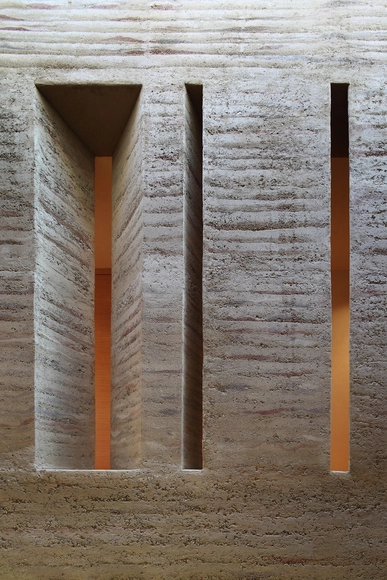
Rammed earth has been used in construction for thousands of years, with evidence of its use dating as far back as the Neolithic Period. Commonly used especially in China, the technique was applied to both ancient monuments and vernacular architecture, with the Great Wall utilizing the technique. Though interest in rammed earth declined in the 20th century, some continue to advocate its use today, citing its sustainability in comparison to more modern construction methods. Most notably, rammed earth structures use local materials, meaning they have low embodied energy and produce little waste. Below, we describe how to build with this material.
https://www.archdaily.com/933353/how-rammed-earth-walls-are-builtLilly Cao
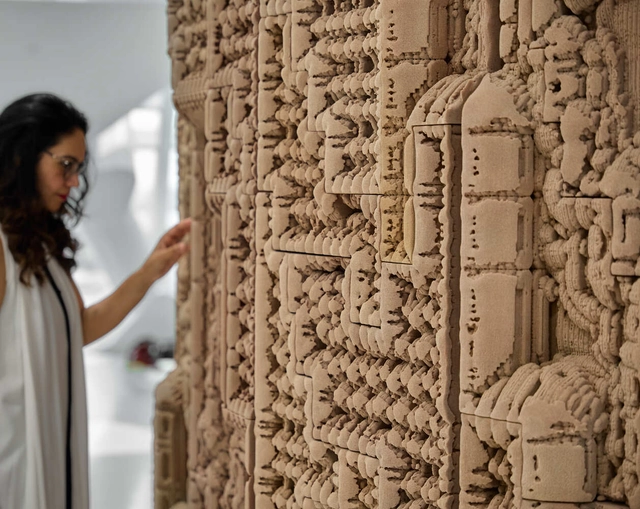
3D printing holds vast potential due to its ease of large-quantity manufacturing, its flexibility in terms of material exploration, and its ability to materialize all kinds of geometries. This year, architects and designers have looked at 3D printing technology to decarbonize construction materials, integrate contemporary aesthetics with traditional construction methods, and add a layer of craft and artistry to interiors and facades.
Our buildings become symbolic of the times we live in, reflecting the spirit of a given era, attending to different needs, lifestyles and functions. “Architecture should speak of its time and place, but yearn for timelessness,” says one of the most prominent architects of our time, Frank Gehry. For architectural innovators, exploring new technological potentials and envisioning ways to enrich people’s lives have long been driving forces, shaping responses to contemporary challenges. Today, sustainability stands as a key challenge, adding new dimensions to the debate, bringing together form, function, the responsible choice of materials and long-term thinking. Adapting to these demands has never held more significance.
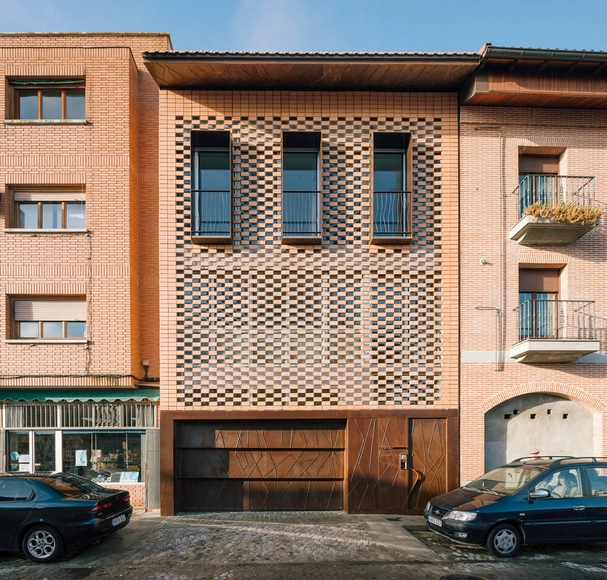
The duality of sunlight in the field of architectural design presents fascinating contrasts, especially when addressing the question of how to interact with it through the built environment and the materials that define architecture. The sun's influence in this discipline has become an essential part of the cultural heritage of some countries, as evidenced by Spanish architecture, where the interaction with sunlight manifests through elements such as lattices. These lattices are recognizable on the facades of buildings from the Middle Ages, exemplified by structures like the Alhambra, to 20th-century constructions such as Casa Gomis, considered historical monuments.
https://www.archdaily.com/1010864/sunscreen-facades-from-ceramic-textile-systems-to-double-skin-glassEnrique Tovar
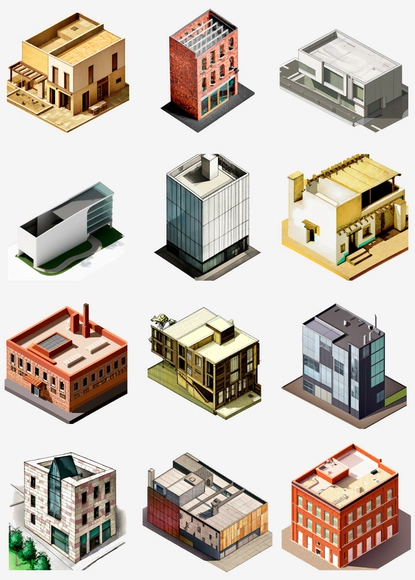
A contemporary building immersed in a built environment. This building is made of (material). An isometric view with realistic textures. Image via DALL.E 2
As AI has become more accessible, we have witnessed examples illustrating its diverse applications. Prominent among these are generative AIs, which excel in their ability to “create” images through prompts, many distinguished by their composition and vividness. These AI systems are neural networks with billions of parameters, trained to create images from natural language, using a dataset of text–image pairs. Thus, although the initial question posed by Turing in the 1950s, “Can machines think?” still recurs today, the generation of images and text is grounded in existing information, limiting their capabilities.
https://www.archdaily.com/1010723/does-ai-correlate-materiality-with-contemporary-architecture-an-experiment-with-six-building-materialsEnrique Tovar
The global housing crisis generates a wide range of challenges, from those who are in situations of homelessness, to the realities of millions who face unaffordable housing conditions, overcrowding, and excessively high rents. Tackling this involves political will, the union of the state and private companies, and innovative solutions that prioritize accessibility, sustainability, and government mechanisms that enable a functioning system. Amongst all of these factors though, one thing is certain: we need to build massively in the future to improve the housing situation. The implementation of efficient construction methods, such as prefabrication and modular construction, can speed up the creation of affordable housing units, reducing construction costs and timeframes. Adopting green building practices, such as using recycled materials and designing energy-efficient structures, not only contributes to sustainability but minimizes long-term operating expenses for residents.
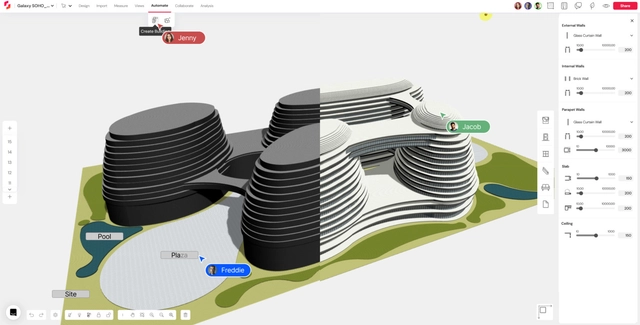
Transforming a conceptual massing model to BIM with Snaptrude’s automated workflows. Image Courtesy of Snaptrude
In the ever-changing world of design and construction, the tools at architects’ disposal have remained the same for decades. With its ability to deeply understand how architects design, Snaptrude has emerged as a collaborative 3D building design tool that incorporates smart, parametric modeling, live building information, easy real-time collaboration, and offers strong interoperability with other BIM tools like Revit.
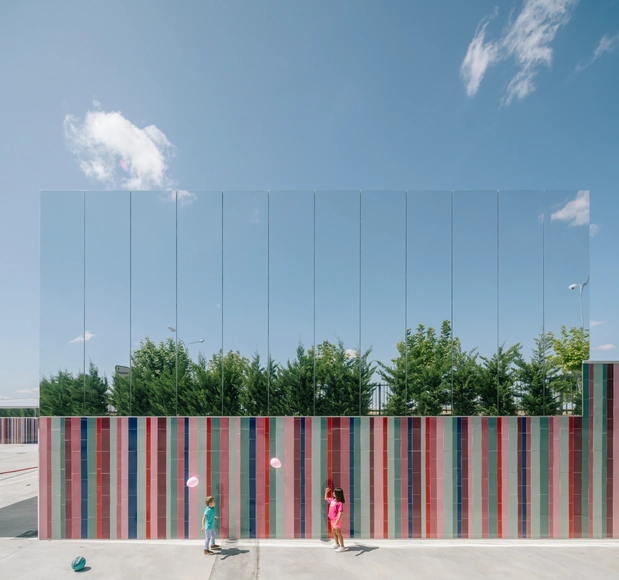
The Almost Invisible School / ABLM arquitectos. Image Cortesia de ABLM arquitectos
The referential of movement, which describes the variation in an object's position and velocity according to the observer's perspective, is one of the fundamental concepts of physics. This idea not only influences the understanding of movement in physical systems but can also be analogously applied in other areas, such as architecture, where the different perspectives of users can shape their experiences and interactions with built space. Each person brings cultural, emotional, and physical baggage, resulting in unique architectural interactions, similar to an observer's interpretation of a motion reference.
The world's population is undergoing a significant demographic transformation, with an increasingly larger portion of people reaching older ages. This has prompted governments to implement public policies aimed at promoting the well-being of the growing number of elderly individuals worldwide. Alongside this trend, there is a need to address special needs that extend beyond just the elderly population and encompass various age groups. Advancements in medical science have enabled many people with disabilities or special needs to lead fuller and more independent lives, contributing to a more inclusive society. This progress also places a crucial responsibility on architects and designers, who must create built environments that are genuinely inclusive, and capable of accommodating a wide diversity of individuals with specific medical needs and varying levels of mobility. This underscores the fundamental importance of universal design and accessibility principles.
Essential Induction Cooktop. Image Courtesy of Gaggenau
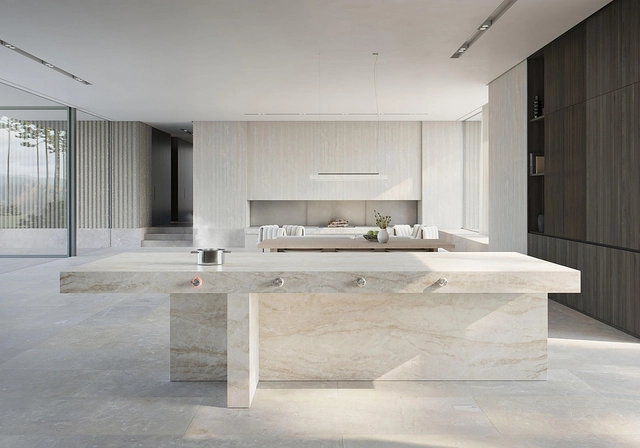
Following evolving lifestyle trends and technological innovations, contemporary architecture often enhances the design of kitchens to fulfill multifaceted and dynamic roles. By incorporating smart and automated systems and creating flexible, adaptable spaces with minimalist and clean lines, kitchens embody the essence of contemporary life.
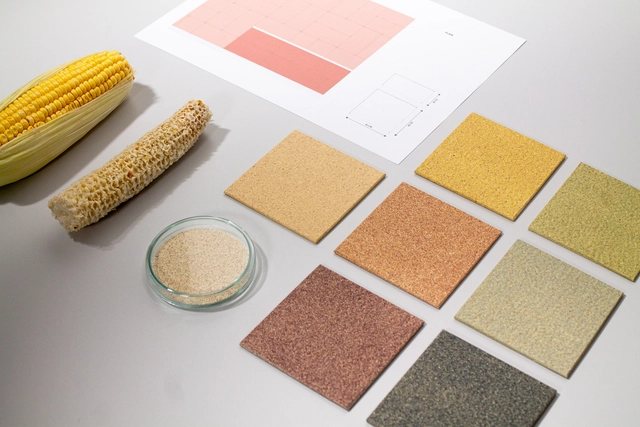
The practice of upcycling –present in a variety of industries from fashion to construction– not only revitalizes discarded items, adding new values and functions, but also contributes to turning them into valuable resources. Adopting the spirit of the circular economy by harnessing agricultural waste such as corn cobs, rice straw, and sugar cane bagasse for building materials marks a fundamental shift towards sustainable practices, promoting a closed-loop system that minimizes waste and optimizes resource efficiency.
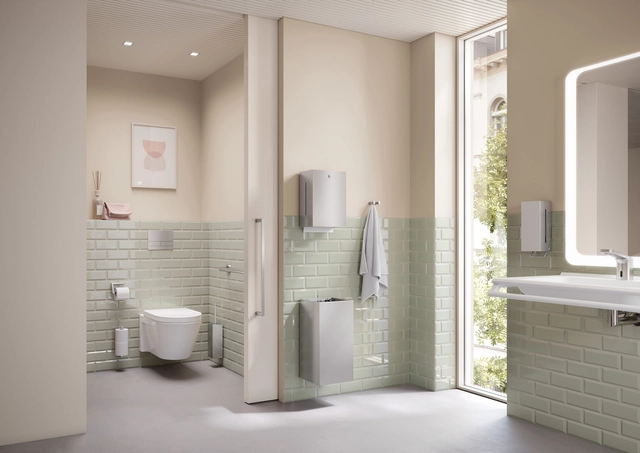
Even the most mundane elements of everyday life have undergone remarkable developments throughout the years, especially when it comes to practicality, efficiency, and sustainability. A notable example is the contemporary toilet, an essential element for any home or public space, which has undergone significant transformations. Although they may appear to have remained relatively unchanged over the decades in terms of design and materials, incorporating technology has been the main development, offering improvements in comfort, variety of design, and innovative features. The evolution of toilets transcends mere functionality, representing a fusion of technology, design, and sustainability to create a holistic bathroom experience.