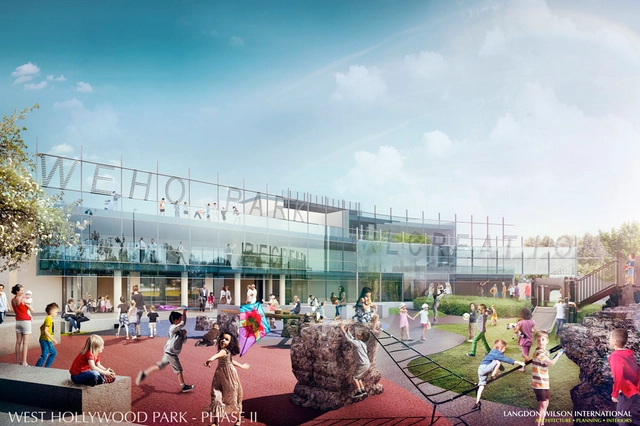
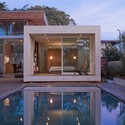
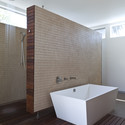
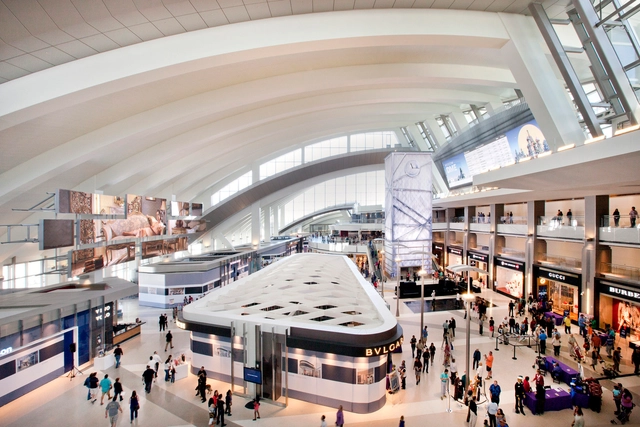
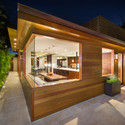
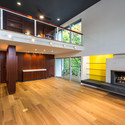
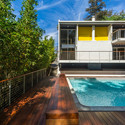
The park will cover over 5 acres of (soon to be) green space in the middle of Los Angeles, although at a slight cost. A number of existing buildings will be demolished to make way for the park, including a library, office park, and swimming pool complex. New structures will likely include a recreation and community centre, as well as various playground facilities scattered around the park.
https://www.archdaily.com/460024/shortlist-for-west-hollywood-park-project-announcedKatherine Allen
The American Institute of Architects (AIA) and MIT’s Center for Advanced Urbanism has produced a new report examining urban health in eight of the USA’s largest cities, which has been translated into a collection of meaningful findings for architects, designers, and urban planners. With more than half of the world’s population living in urban areas - a statistic which is projected to grow to 70% by 2050 - the report hinges around the theory that “massive urbanization can negatively affect human and environmental health in unique ways” and that, in many cases, these affects can be addressed by architects and designers by the way we create within and build upon our cities.
Water scarcity is a profound challenge for designers of the built environment. Beyond looking for water sources and creating sustainable ecosystems, how can we begin to create cities and buildings that will help us to celebrate and mitigate hydro-logical concerns? Hadley and Peter Arnold, co-directors of the Arid Land Institute (ALI) at Woodbury University, have decided to tackle this problem around Los Angeles. With the support of the World Water Forum and the Metropolitan Water District of Southern California, they recently developed a high-resolution geospatial model to strategically identify and quantify the potential for improving storm water capture within urban areas.
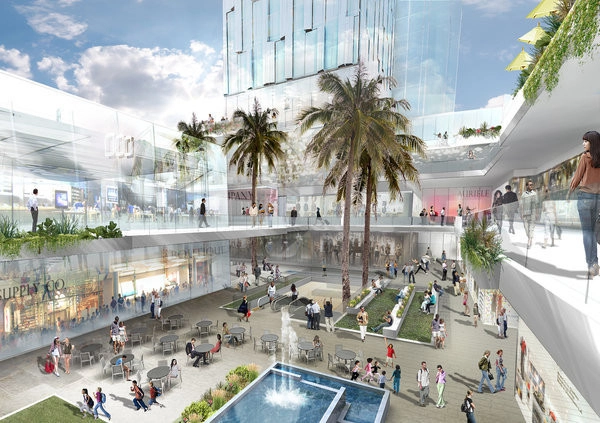
Related Cos. rendering of a conceptual plan for a retail and residential complex across Grand Avenue. Image Courtesy of Related Cos., via LA Times
"Will Grand Avenue finally turn around? Most likely not until they make it a two-way, add more trees, bike lanes, and pedestrian amenities. Buildings alone can’t do it, no matter how daring, novel (or expensive) the architecture." -- Guy Horton, The Indicator, "Ten Years Later, Has the Disney Concert Hall Made a Difference?"
The latest controversy surrounding the Grand Avenue re-design, the long-awaited project to develop the stretch of land east of the Walt Disney Concert Hall, is the re-instatement of Frank Gehry, a move which occurred after the city of LA rejected plans from mega-developers Related Cos. (designed by Gensler in collaboration with Robert A.M. Stern) for being "overly commercial."
Of course, while the Related Cos. plans may have failed to wow the city, the decision to bring Gehry back to the project hasn't exactly been embraced either. A must-see article in Zócalo Public Square asks four urban planning experts, "what would you do with Grand Avenue?" In his latest ArchDaily column, Guy Horton offers his opinion: any re-design must rely on activating life on the street-level, rather than on one architectural solution. Well, ArchDaily readers, now we'd like to know your thoughts on the matter.
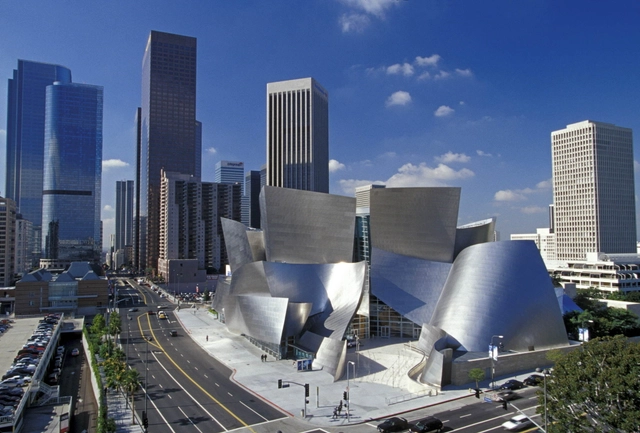
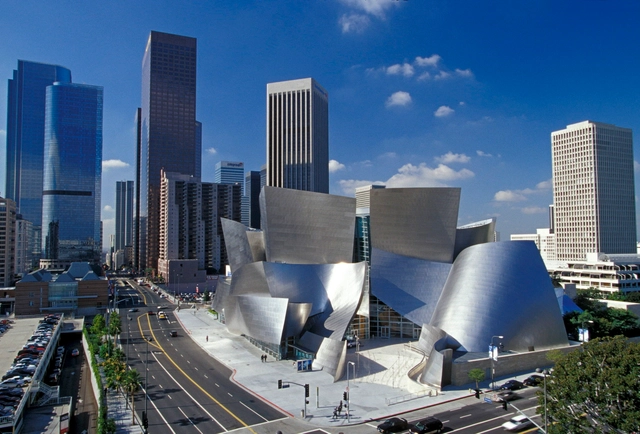
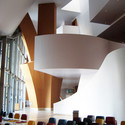
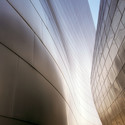
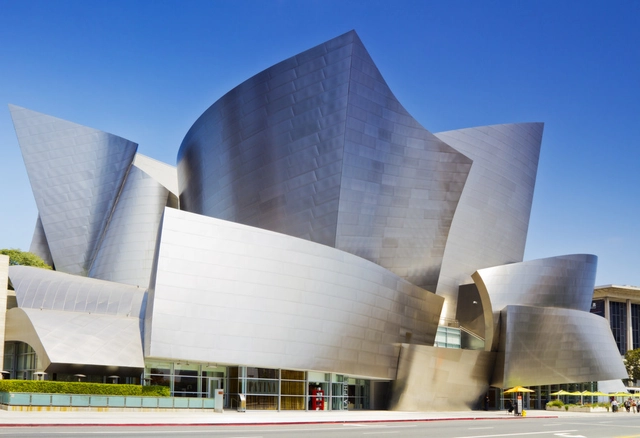
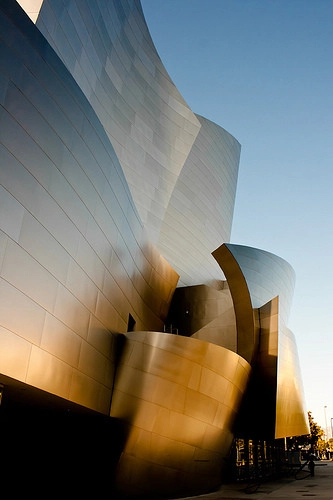
Completed October 23, 2003, The Walt Disney Concert Hall celebrates its tenth anniversary today. Home to the LA Philharmonic, it has received wide acclaim for its excellent acoustics and distinctive architecture. In the decade since its opening, the hall's sweeping, metallic surfaces have become associated with Frank Gehry’s signature style.
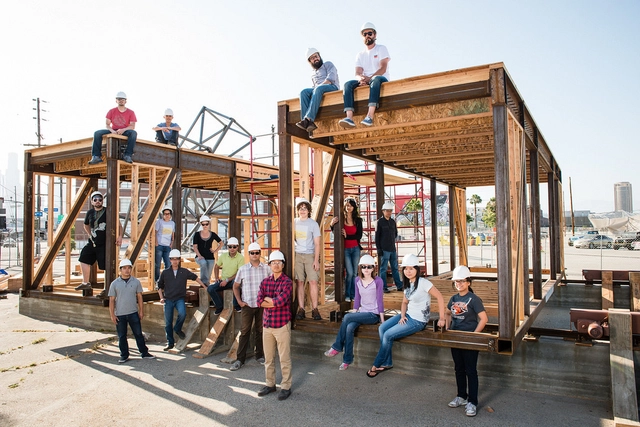
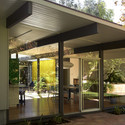
DALE, short for Dynamic Augmented Living Environment, is this year's U.S. Department of Energy Solar Decathlon entry for the SCI-Arc/Caltech team. Made of two movable, prefabricated modules that open to allow the outdoors in, DALE celebrates the active California lifestyle through its dynamic architecture.
DALE learns from two classic California precedents: the super-sized suburban tract home and the compact, sufficient bungalow; amending one and expanding on the other to become a new Southern California typology. At 600 square feet, it is a micro house with an unprecedented flexible interior that results in the program of a house three times the size.
https://www.archdaily.com/441478/solar-decathlon-2013-sci-arc-and-caltech-create-california-style-zero-net-energy-bungalowJose Luis Gabriel Cruz
On October 23rd, the Walt Disney concert hall, the project that almost never was, will celebrate its ten-year anniversary. Throughout these ten years it has had all manner of transformative power attributed to it. But has it really transformed LA? What would the city have been like if it had never been built? Would it be fundamentally different?
The answer? No.The city wouldn’t even be that different in the immediate vicinity of Grand Avenue.
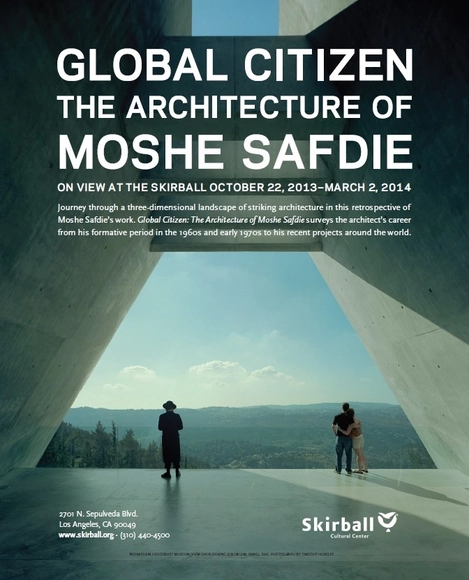
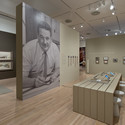
Journey through a three-dimensional landscape of striking architecture in this career-spanning exhibition of Moshe Safdie’s work. Global Citizen: The Architecture of Moshe Safdie surveys the renowned architect’s career from his formative period in the 1960s and early 1970s to his recent projects around the world, exploring his aesthetic language of transcendent light, powerful geometry, and iconic forms.
It's been called a "remarkable work of public architecture" that "engages [the city of] Los Angeles" like few others. With the 10 year anniversary of Frank Gehry's Walt Disney Concert Hall approaching, the LA Times, with some great, in-depth coverage, has been taking a look back at its architecture and what makes it such an important icon for both Gehry and LA. Oh, and don't forget to check out its soon-to-be neighbor on Grand Avenue, the Broad Museum by Diller Scofidio + Renfro!