1. ArchDaily
  2. Los Angeles

Los Angeles: The Latest Architecture and News

Can Anyone Win in Architecture Criticism? An Appeal for a "New Sincerity"

In the mid-1980s, after literature had long been held hostage by postmodernist irony and cynicism, a new wave of authors called for an end to negativity, promoting a "new sincerity" for fiction. Gaining momentum into the 1990s, the movement reached a pinnacle in 1993 when, in his essay E Unibus Pluram: Television and U.S. Fiction, pop-culture seer David Foster Wallace, a proponent of this "new sincerity," made the following call to action: “The next real literary ‘rebels’ in this country might well emerge as some weird bunch of anti-rebels, born oglers who dare somehow to back away from ironic watching, who have the childish gall actually to endorse and instantiate single-entendre principles... These anti-rebels would be outdated, of course, before they even started. Dead on the page. Too sincere. Clearly repressed. Backward, quaint, naive, anachronistic. Maybe that’ll be the point. Maybe that’s why they’ll be the next real rebels. Real rebels, as far as I can see, risk disapproval. The old postmodern insurgents risked the gasp and squeal: shock, disgust, outrage, censorship, accusations of socialism, anarchism, nihilism. Today’s risks are different. The new rebels might be artists willing to risk the yawn, the rolled eyes, the cool smile, the nudged ribs, the parody of gifted ironists, the ‘Oh how banal.'"

Architecture, ever in debt to the styles and ideas of other art forms, could learn a thing or two now from the resuscitation of American fiction at the turn of the millennium. It too is enduring an identity crisis, mired by pessimism and uncertainty - a reality made painfully clear this past January when a New York Times Op-Ed by Steven Bingler and Martin C. Pedersen, How to Rebuild Architecture, divided camps and made the design world fume. In the editorial, the authors spoke vehemently of an architectural profession that has become mired by egos and been disconnected from public needs. Things quickly got ugly, critics wrestled with critics and subsequently the public got involved. What no one seemed to take into account is that this type of hounding is at the core of the problem. In its current landscape the discipline has struggled with its past, been deferential to its present, and wrestled with the uncertainty of its future. In a moment when we have become addicted to despondency, can anyone win?
10 Compete to Revitalize Los Angeles’ Oldest Park

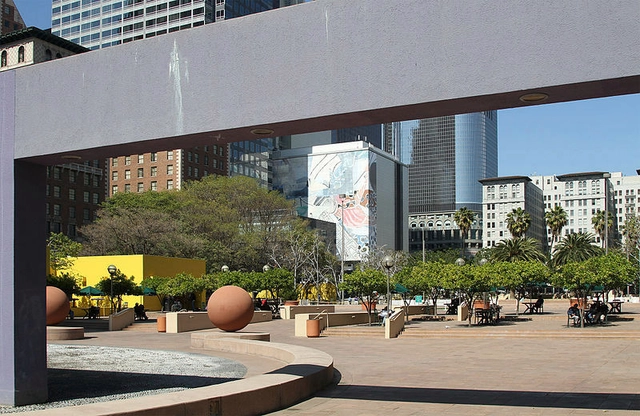
Ten practices from around the world have been shortlisted in a competition that aims to transform Los Angeles' Pershing Square one of Southern California's top destinations. Located on a five-acre plot in the city's downtown, Pershing Square is Los Angeles' oldest park. Each semi-finalist has been challenged to develop proposals based off of experiences. A small selection of finalists will be selected in December to move on to the competition's final phase.

The 10 semifinalists are:

WIRED Looks at 8 Cities of the Future

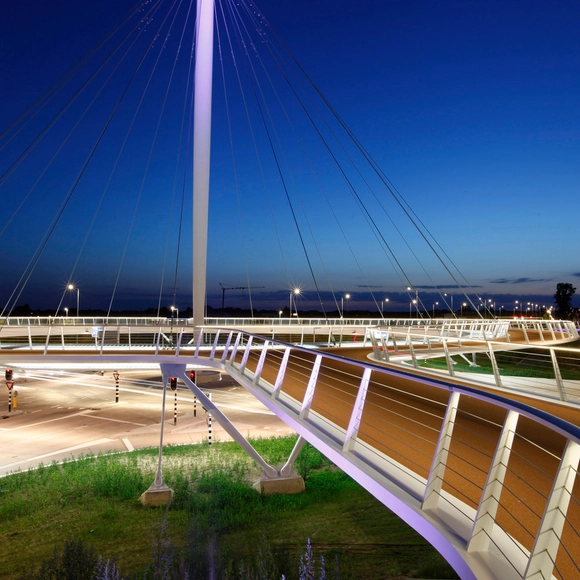
WIRED Magazine has created a list of Eight Cities That Will Show You What The Future Will Look Like in the latest edition of their design issue. In the relatively short span of time that humans have been planning cities, more and more decisions have been made that have shaped the path of new technologies and methods that will make cities better. Such projects—like new streetlights, bicycle infrastructure, and traffic-sensitive museums—highlight some of these advances in the urban lifestyle.

"The cities of tomorrow might still self-assemble haltingly, but done right, the process won’t be accidental. A city shouldn’t just happen anymore. Every block, every building, every brick represents innumerable decisions. Decide well, and cities are magic," writes Wired author Adam Rogers. Read on after the break to see how 8 different cities from around the world are implementing innovative projects. 

The Power of Photography: How Images Continue to Shape the Built Environment

In a culture dominated by smartphones and Instagram, with estimates that over one trillion photographs will be taken this year alone, it might seem impossible for photographs to make and shape issues in the ways they once did. Despite this, images still steer debates with shocking resiliency and, with luck, become iconic in their own right. As architecture is synonymous with placemaking and cultural memory, it is only logical that images of the built environment can have lasting effects on the issues of architecture and urbanism. It's never been easier for photographs to gain exposure than they can today, and with social media and civilian journalism, debates have never started more quickly.

Society of Architectural Historians 2016 Annual International Conference

The SAH 2016 Annual International Conference will take place in Pasadena/Los Angeles, April 6-10, with the theme New Local/Global Infrastructures. The conference will engage participants from around the world with the rich, evolving legacy of the region’s built environment. With the scheduled completion of the Metro Expo Light-Rail Line west to Santa Monica in early 2016, Pasadena will be connected to downtown LA and the rest of Los Angeles County. This infrastructure, building on historic right-of-ways, will provide new ways to see the broad range of the region’s architecture and urbanism.

New Website Visualizes Human Activity in Cities Across the World

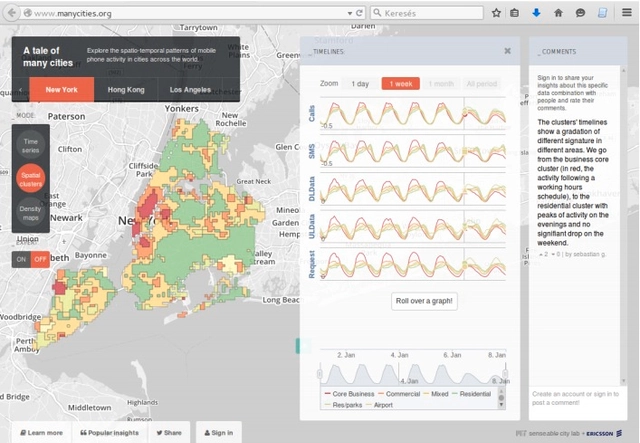
The SENSEable City Laboratory at MIT has developed a new tool with Ericsson to better understand human behavior. "ManyCities" is a new website that "explores the spatio-temporal patterns of mobile phone activity in cities across the world," including London, New York, Los Angeles and Hong Kong. Taking complex data and organizing it in a intuitive way, the application allows users to quickly visualize patterns of human movement within the urban context down to the neighborhood scale. You can imagine how useful a tool like this can be for urban planners or even daily commuters, especially once real time analytics come into play. Take a look at ManyCities yourself, here.

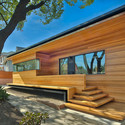
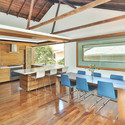
Fenlon House / Martin Fenlon Architecture

Fenlon House / Martin Fenlon Architecture - Houses, Deck, Beam, FacadeFenlon House / Martin Fenlon Architecture - Houses, Kitchen, Facade, CountertopFenlon House / Martin Fenlon Architecture - Houses, Deck, Facade, BeamFenlon House / Martin Fenlon Architecture - Houses, Beam, Facade, Table, ChairFenlon House / Martin Fenlon Architecture - More Images+ 11

Los Angeles, United States

Bellino Residence / Mayes Office

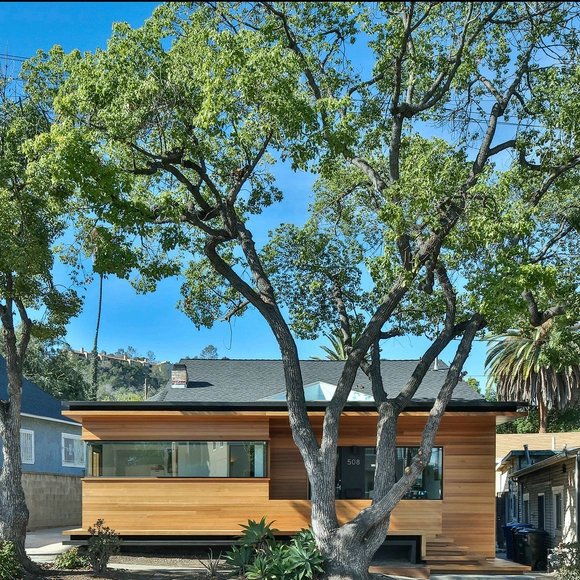
Bellino Residence / Mayes Office - Houses, Door, Stairs, Beam, Facade, Handrail, Table, Chair, BenchBellino Residence / Mayes Office - Houses, Deck, HandrailBellino Residence / Mayes Office - Houses, Bedroom, Door, Beam, Facade, BedBellino Residence / Mayes Office - Houses, Garden, FacadeBellino Residence / Mayes Office - More Images+ 20

Los Angeles, United States

Interview: Elizabeth Diller on the Design of The Broad in Los Angeles

Subscriber Access | 

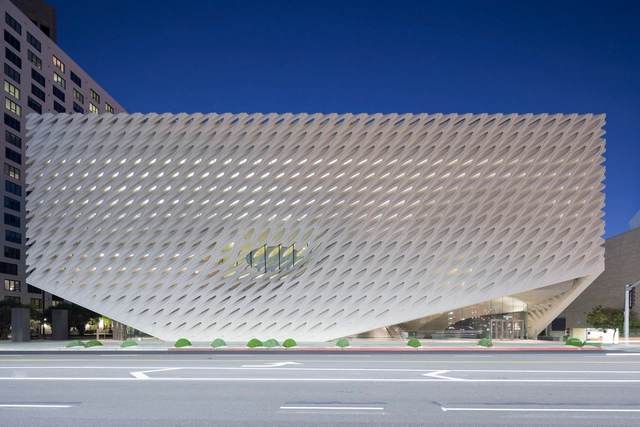
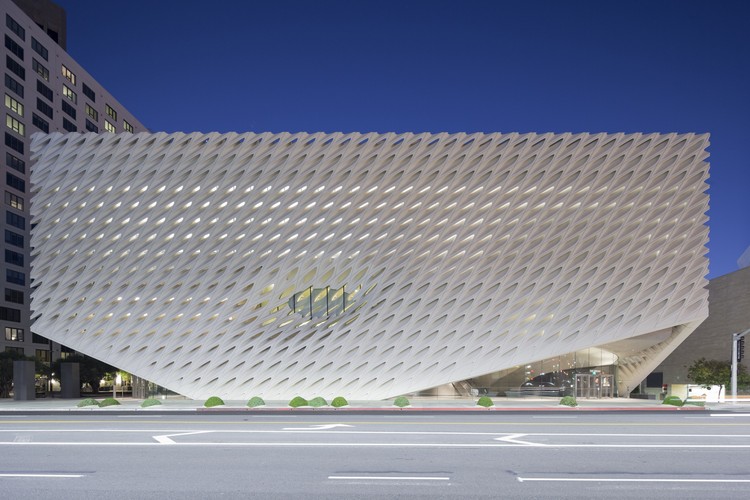
The Broad has officially opened its doors in downtown Los Angeles. Taking four years to complete, the highly anticipated, 120,000-square-foot building houses a prominent collection of postwar and international contemporary art owned by billionaire philanthropists Eli and Edythe Broad. During the press preview, VernissageTV caught up with the building's architect, Elizabeth Diller of Diller, Scofidio + Renfro, to gain a better understanding of The Broad's “veil over the vault" concept.

Critical Round-Up: Diller Scofidio + Renfro's Broad Museum

Subscriber Access | 

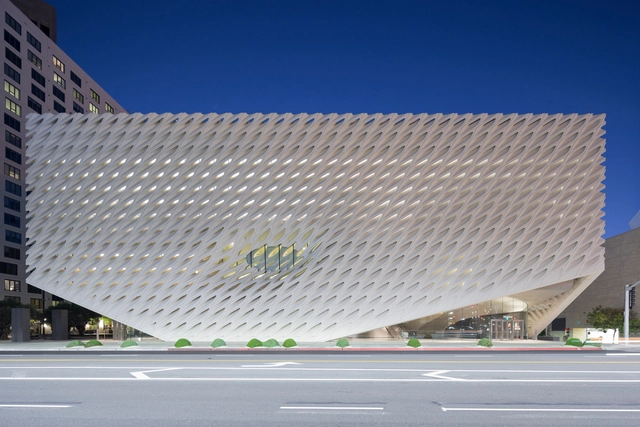
After teasing the general public by offering the press and 3,000 lucky local citizens with a preview day six months ago, the Broad Museum has finally opened its doors. Designed by Highline architects Diller, Scofidio + Renfro, the museum took four years and $140 million to build, adding its presence to LA’s architectural Broadway, Grand Avenue. With its visually striking facade given the tough task of responding to its enigmatic neighbor, Frank Gehry’s perennially polarizing Walt Disney Concert Hall, the building was sure to attract the attention of the critics, and they rose to the challenge in their droves. Read on to find out what five critics thought of the building dubbed “the veil over the vault.”

Critical Round-Up: Diller Scofidio + Renfro's Broad Museum - Image 1 of 4Critical Round-Up: Diller Scofidio + Renfro's Broad Museum - Image 2 of 4Critical Round-Up: Diller Scofidio + Renfro's Broad Museum - Image 3 of 4Critical Round-Up: Diller Scofidio + Renfro's Broad Museum - Image 4 of 4Critical Round-Up: Diller Scofidio + Renfro's Broad Museum - More Images+ 1

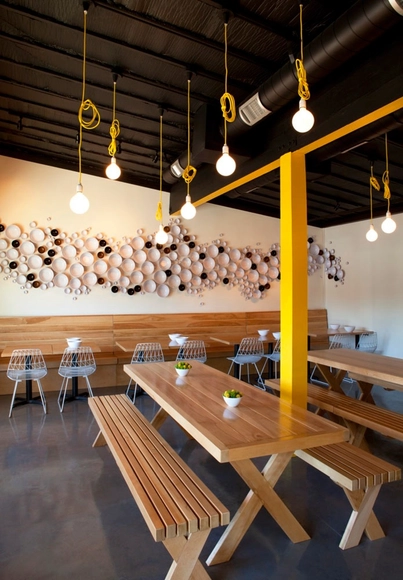
Yellow Fever / Fleetwood Fernandez

Yellow Fever / Fleetwood Fernandez - Interior Design, Facade, Door, Chair, BenchYellow Fever / Fleetwood Fernandez - Interior Design, TableYellow Fever / Fleetwood Fernandez - Interior Photography, Interior Design, ChairYellow Fever / Fleetwood Fernandez - Interior Photography, Interior Design, LightingYellow Fever / Fleetwood Fernandez - More Images+ 4

  • Area Area of this architecture project Area:  1400
  • Year Completion year of this architecture project Year:  2014
  • Manufacturers Brands with products used in this architecture project
    Manufacturers:  Tronk Design

Competition Launched to Revitalize LA’s Pershing Square

Pershing Square Renew, a public/private partnership formed by Los Angeles City Council member José Huizar, has launched an international design competition to re-imagine the five-acre urban park at the heart of downtown Los Angeles.

LOHA’s WATERshed Reimagines and Reactivates the LA River

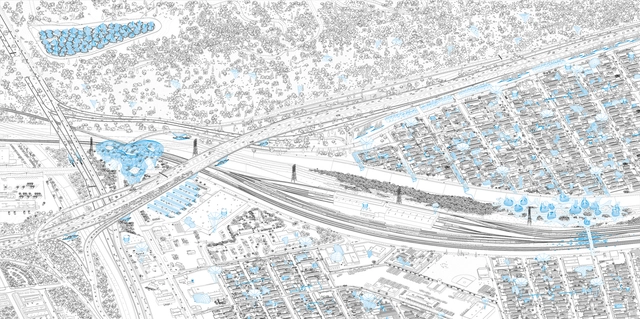
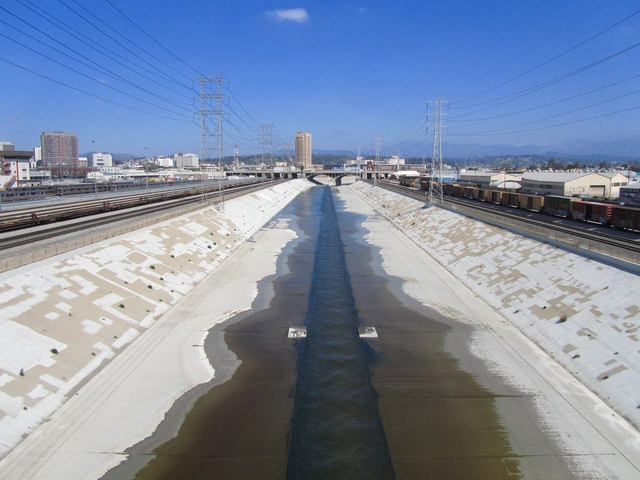
Lorcan O’Herlihy Architects (LOHA) has designed a speculative system of interventions for the Los Angeles River that “examines the relationship between urbanization and water use to develop new models of densification that recognize and tap into existing ecological and infrastructural patterns.” Called WATERshed, the design is part of the A+D Museum’s ongoing “Shelter: Rethinking How We Live in Los Angeles” exhibition that explores new typologies of housing in Los Angeles.

With their model for urban regeneration, LOHA hopes to address issues like the ongoing California drought, as well as the United Nation’s prediction that by 2030, nearly half of the world’s population will be living in areas of high water stress. Thus, the plan utilizes the Los Angeles River as a resource for water use and management in order to provide a path for sustainable growth in Los Angeles, and an example for other cities.

LOHA’s WATERshed Reimagines and Reactivates the LA River - Image 4 of 4LOHA’s WATERshed Reimagines and Reactivates the LA River - Image 2 of 4LOHA’s WATERshed Reimagines and Reactivates the LA River - Image 1 of 4LOHA’s WATERshed Reimagines and Reactivates the LA River - Image 3 of 4LOHA’s WATERshed Reimagines and Reactivates the LA River - More Images+ 11

Video: Enter the Ethereal Spaces of Los Angeles' Cathedral of Our Lady of the Angels

Subscriber Access | 

A soaring contemporary space for the divine, The Cathedral of Our Lady of the Angels opened to the public in 2002. Designed by Pritzker Prize-winning Spanish architect Rafael Moneo, the Roman Catholic cathedral is a monument to the successes of postmodernism deep in the heart of downtown Los Angeles. The cathedral features modernist decoration, from angular wooden pews to steel chandeliers complete with blown glass orbs, and can host up to 3,000 visitors in its sunlight spaces with ample outdoor space in the adjacent gardens and plaza.

5 Reasons Frank Gehry Might be the Perfect Choice for the LA River Master Plan

Subscriber Access | 

Since the Los Angeles Times broke the news that the LA River Revitalization Corp has enlisted Gehry Partners to lead a new master plan effort for the Los Angeles River, there have been a slew of negative responses: the Friends of the Los Angeles River have refused to endorse the Gehry effort, reactions collected by the Architects Newspaper ranged from skeptical to angry, and Alissa Walker at Gizmodo did not mince words when her headline declared “Frank Gehry is the Wrong Architect to Revitalize the Los Angeles River.” These responses raise real and legitimate concerns - progress on the LA River has been years, if not decades, in the making. There is already a master plan, prepared by Mia Lehrer and Associates, and the US Army Corps of Engineers approved a plan to restore 11 miles of the river, known as Alternative 20, just this past July. There are worries that this new effort could threaten the current approvals and funding.

Frank Gehry is an easy target for criticism. His buildings can be polarizing, and his detractors are quick to seize on any defect. Details are trickling out slowly, but a recent presentation to reporters revealed that the plan would eventually identify locations for parks and real estate developments, as well as establish a unified design theme for future improvements such as pedestrian and bicycle paths. For his part, Gehry has emphasized the water reclamation aspects of the project - an especially timely subject in drought-stricken California. And in an interview with Frances Anderton on KCRW’s “Design and Architecture,” Gehry was quick to clarify, “It’s not a building, I’m not doing a building!”

PAR Reinterprets Courtyard Housing with Los Angeles Skyscraper

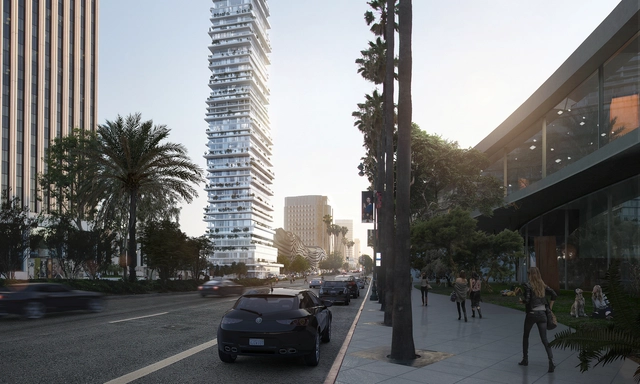
Platform for Architecture + Research (PAR) has reinterpreted the idea of "courtyard housing" with a 930-foot-tall "stack of individual houses" envisioned for a site on Los Angeles' Wilshire Boulevard. Named "Wilshire Tower," the conceptual skyscraper is one of many radical proposals being unveiled at the A+D Museum's ongoing “Shelter: Rethinking How We Live in Los Angeles” exhibition that exploring new forms of housing for Los Angeles.

The Broad Museum / Diller Scofidio + Renfro

The Broad Museum / Diller Scofidio + Renfro - Exterior Photography, Museum, Facade, CityscapeThe Broad Museum / Diller Scofidio + Renfro - Exterior Photography, Museum, Facade, CityscapeThe Broad Museum / Diller Scofidio + Renfro - Interior Photography, MuseumThe Broad Museum / Diller Scofidio + Renfro - Interior Photography, Museum, Facade, LightingThe Broad Museum / Diller Scofidio + Renfro - More Images+ 15

Los Angeles, United States

MAD Architects Envision the Future of Housing in Los Angeles

MAD Architects has proposed a futuristic model for housing in Los Angeles, as part of the ongoing “Shelter: Rethinking How We Live in Los Angeles” exhibition at the A+D Museum. Dubbed the "Cloud Corridor," the concept is based on Ma Yansong’s “Shanshui City” philosophy for architecture to "manifest the spiritual essence between people and nature." The vision is the opposite of sprawl, proposing a high-density vertical village made up of nine interconnected residential towers.