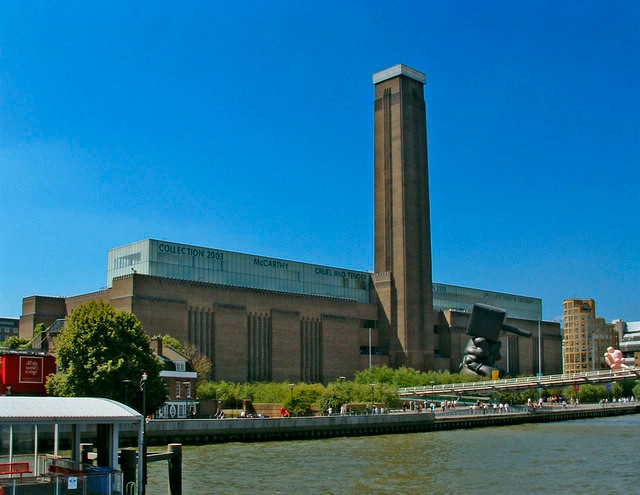
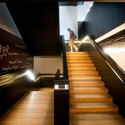
London’s Bankside Power Station stood disused from 1981 until 2000, when it opened to the public as The Tate Modern. Swiss architects Herzog & de Meuron approached the conversion with a relatively light hand, creating a contemporary public space without diminishing the building's historical presence. The impressive cultural icon has since become the most visited museum of modern art in the world, revitalizing its formerly sequestered, industrial neighborhood.
“Architecture is too complex to be solved by any one person.”
Richard Rogers is an architect who understands the significance of collaboration. As a man with an intense social mind and a thirst for fairness in architectural and urban design, Rogers’ substantial portfolio of completed and proposed buildings is driven by the Athenian citizen’s oath of “I shall leave this city not less but more beautiful than I found it.”
In honor of his success, London’s Royal Academy (RA) is currently playing host to a vast retrospective of Richard Rogers’ work, from his collaborations with Norman Foster and Renzo Piano, to the large-scale projects that define Rogers Stirk Harbour + Partners (RSHP) today. The RA’s extensive exhibition has been condensed into a series of motifs that have defined his architectural work, punctuated by memorabilia which offer personal insights into how Rogers’ career has been shaped by the people he’s worked with and the projects that he has worked on.
Continue after the break for a selection of highlights from the exhibition.
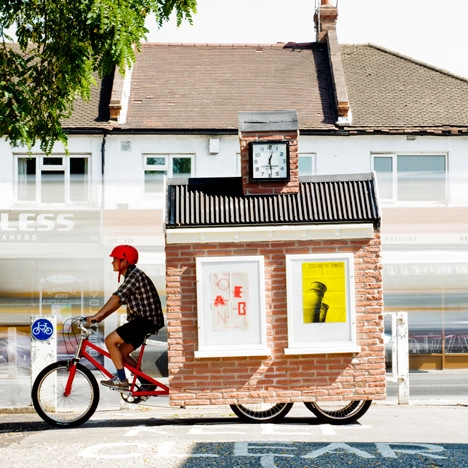
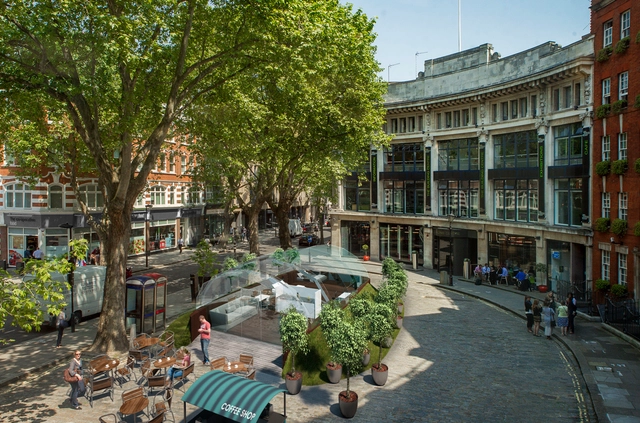
A Mobile town square designed for Cricklewood, by Studio Harto and Studio Kieren Jones. Image Courtesy of http://cricklewoodtownsquare.com/
Cricklewood, a North London suburb devoid of public space, is finding a new lease of life through a series of pop-up interventions - including a mobile town square designed by Studio Hato and Studio Kieren Jones - put together by civic design agency Spacemakers. While the project might have a bit further to go before any benefits are truly felt by the local residents, the project is part of a wider scheme financed by the Mayor’s Outer London Fund which will hopefully lead to the rejuvenation of more of the capital's suburbs. Read Liam O'Brien's full article in The Independenthere.
A large scale architectural installation, informative exhibition and free two day conference will take place at The Building Centre WC1 during the 2013 London Design Festival to launch a four year study into the effects of natural light.
A typical new home in the UK has an average of only 12% of the walls glazed. Natural light in the home and workplace can reduce energy costs and improve health and wellbeing, so why do we have so little natural light in our buildings?
The Photon Project is a major four-year scientific study to investigate the impact of natural light on biology and wellbeing. To launch the project a prototype fully-glazed ‘Photon Pod’ will be built in Central London, complete with seating and landscaping. The installation and exhibition will be in place during the London Design Festival (14 – 22 September). During this week the public are invited to experience ‘life under glass’ and take part in simple scientific tests, designed specifically for the event by Harvard University to test the effects of daylight on the human body.
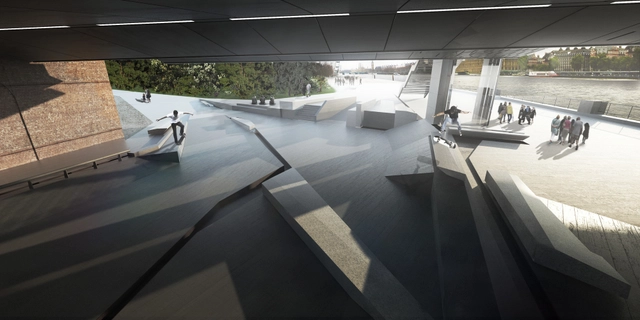
The original plans proposed converting the space under Hungerford Bridge, used by skateboarders for years, into a new riverside area for urban arts. In response to skateboarders' outcry, Southbank Centre has decided to alter the design of the space so that skateboarders' needs will be taken into account. The Centre commissioned Iain Borden, skater and Professor of Architecture and Urban Culture at the Bartlett School of Architecture, UCL, and Rich Holland, skater and architectural designer at Floda31 to prepare a draft design brief earlier this summer; now, three architectural practices with skate-space experience have responded to the brief with three potential designs.·
An expert panel of skaters, including Borden, Holland, and film-maker Winstan Whitter, will then be responsible for "selecting the architect they’d most like to work with, finalising the design brief and developing the design."
Videos
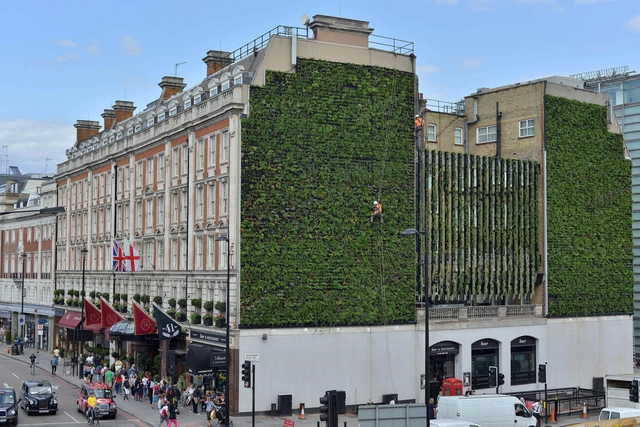
Courtesy of Green Roof Consultancy and Treebox
The Rubens at the Palace Hotel in Victoria, London, has unveiled the city's largest "living wall" - a vertical landscape, composed of 16 tons of soil and 10,000 plants, designed to reduce urban flooding. Taking two months to construct and covering a 350 square foot area, the 21 meter high wall will beautify the cityscape year round with seasonal flowers such as strawberries, butter cups and winter geraniums.
Because of the lack of absorbent surfaces in the Victoria area of London, the Victoria Business Improvement District (BID) decided to step in with the design of this incredible wall that combats urban flooding with special water storage tanks. Designed by Gary Grant of Green Roof Consultancy, these tanks can store up to 10,000 liters of water that are then channeled back through the wall to nourish the plants. Not only will the wall do a great job of keeping the surrounding streets flood-free, it boosts the area's green appeal and attracts wildlife into the dense urban environment.
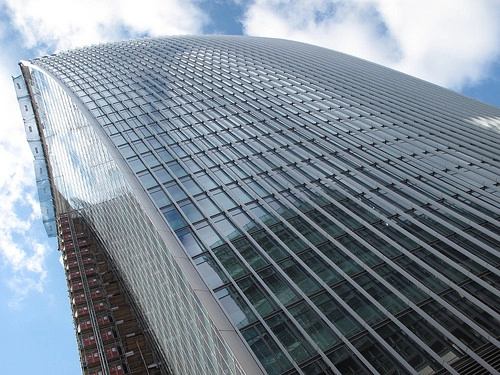
The big story today is about a new development in London's financial district dubbed The Walkie Talkie due to its unusual shape.
The combination of its shape (which is curved), its placement, and its height has apparently created a tremendously intense reflection and beam of light that creates extraordinary heat on a nearby block, and one Jaguar owner says his car literally suffered melting damage from having been parked in that spot.
https://www.archdaily.com/423560/reflection-from-the-walkie-talkie-making-cars-meltJoe Weisenthal, Business Insider
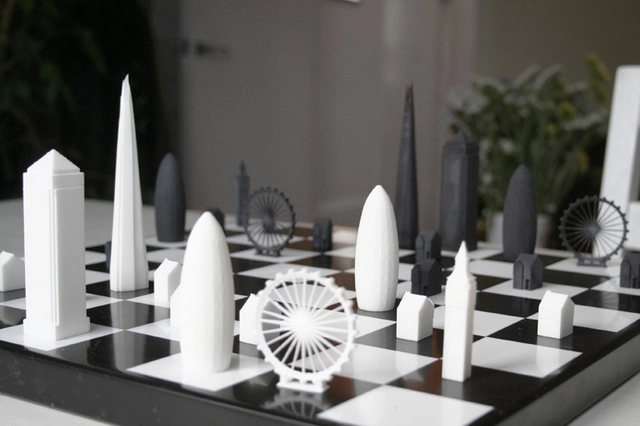
Imagine your city skyline as a chessboard battleground; which landmark would declare itself as the almighty king and who serve as its faithful pawn? Well, according to British designers Ian Flood and Chris Prosser, London’s Canary Wharf, Renzo Piano’s Shard and Norman Foster’s Gherkin would all deserve high ranks while the ubiquitous London terraced house fulfilled the role of the pawn.
After replacing their own standard chess set with 3D-printed models of their city’s landmarks, Flood and Prosser have established the Kickstarter campaign “Skyline Chess” with the hopes of expanding their idea beyond London’s skyline. If the campaign is successful, architectural enthusiasts worldwide will have the opportunity to select any of the world’s most iconic cities (Shanghai vs. Paris?) for an ultimate duel of chess.
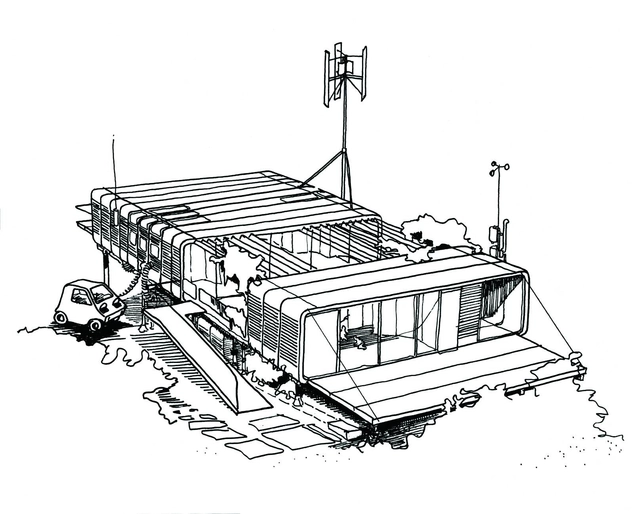
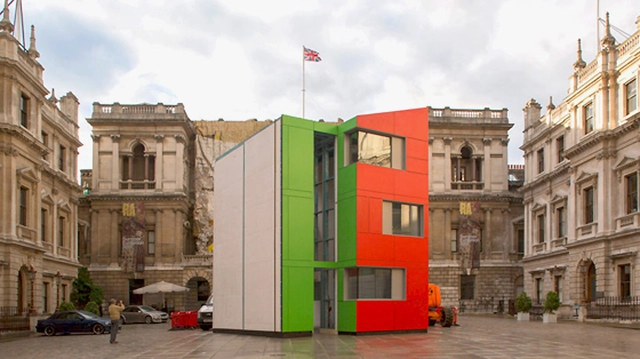
Rogers Stirk Harbour + Partners (RSHP) have unveiled a three story flat-pack house in the courtyard of London’s Royal Academy of Arts (RA). Designed as an answer to the UK’s urgent need for cost-effective housing, the prototype demonstrates a method of building "high-quality, well-designed houses significantly cheaper than other traditional methods of construction."
RSHP, known for their large-scale projects, envisage Homeshell as part of a wider platform which could encompass apartments, schools, factories and healthcare centers.
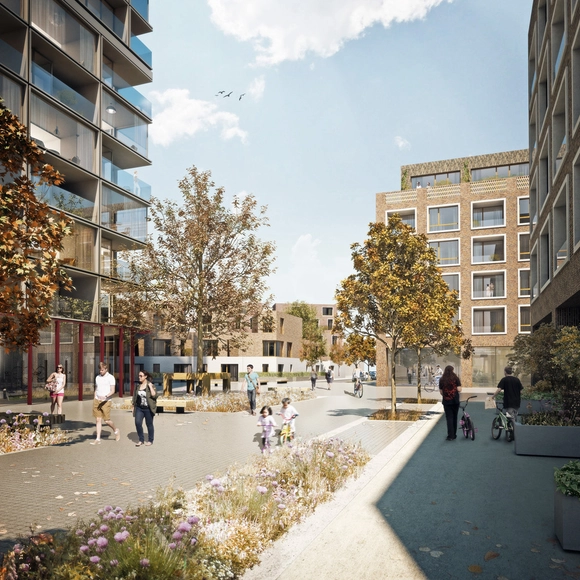
Hawkins\Brown, with Mae Architects and Grant Associates, have been appointed by London Borough of Camden to develop proposals in collaboration with residents for the potential redevelopment of the Agar Grove Estate, a major housing regeneration project for London with an estimated construction value of £55 million. The current proposal being developed includes the demolition of 112 homes and the provision of around 360 new homes, bringing the total number of homes to around 500. A range of unit types has been introduced including family terrace housing and maisonettes with gardens, as well as lateral flats with balconies. More images and architects' description after the break.
Concept image of environment by Li Xiaodong, commissioned by the Royal Academy of Arts, London, detail.Li Xiaodong
The Royal Academy of Arts’ (RA) in London will soon be transformed into a multi-sensory “architectural maze” with the construction of seven installations by seven world-famous architects for the exhibit, Sensing Space: Architecture Reimagined. Participants, handpicked by curators Kate Goodwin and Drue Heinz, include Alvaro Siza, Eduardo Souto de Moura, Pezo von Ellrichshausen and Kengo Kuma.
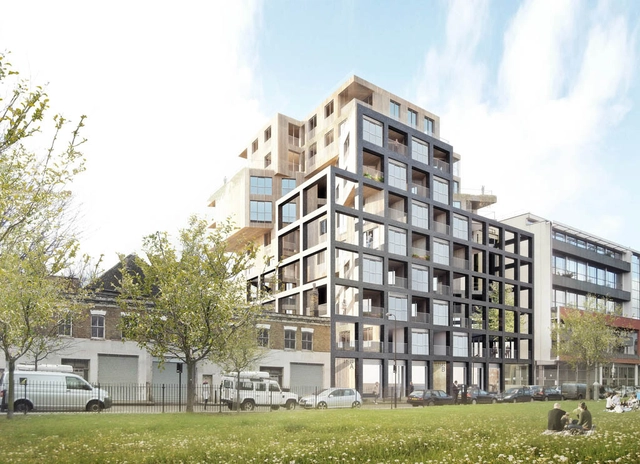
Award-winning architectural practice Hawkins\Brown Architects, with Regal Homes, have just received planning permission from the London Borough of Hackney for their design of a new 6,750 sqm mixed-use development located on Wenlock Road. Situated within the Regents Canal Conservation Area, their proposal has a unique cruciform plan which not only gives the development a unique residential experience, but results in a dynamic form when seen from the Regent's Canal. More images and architects' description after the break.
The Architecture Foundation, in collaboration with Rogers Stirk Harbour + Partners and the Royal Academy of Arts, has shortlisted five multidisciplinary, architect-led teams to envision future development along the Tidal Thames in London. The competition, dubbed London As It Could Be Now: New Visions for the Thames, will challenged the teams to put forward new ideas for self-selected sites along the river that are relevant to changing social, economic, cultural and environmental conditions and concerns.
The 2010 launch of the “Boris Bike” - London’s cycle hire scheme, named after mayor Boris Johnson – was the clearest indication to date that cycling was no longer just for a minority of fanatics but a healthy, efficient and sustainable mode of transport that city planners wanted in their armoury. There are now more than 8,000 Boris Bikes and 550+ docking stations in Central London. And the trend’s not anomalous to London: Wikipedia reports that there are 535 cycle-share schemes in 49 countries, employing more than half a million bikes worldwide.
However, the real question is: will cycling actually change the city? Will it result in new urban forms or, as the title of Australian academic Dr Steven Fleming’s new book predicts, a “Cycle Space”? Like Fleming, I believe so. I believe that cycling might just be the catalyst for a 21st Century urban renaissance.