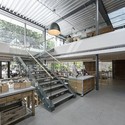
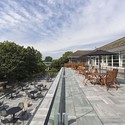
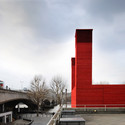
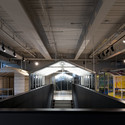
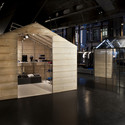
The Shed, a 225-seat auditorium designed by Haworth Tompkins, was completed earlier this year in London. It's made of raw steel and plywood, while the rough sawn timber cladding refers to the National Theatre’s iconic board-marked concrete. You can see more photos of photographer Philip Vile after the break.
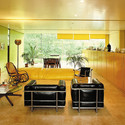
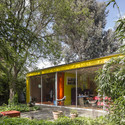
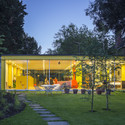
The Rogers House, designed by Richard and Su Rogers in 1968, is one of the lesser known architectural works from the master who went on to design the Centre Pompidou in Paris with Renzo Piano. The house, which represented British Architecture at the 1967 Paris Biennale, was commissioned by Rogers' parents and was granted Grade II* Listing in February 2013 - a rare accolade for a building so recent - cementing its importance in the architectural heritage of the United Kingdom.
Described by Rogers as "the most successful small project I've been involved in", the house carefully balances the openness of shear glass facades with the need to provide his parents with privacy and seclusion - a task made harder by the building's location, just a short walk from Wimbledon Village in central London. Incorporated within the design is a separate flat and pottery studio which were positioned to provide a sound barrier between the house of the adjacent road. It is, essentially, "a transparent tube with solid boundary walls".
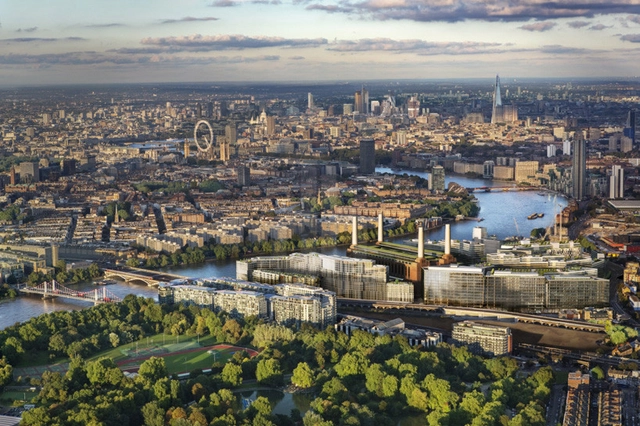
Courtesy of Battersea Power Station Development Company
Gehry Partners and Foster + Partners have been selected to design phase three of the Battersea Power Station redevelopment project in London. Together, the prestigious duo will design a retail pedestrian street that will link the power station to the new Northern Line extension. In addition to this, each practice will design a residential building along the avenue, which will be Gehry’s first residential project in London.
“Our goal is to help create a neighborhood and a place for people to live that respects the iconic Battersea Power Station while connecting it into the broader fabric of the city,” Gehry stated. “We hope to create a design that is uniquely London, that respects and celebrates the historical vernacular of the city.”
Manufacturers: Altro Supergrif, Armourcoat, B&K Structures, DR International Climbing Walls, Eskape, +7Jakob USA, Novum Structures, Parthos, Polyflor, Rockwell Group, Smart Systems, Taskmaster-7
Videos
Battle Bridge Place. Image Courtesy of Gridiron / King's Cross Central Limited Partnership
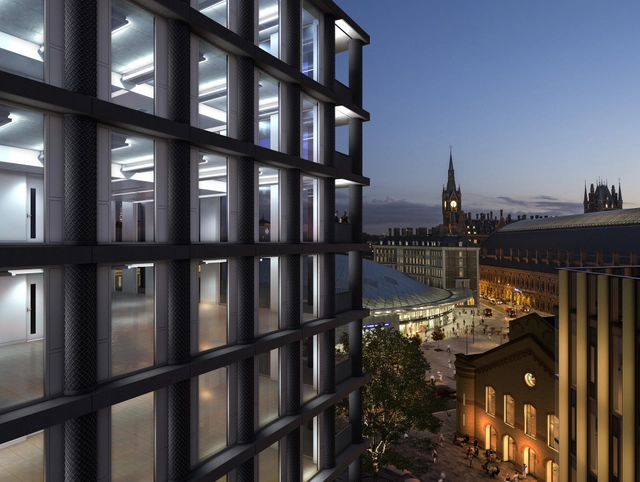
London's King's Cross has seen a surge of redevelopment in recent years, the most iconic of which - John McAslan + Partner's new concourse for King's Cross Station - was completed last year. The area has also been defined by the new Central Saint Martin's campus, designed by Stirling Prize winner Stanton Williams, and Google's new London headquarters. Plans have now been unveiled for Gridiron (One St. Pancras Square), a 50,000 square foot office building nestled between St. Pancras International and King's Cross Stations, designed by David Chipperfield Architects and set for completion in the first half of 2014.
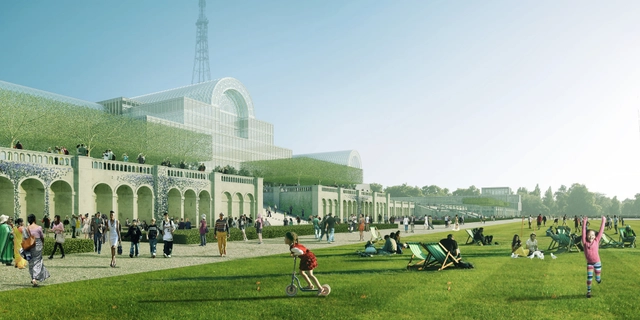
Mayor of London, Boris Johnson said: "Paxton's stunning Crystal Palace was a beacon of innovation in the 19th century, encapsulating a spirit of invention which was to shape London and the world for generations to come. Since the iconic building was destroyed, the conundrum of what to do with the crumbling site has not been successfully resolved.” Until now.
Check out renderings and more information, after the break…
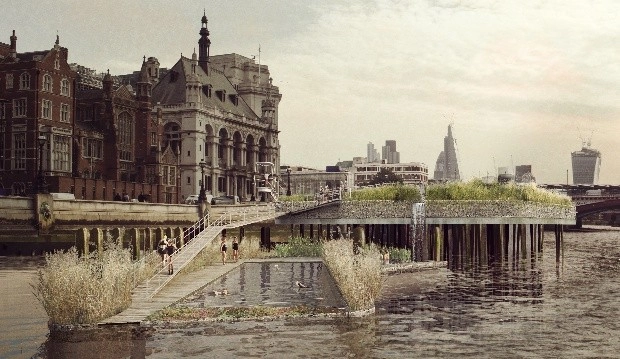
Five proposals for reconnecting Londoners with the River Thames have gone on display at London's Royal Academy of Arts (RA). The competition, organised by the Architecture Foundation, "launched an open call for multidisciplinary design teams to put forward new ideas and visions for self-selected sites along the Tidal Thames" earlier this year. The five selected teams were shortlisted earlier this year and recently discussed their designs at a public design workshop. The schemes are now being exhibited as part of the Richard Rogers RA: Inside Outexhibition.
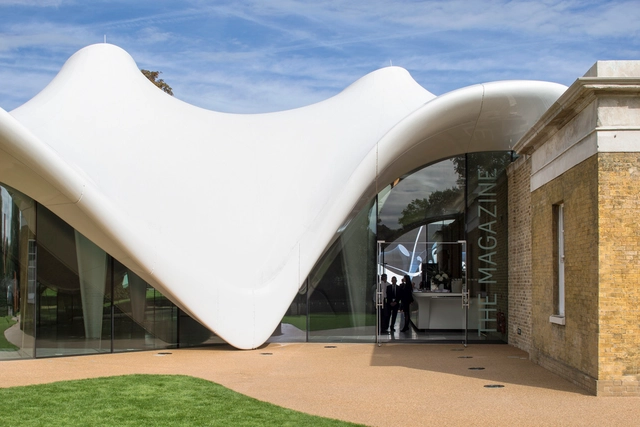
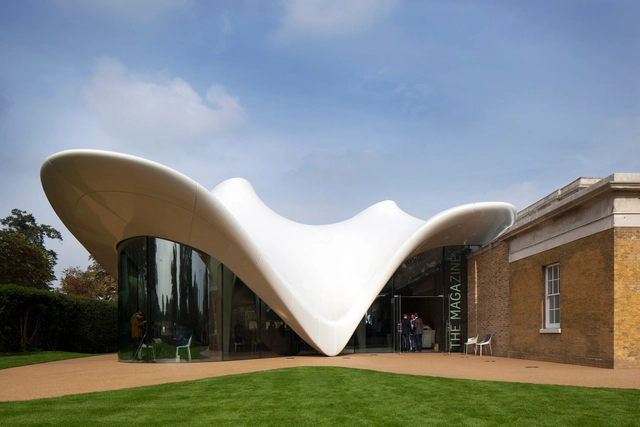
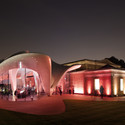
A couple of days ago we featured Zaha Hadid's Serpentine Sackler Gallery, her recent conversion of a classical 19th century brick structure. Today, photographer Danica Kus shared with us some more photos on this project. Enjoy them all after the break.
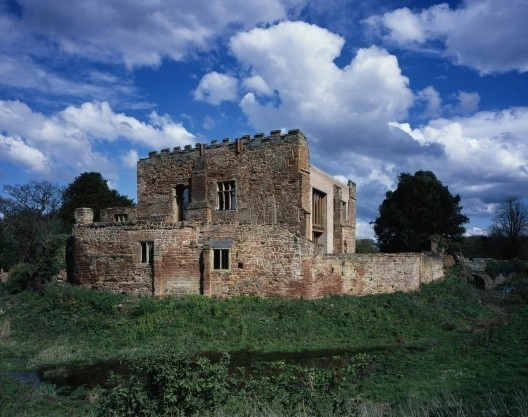
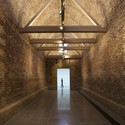
Following the news that the 2013 RIBA Stirling Prize was been won by Witherford Watson Mann for Astley Castle at a ceremony in London last week, the critical response to the project has been extremely positive. Joseph Rykwert (who recently won the RIBA Gold Medal) said that "Witherford Watson Mann have been gentle surgeons, saving the essential, eliminating the incidental". Check out the critical responses from The Financial Times' Edwin Heathcote, The Guardian's Oliver Wainwright, Building Design's Ellis Woodman, and the Architects' Journal's Rory Olcayto after the break...
The 2013 RIBA Stirling Prize has been won by Witherford Watson Mann for Astley Castle (Nuneaton, Warwickshire). The winner was just announced at a ceremony at London's Central Saint Martins, a building designed by last year's winner Stanton Williams. Astley Castle was also voted as BBC readers' favourite earlier this week. Jury-member Stephen Hodder stated that "engaging with the building was such a surprise for [the jury]," and described it as an "unassuming" building with great "rigour."









.jpg?1381466807&format=webp&width=640&height=580)
.jpg?1381466864 "© Ioana Marinescu")
.jpg?1381466858 "© Ioana Marinescu")
.jpg?1381466912 "© Jakob Spriestersbach")
.jpg?1381466834 "© Ioana Marinescu")
.jpg?1381466807)












_Landmark_Trust.jpg?1380664454)