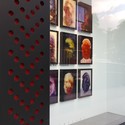
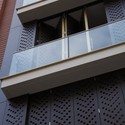
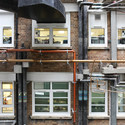
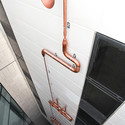
Museum of London Exterior, Courtesy The Museum of London
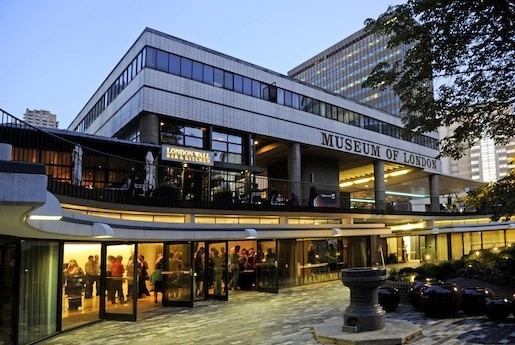
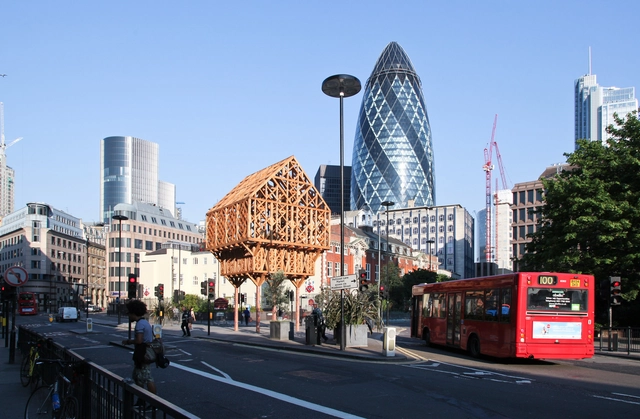
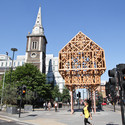
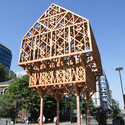
The Architecture Foundation is delighted to be working with the Museum of London to commission a design team to develop a temporary structure that will help facilitate participatory discussion about future development plans for the Museum of London and the wider cultural hub in this part of London. The structure, which will be located outside the Museum of London’s main entrance, should be able to accommodate individuals and small groups at any one time and allow them to feedback on proposed visions for the Museum and its future. It is envisaged that the structure should also help attract visitors to the Museum and make use of its exterior forecourt spaces.
A striking 3D printed installation will showcase a selection of four projects and prototypes from the studio’s cutting-edge research on sustainable, nature-inspired design, including two new, previously unpublished designs. Study models, sketches and specially commissioned short films introducing Exploration’s projects will be presented alongside a myriad of natural specimens that inspired the designs – offering unique insight into the studio’s practice of learning from nature in order to deliver future-facing solutions for architecture, systems design and materials production that address the major challenges of our age.
Sellar Property Group has announced plans to commission yet another Renzo Piano-designed tower in London at the base of The Shard. Replacing the current Fielden House, a 1970s office building located on London Bridge Street, the new 27-story residential tower plans to provide 150 apartments, retail space and roof garden. As part of the area’s regeneration plan, the project will be the third Piano-designed building on the block.
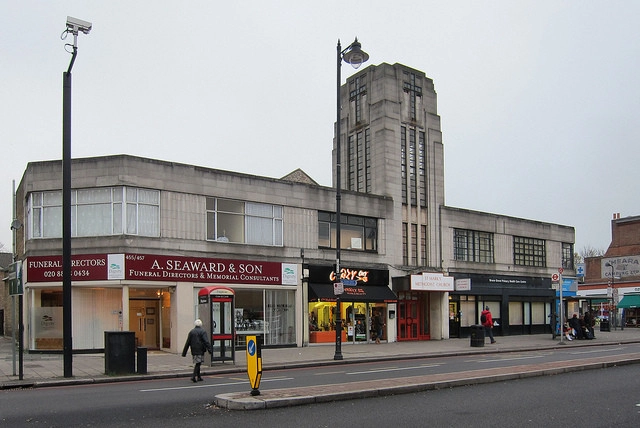
John McAslan + Partners, already known for their involvement in humanitarian issues thanks to their work in Haiti, are now turning their attention to Tottenham in London, as reported by The Guardian. The practice hopes that by opening a new office on the high street of Tottenham, the area notorious as the crucible of the riots that spread across the UK in August 2011, and by engaging with the community, they can help to make a change. Read the full story here.
Foster + Partners has unveiled a scheme that aims to transform London’s railways into cycling freeways. The seemingly plausible proposal, which was designed with the help of landscape firm Exterior Architectureand transportation consultant Space Syntax, would connect more than six million residents to an elevated network of car-free bicycle paths built above London’s existing railway lines if approved.
"SkyCycle is a lateral approach to finding space in a congested city," said Norman Foster, who is both a regular cyclist and the president of Britain's National Byway Trust. "By using the corridors above the suburban railways, we could create a world-class network of safe, car free cycle routes that are ideally located for commuters."
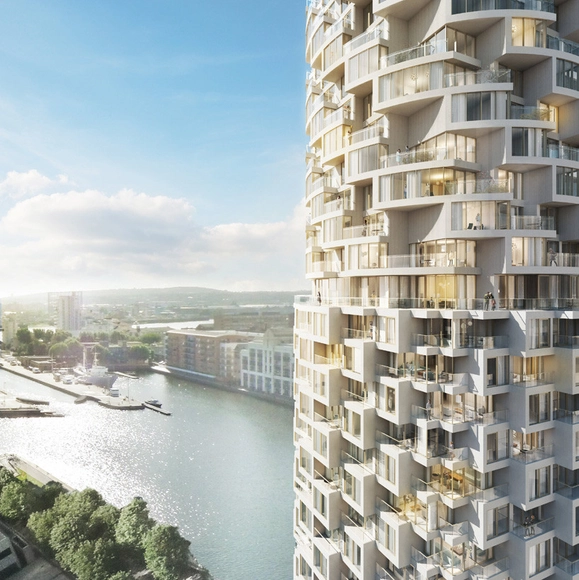
ArchDaily recently spoke to Ben van Berkel, co-founder and principal architect at UNStudio, an international network of specialists in architecture, urban development and infrastructure based in the Netherlands. The office, which was founded in 1988, has completed projects around the world ranging from Rotterdam’s Erasmus Bridge to the Mercedes-Benz Museum in Stuttgart. With over 81 built projects, and 54 currently in progress (including Raffles City in Hangzhou and Scotts Tower in Singapore), London’s Canaletto Tower (which is due to be completed in 2015) marks the practice’s first major project in the UK.
Mies. UK recently spoke to Roger Stephenson OBE, Managing Partner at Manchester based stephenson:ISA Studio, about his award winning practice's approach to "using craft in a contemporary way". The office most recently completed an addition to Chetham's School of Music, winning the 2013 RIBA Regional Building of the Year Award, RIBA National Award, and the RIBA Regional Award. This project is the latest in a long list of innovative buildings that are part of a "rigorously coherent, contextually progressive architecture" that has made the practice one of best known regionalist design offices in the UK.
Read the interview in full, and watch a three minute tour of Chetham's School of Music, after the break.
The London Cinema Challenge, organized by Combo Competitions, challenged participants to design a new cinema located on Newman Street in central London which should "reflect the participants’ ideas of the cinematic experience in the near future." The scope of the proposal, along with the extravagance of the idea, was decided by the individual competitors with the only criterion being that the design provided a space to watch movies. In addition to the cinema, each proposal had to include a "unique feature helping to serve the main purpose" of the building. Whether "an intimate screening room for indie films, or a commercial multi-storey cinema complex showing blockbusters," the winning proposals demonstrate an array of unique ideas.
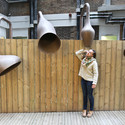
Text description provided by the architects. The Lullaby Factory is an intervention by Studio Weave which makes the best of a bad situation: a recently designed building at Great Ormond Street Childrens' Hospital, the Morgan Stanley Clinical Building, was designed to look onto an open space - a view which, thanks to the hospital's phasing of developments, will be obstructed by the Southwood Building for another 15 years.
In the intervening time, something had to be done about the view onto the narrow alleyway and industrial facade of the Southwood Building. Studio Weave re-imagined the building, covered in pipework, as a fantastical factory, manufacturing lullabies for the children staying in the hospital.
Read on after the break for more on Studio Weave's clever intervention...
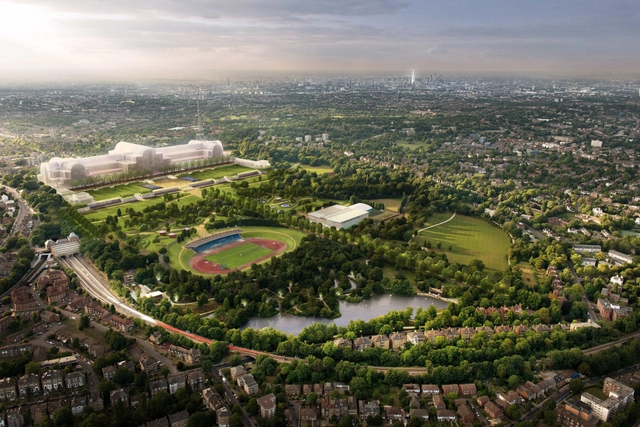
Architects have been invited to submit expressions of interest in designing The Crystal Palace as a new cultural destination for London in the spirit, scale and magnificence of the original. Plans to invest £500 million in rebuilding The Crystal Palace and restoring the surrounding public park were announced in October by ZhongRong Group, with the support of the Mayor of London and the Bromley Council.
The new culture-led exhibition and employment space will sit at the top of the 180-acre Crystal Palace Park in south London. It will incorporate the listed Italian style terraces, and other Victorian heritage within the park, fully restored for the public. The project is expected to create more than 2000 permanent and temporary jobs as well as attracting wider investment into the local high streets and the wider economy.
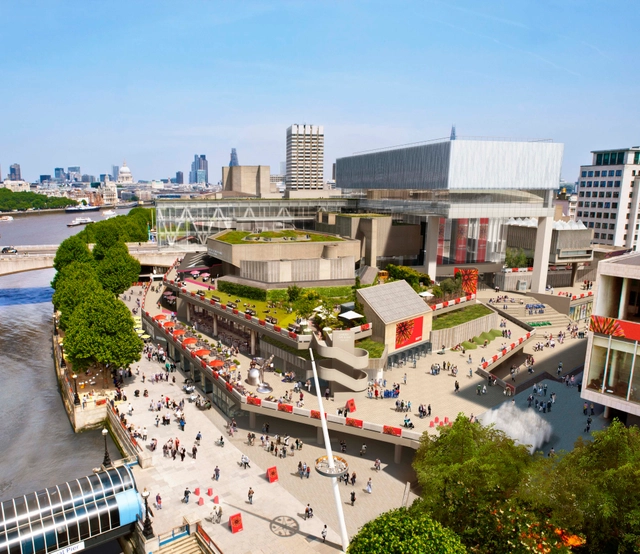
Earlier this month, Feilden Clegg Bradley Studios released new images of the Southbank Centre, the most detailed renderings yet of the highly controversial redevelopment. Among the most significant alterations are a change to the exterior of the crowning glass box, a slight reduction in the size of the "liner" building (to preserve views of the Houses of Parliament from the neighboring National Theatre), and adjustments to various columns to preserve routes through the site.
Read on to find out more about the changes to the design..
Herzog & de Meuron's Residential Tower. Image Courtesy of Canary Wharf Group plc
London firm Allies and Morrison has submitted planning applications for a 9.23 hectare, mixed-use development east of London’s Canary Wharf. Dubbed “Wood Wharf,” the new neighborhood will include upwards of 3,000 homes, 240,000-square-meters of commercial office space, 100 retail outlets, hospitality and more - all interconnected by a 3.6 hectare network of public space.
A 56-story, cylindrical skyscraper designed by Herzog & de Meuron will be one of three residential buildings planned for the scheme’s first phase, designed in collaboration with Stanton Williams. Allies and Morrison, who provided the revised masterplan for Canary Wharf Group, will design the first two office blocks targeted at technology-based companies.
The Royal Institute of British Architects (RIBA) has announced the President’s Medals Student Awards at a special event in London. The awards, known to be the world's most prestigious awards in architectural education, were inaugurated in 1836 and are therefore the institutes oldest award (even older than the RIBA Gold Medal). Three medals - the Bronze for a Part I student, the Silver for a Part II student, and the Dissertation Medal - are awarded to "promote excellence in the study of architecture [and] to reward talent and to encourage architectural debate worldwide."
Around 300 schools of architecture from over 60 countries were invited to nominate design projects and dissertations by their students, of which students of the Bartlett School of Architecture at University College London won all of this year's primary awards.