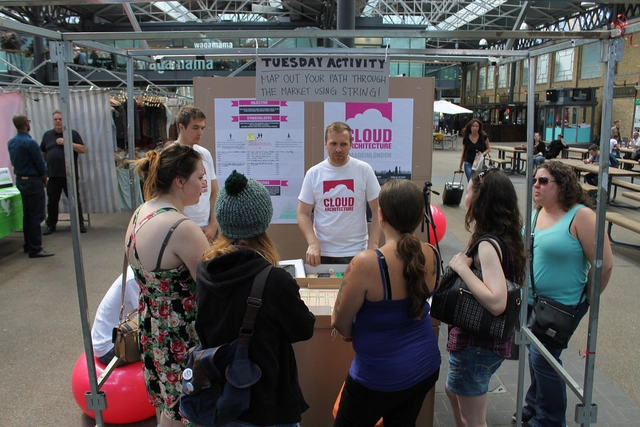
As part of the London Festival of Architecture, Cloud Architecture is conducting a participation-based research and design project from a pop up studio in Old Spitalfields Market in central London. Running until June 20th, the project aims to engage visitors to the market with the ideas and process of architectural design studios, which members of the public rarely get to experience first-hand.
At the same time, visitors to the studio will be encouraged to take part in a project to redesign the Old Spitalfields Market, based on data collected on site and the participatory input and opinions of those who use it.
Read on after the break for more on the studio and some of the results from the first week of research
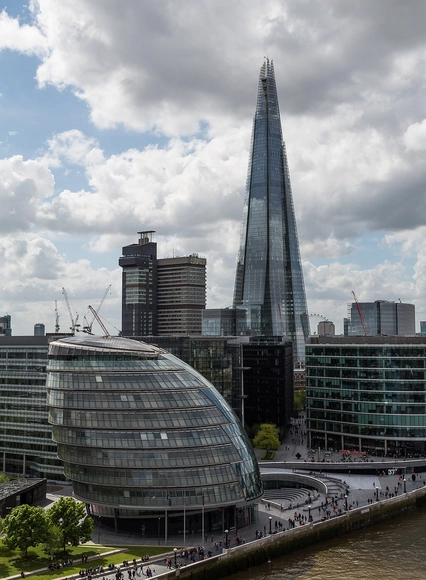
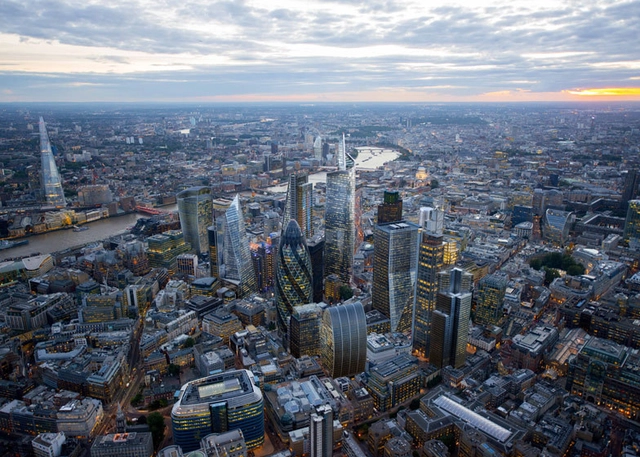
The debate over the future of London's Skyline stepped up a gear on Tuesday, as the issue was taken up by the London Assembly's Planning Committee in City Hall. The London Assembly is an elected watchdog which is tasked with examining the decisions and actions of London's mayor, and is expected to apply pressure to mayor Boris Johnson over the issue of skyscrapers in the capital.
The committee heard from leading architectural figures in London including former RIBA president Sunand Prasad (of Penoyre & Prasad), English Heritage planning and conservation director for London Nigel Barker and former City planning officer Peter Rees.
More on the London Assembly debate after the break
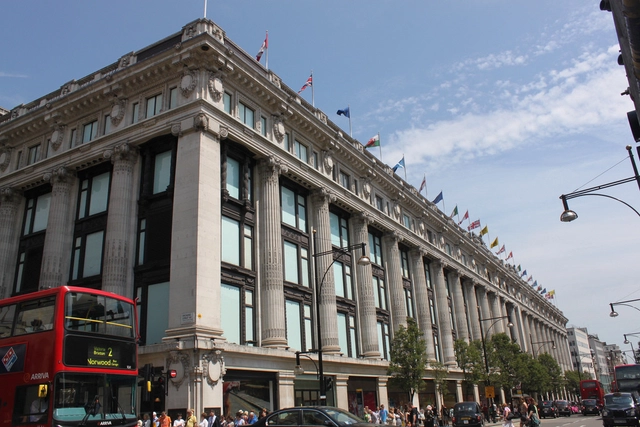
David Chipperfield has been selected by Selfridges to remodel their flagship London store, creating a new 4,600 square metre accessories department and creating a new entrance to the Eastern side of the building. The additions by Chipperfield are part of the store's larger 5-year, £300 million project which also includes work by Gensler to better connect the original 1909 building by Daniel Burnham with the later addition behind.
Chipperfield's addition will aim to improve the store's presence on Duke Street, which will act as a secondary entrance to the building's primary public face on Oxford Street, with the new accessories department planned to open in 2016.
Courtesy of The Canary Wharf and Qatari Diar Groups
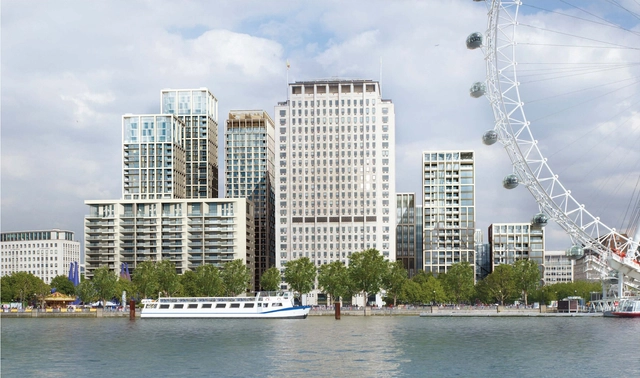
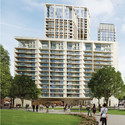
The £1.2 billion Shell Centre development in London, masterplanned by Squire & Partners, has been awarded planning permission after being called in for review by Communities Secretary Eric Pickles. Featuring 8 towers of up to 37 storeys which will sit alongside the existing 27-storey Shell Tower, the scheme was granted permission by the local council last year but was called in for review over fears that it could threaten the UNESCO Heritage status of the area around Westminster.
However, despite being awarded planning once again, opponents of the scheme have said they will continue to fight it, and have threatened to mount a judicial review of the scheme.
Read on after the break for more on the controversy
The scheme will focus on three London Boroughs: Kingston, Enfield and Waltham Forest, each of which were awarded "mini-Holland" status - a reference to the cycling haven of the Netherlands which these areas of London will be modeled on. Each borough will nominate their own principal designers, but the three appointed architects, who all sit on the Mayor's design advisory panel, will be acting as consultant and client for a different borough.
Read on after the break for a rundown of the proposed changes
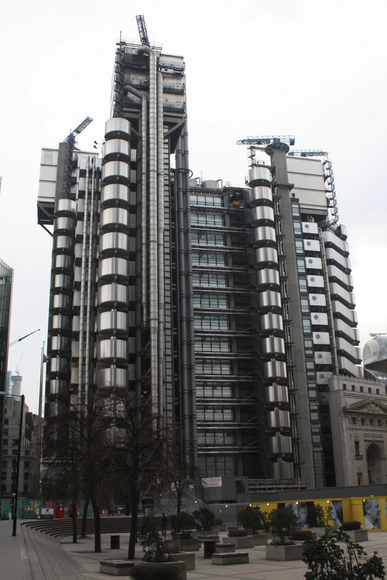
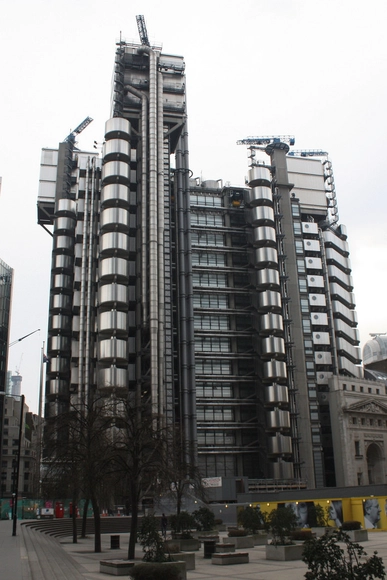
Following the news that Lloyd's of London is planning to leave it's Grade-I listed headquarters designed by Richard Rogers, Edwin Heathcote has written an interesting article asking whether the Lloyd's Building - along with some other more spectacular failures of 'iconic' commercial architecture - can teach us anything about how we ought to design buildings. He argues that while high-profile design serves developers well, tenants seem to prefer bland yet functional corporate buildings, leading Heathcote to ask: shouldn't we be seeking something in between? You can read the article in full here.
Chilean-German architecture practice GUN Architects' latest installation, accompanied by an exhibition in the AA gallery, brings the micro-climate of Chile to the UK. Using tree-like structures and pyramidal fabric ‘stalactites,’ the architects create a unique ecology that is at once natural and material. The architects' description of the installation, after the break...
Insurance firm Lloyd's of London has indicated that it plans to leave its famous Richard Rogers-designed headquarters, which it has occupied since construction ended in 1986. Lloyd's has recently been involved in talks with Henderson, the developer of Make Architects' Gotham City project which earlier this year gained planning permission for a site adjacent to their current headquarters.
More on the building's uncertain future after the break
With the London Festival of Architecture opening yesterday, this article in the London Evening Standard highlights just one of the many threads which make up this year's theme: the importance of foreign talent in making up London's cosmopolitan architectural culture. From Adam Caruso to Zaha Hadid, many of the city's biggest names have come from abroad to study and work in the UK, helping to make it one of the greatest centres for design in the world - but all this could be at risk from untenable housing prices and draconian new visa restrictions. You can read the full article here.
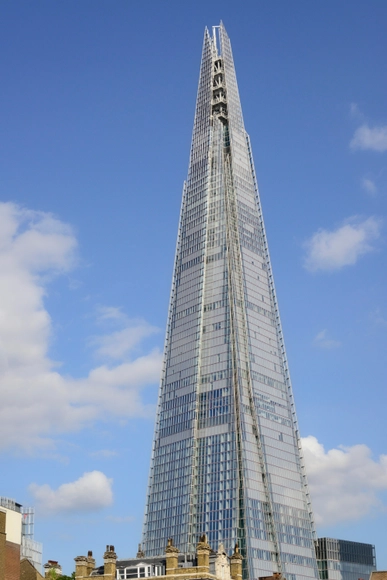
This interesting article by Oliver Wainwright at the Guardian reveals the trend in recent London architecture for "Shardettes" - smaller and usually cheaper imitations of Renzo Piano's famous design which Wainwright says "has become a beacon for designers bereft of inspiration." Highlighting four angular, glazed buildings that are either recently or partially constructed, he questions the quality of these miniature imitations and asks "is this Shardenfreude frenzy something to be welcomed?" You can read the full article here.
With no casualties, last week's fire at the Glasgow School of Art, which caused significant damage to parts of the building and gutted Charles Rennie Mackintosh's canonical library room, will be remembered as a tragic event that robbed us of one of the best examples of Art Nouveau of its time. The intention of the Glasgow School of Art is to restore the building in the hope that in generations to come, the fire will be all but forgotten, a strategy which has been largely well received by the profession.
However, in the case of other fires things have not gone so smoothly: for millennia, fire has played a big role in determining the course of architectural history - by destroying precious artifacts, but often also by allowing something new to rise from the ashes. Read on after the break as we count down the top 10 fires that changed the course of architectural history.
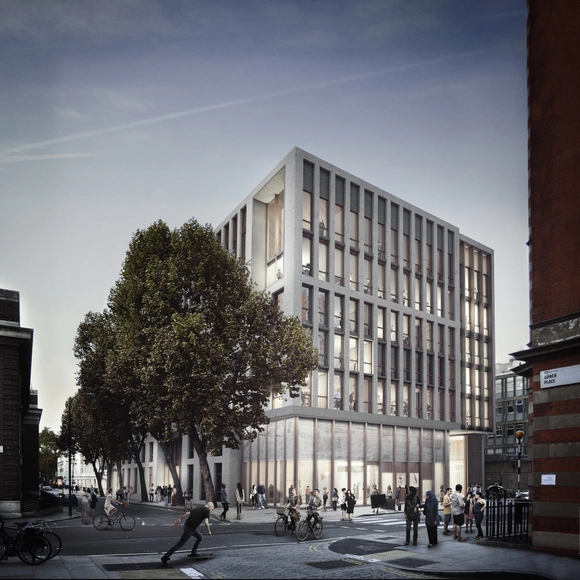
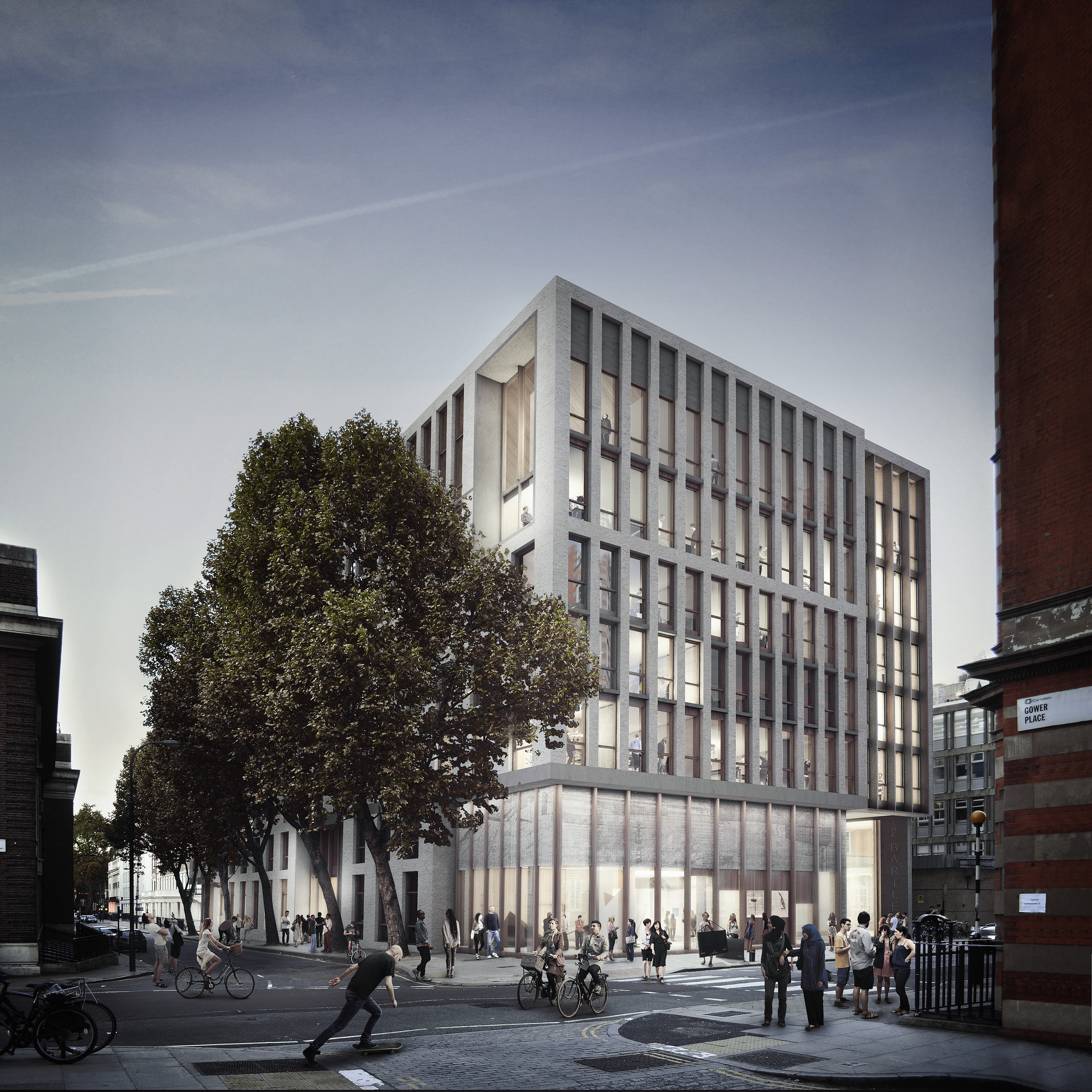
Hawkins\Brown have revealed plans for a £30 million revamp of Wates House in London, home to the Bartlett School of Architecture. The alterations will retain the structure of the 1970s building, opening up the facade to reveal the building's internal activities to the street, as well as adding a new entrance and converting some of the ground floor into an exhibition space. The project strikes a balance between the requirements of working within one of London's conservation areas, and retrofitting an outdated 1970s building to meet the needs of a constantly changing program.
Read on after the break for more project images and info
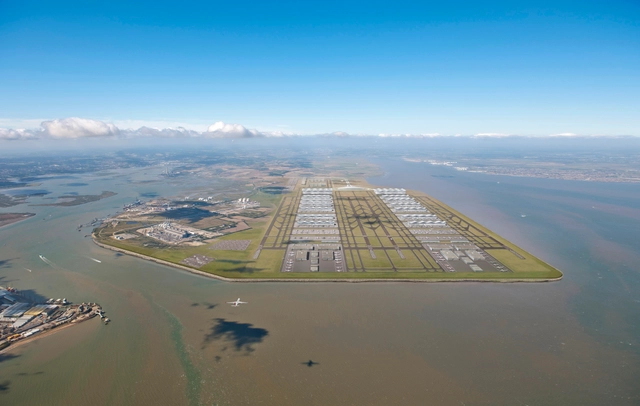
In response to the UK Airports Commission's call for evidence, Foster + Partners has released a detailed feasibility study supporting their plans for a new airport on the Isle of Grain in the Thames Estuary. Their plan proposes a four-runway airport built on a 35 square kilometre platform constructed partially in the mouth of the Thames. The scheme is popularly called "Boris Island" thanks to its most prominent supporter, Mayor of London Boris Johnson.
Norman Foster said "Since the Airports Commission submission a year ago, the need for increased airport capacity has become even more urgent. It is time to get serious about the issue of airport capacity. Britain needs an effective long-term solution, not the usual short-term fix that is Heathrow’s proposed third runway. London today needs to follow in the footsteps of its nineteenth-century forebears and invest boldly in infrastructure. Only long-term thinking will properly serve the demands of our future generations."
Read on for a breakdown of the information contained in the report
Steven Holl's design for Maggie's Centre St Bart's. Image Courtesy of Steven Holl Architects
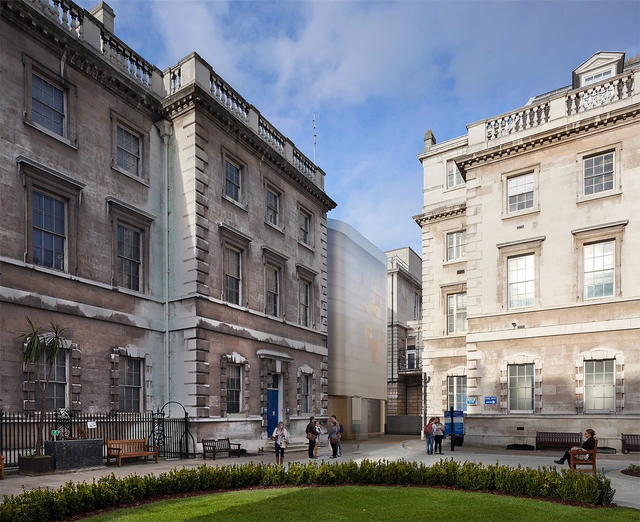
Michael Hopkins has added his thoughts to the row over Steven Holl's plans for the New Maggie's Centre at St Bart's Hospital in London, with a letter to London City Planners saying that the design is in the wrong place and would ruin the setting of the 18th Century Great Hall. Hopkins, whose rival scheme received planning permission last month, says that the construction of the Maggie's Centre represented a "once-in-a-lifetime opportunity" to restore the great hall to its original design which was only met by his plans to build the Maggie's centre in a different part of the St Bart's site.