1. ArchDaily
  2. Lina Bo Bardi

Lina Bo Bardi: The Latest Architecture and News

When Art Came First: Spatial Experiments That Shaped Architecture in Latin America

Subscriber Access | 

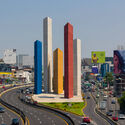
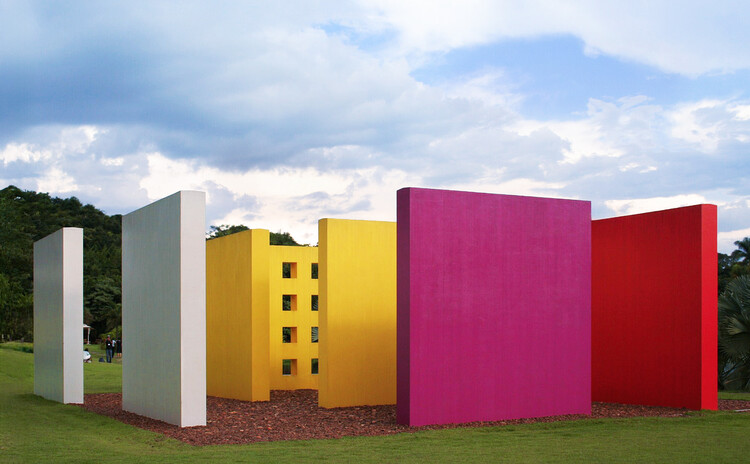
Many of the spatial ideas we now associate with contemporary architecture, collective use, and bodily experience did not originate in buildings alone. In Latin America, these ideas were often explored first through art, at a moment when artists were actively questioning how space could be occupied, shared, and experienced beyond traditional forms.

During the mid-20th century, the region underwent rapid urbanization and profound social change. Architecture was increasingly expected to respond to public life, collectivity, and new ways of inhabiting space. At the same time, art offered a more flexible ground for experimentation, one less constrained by function, regulation, or permanence. As a result, many spatial questions were tested through artistic practices before becoming part of architectural thinking.
When Art Came First: Spatial Experiments That Shaped Architecture in Latin America - Image 1 of 4When Art Came First: Spatial Experiments That Shaped Architecture in Latin America - Image 2 of 4When Art Came First: Spatial Experiments That Shaped Architecture in Latin America - Image 3 of 4When Art Came First: Spatial Experiments That Shaped Architecture in Latin America - Image 4 of 4When Art Came First: Spatial Experiments That Shaped Architecture in Latin America - More Images+ 11

Forum, Depot, Maze: Toward a Plural Ecology of Museums

Subscriber Access | 

This article is part of our new Opinion section, a format for argument-driven essays on critical questions shaping our field.

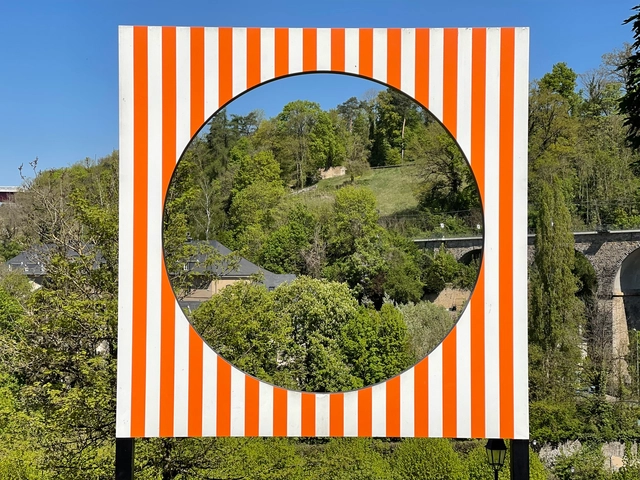
Traditionally, a museum visit is a calendared occasion with a clearly scripted sequence. Arrival is ceremonially marked—by grand stairs or thresholds, by ticketing and information desks, by an audio guide and a concise institutional preface about mission and history. That deliberate "special occasion" quality extends from how museums were long conceived: deliberately exceptional, tightly curated, and organized around a specific narrative arc. In this model, the museum assumes an authoritative voice—its knowledge deep, vetted, and to be respected rather than contested—while architecture and choreography reinforce a rather singular way of entering, learning, and remembering.
Forum, Depot, Maze: Toward a Plural Ecology of Museums - Image 1 of 4Forum, Depot, Maze: Toward a Plural Ecology of Museums - Image 2 of 4Forum, Depot, Maze: Toward a Plural Ecology of Museums - Image 3 of 4Forum, Depot, Maze: Toward a Plural Ecology of Museums - Image 4 of 4Forum, Depot, Maze: Toward a Plural Ecology of Museums - More Images+ 17

Democratizing Access to Culture: The Past, Present, and Future of Cultural Centers

The cultural center is an architectural typology that has fascinated architects and urban planners for decades. Whether due to its multifaceted program, its often emblematic scale, or its potential to transform the urban context in which it is inserted, it is a building type that carries strong symbolic and conceptual value. The wide circulation of international references—many designed by renowned architects—reinforces the aura of prestige associated with this program, frequently seen as a privileged ground for formal and conceptual experimentation. Not by chance, cultural center designs are among the most recurring themes in competitions, exhibitions, and academic studios.

Yet behind this contemporary fascination lies a complex history in which the notion of space dedicated to culture has been redefined over time, gradually taking the form we recognize today. This ongoing evolution invites us to reflect not only on the historical path of these spaces but also on the possibilities that will shape their future.

Democratizing Access to Culture: The Past, Present, and Future of Cultural Centers - Image 1 of 4Democratizing Access to Culture: The Past, Present, and Future of Cultural Centers - Image 2 of 4Democratizing Access to Culture: The Past, Present, and Future of Cultural Centers - Image 3 of 4Democratizing Access to Culture: The Past, Present, and Future of Cultural Centers - Image 4 of 4Democratizing Access to Culture: The Past, Present, and Future of Cultural Centers - More Images+ 8

Serious Play: The Subversive Designs of Lina Bo Bardi and Aldo van Eyck

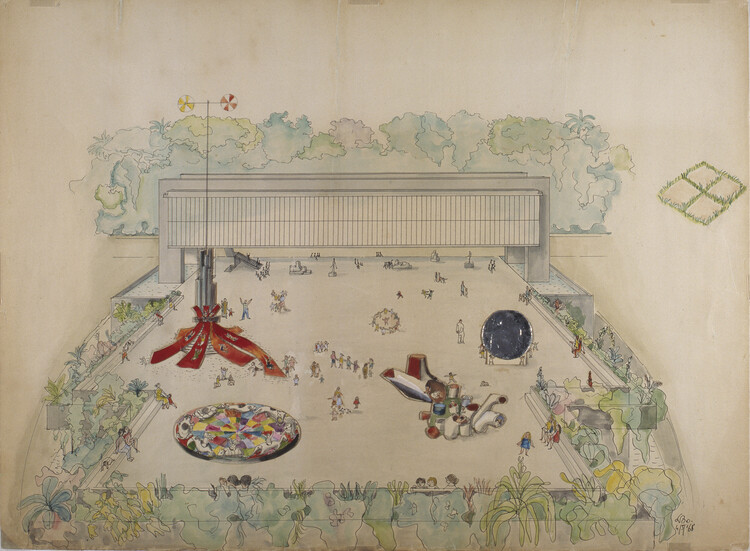
Aldo van Eyck and Lina Bo Bardi were two subversive figures. Their visions of collectivity and playfulness—though applied to very different kinds of structures—shared a common ground: an idea of architecture that goes beyond design. For both, architecture was a living space, animated by appropriation, movement, and exchange. From Dutch playgrounds to thw São Paulo Museum of Art, their ideals intertwined, reinforcing the notion of an architecture where anyone could become a child again.

Serious Play: The Subversive Designs of Lina Bo Bardi and Aldo van Eyck - Image 1 of 4Serious Play: The Subversive Designs of Lina Bo Bardi and Aldo van Eyck - Image 2 of 4Serious Play: The Subversive Designs of Lina Bo Bardi and Aldo van Eyck - Image 3 of 4Serious Play: The Subversive Designs of Lina Bo Bardi and Aldo van Eyck - Image 4 of 4Serious Play: The Subversive Designs of Lina Bo Bardi and Aldo van Eyck - More Images+ 8

Between Fantasy and Reality: Aldo Rossi's Floating Teatro del Mundo for the First Venice Architecture Biennale

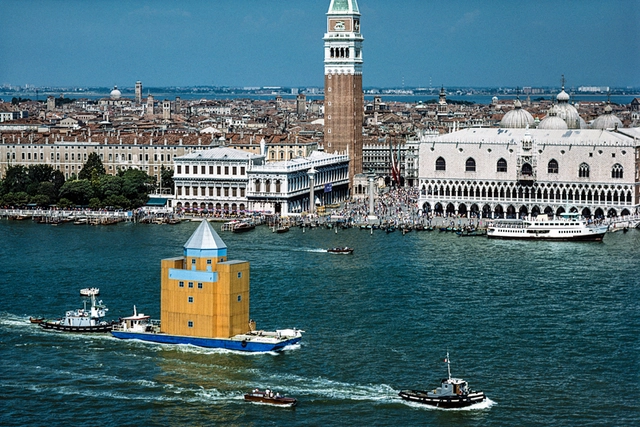
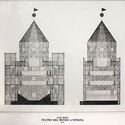
The first edition of the Venice Architecture Biennale took place in 1980, immediately revealing its role as a platform for images and ideas that would become essential references in contemporary architectural theory and practice. This disruptive character was embodied from the very beginning by the strangely familiar floating structure designed by Aldo Rossi, titled Teatro del Mondo. At once temporary and archetypal, the project introduced central themes that would shape Italian architectural discourse in the years that followed. To this day, it continues to inspire reflections on timelessness, imagination, and the memory embedded in cities.

Between Fantasy and Reality: Aldo Rossi's Floating Teatro del Mundo for the First Venice Architecture Biennale - Image 1 of 4Between Fantasy and Reality: Aldo Rossi's Floating Teatro del Mundo for the First Venice Architecture Biennale - Image 2 of 4Between Fantasy and Reality: Aldo Rossi's Floating Teatro del Mundo for the First Venice Architecture Biennale - Image 3 of 4Between Fantasy and Reality: Aldo Rossi's Floating Teatro del Mundo for the First Venice Architecture Biennale - Image 4 of 4Between Fantasy and Reality: Aldo Rossi's Floating Teatro del Mundo for the First Venice Architecture Biennale - More Images

Concéntrico 2025: The Politics of Urban Presence

Subscriber Access | 

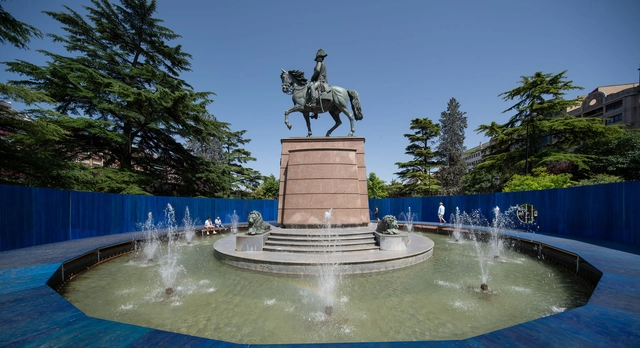
Every June, the Spanish city of Logroño transforms into a space of architectural dialogue, opening its streets, plazas, riverbanks, and traffic islands to temporary structures that redefine how cities are inhabited. For ten editions, Concéntrico has worked not as a specialized fair or an architecture biennale, but as a portable museum — a curatorial gesture that brings a dispersed collection of contemporary architecture into public space. Set in a city suspended between arid plains and distant mountains, far from the circuits of capital cities and cultural institutions, Concéntrico presents itself as a temporary promise. It's a reminder that even cities that are often overlooked can host architecture that is current, diverse, and speculative. In this sense, the festival is less about celebration and more about activation.

But beyond its curatorial logic, Concéntrico operates as a political structure. In the ancient sense of polis, it invites citizens, architects, and institutions to reassess what public space can be. The interventions offer speculative proposals for urban life that reveal what is missing, what is possible, and what should be questioned. A temporary pool over a fountain, a bathhouse in a roundabout, or a shared meal on a major avenue are not just spatial gestures — they are political statements, asking how urban infrastructure might be redirected from control to care, from efficiency to encounter. In that way, the festival becomes not just a reflection of the city, but an instrument for its transformation.

Concéntrico 2025: The Politics of Urban Presence - Image 1 of 4Concéntrico 2025: The Politics of Urban Presence - Image 2 of 4Concéntrico 2025: The Politics of Urban Presence - Image 3 of 4Concéntrico 2025: The Politics of Urban Presence - Image 4 of 4Concéntrico 2025: The Politics of Urban Presence - More Images+ 58

Learning from Artists: New Perspectives on Public Space

Public space has long been central to architectural thought, often framed in terms of planning, infrastructure, and regulation. From Haussmann's Paris to contemporary masterplans, architects have worked to define and formalise collective life through spatial tools. Yet, outside of these frameworks, artists have continuously offered alternative ways of understanding and inhabiting public space—ways that rely not on construction or permanence, but on presence, perception, and participation. Through actions, objects, or atmospheres, artists engage the city as a site of friction and imagination. These gestures challenge architectural conventions and invite artists to reconsider public space not as a solved form, but as a contingent and open process.

Learning from Artists: New Perspectives on Public Space - Image 1 of 4Learning from Artists: New Perspectives on Public Space - Image 2 of 4Learning from Artists: New Perspectives on Public Space - Image 3 of 4Learning from Artists: New Perspectives on Public Space - Image 4 of 4Learning from Artists: New Perspectives on Public Space - More Images+ 18

How to Save a Building from Demolition: Emerging Procedures to Uncover the Potential of Existing Structures

The twentieth century marked a definitive shift in the realm of architecture, as the Modernist movement broke from traditional building styles and encouraged experimentation and innovation. With the help of new materials and technologies, these times represent a crucial moment in the history of architecture as both cities and building styles evolved at an unprecedented rate. The structures that stand testament to this day are, however, nearing the age of a hundred years old. Their stark design features are not always embraced by the public, while the functionalist principles often hinder the adaptability of their interior spaces. Given that they also often occupy central positions within the city, there is increasing pressure to demolish these structures and redevelop the area in its entirety.

How to Save a Building from Demolition: Emerging Procedures to Uncover the Potential of Existing Structures - Image 1 of 4How to Save a Building from Demolition: Emerging Procedures to Uncover the Potential of Existing Structures - Image 2 of 4How to Save a Building from Demolition: Emerging Procedures to Uncover the Potential of Existing Structures - Image 3 of 4How to Save a Building from Demolition: Emerging Procedures to Uncover the Potential of Existing Structures - Image 4 of 4How to Save a Building from Demolition: Emerging Procedures to Uncover the Potential of Existing Structures - More Images+ 8

Why Do Modernist Principles Still Underpin Design Education in Brazil? Five Professors Share Their Perspectives

The complex relationship between architectural education and modernist principles in Brazil raises important questions about contemporary architectural practice. To explore this topic, we invited five professors from different Brazilian universities to share their perspectives: Eduardo Lopes (Universidade do Vale do Itajaí), Eduardo Westphal (Universidade Federal de Santa Catarina), Fábio Mosaner (Universidade Federal de Pernambuco), Marta Bogéa (Faculdade de Arquitetura e Urbanismo da Universidade de São Paulo), and Rodrigo Bastos (Universidade Federal de Santa Catarina). Their insights highlight modernism's lasting influence on architectural education while raising key questions for the current architectural debate.

Why Do Modernist Principles Still Underpin Design Education in Brazil? Five Professors Share Their Perspectives - Image 1 of 4Why Do Modernist Principles Still Underpin Design Education in Brazil? Five Professors Share Their Perspectives - Image 2 of 4Why Do Modernist Principles Still Underpin Design Education in Brazil? Five Professors Share Their Perspectives - Image 3 of 4Why Do Modernist Principles Still Underpin Design Education in Brazil? Five Professors Share Their Perspectives - Image 4 of 4Why Do Modernist Principles Still Underpin Design Education in Brazil? Five Professors Share Their Perspectives - More Images+ 5

From Design Movements to Materials: Reflecting on Architectural Exhibitions in 2024

Reflecting on 2024, numerous architectural exhibitions have opened worldwide, addressing various themes, exhibition formats, and featured architects. Architectural design and architecture practice influence our daily lives in subtle and often unnoticed ways, where the end-users embrace built environments as they are. This reaction may arise from a combination of factors, such as a sense of powerlessness to enact significant change after a building is constructed or the experience of growing up in environments over which individuals had little or no agency in shaping. For these reasons, architectural exhibitions serve an essential purpose, offering society a chance to pause, reflect, and critically examine the myriad issues that surface during designing and building. These issues are often overlooked or need to be acknowledged, as practitioners may prioritize delivering projects within strict timelines over exploring more profound reflections.

In 2024, museums, galleries, and curators responded to the evolving challenges within the built environment with various approaches. Some exhibitions questioned the ethics of building materials and the practices behind supply chains, drawing attention to the broader implications of material choices. Others focused on documenting architectural movements worldwide, emphasizing their cultural and historical significance and the urgent need to preserve and adapt rather than replace them with entirely new builds. These efforts highlight the role of exhibitions in raising awareness about pressing issues while fostering a more critical dialogue about the architectural discipline.

From Design Movements to Materials: Reflecting on Architectural Exhibitions in 2024 - Image 1 of 4From Design Movements to Materials: Reflecting on Architectural Exhibitions in 2024 - Image 2 of 4From Design Movements to Materials: Reflecting on Architectural Exhibitions in 2024 - Image 3 of 4From Design Movements to Materials: Reflecting on Architectural Exhibitions in 2024 - Image 4 of 4From Design Movements to Materials: Reflecting on Architectural Exhibitions in 2024 - More Images+ 20

Women Architects and their Material Strategies: Bo Bardi, Merrick & Hadid

Although there is more of a balance between women and men in architecture today, the landscape was quite different a few decades ago. Pioneering women architects have been resistant in a profession dominated by men, and have faced skepticism in challenging contexts, such as construction sites itself. Zaha Hadid commented on the difficulty of inclusion in what she called the "boys club", listing the difficulties in coming to agreements or creating partnerships. Lina Bo Bardi, in turn, used her strong personality to overcome the sexism of her time. Even though these difficulties, women have always found a way to stand out and bring priceless contributions to the profession.

On countless occasions architecture has remembered famous architects and their material discoveries through time, but what about recognizing women's contributions to the discipline? Discussing their pioneering material explorations is key to understanding their role in projects. With an analysis of the work of the well-known architects Lina Bo Bardi, Norma Merrick Sklarek and Zaha Hadid –which introduced innovative techniques and material trends– the following discussion brings to light how women's ideas have influenced the development of architecture. Identifying their approaches on how to managing structures and materials helps to understand the personality of their work and how to implement similar strategies in the future.

Architecture Classics: Modern Housing on the American Continent 1930-1960

Subscriber Access | 

Much of the production of modern architecture on the American continent was based on the model of European architects who, with their works, projected the fundamental premises and ideas for modern living. These pillars of architecture were transferred and consequently adapted to the American territory, introducing, at the same time, their own characteristics according to the territorial, socio-cultural and economic context. 

We understand that good architecture is that which serves as a model for solving problems inherent to the discipline of architecture in general. This is why certain references that we consider today as "classics" are examples of good architectural practices that have been appropriated by other architects, taking the pertinent and necessary elements to achieve a result in accordance with the particular context. 

Museum for Architectural Drawing Presents "Lina Bo Bardi - The Poetry of Concrete" in Berlin, Germany

The Museum of Architectural Drawing presents “Lina Bo Bardi - The Poetry of Concrete,” an exhibition featuring 40 drawings by the esteemed architect Lina Bo Bardi, highlighting her architectural legacy. Showing together for the first time in Europe, these works include sketches and designs, photographs of the architect’s buildings, and illustrations. Taking place in Berlin, Germany, the exhibition opened on 31 May 2024 and will continue until 22 September 2024.

Museum for Architectural Drawing Presents "Lina Bo Bardi - The Poetry of Concrete" in Berlin, Germany - Image 1 of 4Museum for Architectural Drawing Presents "Lina Bo Bardi - The Poetry of Concrete" in Berlin, Germany - Image 2 of 4Museum for Architectural Drawing Presents "Lina Bo Bardi - The Poetry of Concrete" in Berlin, Germany - Image 3 of 4Museum for Architectural Drawing Presents "Lina Bo Bardi - The Poetry of Concrete" in Berlin, Germany - Image 4 of 4Museum for Architectural Drawing Presents Lina Bo Bardi - The Poetry of Concrete in Berlin, Germany - More Images+ 3

Lina's Red: Explore the Use of the Color as Prominent Element in Lina Bo Bardi's Works

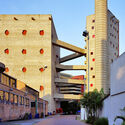
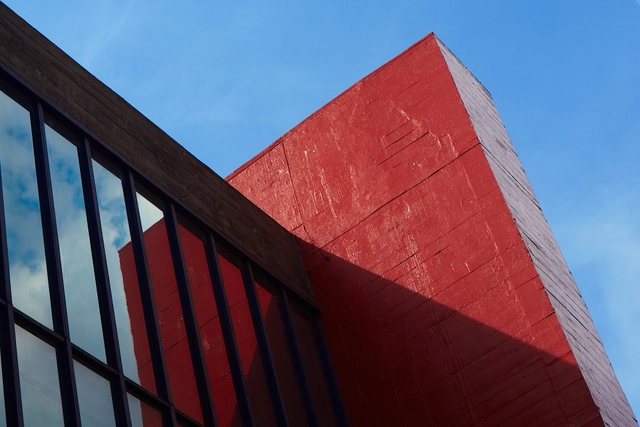
Among the many marks left by architect Lina Bo Bardi in Brazilian architecture is the use of red as a highlight in her works. Whether bringing lightness and vividness to the hardness of São Paulo's concrete at Sesc Pompeia or warming the whiteness of Solar do Unhão in Bahia, red transcended mere visual and aesthetic status to become a distinctive characteristic of the Italo-Brazilian architect, weaving connections between many of her works.

Lina's Red:  Explore the Use of  the Color as Prominent Element in Lina Bo Bardi's Works - Image 1 of 4Lina's Red:  Explore the Use of  the Color as Prominent Element in Lina Bo Bardi's Works - Image 2 of 4Lina's Red:  Explore the Use of  the Color as Prominent Element in Lina Bo Bardi's Works - Image 3 of 4Lina's Red:  Explore the Use of  the Color as Prominent Element in Lina Bo Bardi's Works - Image 4 of 4Lina's Red:  Explore the Use of  the Color as Prominent Element in Lina Bo Bardi's Works - More Images+ 11

The Poetry of Water: Symbolic Meanings in Built Space

In a world of extravagant textures, colors, and flavors, who would have thought that a substance that has no color, no smell, and no taste is precisely the most essential for human existence? Antagonistic in itself, water carries an ambiguity of values and meanings that confer a high degree of complexity sustained by the versatile and soluble profile that distinguishes it in a complex simplicity. In this sense, water, as a source of life, has become an object of devotion and study over time. This has fostered a continuous effort focused on understanding, transporting, and controlling this element.

The Poetry of Water: Symbolic Meanings in Built Space - Image 1 of 4The Poetry of Water: Symbolic Meanings in Built Space - Image 2 of 4The Poetry of Water: Symbolic Meanings in Built Space - Image 3 of 4The Poetry of Water: Symbolic Meanings in Built Space - Image 4 of 4The Poetry of Water: Symbolic Meanings in Built Space - More Images+ 7

Lina Bo Bardi and Her Helicoidal Wooden Staircase: Tradition and Modernity

Subscriber Access | 

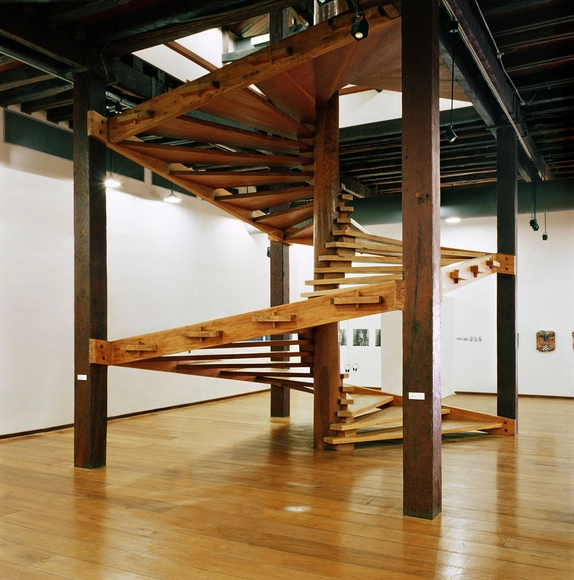
The Unhão complex, constructed in Salvador, Brazil in the 17th century, consisted of a sugar mill with a big house, chapel, and slave quarters. At the time, Salvador was one of the largest and most important Brazilian cities, and its port was the site of a large portion of the Portuguese colony's sugar exports, an economy fueled primarily by slave labor. The ensemble drew the attention of Italian-Brazilian architect Lina Bo Bardi at her first visit in 1958, during which she spent some years working and teaching in the city. Following Bo Bardi's decisive contributions, the buildings were restored and became the new home of the Museum of Popular Art and the Popular University. But within the whole complex, the element that draws the most attention for its plasticity, functionality, and symbolism is the helical wooden staircase.

From Lina Bo Bardi to Renzo Piano: When Drawing Translates the Experience of Space

From Lina Bo Bardi to Renzo Piano: When Drawing Translates the Experience of Space - Featured Image
© Mikkel Frost

If today technologies are emerging for different forms of representation and interaction with drawing, understanding how architects communicate through hand-drawn strokes can be essential to delve into the topic of architectural visualization. Through the simplicity of gestures, small texts or a collage of references, it is possible to translate ideas in an innovative way, unlike the ways that a render can present. For this reason, we highlight here the work of great names such as Lina Bo Bardi, Renzo Piano, Pezo von Ellrichshausen and Mikkel Frost, who, using different techniques, reveal different ways of representing a project.

From Lina Bo Bardi to Renzo Piano: When Drawing Translates the Experience of Space - Image 1 of 4From Lina Bo Bardi to Renzo Piano: When Drawing Translates the Experience of Space - Image 2 of 4From Lina Bo Bardi to Renzo Piano: When Drawing Translates the Experience of Space - Image 3 of 4From Lina Bo Bardi to Renzo Piano: When Drawing Translates the Experience of Space - Image 4 of 4From Lina Bo Bardi to Renzo Piano: When Drawing Translates the Experience of Space - More Images+ 12

UAE / Wetland Wins the Golden Lion for Best National Participation at the 2021 Venice Biennale

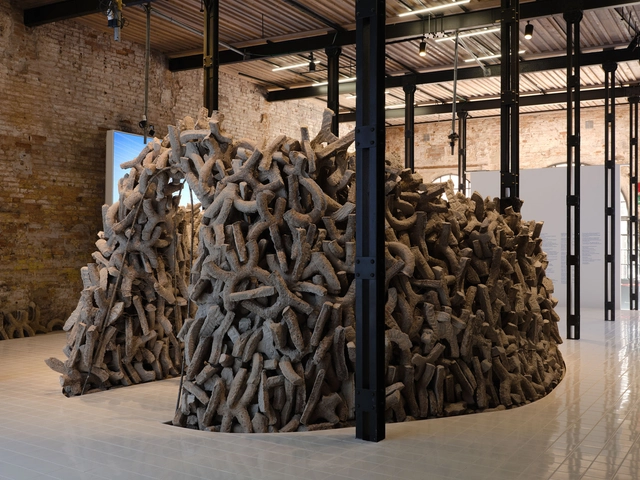
The United Arab Emirates has won the Golden Lion for Best National Participation at the 2021 Venice Biennale, with its contribution entitled Wetland curated by Wael Al Awar and Kenichi Teramoto. Selected by a jury that consists of Kazuyo Sejima (president-Japan), Sandra Barclay (Peru), Lamia Joreige (Lebanon), Lesley Lokko (Ghana-Scotland), and Luca Molinari (Italy), the winning contribution at the 17th Venice Architecture Biennale explores the local geography of the United Arab Emirates to find alternatives to cement, one of the key emitters of the world's carbon dioxide.

The award ceremony, broadcasted live on the Biennale’s official page also presented the Golden Lion for Best Participant in the International Exhibition How will we live together? to RAUMLABORBERLIN- Instances of Urban Practice while the Silver Lion for a promising young participant in the International Exhibition How will we live together? went to Border Ecologies and the Gaza Strip- Foundation for Achieving Seamless Territory (FAST). Other recognitions included a special mention for the national participation of the Philippines and Russia, and to Cave_bureau for the Anthropocene Museum: Exhibit 3.0 Obsidian Rain.

UAE / Wetland Wins the Golden Lion for Best National Participation at the 2021 Venice Biennale - Image 2 of 4UAE / Wetland Wins the Golden Lion for Best National Participation at the 2021 Venice Biennale - Image 3 of 4UAE / Wetland Wins the Golden Lion for Best National Participation at the 2021 Venice Biennale - Image 4 of 4UAE / Wetland Wins the Golden Lion for Best National Participation at the 2021 Venice Biennale - Featured ImageUAE / Wetland Wins the Golden Lion for Best National Participation at the 2021 Venice Biennale - More Images+ 15