The 6th annual AZ Awards is now open for submissions! The competition is open to architects, landscape architects, interior designers, product designers, clients, manufacturers and students for work completed before December 31, 2015. Entries will be juried by a panel of international design experts. (Keep an eye open for the jury announcement soon!)
New York City has seen rapid redevelopment that has capitalized on previously undesirable locations. Sitting at the top of these locations are the sites that have access to waterfront. Most of the ventures in these areas are private economic interests that only address public value when there is a direct return on profit. If not taken into consideration many of these waterfronts will be absorbed and, with the constant return of people to the urban core, there lies a need to create public and cultural infrastructure. In a city that is filled with numerous icons, parks, theaters, and museums an aquarium is one of the few remaining public typologies that isn't prevalent within the immediate area.
Dallas Architecture Forum, a non-profit organization dedicated to providing public education about architecture, design and the urban environment, will continue its 2015-2016 Panel Discussion Series on January 26, 2016 with “Making Fair Park Work.” Moderated by Mark Lamster, Dallas Morning News Architecture Critic, this panel is presented in partnership with the Dallas Festival of Ideas and the College of Architecture Planning and Public Affairs (CAPPA) at the University of Texas at Arlington.
At the beginning of January 2016 the Municipality of Prato, Italy, is launching an open, anonymous, international two-phase design competition for a new 3-hectare urban park in its historical city center. By the end of February, the international jury will select 10 finalist architects who will be invited to conceive a schematic design for the site. In June 2016 the winner will be awarded and commissioned to design the final project for the new Parco Centrale di Prato.
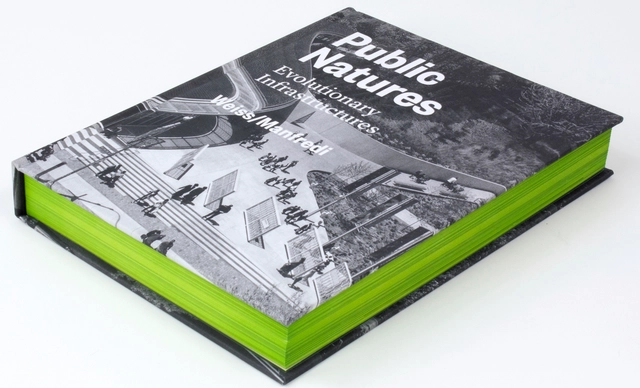
From the Publisher. Rail lines, bridges, highways, waterways, and off-ramps—larger than life but part of it, infrastructural systems are the enduring forms of urban evolution, multiplying as cities grow and requiring expanding swaths of territory to accommodate more and more monofunctional requirements. What if the very hard line between landscape, architecture, engineering, and urbanism could find a more synthetic convergence?
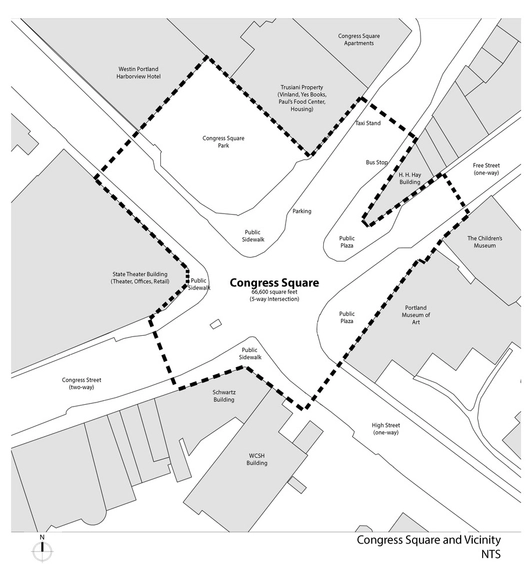
The City of Portland, Maine is seeking proposals from qualified Design Teams for the schematic phase re-design of Congress Square, a 1.3 acre public open space and traffic intersection in the heart of the city’s Arts District in downtown Portland, Maine. The project includes the Congress Square Redesign and the commissioning of works of Public Art, presenting a unique opportunity for collaborative urban design and public art; the redesign concept will be developed in tandem and integrated with the public artwork. One design team will be selected with the artist to be chosen simultaneously; the fee for this schematic design phase is $50,000 and the submission deadline is Thursday, January 28, 2016 by 3:00pm EST.
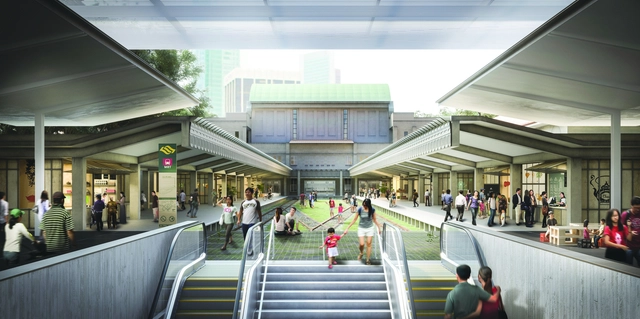
MKPL Architects Recent Winning Proposal for the Singapore Rail Corridor Revitalization. Image Courtesy of Norm Li for MKPL Architects
The President's Design Award, which honours Singapore designs and designers, has named its three Designers of the Year for 2015. Dr. Colin K. Okashimo (sculptor and landscape architect), Mr. Franklin Po (Principal of landscape architecture practice Tierra Design) and Mr. Siew Man Kok (co-founder of MKPL Architects) were selected from 111 nominations by a 14-member panel, which included British architect Richard Rogers.
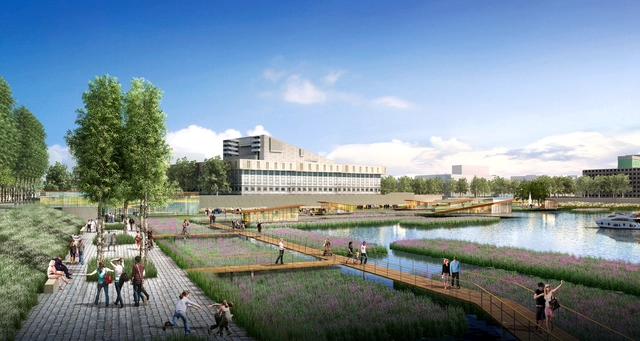
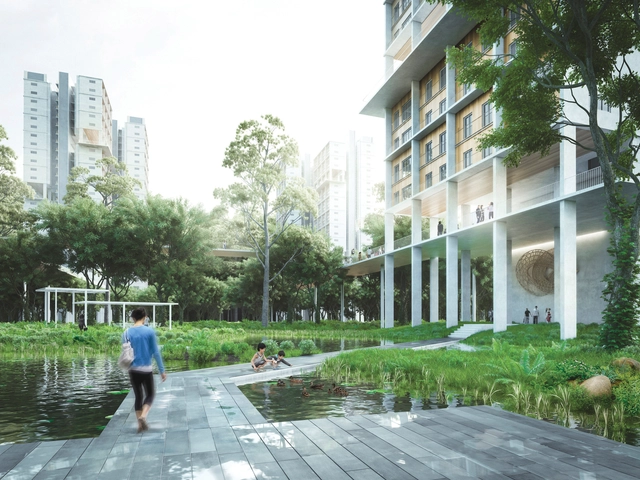
The waterscape in the precinct is one of its distinct characteristics, where residents are able to get in close proximity with different habitants.. Image Courtesy of Norm Li for MKPL/Turenscape Team
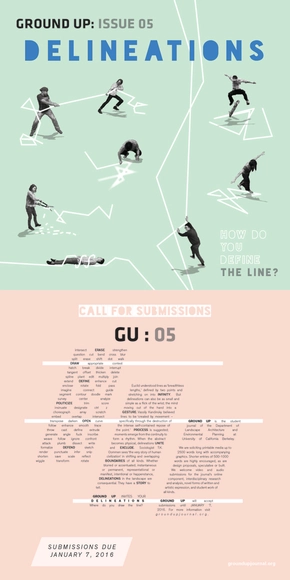
Euclid understood lines as ‘breadthless lengths,’ defined by two points and stretching on into infinity. But delineations can also be as small and simple as a flick of the wrist; the mind moving out of the hand into a gesture. Vassily Kandinsky believed lines to be ‘created by movement – specifically through the destruction of the intense self-contained repose of the point.’ Process is suggested; moments emerge from the continuity to form a rhythm. When the abstract becomes physical, delineations unite and exclude. Sociologist T.K. Oommen sees ‘the very story of human civilization’ in shifting and overlapping boundaries of all kinds. Whether blurred or accentuated, instantaneous or permanent, representational or manifest, intentional or happenstance, DELINEATIONS in the landscape are consequential. They have a story to tell.
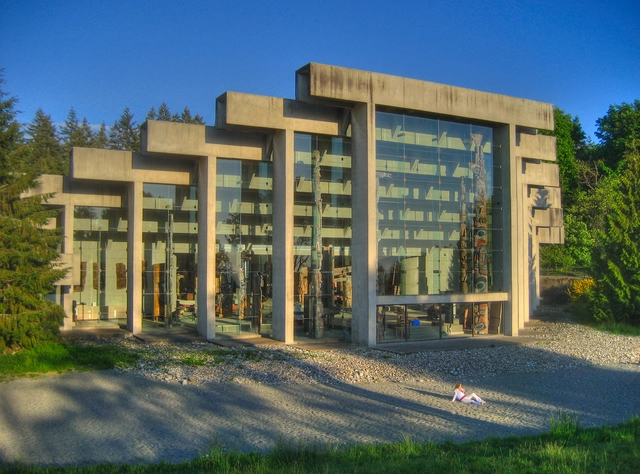
Landscape architect Cornelia Hahn Oberlander has won the 2015 Margolese National Design for Living Prize for her impact on Canadian cities. The School of Architecture and Landscape Architecture at the University of British Columbia, who awards the annual $50,000 prize, chose Oberlander for her "breathtaking, poetic, unforgettable, charged with meaning, and above all, Modernist" designs that have made "outstanding contributions to the development or improvement of living environments for Canadians of all economic classes."
A 1,200 square-meter "test lab" of what aims to be the world's first underground park has opened its doors to New Yorkers. View a sneak peek above, shared with ArchDaily by The Spaces, to see just how the Lowline (as the project's known) plans to "plumb" sunlight into an abandoned trolley terminal beneath the city's Delancey Street in an attempt to transform the forgotten space into a sun-lit, subterranean public garden.
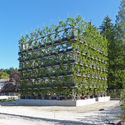
Timber buildings are regularly praised for their sustainability, as carbon dioxide removed from the atmosphere by the trees remains locked in the structure of the building. But what if you could go one better, to design buildings that not only lock in carbon, but actively absorb carbon dioxide to strengthen their structure? In this article, originally published by the International Federation of Landscape Architects as "Baubotanik: Botanically Inspired Biodesign," Ansel Oommen explores the theory and techniques of Baubotanik, a system of building with live trees that attempts to do just that.
Trees are the tall, quiet guardians of our human narrative. They spend their entire lives breathing for the planet, supporting vast ecosystems, all while providing key services in the form of food, shelter, and medicine. Their resilient boughs lift both the sky and our spirits. Their moss-aged grandeur stands testament to the shifting times, so much so, that to imagine a world without trees is to imagine a world without life.
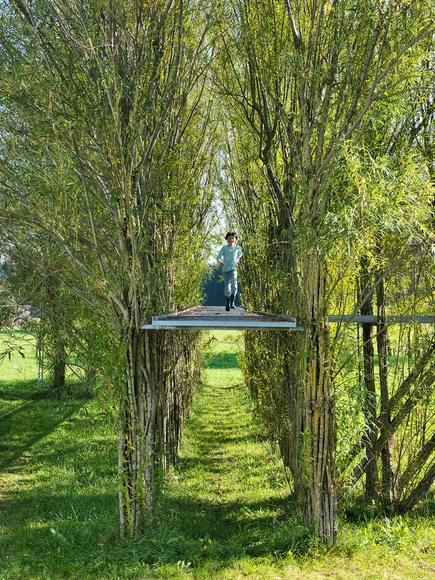
To move forward then, mankind must not only coexist with nature, but also be its active benefactor. In Germany, this alliance is found through Baubotanik, or Living Plant Constructions. Coined by architect, Dr. Ferdinand Ludwig, the practice was inspired by the ancient art of tree shaping.
Poster: 'Flower of Life' International Student Competition for Garden Design
Imagine future cities full of gardens with flower carpets, full of playing children, humming bees and fluttering butterflies. Gardens that help to create a healthy environment, cool cities, collect rainwater and are adapted to the local climate.
Russian-Chinese consortium Turenscape and MAP architects was announced as winners of a major competition to redevelop the Kaban lake system embankments in Kazan, Russia. Their winning concept, “Elastic band: The Immortal Treasure of Kazan” aims to establish a "continuous system of landscapes along the bank line, which will preserve the cultural and historical memory and become a basement for future stage-by-stage development."
"The water is turning into a real living treasure and heritage of Kazan," said the competition's organizer.
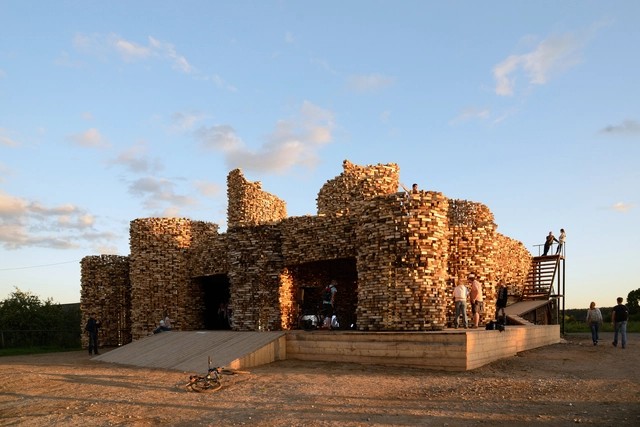
Russian artist Nikolay Polissky has completed yet another of his impressive, handcrafted installations. Located in Zvizzhi Village, in the Ugra National Park in Russia, Polissky’s newest creation—called SELPO, which stands for The Rural Consumer Association, in Russian—wraps around an abandoned soviet building, which used to house the village shop.
The project utilizes off-cut materials from Polissky’s previous work, which has ranged “from temporary pieces of landscape proportions, collectively created […] to public art works in city parks or sculpture parks […] in Europe and in Russia, as well as museum installations.”
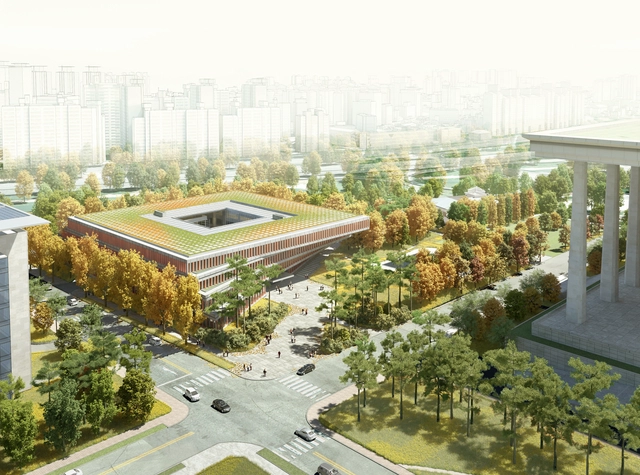
Courtesy of HAEAHN Architecture and H Architecture
South KoreanHaeahn Architecture, in collaboration with New-York-based H Architecture, has won a competition to design the Smart Work Center and Press Center at the historic site of the National Assembly Complex in Yeoido, which is the largest island in the Han River in Seoul.
The 23,750-square-meter building will be flexible in its uses and support "legislative functions of the National Assembly." Overall it will “house five distinctive programs: a press center with a briefing room alongside a small broadcast facility with a workplace for reporters; a highly-equipped smart work center which serves as a remote workplace for commuting officers and Ministers for the government; supplementary office spaces; underground parking; and welfare facilities which will include a restaurant, a banquet hall, and a retail component that will be accessible to both government workers and the general public.”





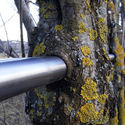
.jpg?1445550937 "Test field with inosculations. Image © foto chira moro")