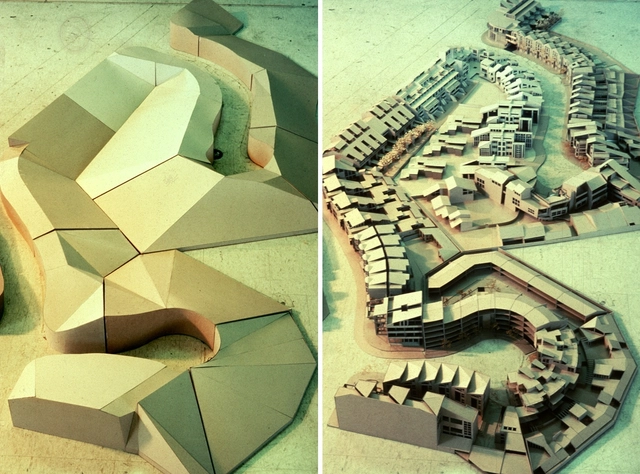
Knowles’ research into environmental conditions and theories about solar envelope zoning prefigured the parametric tools architects and planners use today. This scheme for an L.A. row-housing project demonstrates how dense developments—both low- and high-rise—could still provide equity in terms of natural sunlight. Image Courtesy of Ralph Knowles
I meet architect and educator Ralph Knowles on an unseasonably warm autumn day, even for Southern California. He greets me in shirtsleeves (his shirt is a tropical pattern of vines and branches) and leads me to a seat on the balcony of his condo. The building—a retirement community—is fairly new, but mature oak trees line the quiet street. As we talk about his career, the California oaks form a poignant backdrop. For more than five decades, Knowles, 88, has argued for an architecture that hews closely to nature’s forces and rhythms.
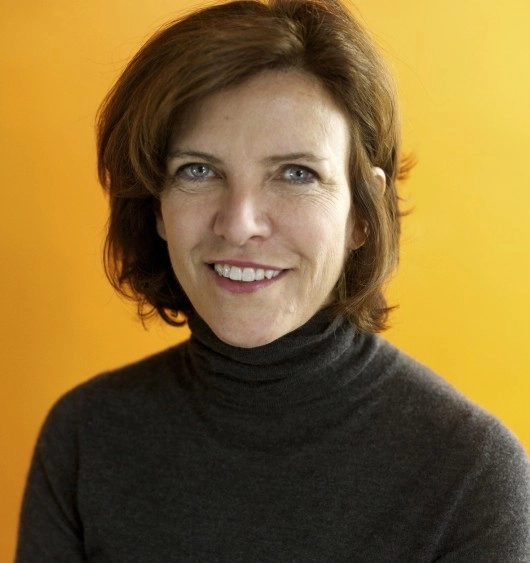
Jeanne Gang, the founder of Studio Gang Architects, has made a name for herself as a designer who can design both show-stopping skyscrapers and sensitive small-scale buildings. From her breakout 2009 Aqua Tower project, to the hypothetical “Polis Station” proposal presented at last year's Chicago Architecture Biennial, Gang has established herself as perhaps Chicago's leading architect.
Gang is also included as part of Vladimir Belogolovsky's ongoing City of Ideas exhibition tour, representing Chicago among 9 other significant architects, each from a different global city. With the exhibition currently in Gang's home city at the Chicago Design Museum until February 25th, here as part of his City of Ideas column on ArchDaily Belogolovsky presents a shortened version of the interview featured in the exhibition.
Blur Building. Exposition Pavilion: Swiss Expo, Yverdon-Les-Bains, 2002. Architects: Diller Scofidio + Renfro. Image Courtesy of Diller Scofidio + Renfro
Today, the MacArthur Foundation announced the 23 recipients of their 2016 MacArthur Fellowship Grants, which are awarded annually “to encourage people of outstanding talent to pursue their own creative, intellectual, and professional inclinations.” Each fellowship comes with a stipend of $625,000 for the recipients to use for individual pursuits, paid out in equal quarterly installments over a five year period. Fellows are selected based on 3 criteria: exceptional creativity, promise for important future advances based on a track record of significant accomplishment, and potential for the fellowship to facilitate subsequent creative work.
This year’s fellows include artists, playwrights, geobiologists, poets, jewelrymakers, novelists and historians, but, for the fifth straight year, no architects. In the program’s 36 year history, just 6 recipients have come from architecture-related fields.
Studio Gang Architects has been chosen by the Department of State to design the new US Embassy compound in BrasíliaBrazil's federal capital. Selected from a shortlist of six, the Jeanne Gang-led practice won the commission with their "strong and cohesive team approach with more than 20 years of collaborative experience executing projects with complex constraints at challenging sites," says the report.
The Architectural Review has announced the final winners in its 2016 Women in Architecture awards, awarding Mexican architect Gabriela Etchegaray with the Moira Gemmill Prize for Emerging Architecture, and Jeanne Gang with the Architect of the Year award. In honoring Gang and Etchegaray, the AR noted that both "have demonstrated excellence in design and a commitment to working both sustainably and democratically with local communities." The pair join other Women in Architecture Award winners Odile Decq and Julia Peyton-Jones, who last week received the 2016 Jane Drew Prize and Ada Louise Huxtable Prize, respectively. Read on for more about the awards.
Eleven women are being considered for the Moira Gemmill Prize for Emerging Architecture prize for their "use of innovative architecture to effect positive social change." Read on to see them all.
At this year’s Chicago Architecture Biennial the directors Joseph Grima and Sarah Herda asked participating architects to demonstrate the “State of the Art of Architecture" by submitting projects that they felt told a story about architecture’s importance in society. As explained in this video by Politico Magazine, native Chicagoan Jeanne Gang of Studio Gang Architects responded to this call by looking at an issue that has plagued American cities in startling ways in recent years: the troubled relationships between communities and their police forces. Often hidden behind fortress-like buildings, police stations in their current form tend to project an image closer to hostile than welcoming. But Gang believes it doesn’t have to be that way.
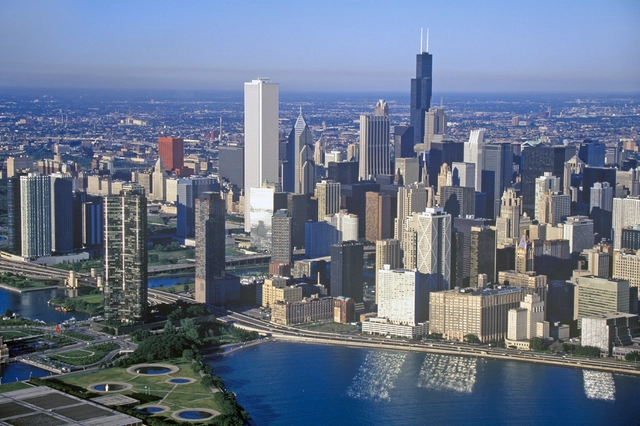
Chicago has long been known for distinctive architecture, and this year’s inaugural Chicago Architecture Biennial has only furthered that reputation. Although it is nearly impossible to narrow down the countless iconic structures, in celebration of the Biennial, we have compiled five Chicago buildings that highlight the many phases of the city’s architectural history.
To celebrate International Women’s Day, we asked the Brazilian non-profit group Arquitetas Invisíveis to share with us a part of their work, which identifies women in architecture and urbanism. They kindly shared with us a list of 48 important women architects, divided into seven categories: pioneers, “in the shadows,” architecture, landscape architecture, social architecture, urbanism and sustainable architecture. We will be sharing this list over the course of the week.
Today we present women architects who stand out for the quality of their work.
The Society of Architectural Historians (SAH) will hold its 68th Annual International Conference in Chicago, Illinois, from April 15–19, 2015, with the theme "Chicago at the Global Crossroads." SAH will celebrate its 75th anniversary during the conference, which includes lectures by Jeanne Gang and Blair Kamin, as well as roundtables and 36 paper sessions covering topics in architecture, art and architectural history, preservation, landscape architecture, and the built environment. SAH is committed to engaging both conference attendees and local participants with public programming that includes over 30 architectural tours, a plenary talk, and a half-day seminar addressing Chicago’s waterways and neighborhoods. Register at sah.org/2015.
The building itself will be designed by MAD Architects, chosen "because of its innovative approach to design and the firm’s philosophy of connecting urban spaces to natural landscapes." In this case, that landscape will be designed by Studio Gang, who will also add a bridge to Northerly Island, an area which they have worked on turning into an ecologically diverse urban park.
Shoreland, once a prominent destination built for the stars in 1926, stood derelict for years at risk of being erased from Chicago’s built history. This all changed the moment Jeanne Gang of Studio Gang Architects seized an opportunity to restore the monumental building into a highly sought after residential tower.
Provided by our friends at Spirit of Space, the video above takes you through the meticulous process and unique transformation of this historic landmark, highlighting insight by Gang herself and David Gwinn of Silliman Group.
Jeanne Gang, founder of Studio Gang, will be hosting a public lecture at the Reva and David Logan Center for the Arts on Monday, April 28, 2014. The lecture, named 'What Mammals Want', will start at 5:15pm and seating is first-come, first-served.
If you don’t know Jeanne Gang, here’s the short and impressive bio: she received her Bachelor of Science in Architecture from the University of Illinois and then went on to Harvard’s GSD for her masters degree. After working at OMA (where she participated in projects such as the Maison à Bordeaux), Jeanne founded Studio Gang in 1997. She has since become a MacArthur Fellow and was 2011's Fast Company Master of Design. So it was particularly exciting to sit down with Jeanne at the 2013 World Architecture Festival in Singapore.
Though few details have emerged, developers Tishman Speyer have confirmed that they have selected Chicago-based architects Studio Gang to design a skyscraper in San Francisco. Gang's tower will be one of three Tishman Speyer projects in the city. We'll be sure to update you as more information becomes available. Via SFGate.
What do you think the North American, Asian and Western European tall building communities most need to learn from each other? This is precisely what the Center on Tall Buildings and Urban Habitat (CTBUH) sat down to ask five leading architects, whose responses formed an eclectic and meaningful overview on the state of tall building worldwide. As Rem Koolhaasnoted, each region has their own journey that is worth understanding, such as the Arab world’s transition from “extravagance to rationality” or Asia’s hyper-focus on project realization. But, as James Goettsch points out, “not every building has to be something remarkable." It’s alright for some buildings to be nothing more than “good citizens.”
Beloit College has chosen Studio Gang Architects to convert a century old power-plant into a campus recreation and activity center. The project was born out of an ongoing partnership with Alliant Energy Wisconsin, the local utility company that currently holds the space, who has been in talks within the college for over a year.
“The Studio Gang team is very excited to partner with Beloit College,” stated Jeanne Gang. “Together we can transform this historic structure into a new hub for wellness, green power, and great architecture. By reflecting Beloit’s core values in the design, values shared by our team, we will create a model that will bring many benefits to the college, city, and region. This is a project that has the potential to inspire other communities around the globe.”
https://www.archdaily.com/436239/studio-gang-chosen-to-convert-power-plant-to-rec-centerKatherine Allen



_Hedrich_Blessing_015.jpg?1478169991&format=webp&width=640&height=580)
_Hedrich_Blessing.jpg?1478166602 "Aqua Tower, Chicago, 2009. Image © Hedrich Blessing. Photographer Steve Hall")
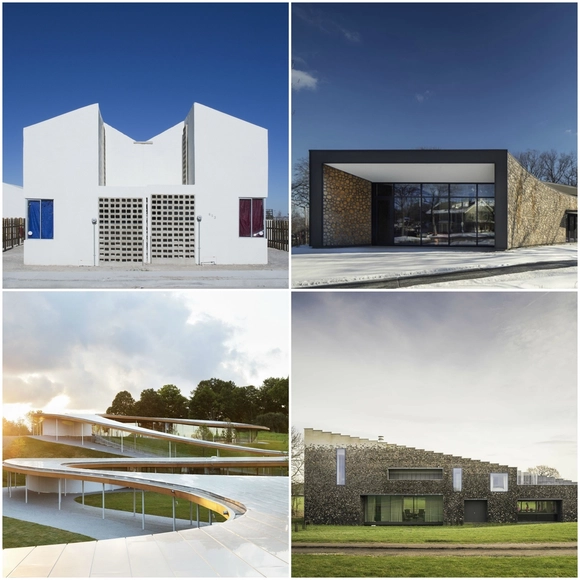
_Iwan_Baan_01.jpg?1478167148 "Arcus Center for Social Justice Leadership, Kalamazoo, Michigan, 2014. Image © Iwan Baan")
_Hedrich_Blessing_012.jpg?1478167596 "Writers Theater, Glencoe, Illinois, 2016. Image © Hedrich Blessing. Photographer Steve Hall")
_Hedrich_Blessing_012.jpg?1478166992 "WMS Boathouse at Clark Park, Chicago, 2013. Image © Hedrich Blessing. Photographer Steve Hall")
_Hedrich_Blessing_015.jpg?1478169991)

.jpg?1457466632&format=webp&width=640&height=580)
_Hedrich_Blessing_015.jpg?1457105259&format=webp&width=640&height=580)





_Sally_Ryan_Photography.jpg?1393871858&format=webp&width=640&height=580)
