Over the past decade, sustainable design has been transformed from a fringe movement to big business. However, given the sheer scale of the environmental damage caused by the built environment, it’s clear that far more must be done. To prevent future catastrophes, the industry must both scale up its green initiatives and increase their effectiveness.
On the quantity front, the entity most responsible for the explosion of green building is LEED. Developed in 2000 by the US Green Building Council (USGBC), the voluntary project rating system has won over the industry by providing both a convenient set of guidelines for sustainable practices and a clear marketing incentive for designers and firms to go green (or at least appear to).
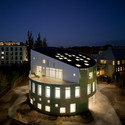
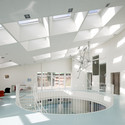
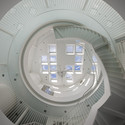
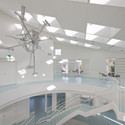
While in Croatia, I took some time to visit Ljubljana, Slovenia, and interview OFIS Arhitekti. The practice was founded in 1998 by partners Rok Oman and Spela Videcnik, both graduates from the Ljubljana architecture school and the Architectural Association.
San Francisco’s newest transit hub will centralize all the transportation in the city by accomodating nine systems under one roof. Pelli Clarke Pelli Architectshave designed a new terminal, a 1.3 mile extension of the Caltrain rail line, and the redevelopment of the surrounding area which will add 2,600 new homes, a 5.4 acre park roof and a retail street. And a loan of over $170 million given by the Transportation Infrastructure Finance and Innovation Act has given the project an extra push foward. Once completed in 2014, the terminal will include wind turbines, geothermal heating methods and a graywater recycling system. The hub will be a strong message that green technology can successfully be combined with modern transportation. “We are thrilled to be one of the first modern rail stations in the United States to achieve this historic milestone and look forward to continuing to make progress on the Transbay Project,” explained Maria Ayerdi-Kaplan, Executive Director of the Transbay Joint Powers Authority (TJPA).
More images and a video of the project after the break.
Working with the idea of “creating a society that is based on quality not quantity, on cooperation and not competition,” CTRLZ architectures have rethought a new model for, not just a building, but rather for society. Due to the on-going “cultural revolution” we are experiencing, the way we approach solving the problems of the world have changed, and architecture along with it. Now, the architect must not merely respond to designing spaces, but to other factors, such as society, energy, the internet, and politics, as well. “We believe that architecture is not anymore about form and/or/…function, but that it is about relations. The development of network systems shows us that the power resides in links and connections.”
More about the model and more images after the break.
Work AC, in collaboration with Edible Schoolyard NY and the Alice Waters’ Chez Panisse Foundation, is designing a new schoolyard for PS216 that will offer the young New Yorkers a different learning experience. The Edible Schoolyard is designed as a series of interlinked sustainable systems where the building will produce energy and heat, collect rainwater, process compost and sort waste with an off-grid infrastructure.
More images and more about the school after the break.
When asked to design a luxury hotel and spa at Hersham Golf Club in Surrey (which is within London’s Green Belt) ReardonSmith Architectsresponded with plans for a subterranean building. Matthew Guy, ReardonSmith’s project designer, explained “Our concept integrates hotel, spa, and golf facilities into a single architecturally exciting and organic composition below and above ground. The design fulfills the requirements of the brief for a bespoke five star hotel while returning hard standing to the Green Belt and improving the physical layout and visual attraction of the entire site. It represents a commercially viable solution to developing in the Green Belt and is, we believe, a world-first.”
Sustainability Round Up to end the week. Some really interesting projects may be done using green roof. Here we show you our second part (see the first one here), of previously featured projects with green roof.
Taipei 101, famous for being one of the world’s tallest buildings, is set to get some major eco-upgrades in an effort to save money, reduce its impact, and gain the much coveted title of “World’s Tallest Green Building.” In 2007, the Burj Dubai surpassed Taipei 101 in terms of height, but the Taiwanese building won’t give up the fight, throwing down $1.8 million in energy efficiency upgrades, which are expected to yield $20 million annually in savings and make it the Earth’s greenest and tallest building.
Over the next 18 months, the skyscraper will undergo significant energy efficiency upgrades and will also seek LEED Gold certification for existing buildings. The certification will largely depend on the building performance after the upgrades and renovations take place. The owners of Taipei 101 are teaming up with SL+A International Asia Inc., Siemens and EcoTech International Inc. to complete the eco-upgrades. Seen at Inhabitat. More images after the break.
One of the US practices I’ve been looking forward to meet has been Trahan Architects. Based in Louisiana, the firm has been very involved in institutional projects for the local community (such as the Holy Rosary Church Complex and the Baton Rouge Library), universities and also in Make It Right.
Greeen! Architects have been awarded an honorable mention for their Eco Towers, an office building in Hamburg, Germany for the Building and Environment Authorities. The office will accommodate 1400 people and will include several public areas as well as green gardens to “give room to nature and a create a green ambiance to all workers and visitors.”
At the beginning of the summer we visited SYNTHe, a urban rooftop garden designed and built by professor Alexis Rocha (I/O Platform founder) with SCI-Arc students.
The SYNTHe project is a 3,000sqf structure located on the top of The Flat, a mid rise residential building in downtown Los Angeles, and its the first green garden approved by city official. The idea of this “green blanket” over at the top of the building is to reduce the building heat gain, reduce storm water waste (80% is captured and used for irrigation) and to establish a sustainable plant ecosystem that collaborated with air pollutants filtering. It also reclaims the rooftop area from HVAC, ventilation and fire control systems, giving a new terrace for the users of the building.
Inside this blanket, 1,500sqf are dedicated to the production of edible plant species, and we had the chance to taste them at the restaurant during lunch, very good. The species planted include: