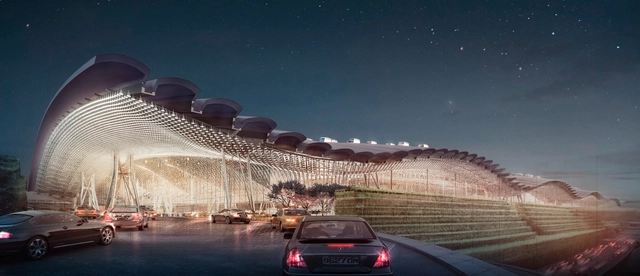
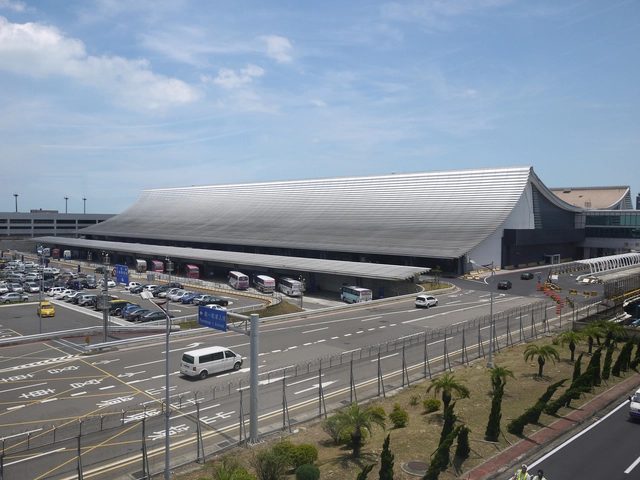
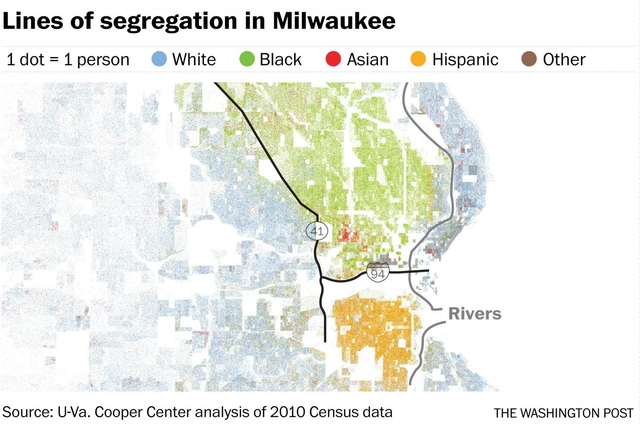
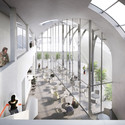
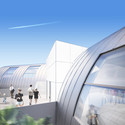
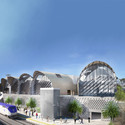
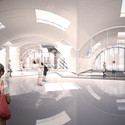
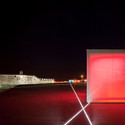
Rogers Stirk Harbour + Partners (RSHP) has won an international competition to expand the Taoyuan International Airport - Taiwan's largest airport, formally known as Chiang Kai-shek International Airport. Their winning scheme for the airport's new Terminal 3 building won the jury over for its "outstanding and innovative planning and design and highly efficient circulation," according the airport's official press release.
"The most compelling feature of their design is an interior experience that fluctuates and moves up and down to reflect changes in the users," said the report.
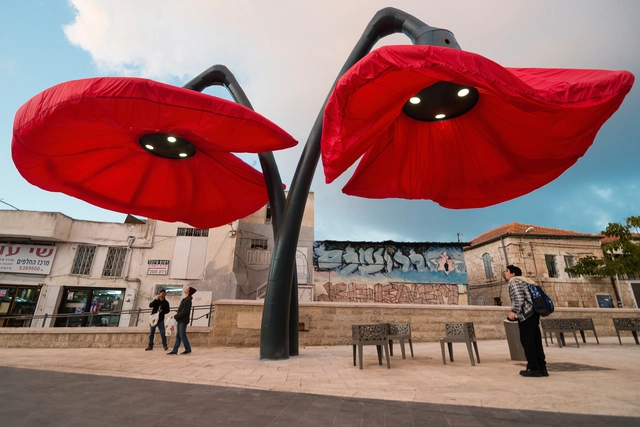
Shade isn't hard to find in Jerusalem's Vallero Square, thanks to these giant urban flowers designed by HQ Architects that bloom in the presence of pedestrians. "Warde," as the installation is called, is a set of four inflatable flowers at the entrance of the city's market square and adjacent tram station that "open up" whenever pedestrians walk by or the tram is approaching.
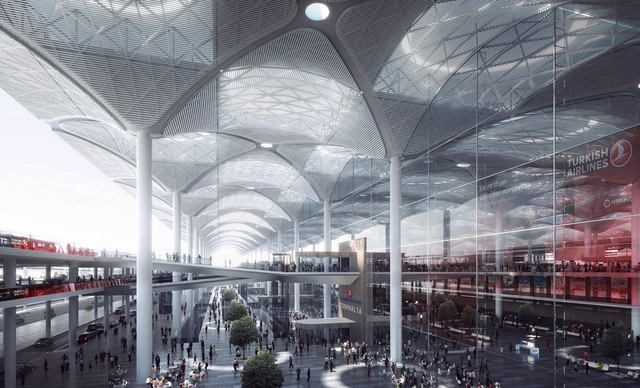
Perkins+Will has been selected to masterplan a major mixed-use development adjacent to undergoing Istanbul New Airport - soon to be one of the largest airports in the world. The 690-hectare scheme, "Airport City" will feature a "central innovation district," hotels, retail and commercial office space, logistic centers, an expo and convention center, public space, and metro and high-speed rail connections to Istanbul and beyond.
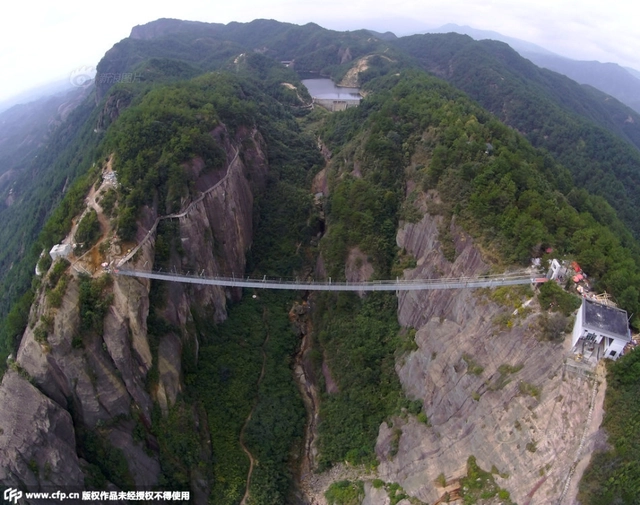
This (terrifying) 300-meter-long bridge is the first in China to be made of all glass. Suspended 180-meters above ground between two cliffs at Hunan's Shiniuzhai National Geological Park, the Haohan Qiao - Brave Men's Bridge - was originally meant to be wood, before being constructed with 24mm thick glass that is 25 times stronger than normal.
"The bridge we build will stand firm even if tourists are jumping on it," said a worker to China News Service. "The steel frame used to support and encase the glass bridge is also very strong and densely built, so even if a glass is broken, travelers won't fall through."
Two quadcopter drones just autonomously built a footbridge that is capable of withstanding the weight of a human. Outfitted with a motorized spool and plastic tubes that dispense Dyneema, a "material with a low weight-to-strength ratio," the flying machines were able to construct a lightweight tensile bridge that spans 7.4 meters between two scaffolding structures at the Flying Machine Arena in Zurich.
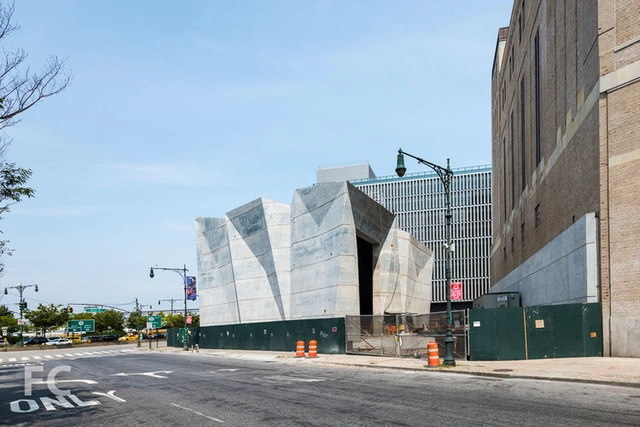
New York City is replacing one of its 40 salt sheds on the Gansevoort Peninsula with a new, origami-like structure by Dattner Architects at Canal St/West St, along the Hudson River. Once completed, the shed will rise almost 70 feet tall and hold over 4,000 tons of salt in its six-foot thick concrete walls. In response to the complaints leveled against the Sanitation Garage across Spring Street from the new salt shed, Dattner Architects deliberately created a monolithic, crystalline form to contrast the scrim-like façade of its neighbour.
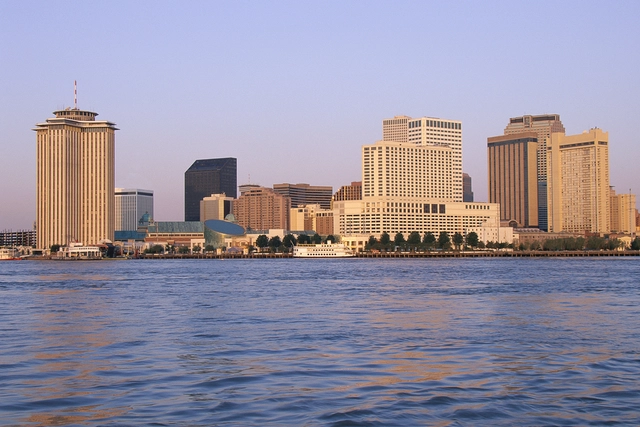
Today marks 10 years since Hurricane Katrina hit New Orleans, setting off what was among the most significant catastrophes to strike the United States in the 21st Century. New Orleans' flood defenses failed, causing the loss of over 1,400 lives and billions of dollars in property damage.
Naturally, such a disaster takes some time to recover from, for individuals but also for a city as a whole, and so for the past decade New Orleans has been a case study for cities to show them how to recover, rebuild and move on - at certain times serving as both an example of good practice and a warning of "what not to do." On the ten-year anniversary of Hurricane Katrina, here's a round-up of stories about the rebuilding of a city from around the web.
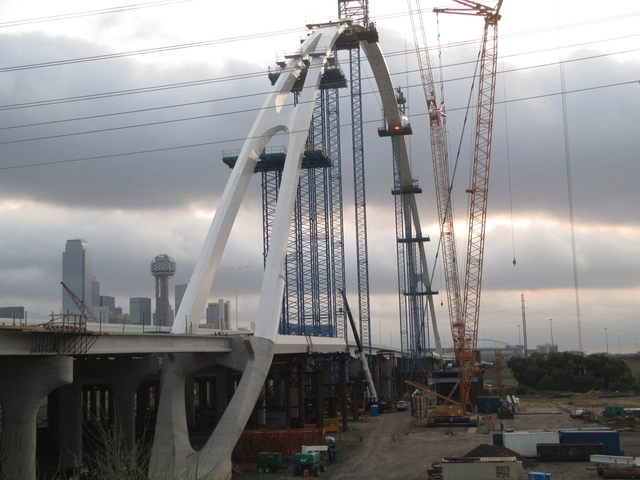
Santiago Calatrava has topped out on his second Dallas bridge - the Margaret McDermott Bridge - two years after completing the Margaret Hunt Hill Bridge. The steel arch, reaching a height of 275 feet, is the first of two that will support the 1311-foot-long bridge that is intended to provide access to pedestrians, bicyclists and cars over the Trinity River. The $113 million bridge is part of the massive $798 million Dallas Horseshoe Project that aims to alleviate traffic and enhance accessibility downtown. It is scheduled to complete by the summer of 2017.
The Washington Post has published a piece looking at how infrastructure acts as a form of segregation in cities in the US. Using racial dot maps from the University of Virginia’s Weldon Cooper Center for Public Service, they show how highways, railroads, historically uncrossable avenues, and similar urban design decisions have a huge impact on the physical isolation of different races. These types of infrastructure were also found to reinforce boundaries set by natural patterns of topography and bodies of water. Cities found to have clear infrastructural segregation include Pittsburgh, Hartford, Detroit, Washington, D.C., and Milwaukee. Read the full article, here.
International architecture non-profit Shelter Global has announced the winners of its 2015 Dencity Competition. Out of 300 entries from 50 different countries, three winners and six special mentions were selected.
The competition’s goal was “to foster new ideas on how to handle the growing density of unplanned cities and to spread awareness of the massive problem,” and jury members sought out project designs that empower communities and allow for self-sufficiency. Read about the three winners, after the break.
AECOM has designed a preliminary study for a mixed-use transportation development in Solana Beach, California, as part of a response for a RFP (Request for Proposal). Located near major roads and connected to railroads, the project proposal consists of a combination of retail stores and restaurants, providing transit users with leisure spaces on their travels, in addition to parking for the nearby AMTRAK train station.
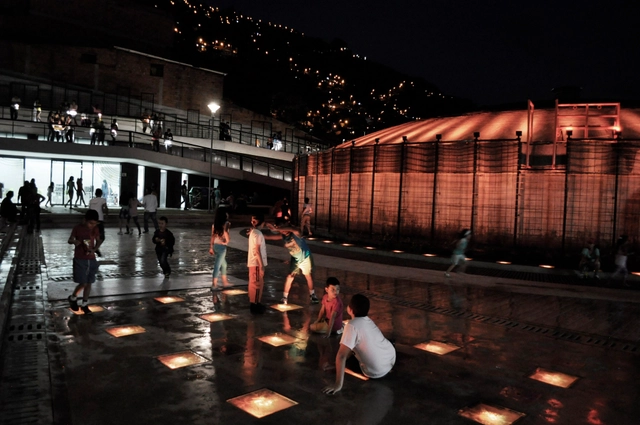
With a high-density population and a history of internal armed conflict, the city of Medellín in Colombia lacked substantial public space, but had an overwhelming amount of industrial infrastructure in place. But as profiled by The Architectural Review, recently architects and urban planners of the EPM group saw this imbalance as an opportunity, and so in the uninhabited patches of land surrounding over one hundred fenced industrial lots, the UVA or Unidades de Vida Articulada (Units of Articulated Life) program was born. Including initiatives to build public classrooms, launderettes and cafés, the UVA projects were conceived together with the local population through a series of workshops, where every resident was invited to express their vision for the new public square through writing and drawing. Medellín, existing at the convergence of several hills, provides a wide variety of unique landscapes for architects to experiment on - and through the UVA projects, EPM Group demonstrates how architecture can empower a community from the first day of design. Read more about how this project will continue to instigate positive change at The Architectural Review.
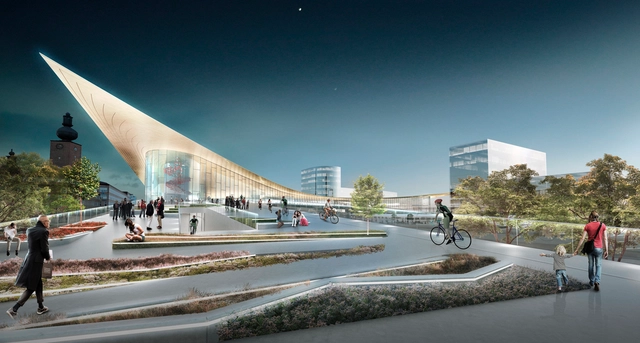
BIG has unveiled plans for a new transportation hub in the heart of Västerås - one of Sweden's largest cities. The ambitious plan, "3B - Build Away the Barriers" will redevelop 17-acres surrounding an existing railway station in an effort to reconnect it to the city. As it exists now, the station's tracks divides two areas of the city; BIG's proposal aims to unite them with a single "floating roof" shaped by the "flow of people and public life" that will integrate new public programs into the site.