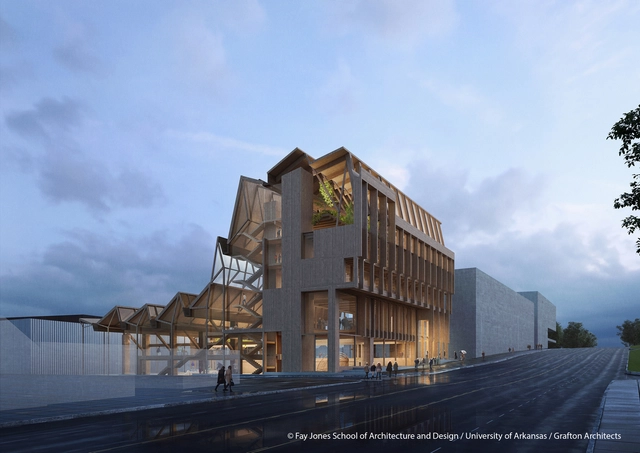
Courtesy of Fay Jones School of Architecture and Design, University of Arkansas / Grafton Architects
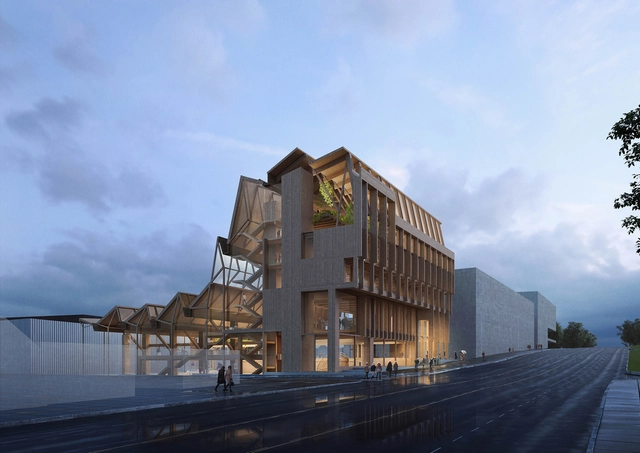
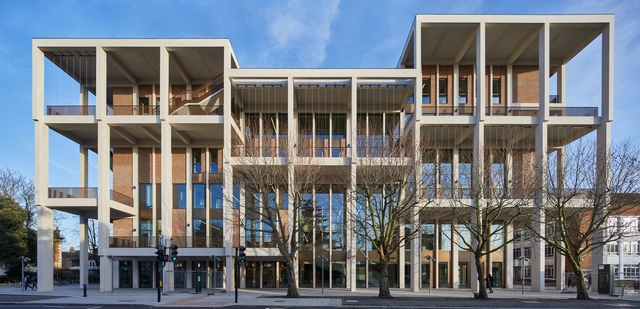
Grafton Architects was selected as the winning firm to design the Anthony Timberlands Center for Design and Materials Innovation at the University of Arkansas. In collaboration with Modus Studio for the planned campus design research center, the design on the project is scheduled to begin this summer.
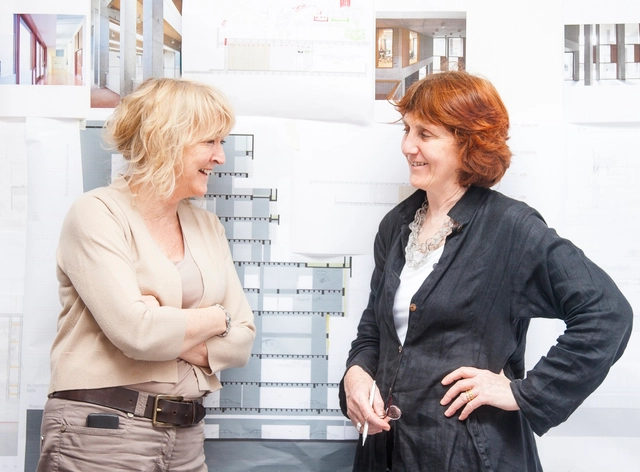
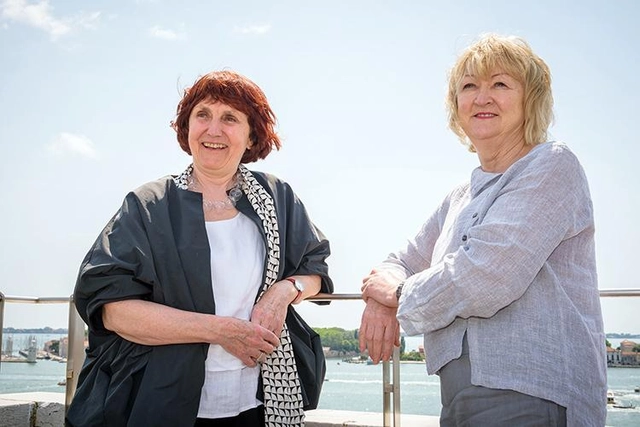
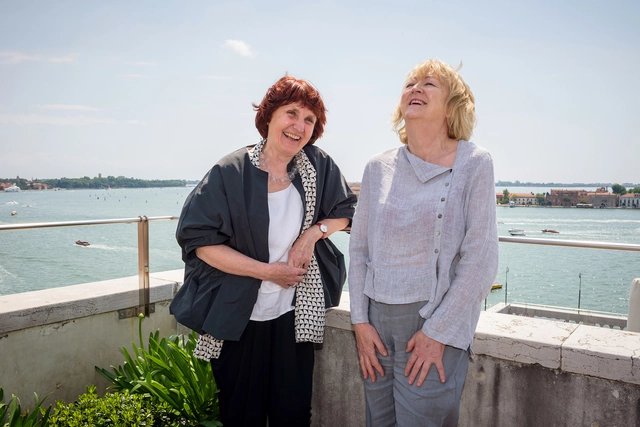
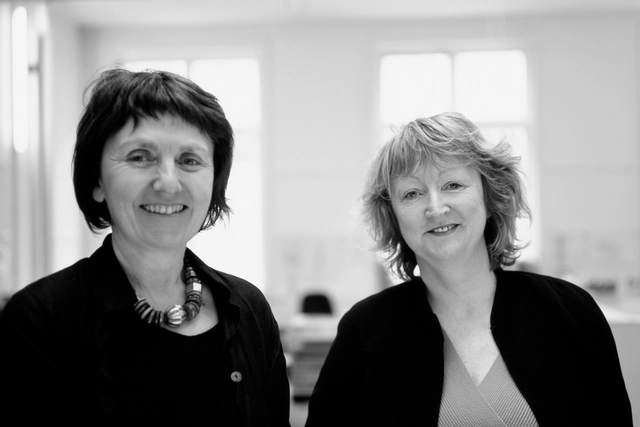
Grafton Architects. Image Courtesy of Fay Jones School of Architecture and Design, University of Arkansas
Selected from 69 submissions from 10 countries, six international firms were shortlisted for the design competition of the future Anthony Timberlands Center for Design and Materials Innovation at the University of Arkansas.
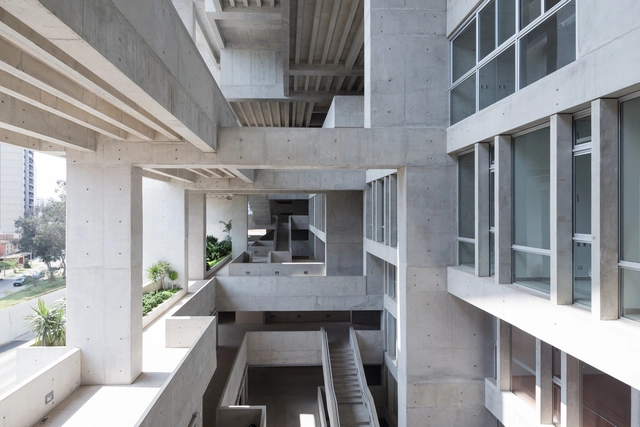
Architects around the world are constantly striving to explore new ways of using materials that are both more environmentally friendly, and can create impactful designs that demonstrate new abilities of creativity. For 2020 Pritzker Prize winners Yvonne Farrell and Shelley McNamara of Grafton Architects, these ideas are at the forefront of every project they design, but became especially meaningful when they visited their completed “carved mountain” project, University Campus UTEC, in Lima, Peru for the first time.
Pritzker Prize 2020 Laureates, Irish architects Yvonne Farrell and Shelley McNamara are known for their powerful yet delicate approaches. In this exclusive video for ArchDaily, Martha Thorne, executive director of the Pritzker Architecture Prize and Dean of IE School of Architecture and Design, shares some of the reasons why Grafton Architects has won the Pritzker Prize 2020.
“When you read Love in the Time of Cholera you come to realize the magic realism of South America.” Yvonne Farrell, Shelley McNamara and I were in a corner of the Barbican Centre’s sprawling, shallow atrium talking about the subject of their most recent accolade, the Royal Institute of British Architects inaugural International Prize, awarded that previous evening. That same night the two Irish architects, who founded their practice in Dublin in the 1970s, also delivered a lecture on the Universidad de Ingeniería and Tecnologia (UTEC)—their “modern-day Machu Picchu” in Lima—to a packed audience in London’s Portland Place.
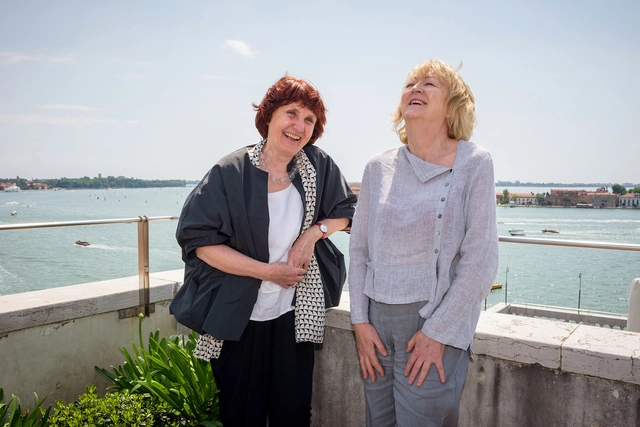
This year, architecture’s highest honor, the Pritzker Prize, has been granted to Grafton Architects' Yvonne Farrell and Shelley McNamara of Dublin, Ireland. The 2020 Laureates, who are both educators and architects, are known for their powerful yet delicate approaches. Their contextual and modern interventions are very attentive to history, demonstrating high levels of sensitivity and craftsmanship.
With more than 40 years of professional experience, Yvonne Farrell and Shelley McNamara, partners and co-founders of Dublin-based Grafton Architects, are the first women to be jointly awarded the architecture’s highest honor, the Pritzker Prize. In addition to a very welcoming breath of hope towards greater female representation in the field, the selection also cast light over an equally urgent theme in the profession: recognizing architecture practice as a collective effort.
Yvonne Farrell and Shelley McNamara founded Grafton Architects in 1978, after they met each other at the School of Architecture at University College Dublin. The practice, named after the street where the duo's first office was located, has been awarded this year’s prestigious 2020 Pritzker Award. Grafton's built work reflects the continued search of architectural excellence, in buildings ranging from small scale housing to large public volumes.
https://www.archdaily.com/934727/grafton-architects-get-to-know-2020-pritzker-winners-built-workAD Editorial Team
Dublin-based Grafton Architects have been announced as the winners of the RIBA2020 Royal Gold Medal, the UK’s highest honor for architecture. Recognizing the practice’s significant global contribution to architecture, the award is approved personally by Her Majesty The Queen. RIBA acknowledged that the people-centered practice has achieved global recognition and is known especially for its exemplary education buildings.
The Royal Institute of British Architects has announced the launch of the RIBA International Awards 2020 to recognize architecture outside of the United Kingdom. Now open for entries, the awards are open to any qualified architect in the world for a building outside of the UK, of any size and budget. The biennial awards celebrate buildings that exemplify design innovation, embrace sustainable technologies and deliver meaningful social impact.
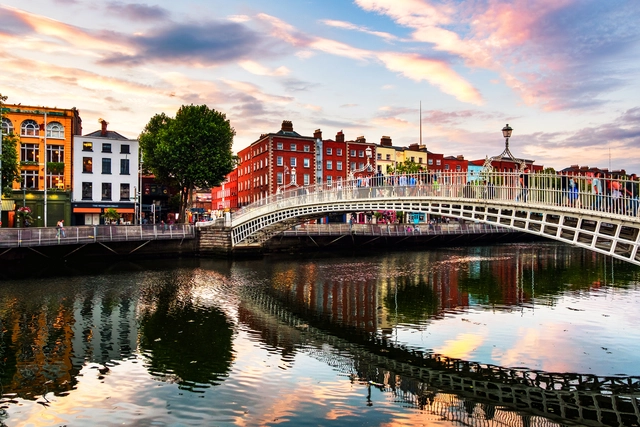
Dublin is one of the world’s most beloved cities. The Irish capital welcomes over 5.6 million tourists every year from around the world, seeking out the city’s red brick rows, cobblestone streets, and lush green parklands.
Dublin has good reason for being on any architect’s travel list. Modest Georgian tenements, sensitively altered by local architects, stand alongside major civil and public works by some of the world’s most renowned international firms, while warm art nouveau and art deco cafes sit alongside the sleek, modern headquarters of the world’s largest tech firms.
https://www.archdaily.com/904358/an-architectural-guide-to-dublin-30-things-to-see-and-do-in-irelands-capitalNiall Patrick Walsh
One of the few incontrovertible truths to emerge from the 16th International Architecture Exhibition, which opened in Venice on May 26 and runs through November 25, is that sensitivity and skill in making architecture do not necessarily transfer to the work of organizing an architecture exhibition.
As La Biennale prepares to open to the public this Saturday May 26, PLANE—SITE spoke to curators Yvonne Farrell and Shelley McNamara about this edition’s theme, Freespace. They move beyond architecture as an object, instead imagining Freespace as an invitation to think about architecture as a space of opportunities. Literally and metaphorically, Freespace presents environments of generosity, accessibility and freedom and celebrates the rich civic experiences that they create.
https://www.archdaily.com/895066/curators-yvonne-farrell-and-shelley-mcnamara-provide-insight-into-the-theme-of-the-2018-venice-biennaleAD Editorial Team
The jury will be responsible for awarding the Golden Lion for Best National Participation, the Golden Lion for Best Participant in the International ExhibitionFREESPACE, and the Silver Lion for a Promising Young Participant in the International ExhibitionFREESPACE. They will also have the opportunity to award one special mention to National Participations and two special mentions to the participants in the International Exhibition.
https://www.archdaily.com/894353/jury-members-for-the-2018-venice-biennale-announcedNiall Patrick Walsh
At a press conference earlier today, curators of the 2018 Venice Biennale Yvonne Farrell and Shelley McNamara of Grafton Architects revealed more information about this year's upcoming event, to be hosted from May 26th to November 25th. Building on the thematic concept the duo presented last June—“Freespace”—the event will feature a main exhibition in the Central Pavilion of the Giardini and the Arsenale featuring work by 71 participants, while two Special Sections will feature a total of 29 further participants. Elsewhere, 65 national pavilions will present contributions from around the world, including 7 first-time participants: Antigua & Barbuda, Saudi Arabia, Guatemala, Lebanon, Mongolia, Pakistan and the Holy See.
At a meeting convened today at the Biennale's headquarters at Ca’ Giustinian in Venice, Italy, Grafton Architects—Yvonne Farrell and Shelley McNamara—revealed the theme and outline for the 2018 Venice Architecture Biennale, which they have titled Freespace. According to the Directors, the forthcoming Biennale will celebrate "generosity and thoughtfulness," and "a desire to engage."
We believe that everyone has the right to benefit from architecture. The role of architecture is to give shelter to our bodies, but also to lift our spirits. A beautiful wall forming a street edge gives pleasure to the passer-by, even if they never go inside.
Freespace will "reveal diversity, specificity, and continuity in architecture. Together," they proposed, "we can reveal the capacity of architecture to connect with history, time, place, and people. These qualities sustain the fundamental capacity of architecture to nurture and support a meaningful impact between people and place." In their closing statement, Farrell and McNamara chose to quote an Ancient Greek proverb: a society grows great when old men plant trees whose shade they know they will never sit in.



.jpg?1484680102&format=webp&width=640&height=580)








_preview.jpeg.jpg?1535984024&format=webp&width=640&height=580)



.jpg?1488337672 "Courtesy of Shell Arquitectos")

