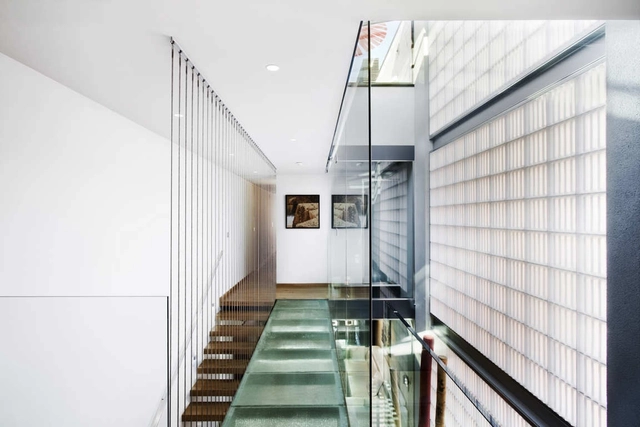
In 1977, a New York Times article by Carter B. Horsley proclaimed that “Glamorous Glass Bricks Are Booming:” once a “less than first-class” material, it was beginning to gain acceptance among architects in residential and restaurant projects for its translucence, privacy, visual interest, and sense of order. However, following the industry’s brief but widespread use of glass bricks, many now associate the material with outdated 80’s architectural styles, an aesthetic that few seem interested in reviving. Yet pioneering contemporary architects have begun using this unique material in new and distinctly modern ways, whether for sleek and minimalist bathrooms, industrial bars and restaurants, vintage residential windows, or even experimental urban facades. As Horsley stated, it appears that glamorous glass bricks are booming – again.
https://www.archdaily.com/941686/glamorous-glass-bricks-are-booming-nil-againLilly Cao
Exterior rendering of Menokin’s “The Glass House Project". Image Courtesy of Machado Silvetti
Menokin Foundation has begun construction on its “Glass House Project”, a new initiative in the preservation of historic landmarks. Protecting what remains from the 1769 house, the intervention will replace missing walls, floors, and sections of the roof with glass. Designed by Machado Silvetti, in collaboration with glass engineer Eckersley O’Callaghan, and landscape designer Reed Hilderbrand, the project will be developed in phases, to be completed in 2023.
Every year around this date, festivals, educational events, exhibitions, and excursions are organized to celebrate and raise awareness about the conservation of migratory birds. These species have seen their habitats transformed during the last few decades in part because of human action: designers and real estate agents have built and nurtured an urban imaginary dominated by glass structures as a symbol of power and progress. Before proceeding with the conquest of the sky, it is worth considering some materials that are more friendly to the species with which we cohabitate.
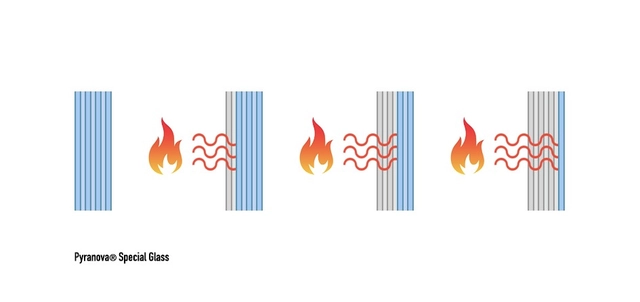
Insufficiently regulated in much of the world, the fire resistance of glass is an important issue that is often poorly resolved, endangering people's lives. What characteristics must a glass have to resist a fire? What options are there to choose from? We talked with the experts of Cristales Dialum to investigate these essential questions.
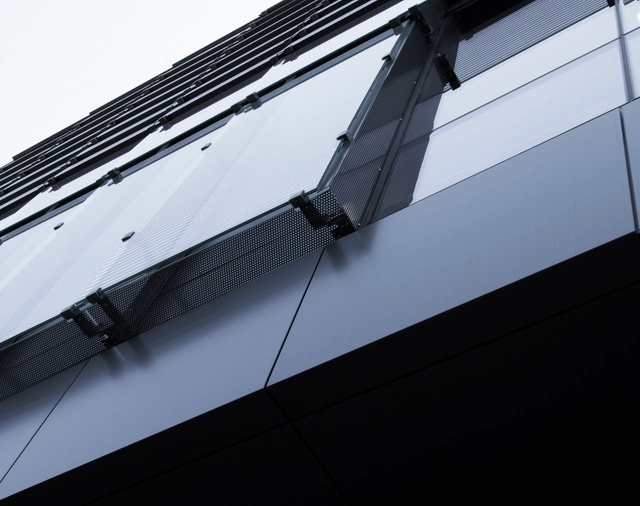
In an effort to avoid disruptions to the coming football season (and by extension, any frustration among the passionate University of Iowa Hawkeyes’ fans), the challenge facing Iowa City architecture firm Neumann Monson was to rapidly deliver and install Kinnick Stadium’s new custom glass facade, all during the team’s off-season. Ranked top among Big 10 stadiums, Kinnick opened the 2019 football season with an expanded North End Zone after careful coordination by the design, manufacturing, and construction teams throughout the project.
The Union of architects of Russia invites you to participate in the 7th Russian competition with international participation «GLASS IN ARCHITECTURE»
The Union of Architects of Russia invites you to participate in the 7th Russian competition with international participation «GLASS IN ARCHITECTURE», which will be held as a part of the 3d international Forum of architectural glass industry «Archlass 2020» from 19 to 21 May 2020 in the Technopark Skolkovo simultaneously with the 2nd international forum AlumForum 2020.
Last April, Mayor Bill de Blasio of New York announced plans to introduce a bill that would ban the construction of new all-glass buildings. Part of a larger effort to reduce citywide greenhouse emissions by 30 percent, other initiatives included using clean energy to power city operations, mandatory organics recycling, and reducing single-use plastic and processed meat purchases. The announcement came on the heels of the city council passing the Climate Mobilization Act, a sweeping response to the Paris Climate Agreement that included required green roofs on new constructions and emissions reductions on existing buildings.
https://www.archdaily.com/931309/de-blasios-glass-skyscraper-ban-could-mass-timber-and-transparent-concrete-take-its-placeLilly Cao
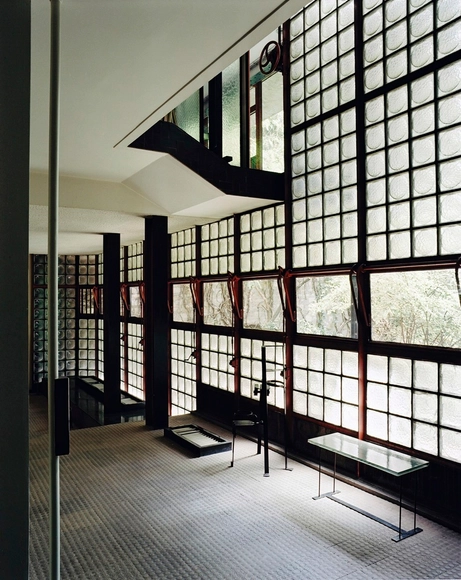
Completed in 1932, Maison de Verre—or “House of Glass”—has become a prime example of modern architecture, despite the fact that not many people have actually seen the hidden treasure, located on Paris’ Left Bank.
Although his work is currently viewed in high regard, Chareau had a tumultuous career, with large variances between his successes and his failures.
Drawing from a Cultured Magazine spotlight article on the designer, we have compiled a list of facts about Chareau’s life and career that showcase the rollercoaster of his success.
Continue reading for the 10 things you didn’t know about Pierre Chareau.
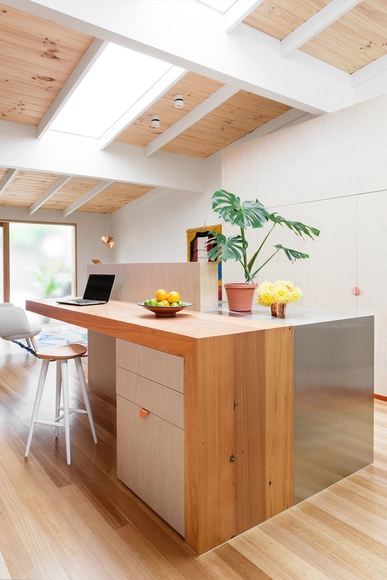
One of the most practical and functional spaces of any residential project is the kitchen. Its artificial surfaces – be it countertops, kitchen benches, or coverings – contain most of the space's equipment. Thus, it’s essential to build kitchens with the most resistant and hygienic materials. Aside from these requirements, it's also important to pay attention to aesthetics and profitability, while adapting the space to the dynamics of each family.
Today, improvements in glass processing technology have made it possible to render specific and effective solutions for a wide range of architectural projects. In fact, there are so many options available that it's almost necessary to research different products and their properties, and how this will impact, for example, the windows and doors that you are designing.
What variables should be considered – and prioritized – when choosing the glass used in a project? How can aesthetics coincide with function and efficiency? We sat down with the experts at Cristales Dialum to delve into the complex world of glass and to better understand the hows and whys of choosing the best type of glass for your projects and ensuring the best results for your clients.
Glass is so present in our lives that it’s very difficult to think about the amount of work, experimentation and technologies behind each panel or glass object. It’s also impossible to separate innovations from modern architectural projects –from architects such as Mies Van der Rohe and Le Corbusier– from the advances of the glass industry.
We’re following the history of glass, from Mesopotamian artifacts to technological glasses, and we invite you to travel with us.


.jpg?1592208513&format=webp&width=640&height=580)


.jpg?1578857650 "© Neumann Monson")










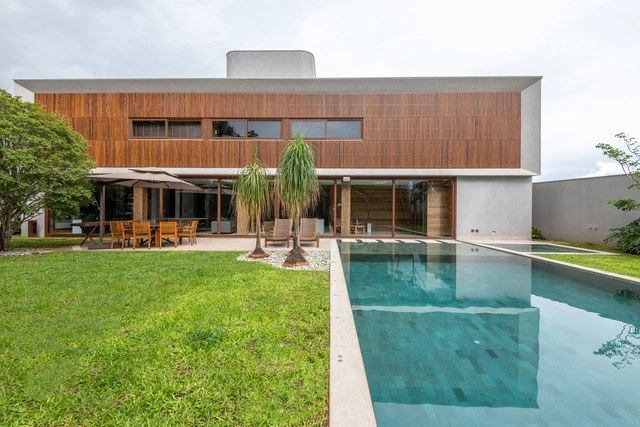
.jpg?1548166722&format=webp&width=640&height=580)
.jpg?1548167206 "© Jomar Bragança")
.jpg?1548167076 "© Jomar Bragança")
.jpg?1548167136 "© Jomar Bragança")
.jpg?1548166437 "© Jomar Bragança")
.jpg?1548166722)
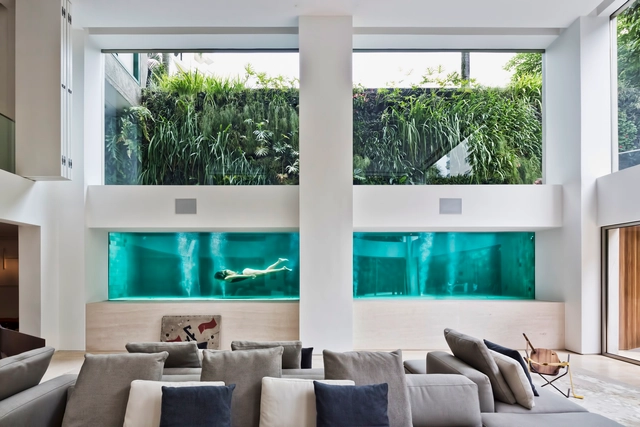
.jpg?1548095744&format=webp&width=640&height=580)
.jpg?1548094482 "© Jomar Bragança")
.jpg?1548094969 "© Jomar Bragança")
.jpg?1548094654 "© Jomar Bragança")
.jpg?1548095383 "© Jomar Bragança")
.jpg?1548095744)