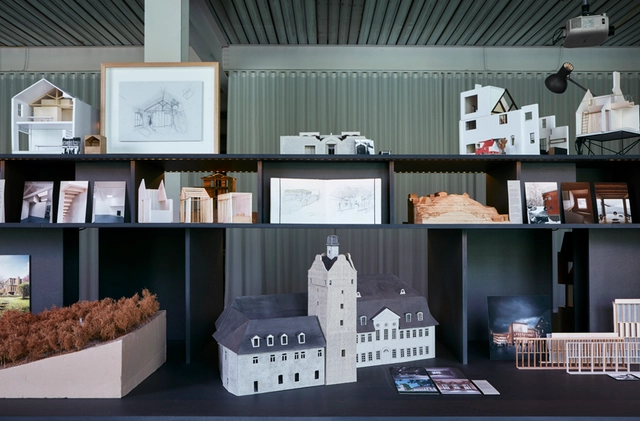
An exhibition that comprises of sketches of 20 internationally renowned architectural minds will be on display at Gallery 1AQ, a gallery in the foreshadow of the iconic Qutab Minar, an ancient Mughal monument from 3 - 21 February, 2017. Along with the exhibit, there will be interactive events over 3 weeks where design powerhouses from around the globe and across different platforms will be presenting. The same has been curated by the Verendra Wakhloo and Rachit Srivastava.
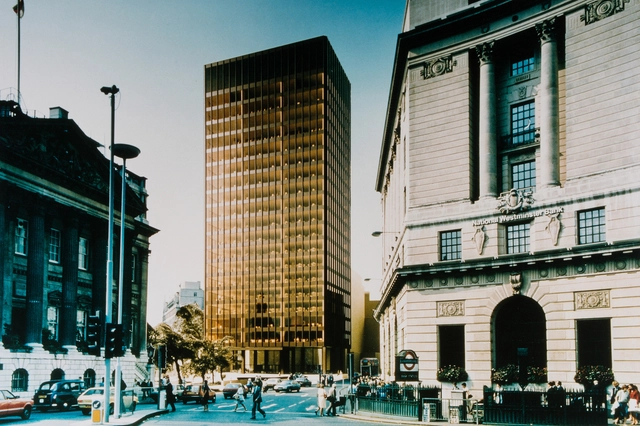
In the 1960s James Stirling asked Ludwig Mies van der Rohe why he didn’t design utopian visions for new societies, like those of Frank Lloyd Wright’s Broadacre City or Corbusier’s Cité Radieuse. Mies replied that he wasn’t interested in fantasies, but only in “making the existing city beautiful.” When Stirling recounted the conversation several decades later it was to the audience of a public enquiry convened in London – he was desperately trying to save Mies’ only UK design from being rejected in planning.
Our experience of information is changing. We now consume more and more information digitally, with much of this being non-textual. Videos, photos and GIFs have become commonplace, with technology allowing these mediums to be as easily shareable as text. This gives way to another trend: the increase in the number and accessibility of online platforms. Not only is more information being digitized, but more dynamic ways of digitization are being developed; multimedia articles and online exhibitions, for example, hope to provide a more engaging way of sharing information.
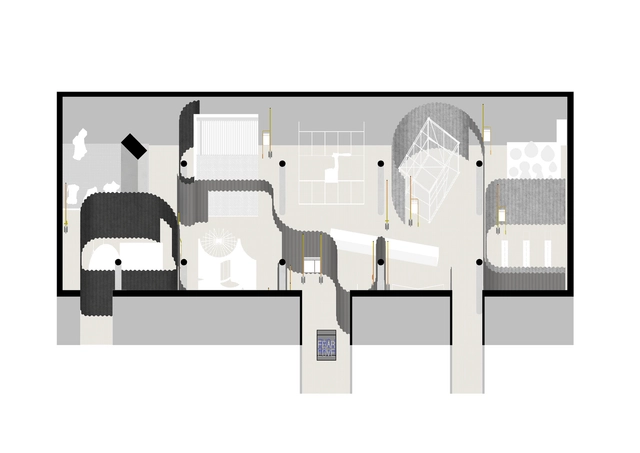
The inaugural show at the new LondonDesign Museum, Fear and Love, presents a collection of "reactions to a complex world." Featuring eleven specially-commissioned installations designed by the likes of OMA/AMO, Hussein Chalayan, Andrés Jaque and Metahaven, the spatial context which frames them is the work of Sam Jacob Studio.
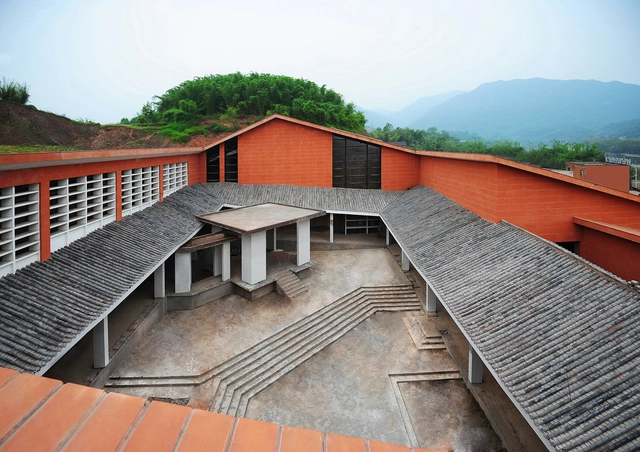
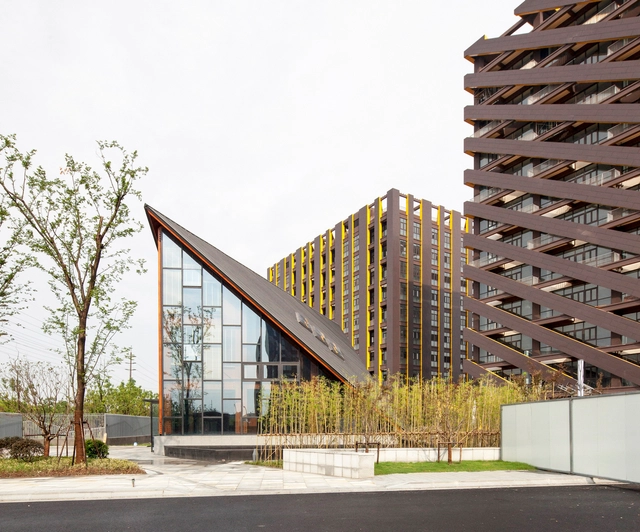
The annual AAP American Architecture Prize, which recognizes outstanding architectural design, interior design, and landscape architecture worldwide, has given URBANLOGIC's Sichuan Arts Factory and Innovation Center a Silver Award in the mixed-use category. The panel of judges included Troy C. Therrien of the Guggenheim Foundation and Museum, Peggy Deamer of Yale University, Ben Van Berkel of UNStudio and Harvard University Graduate School of Design, and Alan Ricks and Michael Murphy, founders of Mass Design Group.
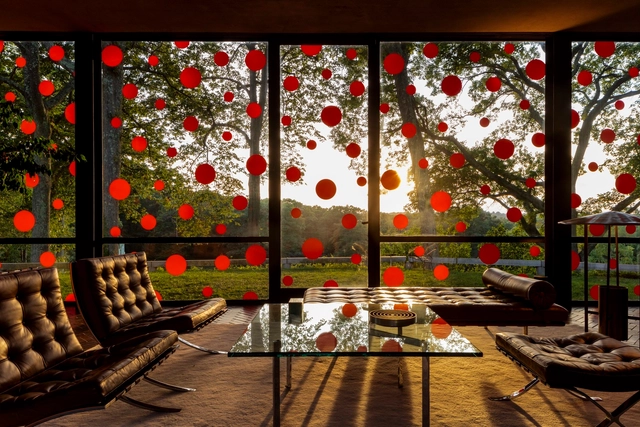
Artist and writer Yayoi Kusama has created an installation for the Glass House that will be on display in celebration of the 110th anniversary of Philip Johnson’s birth, as well as the 10th anniversary of the opening of the Glass House site to the public.
From September 1 through 26, Dots Obsession – Alive, Seeking for Eternal Hope will be on display, with the Glass House itself covered with polka dots. “Visitors who attend the exhibition during this time will be offered the unique experience to simultaneously see the world through the eyes of both Philip Johnson and Yayoi Kusama.”
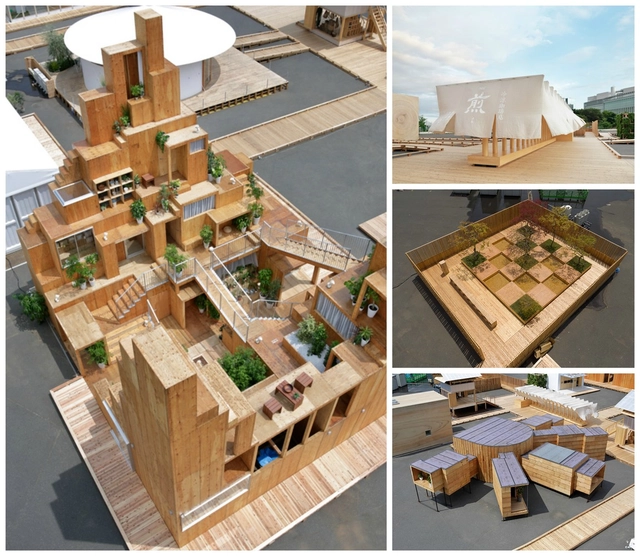
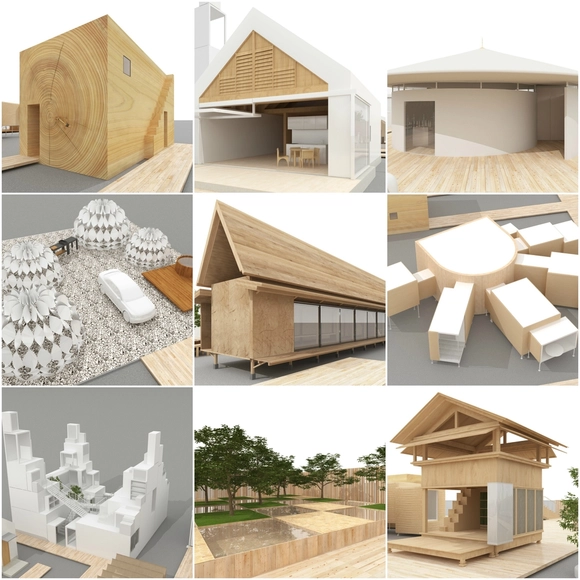
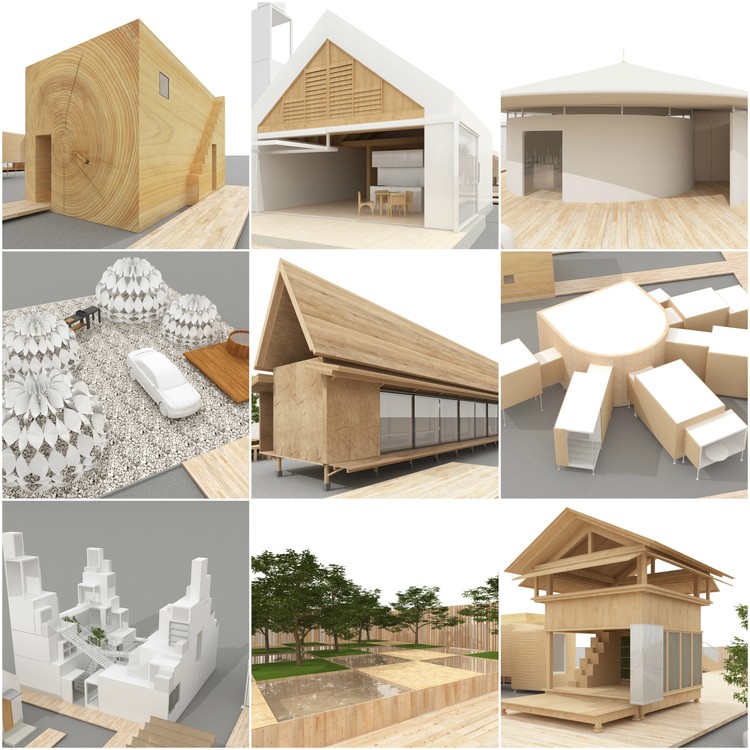
New images from HOUSE VISION Tokyo 2016 have been released as the event opened to the public this past weekend. This year’s theme, “Co-Dividual: Split and Connect / Separate and Come Together,” explores how architecture can create new connections between individuals, and the ways Japanese housing can adapt to cultural shifts through the implementation of technology.
This year’s exhibition features house designs by top Japanese architects including Sou Fujimoto, Kengo Kuma, Shigeru Ban and Atelier Bow-Wow, each paired with a leading company to envision and implement new strategies in housing design.
Continue after the break to see images from the event and the pavilions.
The exhibit, entitled Oskar Hansen: Open Form, will detail “the evolution of Hansen’s theory of Open Form from its origin in his own architectural projects to its application in a firm, visual games, and other artistic practices.”
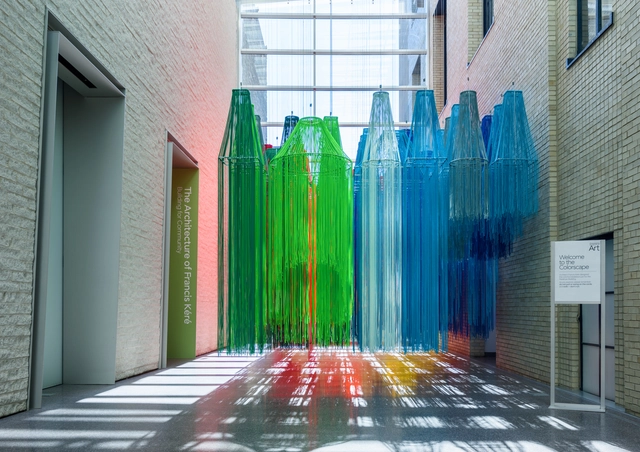
Currently on display at the Philadelphia Museum of Modern Art, Award-winning African architect Diébédo Francis Kéré has created Colorscape, a installation made from steel and brightly-colored fiber, to accompany his first solo show in the United States. The exhibition is titled The Architecture of Francis Kéré: Building with Community, and features of a retrospective of the architect’s career that includes material artifacts, tools and scale-models created for stand-out projects in both Africa and Europe.
Following the success of the inaugural HOUSE VISION Tokyo in 2013, the exhibition is set to return again this summer under the theme of “Co-Dividual: Split and Connect / Separate and Come Together.” Once again curated by Kenya Hara, designer and creative director for minimalist housewares retailer Muji, the month-long event will tackle the objective of “thinking about how to create new connections between individuals,” as well as build upon the topics explored by its previous edition, namely the ways in which Japanese housing can adapt to recent demographic, technological and cultural shifts, and the vision of the house as the intersection between industries.
This year’s exhibition will feature house designs by top Japanese architects such as Sou Fujimoto, Kengo Kuma, Shigeru Ban and Atelier Bow-Wow, each paired with a leading company to envision and implement new strategies in housing design. The houses will be constructed at full-scale, allowing event-goers to fully experience and reflect upon each design.
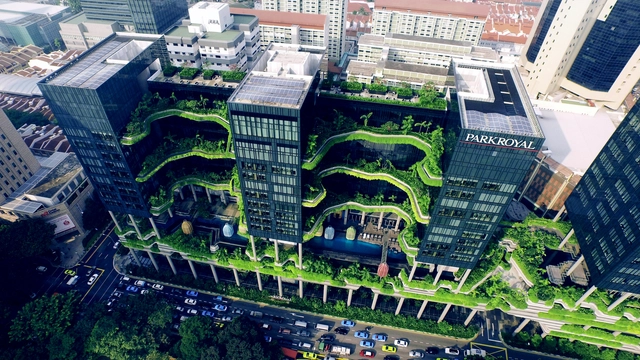
PARKROYAL on Pickering. Image Courtesy of WOHA Architects
Singapore-based WOHA’s “Fragments of an Urban Future” will be on display at the 2016 Venice Biennale, addressing some of the critical issues that megacities face today -- “unprecedented urbanization, accelerating climate change and the need for preservation of tropical biodiversity.” Part of the Global Art Affairs Foundation’s collateral exhibition, “TIME SPACE EXISTENCE,” WOHA’s contribution will be housed in the Palazzo Bembo.
In Granary Square, located in London’s King’s Cross, there is a fragment of the poem Brill by Aidan Dunn set into the ground, which reads: “King’s Cross, dense with angels and histories. There are cities beneath your pavements, cities behind your skies.” Anchored by the converted granary building and a rejuvenated stretch of canal, Argent’s ongoing King’s Cross development is an appropriate setting for Building on the Built, an exhibition which presents the work of London-based practice Jonathan Tuckey Design.
The Baltic Pavilion at the 2016 Venice Biennale, representing Estonia, Latvia and Lithuania, will explore the "transformative efforts at play" that are currently "reprogramming an inert region beyond the delineations of separate nation states." It "intends to explore the built environment of the Baltic States as a shared space of ideas." Located in Enrichetto Capuzzo's Palasport Arsenale Giobatta Gianquinto, a Brutalist architecture sports hall located next to the Arsenale, the exhibition will also be accompanied by a series of related events that will be presented in the form of a cross-section through Baltic space unfolding as "a non-linear stratigraphy."
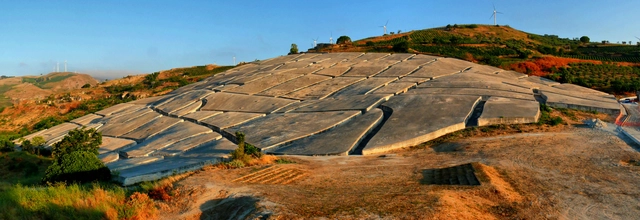
This first major retrospective of Alberto Burri's (1915-1995) work in the United States in nearly forty years will close at New York City's Guggenheim Museum later this week. More than one hundred works are on display covering his entire career, culminating in a film of Burri's largest work: the reinterpretation of the ruins of Gibellina, in Sicily. The old city, destroyed by the 1968 Belice earthquake, was later encased in concrete preserving the morphology of the buildings and the city's medieval streetscape. Alongside his two-dimensional work, the exhibition ultimately seeks to demonstrate how Burri blurred the line between painting and sculptural relief that directly influenced the Neo-Dada, Process art, and Arte Povera movements.
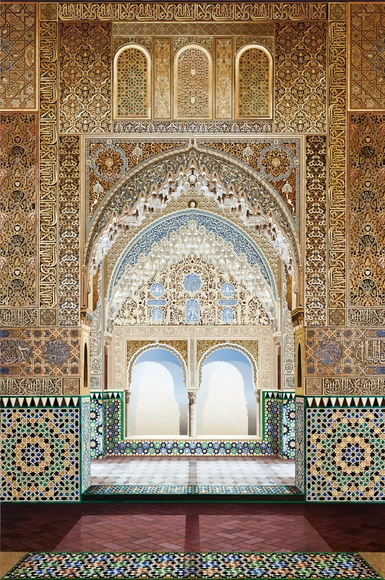
Ben Johnson is a painter preoccupied by realism – especially when it comes to the two-dimensional representation of architectural space. A British artist practicing in London, Johnson has been working professionally since the mid-1960s. In that time his extensive œuvre has encompassed painted cityscapes and prints to depictions of rooms designed—among others—by Norman Foster, John Pawson, I. M. Pei, and David Chipperfield.














.jpg?1472437212&format=webp&width=640&height=580)
.jpg?1472436928 "© Zhang Xuetao")
.jpg?1472437628 "© Zhang Xuetao")
.jpg?1472436914 "© Zhang Xuetao")
.jpg?1472438105 "© Zhang Xuetao")
.jpg?1472437212)