1. ArchDaily
  2. Europe

Europe: The Latest Architecture and News

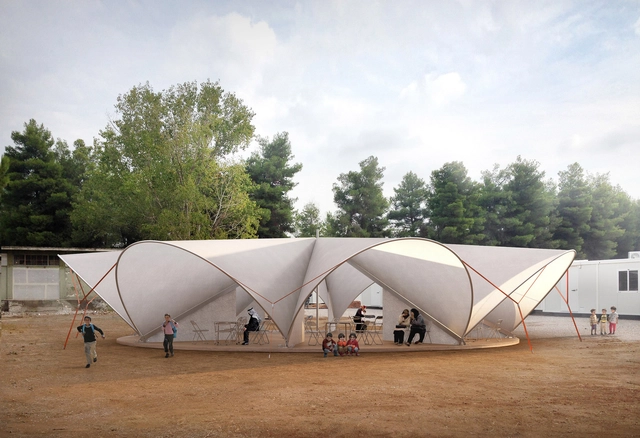
Maidan Tent - Architectural Aid for Europe's Refugee Crisis

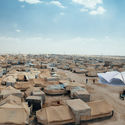
Over the past two years alone, more than a million people have fled the Syrian conflict to take refuge in Europe, strenuously testing the continent’s ability to respond to a large-scale humanitarian crisis. With the Syrian Refugee Crisis still unresolved, and temporary refugee camps now firmly established on the frontiers of Europe, architects and designers are devoting energy to improving the living conditions of those in camps fleeing war and persecution.

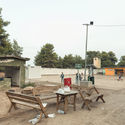
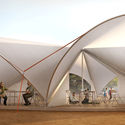
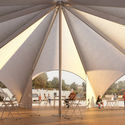
One emerging example of humanitarian architecture is Maidan Tent, a proposed social hub to be erected at a refugee camp in Ritsona, Greece. Led by two young architects, Bonaventura Visconti di Modrone and Leo Bettini Oberkalmsteiner, and with the support of the UN International Organization for Migration, Maidan Tent will allow refugees to benefit from indoor public space – a communal area to counteract the psychological trauma induced by war, persecution, and forced migration.
Maidan Tent - Architectural Aid for Europe's Refugee Crisis  - Image 1 of 4Maidan Tent - Architectural Aid for Europe's Refugee Crisis  - Image 2 of 4Maidan Tent - Architectural Aid for Europe's Refugee Crisis  - Image 3 of 4Maidan Tent - Architectural Aid for Europe's Refugee Crisis  - Image 4 of 4Maidan Tent - Architectural Aid for Europe's Refugee Crisis  - More Images+ 19

MArch. Master in Architecture, Design and Innovation

MArch. Architecture and Design.

MArch Valencia originates as a cultural meeting point for professional architects and designers, students and companies with a same set of values; with the aim of bringing together and sharing all different experiences that arise during creative processes.

A nexus between the academical, professional and enterprise worlds, which is vital nowadays.

NL Architects and XVW Architectuur's deFlat Wins 2017 EU Prize for Contemporary Architecture - Mies van der Rohe Award

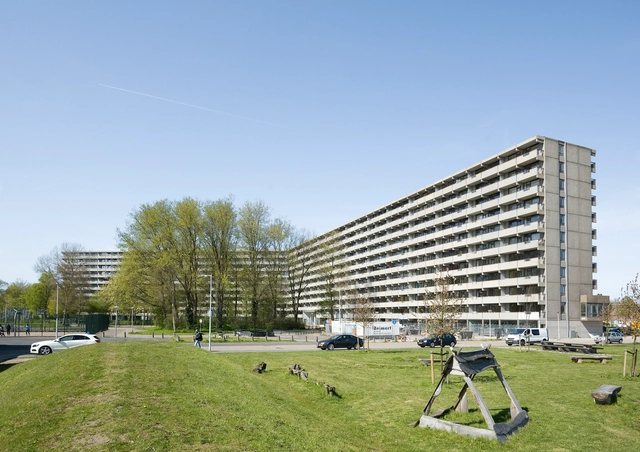
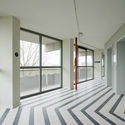
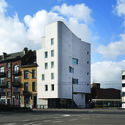
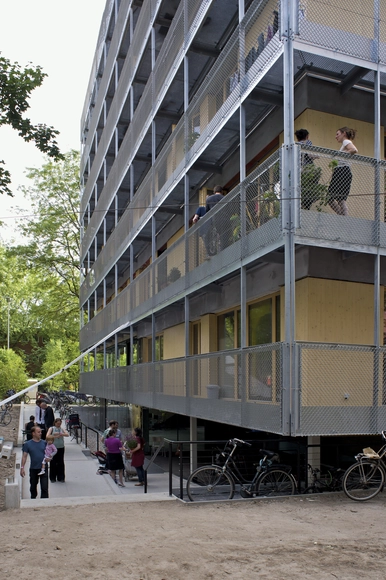
NL Architects + XVW architectuur’s “innovative renovation” of the DeFlat Kleiburg apartment complex in Amsterdam’s Bijlmermeer neighbourhood has been selected as the winner of the 2017 EU Prize for Contemporary Architecture-Mies van der Rohe Award.

One of the largest residential buildings in the Netherlands, the complex was saved from the wrecking ball through its transformation into a rejuvenated framework called a “Klusflat," within which inhabitants could renovate their apartments by themselves. This is the first time the award has been given to a renovation of an existing building.

DeFlat Kleiburg was selected from a list of 355 works from 36 European countries, including the four other finalist projects: Rudy Ricciotti + Passelac & Roques’ Rivesaltes Memorial; BBGK Architekci’s Katyn Museum; Lundgaard & Tranberg Architects’ Kannikegården; and Alison Brooks Architects’ Ely Court. NL Architects were also awarded the EU Mies Awards’ Emerging Architect Prize in 2005 for their work BasketBar in Utrecht.

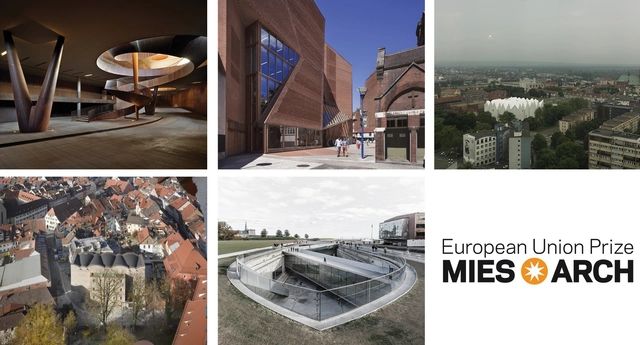
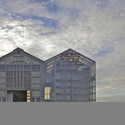
NL Architects and XVW Architectuur's deFlat Wins 2017 EU Prize for Contemporary Architecture - Mies van der Rohe Award - Image 5 of 4NL Architects and XVW Architectuur's deFlat Wins 2017 EU Prize for Contemporary Architecture - Mies van der Rohe Award - Image 4 of 4NL Architects and XVW Architectuur's deFlat Wins 2017 EU Prize for Contemporary Architecture - Mies van der Rohe Award - Image 6 of 4NL Architects and XVW Architectuur's deFlat Wins 2017 EU Prize for Contemporary Architecture - Mies van der Rohe Award - Image 7 of 4NL Architects and XVW Architectuur's deFlat Wins 2017 EU Prize for Contemporary Architecture - Mies van der Rohe Award - More Images+ 7

Exhibition: After Schengen European Borders by Ignacio Evangelista

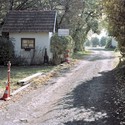
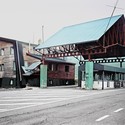
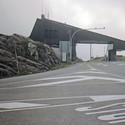
The "After Schengen" photo series shows old border crossing points between different states in the European Union. After the Schengen agreement, most of these old checkpoints remain abandoned and out of service, allowing us to gaze into the past from the present. It causes many reflections, especially at a moment when European Union project is heavily discussed.

reSITE 2017: In/visible City

reSITE brings the 6th annual architecture and urbanism event, reSITE 2017: In/visible City, back to Prague at the Ricardo Bofill-designed Forum Karlin.

How does invisible infrastructure shape the visible aspects of a city?

40 international thought leaders will discuss the intersections of design and infrastructure and the presence of these vital systems in the architecture and landscape of cities.

2017 European Union Prize for Cultural Heritage / Europa Nostra Award Winners Announced

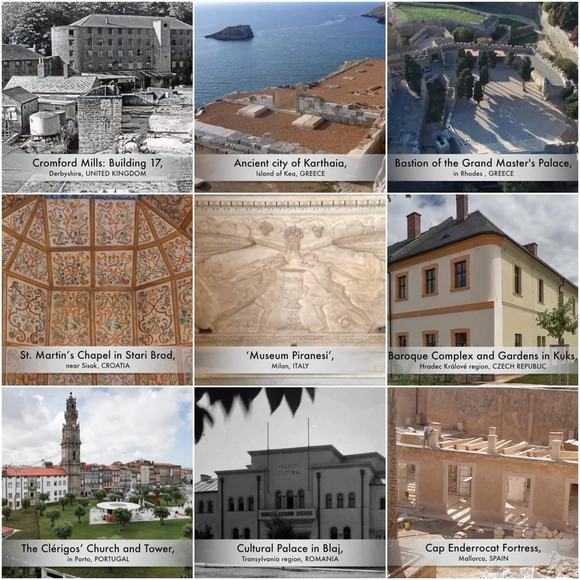
The European Commission and Europa Nostra have unveiled the winners of the 2017 European Union Prize for Cultural Heritage / Europa Nostra Awards, which honor achievements in conservation, research, dedicated service, and education, training and awareness. Out of 202 applications from 39 countries, 29 winners have been selected.

The winners of the 2017 European Union Prize for Cultural Heritage / Europa Nostra Awards are:

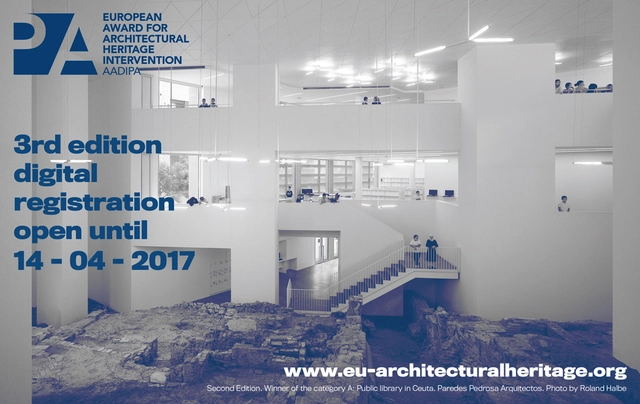
Call for Submissions to 3rd Edition of European Award for Architectural Heritage Intervention AADIPA

The Award for Architectural Heritage Intervention AADIPA, arises from the belief that heritage, as a vehicle for social integration and an economic vitalizing resource for the community, deserves to be appreciated and encouraged. In the current context, in which architectural heritage is considered not only to be a fundamental instrument of knowledge but also a first rate socio-economic resource for the sustainable development of the territory, the disclosure, distinction and recognition of works and quality projects contributing to the preservation of the collective memory is imperative.

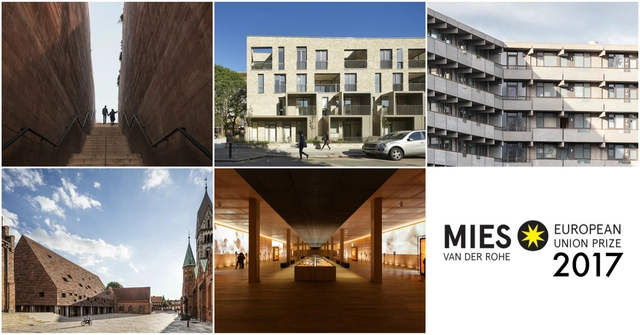
5 Finalists Selected for the 2017 EU Prize for Contemporary Architecture - Mies van der Rohe Award

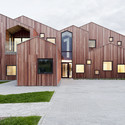
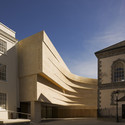
Five European projects have been selected as finalists for the 2017 EU Prize for Contemporary Architecture - Mies van der Rohe Award. Chosen from a shortlist of 40 projects, the five finalists were lauded by the jury for their ability to “respond to the concerns of today’s European society.”

“Our instincts could be summed up by the words of Peter Smithson: ‘things need to be ordinary and heroic at the same time,’” said Jury Chairman Stephen Bates. “We were looking for an ordinariness whose understated lyricism is full of potential’.”

Through April, the jury members will visit each finalist project to evaluate the buildings firsthand and to see how they are used by the public. The Prize Winner will be announced in Brussels on May 16.

The five finalists are:

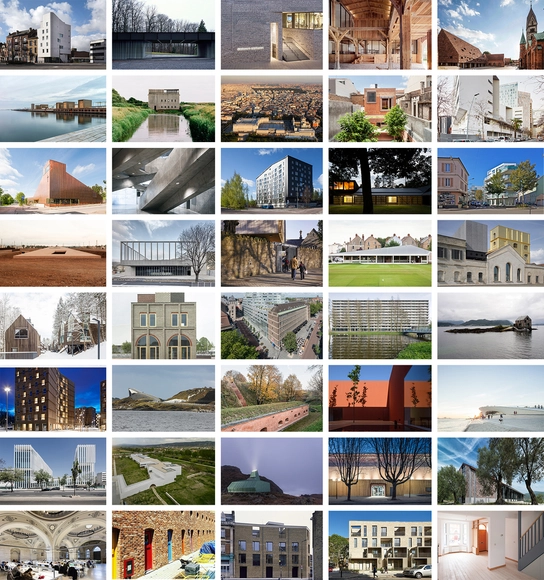
40 Projects Shortlisted for the 2017 EU Prize for Contemporary Architecture - Mies Van Der Rohe Award

The European Commission and the Mies van der Rohe Foundation have announced the 40 shortlisted works that will compete for the 2017 European Union Prize for Contemporary Architecture – Mies van der Rohe Award. The jury has chosen from 355 nominated works and the shortlist highlights the opportunities and the trends of today’s European territory: cities, housing, heritage, and memory. The five finalists will be announced in mid-February and the winner and the Emerging Architect in mid-May.

A third of the works tackle the challenge of contemporary architecture in relation with built heritage and a third of the work tackles the contemporary challenges of housing. The management of the historic urban landscape will be among the priorities highlighted by the ‘European Year of Cultural Heritage' in 2018.

"I would want the shortlisted schemes to demonstrate an interest in making places, in exploring convention and known typologies, in celebrating the pleasures of everyday use by a consideration of detail and an unspoken resistance to the current global tendency towards a self-referential architecture, one that belies context and the act of inhabitation." - Stephen Bates, Chairman of the Jury.

Seen the shortlist after the break.

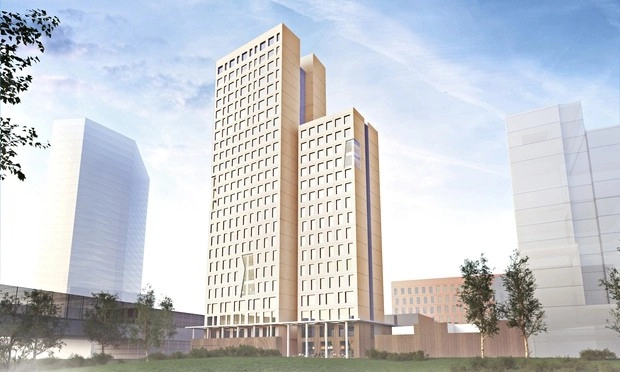
Vienna to Build World's Tallest Wooden Skyscraper

Rüdiger Lainer and Partner plans to construct the world’s tallest wooden skyscraper next year in Vienna’s Seestadt Aspern area. 76 percent of the 84-meter tower is expected to be made from wood rather than concrete, saving approximately 2,800 tonnes of CO2 emissions (equivalent to driving a car 25 miles a day for 1,300 years).

“I think it is important everyone now in 2014 thinks in different ways. We have wood, which is a perfect construction material for building,” she said. “It was used 200 years ago and it was perfect then and is perfect now,” says Kerbler project developer Caroline Palfy, commenting on the architects’ decision to use wood due to its environmental benefits.

An interior loft view and more details, after the break. 

5 Finalists Selected for the 2015 EU Prize for Contemporary Architecture- Mies van der Rohe Award

Five projects have been selected as finalists of the 2015 EU Prize for Contemporary Architecture- Mies van der Rohe Award. The finalists were selected from a shortlist of 40 projects, and over the next couple of months the jury members will visit each of the finalist projects to evaluate the buildings firsthand and gather information from the people who use them. On May 7, the architects will present their projects to the jury. The winner will be announced the following day at a ceremony at Mies van der Rohe’s Barcelona Pavilion.

See the five finalists after the break.

40 Projects Shortlisted for the 2015 EU Prize for Contemporary Architecture – Mies van der Rohe Award

Update: The five finalists for the 2015 Mies van der Rohe Award will be announced on February 25 at 12 UTC. 40 projects from 17 European countries have been shortlisted for the 2015 European Union Prize for Contemporary Architecture – Mies van der Rohe Award. Chosen from the 420 original nominees, five of the shortlisted projects will be chosen for the next round of selection, to be announced at the end of February in London. These selected architects will then present their projects before a committee on May 7, who will select one recipient of the highly esteemed international design award, as well as one recipient of the Emerging Architect Prize. The winners will be announced the following day at the Mies van der Rohe Pavilion in Barcelona.

40 Projects Shortlisted for the 2015 EU Prize for Contemporary Architecture – Mies van der Rohe Award - Image 1 of 440 Projects Shortlisted for the 2015 EU Prize for Contemporary Architecture – Mies van der Rohe Award - Image 2 of 440 Projects Shortlisted for the 2015 EU Prize for Contemporary Architecture – Mies van der Rohe Award - Image 3 of 440 Projects Shortlisted for the 2015 EU Prize for Contemporary Architecture – Mies van der Rohe Award - Image 4 of 440 Projects Shortlisted for the 2015 EU Prize for Contemporary Architecture – Mies van der Rohe Award - More Images+ 36

Co-Housing Movement Sweeps through Europe

Subscriber Access | 

In the Spanish suburb of Alfafar, conditions were looking grim as economic hardships plunged over 40% of its residents into unemployment and left significant portions of its housing vacant. In response, a group of young architects have developed a co-housing plan for the area to accommodate its shifting needs, enabling residents to exchange and share space as needed. Using the existing buildings as the framework, the line between public and private will evolve over time with changing conditions, following in the footsteps of other European countries that have successfully employed similar undertakings. Read more about Alfafar's co-housing plan, here.

420 Projects Nominated for the 2015 European Union Prize for Contemporary Architecture – Mies Van der Rohe Award

The European Commission and the Fundació Mies van der Rohe have selected 420 projects to compete for the 2015 European Union Prize for Contemporary Architecture – Mies van der Rohe Award. The nominations span 36 countries, with the most nominated projects coming from Spain. Twenty-seven percent of the shortlisted projects are housing related, while 24% are cultural facilities, 11% are education-related and the remaining 33% are sport, commercial, governmental, transport and urban projects.

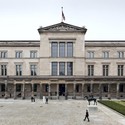
Established in 1987 by the European Union, the European Commission, the European Parliament and the Fundació Mies van der Rohe – Barcelona, the 60.000€ Mies Van der Rohe award is one of the most prestigious and important awards for European architecture. The prize is awarded biennially to works that have been completed in the past two years. Previous winners have included the Harpa Concert Hall and Conference Centre in Reykjavik, designed by the Danish architectural firm Henning Larsen in collaboration with the Islandic practice Batteríið and the artist Olafur Elíasson, and the Neues Museum in Berlin, designed by David Chipperfield Architects and Julian Harrap.

An Emerging Architect prize for professionals beginning their career as well as the Young Talent Architecture Prize (YTAP) for the best European master’s projects from 2014 will also be awarded. In addition, this year for the first time the jury will include a client who has supported high quality architecture and commissioned projects to European architects. The jury will select the shortlisted projects by the end of January 2015.

Read on after the break for the members of the jury, the full list of all 420 nominated projects and ArchDaily's exclusive Mies van der Rohe Award infographic. 

Built Reminders of a Former Time: Europe's Dissolved Border Crossings Photographed

Citizens of central Europe, perhaps uniquely in the world, are used to a life of no borders and free movement between nations. Following two devastating wars fought primarily on European soil, the formation of the early European Union in the 1950s paved the way for a more liberal, less isolated continent. It was not until the signing of the Schengen Treaty in 1985 (which came into effect in 1995) that the majority of borders were truly dissolved and travelling between nations, cultures, and communities became as simple as walking down the road.

Ignacio Evangelista's series of photographs entitled After Schengen examine the remnants of the old, abandoned crossing points that still exist across the Union. No longer necessary to maintain a country's independent sovereignty, and almost twenty years since the revolutionary pact was ratified, these palimpsests of border control remain as striking today as when they when delineated the closed boundaries between nations.

See a selection of the collection after the break...

Built Reminders of a Former Time: Europe's Dissolved Border Crossings Photographed - Image 1 of 4Built Reminders of a Former Time: Europe's Dissolved Border Crossings Photographed - Image 2 of 4Built Reminders of a Former Time: Europe's Dissolved Border Crossings Photographed - Image 3 of 4Built Reminders of a Former Time: Europe's Dissolved Border Crossings Photographed - Image 4 of 4Built Reminders of a Former Time: Europe's Dissolved Border Crossings Photographed - More Images+ 6

AD Interviews: European Architects on the Mies van der Rohe Award

Subscriber Access | 

The European Union Prize for Contemporary Architecture - Mies van der Rohe Award is one of the most important and prestigious prizes for architecture within Europe. First established in 1987, the prize is awarded every two years, and a look at the projects over the years offers unique insight into the development of architecture across Europe. To better understand the significance and uniqueness of the award we spoke with two previous award winners – Kjetil Trædal Thorsen and Craig Dykers from Snøhetta and Dominique Perrault from Dominique Perrault Architecture – as well as Peter Cachola Schmal, an architect, critic and the director of DAM, the German Architecture Musuem, and Josep Lluís Mateo of Mateo Arquitectura and a professor of Architecture and Projects at ETH-Eidgenössische Technische Hochschule/ Swiss Federal Institute of Technology Zurich.

“This is the special thing about the Mies jury, that they do visit the top 5 projects, and see first-hand what this piece of architecture is about. And then they vote, which means the jury really knows what they’re voting about,” Peter Cachola Schmal noted.

“It’s a prize for a project, rather than a prize for an architect,” Kjetil Trædal Thorsen added.

Read on after the break for more on the Mies van der Rohe award and to see what the architects had to say about the importance of archives...

AD Interviews: European Architects on the Mies van der Rohe Award - Arch Daily InterviewsAD Interviews: European Architects on the Mies van der Rohe Award - Arch Daily InterviewsAD Interviews: European Architects on the Mies van der Rohe Award - Arch Daily InterviewsAD Interviews: European Architects on the Mies van der Rohe Award - Arch Daily InterviewsAD Interviews: European Architects on the Mies van der Rohe Award - More Images+ 2

Rome Invites Ideas For Reuse of Europe's Biggest Landfill Site

A major competition for reuse has just been announced for the Malagrotta Landfill, one of the European Union's biggest landfill sites. After Malagrotta was closed in August 2013 due to its controversial size and negative impact on the surrounding community, the Municipality of Rome began a process of redevelopment through community engagement. Multi-displinary teams are tasked with a creating a proposal to reinvent the sprawling 240-hectare property while considering its original purpose. The competition is designed to begin a conversation on the long-term vision for the property.

Search for the 2014 Young Architect of the Year Begins

The search for the 2014 Young Architect of the Year Awards (YAYA), organised by BDOnline, has begun. Now in its 16th year, YAYA "recognises the most promising new architectural practice in the European Union." Open to fully qualified architects who have been practising for twelve years or less, the winner of this year's YAYA will be announced at the Architect of the Year Awards gala dinner on the 2nd December 2014 at The Brewery, London.