1. ArchDaily
  2. Earth

Earth: The Latest Architecture and News

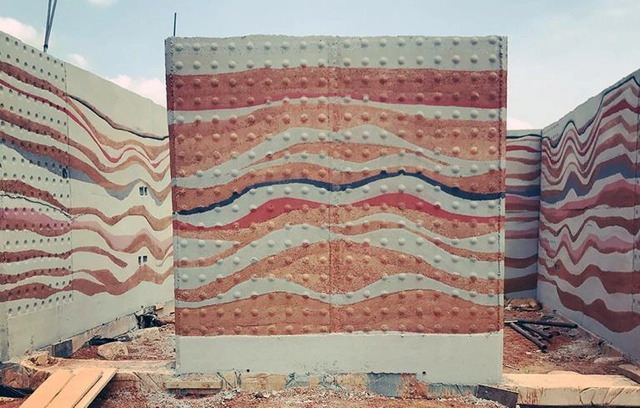
Colors Of the Earth: Ghana's Incredible, Rammed Earth Walls

Subscriber Access | 

Rammed earth constructions are not a novelty, on the contrary, some sections of the Great Wall of China were made using this technique. Relegated and replaced by modern methods of construction, the mud walls are currently re-emerging as an economic, sustainable solution, with low environmental impact. Even Joelle Eyeson, a young African entrepreneur, is betting that it may be the answer to the housing deficit in her region.

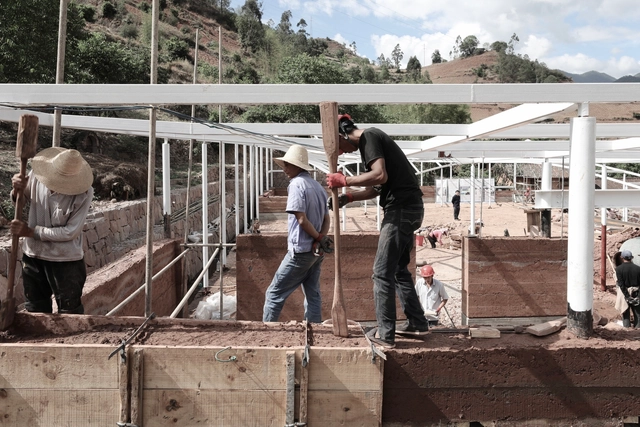
This is a rudimentary construction system in which earth is compressed into wooden boxes. The clay is horizontally placed in layers of 15 cm in height, and compacted with manual or pneumatic tools, to achieve its ideal density creating a resistant and durable structure.
Local Techniques in Big Cities: Beyond Earth and Bamboo

Subscriber Access | 

Vernacular techniques and local materials are becoming more and more relevant in architecture, but is it possible to bring these concepts to large urban areas?

In 1984, the Amazonian architect Severiano Porto had already pointed out the need to make architecture more connected to its location. Using local materials and techniques is becoming more important each day, considering the impacts of the commodity chain of building construction on the planet. Not surprisingly, the number of projects that use this approach is growing every day, as Severiano has already mentioned in his work since the 1980s.

Local Techniques in Big Cities: Beyond Earth and Bamboo - Image 1 of 4Local Techniques in Big Cities: Beyond Earth and Bamboo - Image 2 of 4Local Techniques in Big Cities: Beyond Earth and Bamboo - Image 3 of 4Local Techniques in Big Cities: Beyond Earth and Bamboo - Image 4 of 4Local Techniques in Big Cities: Beyond Earth and Bamboo - More Images+ 11

Is It Possible to Mix Local Materials and 3D Printing?

Subscriber Access | 

The art of building a shelter made from blocks of ice is passed on from father to son among the Inuit, native peoples who inhabit the northernmost regions of the planet. The circular plan, the entrance tunnel, the air outlet and the ice blocks form a structure where the heat generated inside melts a superficial layer of snow and seals the gaps, improving the thermal insulation of ice. In a storm, an igloo can be the difference between life and death and perhaps this is the most iconic and radical example of what it means to build with local materials, few tools and lots of knowledge. In this case, ice is all you have.

Taking advantage of abundant resources and local labor are key concepts for sustainable architecture, which are often overlooked at the expense of solutions replicated from other contexts. With new demands and technologies, the globalization of building materials and construction techniques, is there still room for local materials? More specifically in relation to 3D printed constructions, are we destined to erect them only in concrete?

Round Houses of Raw Earth: 3D Printing Sustainable Homes in 200 Hours

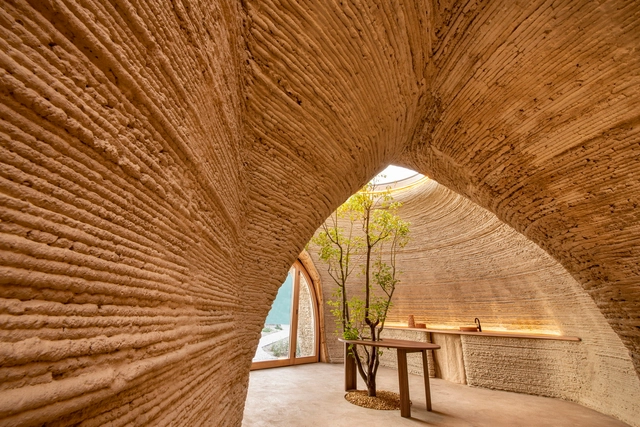
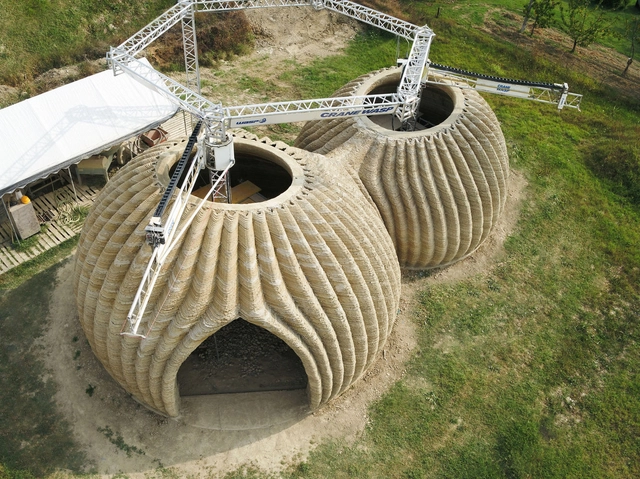
A recent collaboration between the team of Mario Cucinella Architects (MC A) and WASP, specialists in 3D Printing in Italy, has resulted in the first 3D-printed construction of a fully natural, recyclable, and carbon-neutral material: raw earth. The circular housing prototype is called TECLA and it was built in Massa Lombarda (Ravenna, Italy) using multiple 3D printers synchronized to work at the same time.

Ultradistancia Releases "Monsters of Mine", a New Series of Satellite Imageries

Created by Argentinian photographer and visual artist Federico Winer, Ultradistancia, the fine art project based on high-resolution satellite images, has released its latest series “Monsters of Mine”. Showcasing pictures of large mines from all over the world, "Monsters of Mine" reveals a fascinating carved out topography.

Ultradistancia Releases "Monsters of Mine", a New Series of Satellite Imageries - Image 1 of 4Ultradistancia Releases "Monsters of Mine", a New Series of Satellite Imageries - Image 2 of 4Ultradistancia Releases "Monsters of Mine", a New Series of Satellite Imageries - Image 3 of 4Ultradistancia Releases "Monsters of Mine", a New Series of Satellite Imageries - Image 4 of 4Ultradistancia Releases Monsters of Mine, a New Series of Satellite Imageries - More Images+ 17

Using Adobe in Architecture: Techniques and Application

Subscriber Access | 
Using Adobe in Architecture: Techniques and Application - Image 8 of 4
© Marco Aresta

Using Adobe in Architecture: Techniques and Application - Image 1 of 4Using Adobe in Architecture: Techniques and Application - Image 2 of 4Using Adobe in Architecture: Techniques and Application - Image 3 of 4Using Adobe in Architecture: Techniques and Application - Image 4 of 4Using Adobe in Architecture: Techniques and Application - More Images+ 6

It's no secret that adobe is one of the most widely utilized materials in construction. For centuries, it has been the go-to material for civilizations worldwide thanks to its aesthetic qualities and durability. Today, we continue using earthen materials like adobe for a wide array of building projects; however, to obtain optimal results, one cannot ignore the art and skill required in brickmaking. For many in the trade, it's a craft that has been passed down generation after generation.

Call for Submissions: Dichotomy Issue 25

Soil is the foundation of the Earth in which we all inhabit. We grow from it, prosper from it, build upon it, pollute it, and dichotomize it. Soil is an organic material providing a sustainable base for life. Yet, polarized as degrading and dirty. How is it that soil can unite nations, yet divide people? What power does it have in cultivating the built environment and defining its boundaries?