1. ArchDaily
  2. Cultural Center

Cultural Center: The Latest Architecture and News

Château of Chillon Restaurant & Boutique Competition Entry / Mauro Turin Architectes

The proposal for the Château of Chillon Restaurant & Boutique by Mauro Turin Architectes takes into account the cultural significance of the historical national monument and uses century-old construction along with various updated methodologies. Their aspiration is to add, in a notion of continuity, a new layer of history about the site and the Castle. Therefore, the building is designed in the image of its ambitions, in the expectation in what can be called the expansion of the Castle. More images and architects' description after the break.

Sant Josep Library / Ramon Esteve

Sant Josep Library / Ramon Esteve - Library, Facade, Door
© Diego Opazo
Ontinyent, Spain
  • Architects: Ramon Esteve
  • Year Completion year of this architecture project Year:  2008
  • Professionals: Díaz-Sala

Sant Josep Library / Ramon Esteve - Library, Facade, Table, ChairSant Josep Library / Ramon Esteve - LibrarySant Josep Library / Ramon Esteve - Library, Door, FacadeSant Josep Library / Ramon Esteve - Library, FacadeSant Josep Library / Ramon Esteve - More Images+ 24

‘The Slabs’ - Italian Pavilion Expo 2015 Proposal / MenoMenoPiu Architects + BE.ST Architect

MenoMenoPiu Architects + BE.ST Architect shared with us their proposal for the Italian Pavilion Expo 2015. Titled 'The Slabs', their design consists of a light cage where the technical innovation is embedded within the structure: revolutionary glass columns sustain traditional slabs clad in marble. Simple and elegant in its structural system, marble and glass are intertwined to express the Italian architectural tradition of proportion and elegance. More images and architects' description after the break.

Custore Pavilion / Anna Dobek + Mateusz Wojcicki

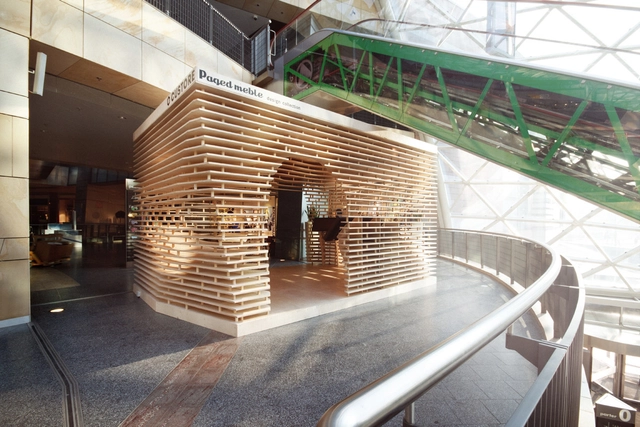
Custore, an experimental project, is a pavilion that explores the areas of parametric architecture used for the commercial market. Designed by Anna Dobek + Mateusz Wojcicki, they had to deal not only with the aesthetic issues of computer-generated sculptural forms, but also with practical problems associated with the execution of the project inside a commercial building, and - most importantly – with the real clash of artistic forms and commercial market guidelines. More images and architects’ description after the break.

'Vitreous' Academic Initiative / University of Houston CoA + Judd Foundation

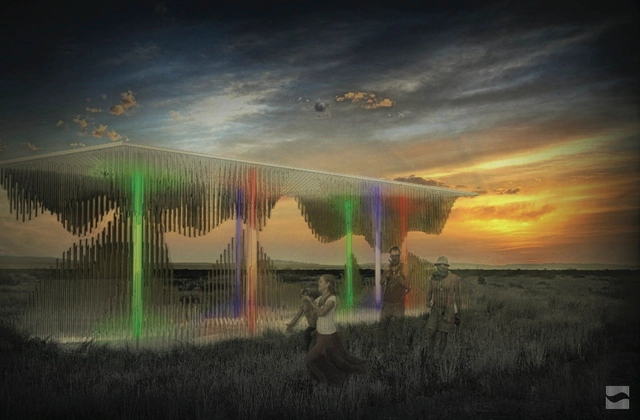
Vitreous is a collaborative academic initiative by the University of Houston's Gerald D. Hines College of Architecture and the Judd Foundation that incorporates the vantage points of the natural landscape, and the technological advancement of digital fabrication and media technologies. The faceted panels disguise and blend the unbounded Marfa landscape with reflective images causing a perceptual distortion between the viewer and the surroundings and between the real and the virtual. More images and the team's description after the break.

Bavarian History Museum Competition Entry / X+UN Architecture

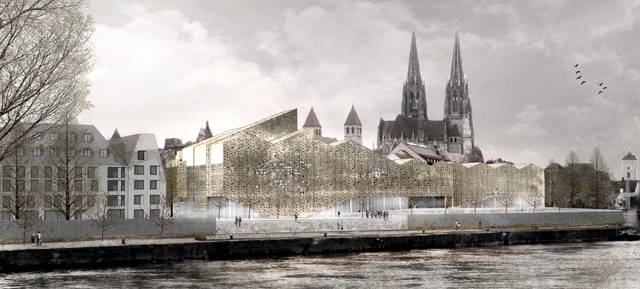
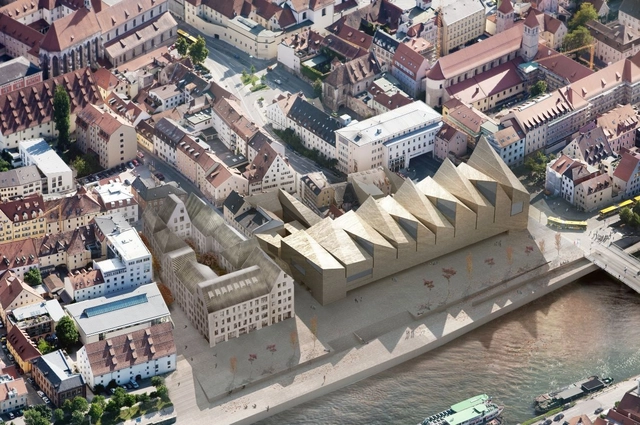
The design of the Bavarian history museum by X+UN Architecture takes into account the impact of the most important landmarks surrounding the site. Located in Regensburg, it is placed on the bank of the Donau River, which acts as a visual promenade that makes the building visible from a long distance and channels an important flow of people into the site. The shape of the museum is generated from a series of stripes parallel to the river. More images and architects' description after the break.

New Central Library in Berlin Winning Proposal / Envés Arquitectos

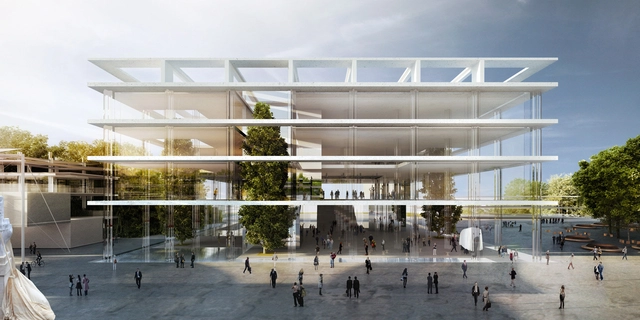
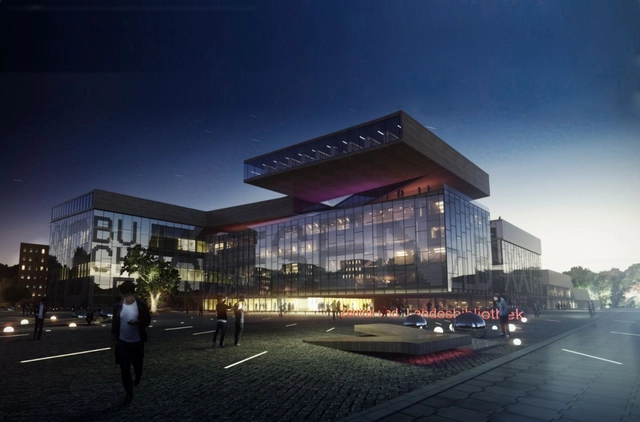
Designed by Envés Arquitectos, their proposal for the New Central Library in Berlin was named as one of the winners of the competition, which is conceived as an open, public, free and comfortable meeting place; summing up, an urban lobby. This flexible place is able to interact with a changing user (from a kid to an ancient), but simultaneously ensures the area’s accessibility and right usage. The library also aims to become an activity catalyst, a landmark to be perceived from far away. More images and architects' description after the break.

Media Library Drachten / ADP Archtitects

Media Library Drachten / ADP Archtitects - Library, Facade, DoorMedia Library Drachten / ADP Archtitects - Library, Facade, Beam, Table, ChairMedia Library Drachten / ADP Archtitects - Library, Facade, Beam, ChairMedia Library Drachten / ADP Archtitects - Library, BeamMedia Library Drachten / ADP Archtitects - More Images+ 8

  • Architects: ADP Architects
  • Area Area of this architecture project Area:  650
  • Year Completion year of this architecture project Year:  2012

Bavarian History Museum Proposal / OODA + Menos é Mais Arquitectos

OODA + Menos é Mais Arquitectos recently unveiled their design proposal for the Bavarian History Museum which explores the ability of architecture and urban planning to spread a cultural event, so that it leads to optimism and a contrasting pleasure drive between the river, the museum, the city and the public in general. Taking advantage of the excellent location on the Danube and close to the cathedral, the new museum is an urban landmark that reveals his historical narrative in its interior. More images and architects' description after the break.

Rio de Moinhos Open Air Theatre / ateliermob

Rio de Moinhos Open Air Theatre / ateliermob - AmphitheaterRio de Moinhos Open Air Theatre / ateliermob - Amphitheater, Garden, Stairs, Handrail, ForestRio de Moinhos Open Air Theatre / ateliermob - AmphitheaterRio de Moinhos Open Air Theatre / ateliermob - Amphitheater, Facade, Handrail, FenceRio de Moinhos Open Air Theatre / ateliermob - More Images+ 7

Rio de Moinhos, Portugal

Thula Fort Restoration / Abdullah Al-Hadrami

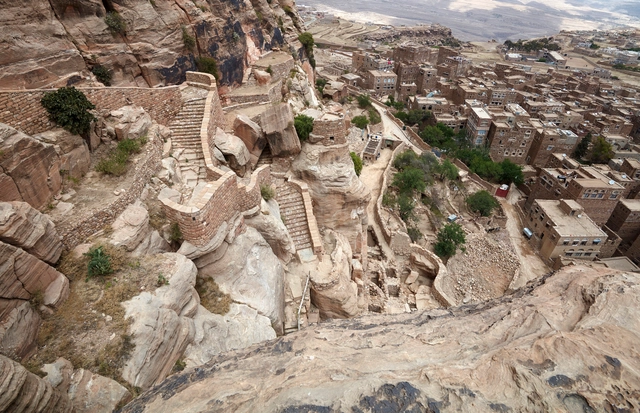
Thula Fort Restoration / Abdullah Al-Hadrami - Restoration, ArchThula Fort Restoration / Abdullah Al-Hadrami - RestorationThula Fort Restoration / Abdullah Al-Hadrami - Restoration, StairsThula Fort Restoration / Abdullah Al-Hadrami - RestorationThula Fort Restoration / Abdullah Al-Hadrami - More Images+ 3

  • Area Area of this architecture project Area:  8754
  • Year Completion year of this architecture project Year:  2011

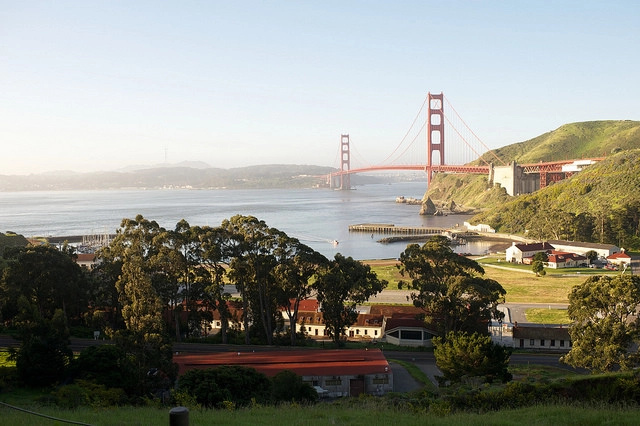
The Presidio Trust of San Francisco Announces 3 Finalists for Cultural Hub Competition

San Francisco is planning a new cultural facility on the former commissary of the military base that has been turned into a national park and has announced three finalists in its competition held by the Presidio Trust, according to news outlet SFGate. The 92,000 square-foot building is part of the Golden Gate National Recreation Area and has an ambitious future that will be developed on this unique location. The three finalists have diverse agendas that range from turning the future cultural center into a performance and exhibition space to an institute that focuses on sustainability issues. The Presidio Trust is currently laying out guidelines in the next step of the competition that will likely be due in the fall. The trust also plans to engage the public with a to-be-scheduled forum in June that will host presentations by the finalists.

Join us after the break for a look at the three finalists.

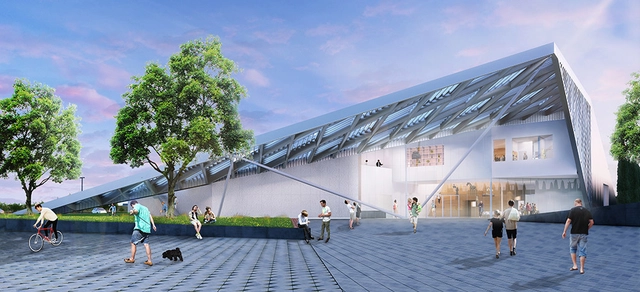
UC Davis Art Museum Proposal / WORKac

Last year the University of California, Davis invited three architectsto compete for the chance to design their new $30 million art museum, slated to open in 2016. The competition was a design-build affair, with each entrant being asked to pair up with a contractor and submit a holistic design. For those who missed it, SO - IL were announced yesterday as the winners of the competition.

Here we present one of two runner-up submissions, this one from WORKac. The concept revolves around creating a distinctive beacon, which would be a centerpoint for an overlap between art, higher-education, and everyday-life. The parallelogram form is intended to create a dynamic space which creates opportunities for interplay with the proposed landscape and surrounding area. Inside a collection of formal and informal, open and intimate are arranged along two axes, pinned together with a bright common space.

Read the architects description after the break...

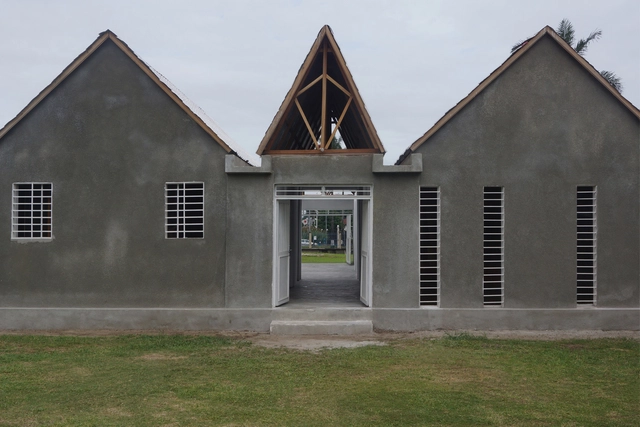
Japanese Cultural Center of D.R. Congo / Keio University SFC Hironori Matsubara Laboratory

Japanese Cultural Center of D.R. Congo /  Keio University SFC Hironori Matsubara Laboratory - Cultural Center, Door, FacadeJapanese Cultural Center of D.R. Congo /  Keio University SFC Hironori Matsubara Laboratory - Cultural Center, ChairJapanese Cultural Center of D.R. Congo /  Keio University SFC Hironori Matsubara Laboratory - Cultural Center, Door, Stairs, Facade, Beam, HandrailJapanese Cultural Center of D.R. Congo /  Keio University SFC Hironori Matsubara Laboratory - Cultural CenterJapanese Cultural Center of D.R. Congo /  Keio University SFC Hironori Matsubara Laboratory - More Images+ 34

'The Great Sky': Great Fen Visitor Center Competition Entry / Nicholas Hare Architects

The ‘Great Sky Visitor Center’ is a shimmering mirrored disc floating above the flat horizon of the Great Fen atop a shallow cone of fenland planting - a dramatic profile and marker in the landscape, but also one camouflaged when seen from the air. Designed by Nicholas Hare Architects, the silvered surface, that seen from within, dematerializes its edge against a reflected sky, intends to patinate and change over time in sympathy with the landscape it reflects. More images and architects' description after the break. Their design is a spherical surface reflecting 360 degree views of the continually evolving Fen landscape. In place of selective framed views, all views would be accepted into the heart of the Center from this ever changing landscape. A shallow landscaped cone provides added drama on approach to the upper viewing level: a device that allows the circular structure to act as a compass, allowing orientation and a literal and metaphorical sinking into the landscape from any chosen point of departure.

'The Fenland Beacon': Great Fen Visitor Center Competition Entry / Nicholas Hare Architects

Titled, 'The Fenland Beacon', this proposal for the Great Fen Visitor Center is rooted in the landscape; responding to the inherent qualities of the Great Fen. Designed by Nicholas Hare Architects, the expansive sweep of the timber façade that ventures out and dissolve into the landscape is punctuated by the tower dramatically rising above the Fenland horizon, anchoring the visitor centre within the wider context; an orientating beacon within the expanse of the Great Fen. More images and architects' description after the break. Visitors are invited to embark upon a journey, aiming to elevate their understanding and deepen their relationship with the Great Fen. The linear sequence of experiences through the site, pavilion and tower distil the beauty of the environment into their elements whilst silencing the others, allowing the appreciation of each individual aspect that makes up the whole. Culminating in the ascent of the tower, the visitor is rewarded with a unique 360-degree panorama of the Great Fen.

Naves Temporary Pavilion Proposal / Appareil

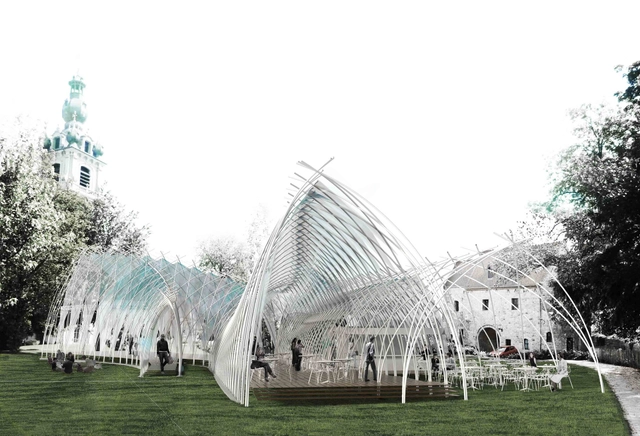
Designed by Appareil, their proposal for Naves, a temporary pavilion for the city of Mons, Capital of Culture in 2015, addresses a contextual relationship to the gothic surroundings as an exploration on lightness and transparency. Inspired by this historical context, this project explores structural and material logics to revisit the gothic arch; the ‘curve’ is examined as a bending element caught within a woven collaborative structure of glass fiber tubes, in which the use of compression is exchanged by the one of tension for the building to achieve maximum lightness. More images and architects' description after the break.

Sejong Art Center 2nd Prize Winning Proposal / Tomoon Architects & Engineers + Ison Architects

Designed by Tomoon Architects & Engineers, in collaboration with Ison Architects, their second prize winning proposal for the Sejong Art Center is a cultural center for opera, music, dance, drama, art exhibitions, cinema, and all types of formal and informal performances. With a total program area of approx. 11,000 square meters, the architects proposed that all of the program elements be brought together into a single mass made as compact as possible, maximizing functionality and efficiency, while conserving open space. More images and architects’ description after the break. The center is composed of an opera house with 800 seats, a flexible black box theater with 300 seats, a cinema theater with 400 seats, an art gallery, a cultural center, a VIP lounge, a cafe and a restaurant. In addition there are other necessary spaces such as rehearsal rooms and administration offices, as well as parking. All of the major public spaces are accessed by a single common lobby which acts as an elevated platform and frame, providing views on one side to the city, and on the other, to the central park and the landscape beyond. The walls of the common lobby are glazed from floor to ceiling and sheathed in a metal mesh, so all of the pre-concert and concert activities can be seen from inside and outside, creating a visually rich dynamic environment for both audience and passersby. Also, because the art gallery, cultural center, café and restaurant are in close proximity, this ensures that the common lobby and all foyer areas will be used all throughout the day and into the evening. The compact building mass means that a variety of open and green spaces can be designed around the building. The northwest facing main entry plaza contains water features to attract people coming from the city. In addition the main entry stairs form a grand backdrop leading to the magnificent view of the opera house, the black box theater, and the cinema behind the glazed common lobby wall. The east facing rear plaza is more informal and park-like and is designed so that it can accommodate a wide variety of outdoor performances in addition to providing wide scenic views of the park and surrounding landscape. The north entry plaza is conceived as a vibrant café / cultural plaza. The opera house is in the shape of the classic horseshoe which provides excellent acoustics and good sightlines from all areas of the hall. The black box theater has been designed for good acoustics and for maximum flexibility in stage and seating configurations to accommodate a variety of performance settings and events. The Sejong Art Center is a culture center for the 21st century, bringing a state-of-the-art cultural facility to Sejong City that is a new symbol for the new city. It is a place to enjoy and contemplate culture, the city and nature, and provides a wonderful place for relaxation and enjoyment for all people and citizens. Architects: Tomoon Architects & Engineers, in collaboration with Ison Architects Location : Nasung-dong, Sejong, South Korea Project Architects: Cha Yong-wook, Son Jin Project Manager: Choi Jae-won Project Team: Shin Eun-ho, Choi Jong-bae, Peter Oh, Lee Joon-ho, Lee Doo-hyeong, Lee Woo-joo, Choi Min-wook Acoustics: OSD Engineering & Consulting Stage: TSD STAGE Structural Engineers: Hyung-sang Engineering Mechanical Engineers: Sahm-shin Engineers Electricity / Telecommunication: Young-Kwang Enginneering CG: 3D Focus Architectural Model: OPUS Site Area: 43,493㎡ Building Area: 11,009㎡ Gross Area: 15,205㎡ Structure: Reinforced Concrete + Steel Structure Material: White Tile, Metal Fabric, Wood, Stone Total Stories: 4 Floors Parking: 354 Project Period: December 2012 – March 2013