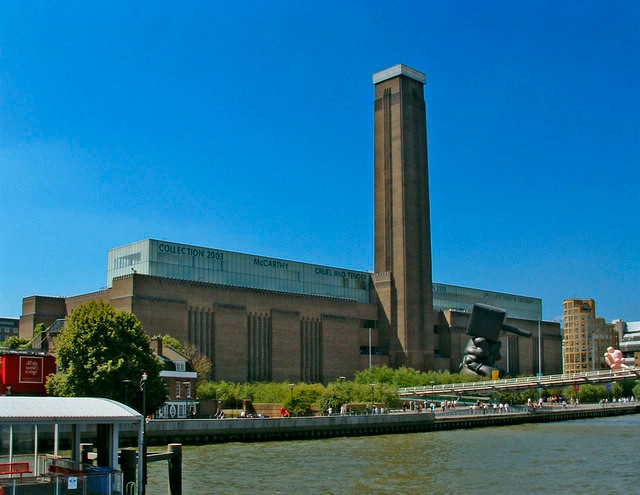
London’s Bankside Power Station stood disused from 1981 until 2000, when it opened to the public as The Tate Modern. Swiss architects Herzog & de Meuron approached the conversion with a relatively light hand, creating a contemporary public space without diminishing the building's historical presence. The impressive cultural icon has since become the most visited museum of modern art in the world, revitalizing its formerly sequestered, industrial neighborhood.
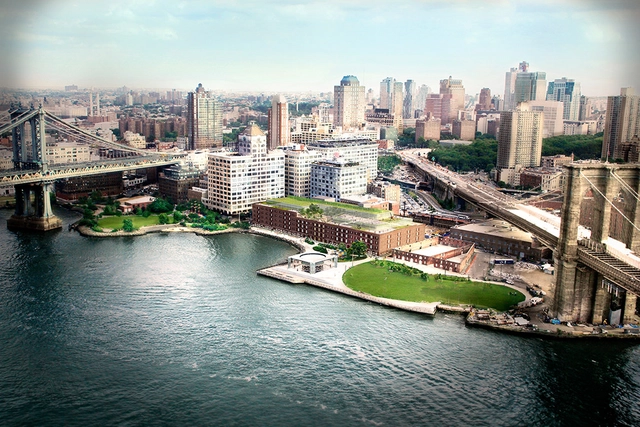
After fifty years of neglect the Empire Stores, located next to the Brooklyn Bridge, are now the most coveted waterfront property in New York. Midtown Equity has partnered with Studio V Architecture to adaptively reuse the 19th-century coffee warehouse into 380,000 square-feet of office, restaurant and commercial space, highlighted by a Brooklyn-centric cultural museum. "After the Brooklyn Bridge," says Joe Cayre, Chairman of Midtown Equities, "the Civil War era Empire Stores are the most iconic structures on the Brooklyn waterfront. As a Brooklyn native who raised my family in the borough, it is an honor for my firm to be chosen for the redevelopment of the Empire Stores."
Learn more after the break...
https://www.archdaily.com/427667/reviving-brooklyn-s-waterfront-19th-century-warehouses-evolve-into-21st-century-hubsJose Luis Gabriel Cruz
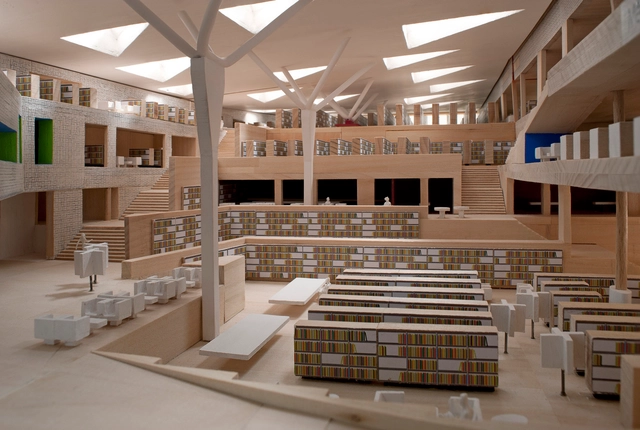
In 2003, BOLLES + WILSON won a national competition that gained them commission of the new Luxemburg National Library (BnL Bibliothèque Nationale de Luxembourg). After years of hibernation, the 39,000 square meter library will break ground in 2014.
Follow us after the break for more analysis on the library...
https://www.archdaily.com/425750/bnl-bibliotheque-nationale-de-luxembourg-bolles-wilsonJose Luis Gabriel Cruz
Designed for the Expo 2017 theme "The Energy of the Future", Saraiva + Associados' proposal was recently selected as one of the top 10 finalists in the competition. Their concept proposes an enduring landmark in Astana that integrates renewables, efficiency, clean technologies and sustainability into livable and feasible architecture where "Energy is Life". From the master plan to the individual buildings, this design embraces the idea that "Life should be built on the conservation of energy" and clearly makes a statement that energy concerns on Buildings and City Planning can be put immediately into action - and the best way to do it is by providing high quality contemporary concepts that efficiently integrates proven technology into feasible designs that can effectively make the difference today. More images and architects' description after the break.
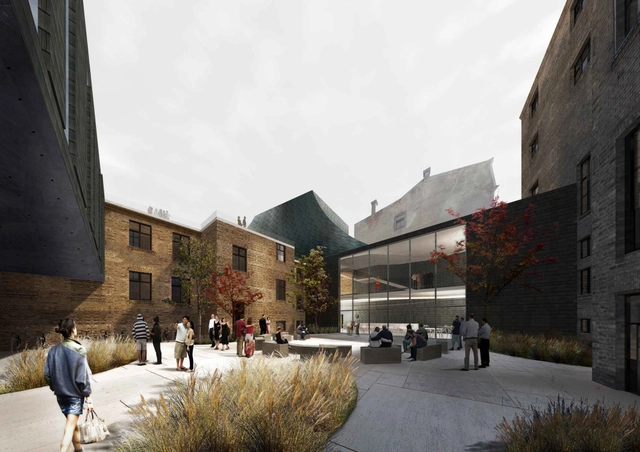
Designed by NRJA + IG Kurbads, their ‘Show Under Skin’ proposal for the reconstruction of the new Riga Theatre corresponds to the dynamism of the creative process within the theater - minimalist, smooth finish, combined with a twisted in a motion stopped volume.The skin is a multi-functional covering structure which is connected with the historical volume, covering it and combining various features and space dimensions in a single organic volume, also matching different adjacent building heights. More images and architects’ description after the break.
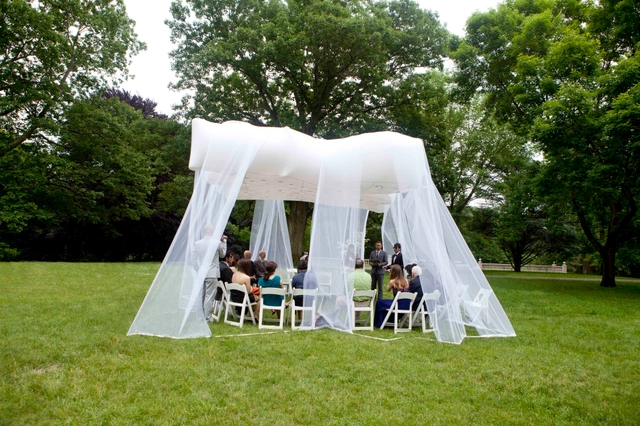
Designed and constructed by QASTIC Lab, ‘Balance Through Buoyancy’ is a temporary researchpavilion called “Floatastic” which was designed and built for a private client to serve as a shade pavilion for a wedding ceremony. Situated in Edgerton Park, in New Haven Connecticut (an Olmsted planned landscape), this deployable structure aims to create a floated shelter which avoids imposing any loads to the ground, which traditional structures require. Instead, it proposes a well-fabricated balloon, which is filled with Helium to raise the imposed loads of fabric veils and any possible dynamic environmental loads toward the sky. More images and architects’ description after the break.



















.jpg?1378307160)
.jpg?1378307514 "© Megabox")
.jpg?1378307201 "© Kyungsub Shin")
.jpg?1378307287 "© Kyungsub Shin")
.jpg?1378307396 "© Megabox")
.jpg?1378307160)


.jpg?1377560311)
.jpg?1377560864 "© Kim Wendt")
.jpg?1377560483 "© Kim Wendt")
.jpg?1377560711 "© Kim Wendt")
.jpg?1377560800 "© Kim Wendt")
.jpg?1377560311)