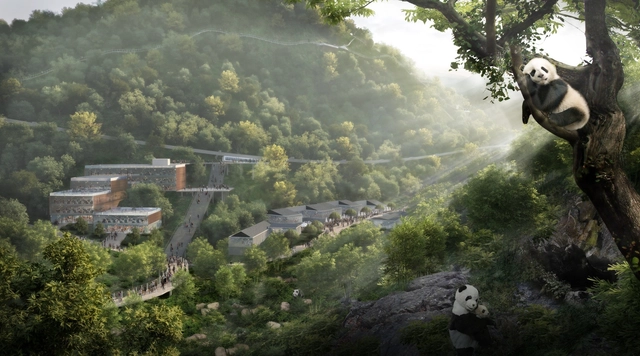
Sasaki has unveiled images of their proposed Chengdu Panda Reserve in China, intended to aid wildlife preservation efforts of the Chinese cultural icon. The masterplan for the reserve represents the launch of “China’s increasing communication, collaboration, and awareness of its pioneering strategies to protect the species and its native habitat.”
With only 1,800 left in the wild, the giant panda is one of the most vulnerable species on earth, and are native to only one region in the world: an area of western China near Chengdu. As one of the fastest-growing cities in the world, Chengdu’s rapid urbanization will yield to a 69-square-kilometer reserve, providing a framework for the protection of endangered species worldwide.
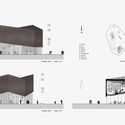
With 486 applicants and 249 conceptual plans received, MUDA-Architects stood out from the 20 finalists and won the first prize in "The Most Beautiful Bookstore in Chengdu" competition. The competition was sponsored by the Chengdu Tianfu New Area Investment Group, China Southwest Architectural Design and Research Institute, and co-sponsored by Chengdu Yi Zhu Yi Shi Culture Communication Ltd.
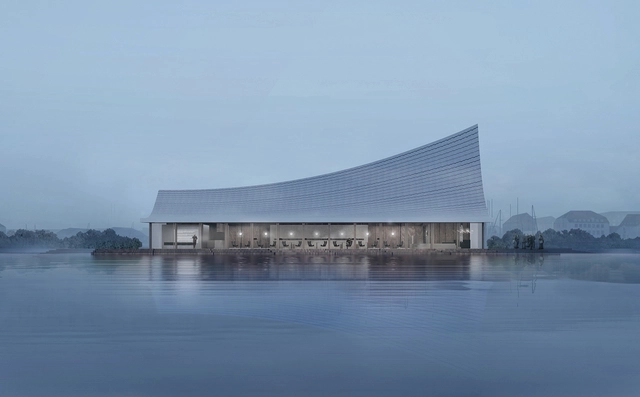
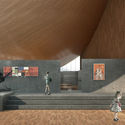
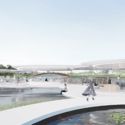
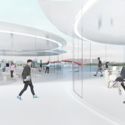
Space 4 Architecture's (S4A) proposal for a bookstore in Chengdu, China reflects the poetic beauty of floating lilies on water. The architects describe the project as a “permeable cultural container” that allows and encourages visitor interaction with the surrounding landscape. The design consists of a series of indoor and outdoor spaces that weave together a gentle intervention that mirrors and enhances the natural scenery it sits within.
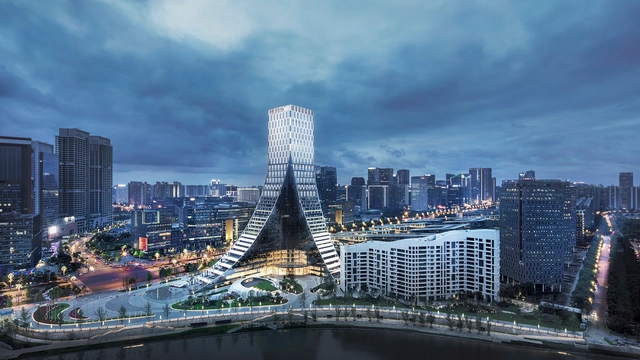
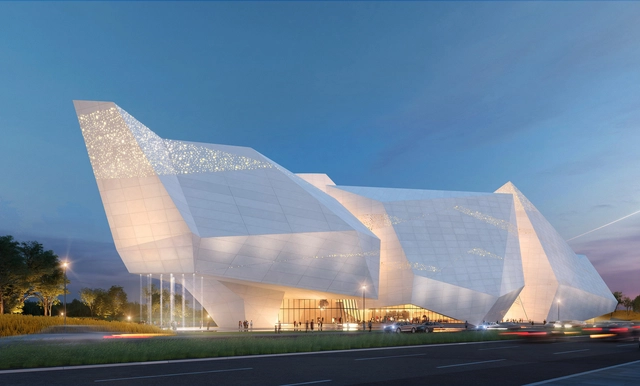
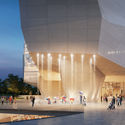
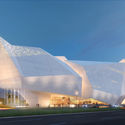
Pelli Clarke Pelli Architects has won an international contest for the Chengdu Natural History Museum in China, seeing off competition from firms such as Zaha Hadid Architects and FUKSAS. With a form inspired by the geological impact of shifting tectonic plates, and reflecting pools inspired by ancient irrigation systems, the scheme makes heavy reference to the surrounding natural landscape, while dominant features such as a tall central atrium form a visual connection with the built environment. Below, the architects offer their own description of the winning scheme.
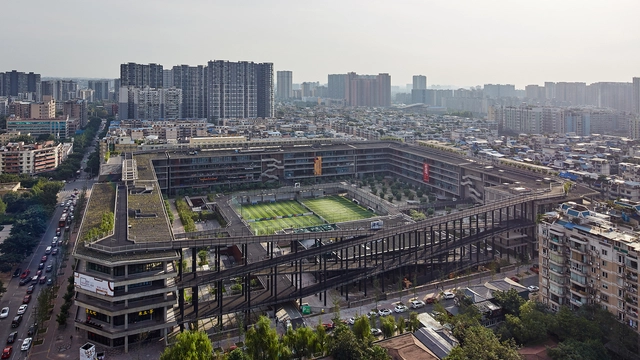
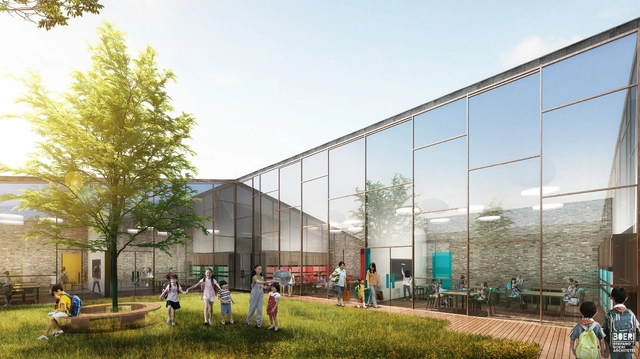
School Exterior Visualization. Image Courtesy of Stefano Boeri Architetti
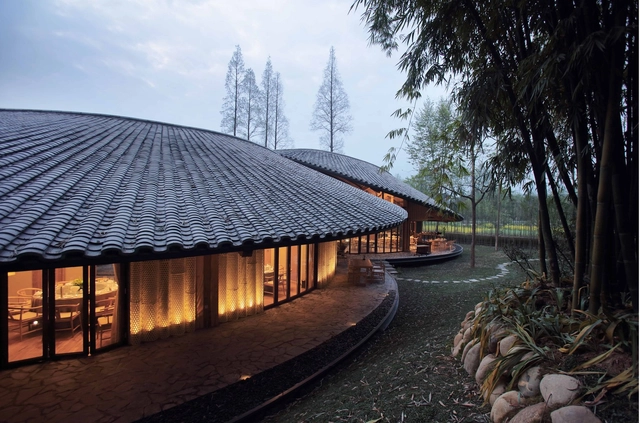
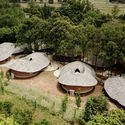
For the 2018 Venice Biennale, Stefano Boeri Architetti presents Slow Food Freespace, the first Slow Village to be constructed in Sichuan, China. Made in collaboration with Slow Food Movement, speakers Stefano Boeri and Carlo Petrini discussed the project at the event “Across Chinese Cities - The Community.”
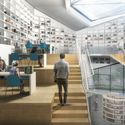
For the Slow Food China project, Stefano Boeri Architetti has designed a school, a library and a small museum for the villages involved, free of charge. The program attempts to encourage millions of Chinese farmers to stay in their rural districts, combatting the unprecedented emigration to cities which has grown in the last few years. By offering educational facilities and cultural landmarks to these rural communities, it inspires the preservation of local culture and acknowledges the importance of the agricultural economy.
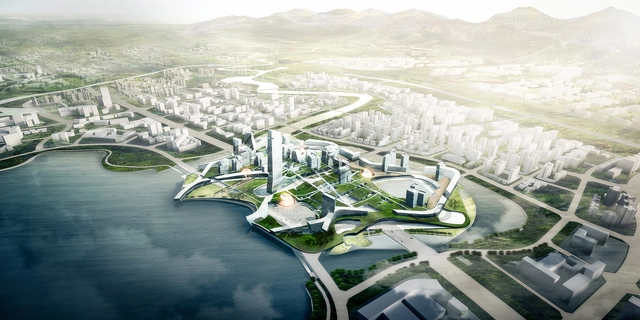
Morphosis has released details of their competition-winning masterplan for Unicorn Island in Chengdu, China. One of four entrants to be successful, including the OMA scheme we covered yesterday, Morphosis were recognized for their “walkable park city interweaving business resources, green infrastructure, and lifestyle” to offer the optimum conditions for both large and small companies to thrive in the Chinese development zone.
As the Chinese economy transitions from a production-based system to one driven by services, the Unicorn island masterplan is an initiative commissioned by the Chengdu government to offer state-of-the-art resources and networks for both start-up firms and so-called “Unicorn” companies, those with a value of over one billion US dollars.
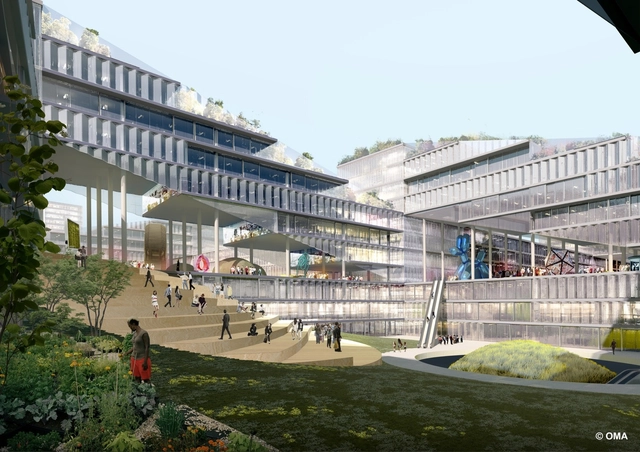
OMA has been announced as one of four firms to win an international competition for the design of Unicorn Island in Chengdu, an “innovative masterplan specifically designed for New Economy companies.”
As Chinamoves from a production-orientated economy to a knowledge and service-based economy, the masterplan seeks to provide a variety of working and living conditions for both start-up firms and “Unicorn” companies, those with a value of over one billion US dollars. Along with OMA, the four winners also included Morphosis, who were recognized for their walkable scheme integrating business, green infrastructure, and lifestyle.
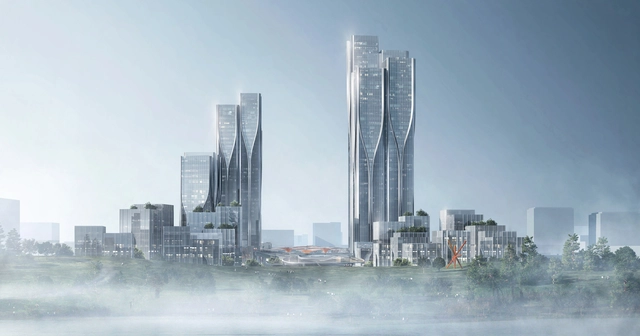
Aedas' latest project is inspired by the tech cloud as a platform to boast connectivity within the mixed-use development and enable maximum productivity between the zones. Vanke Tianfu Cloud City will be within the new development zone in Chengdu, China designated for new hi-tech and sci-tech industries and provide offices, exhibition, residential and retail facilities.
















.jpg?1533346303)






.jpg?1527163240 "Masterplan. Image Courtesy of Stefano Boeri Architetti")