


-
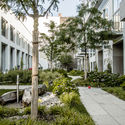
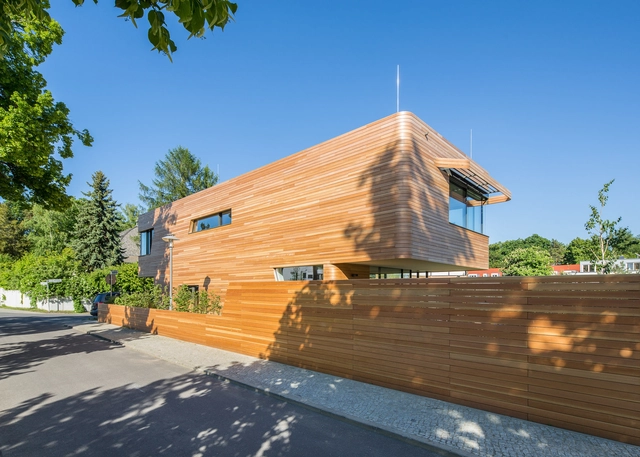
Architects: zanderroth
- Area: 9100 m²
- Year: 2010
-
Manufacturers: BNB Potsdam, Bauklempnerei Ness, Tischlerei Jaehnke
-
Professionals: herrburg Landschaftsarchitekten, Ingenieurbüro Leipold


Willebrand-0085.jpg?1468851086&format=webp&width=640&height=580)
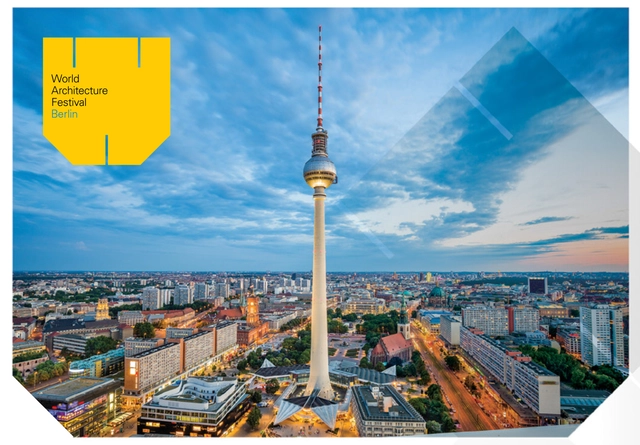
The program for the 2016 edition of the World Architecture Festival (WAF) has been announced. Being held from November 16-18 at the Arena Berlin, Germany, the festival will feature 3 days and 4 nights of events including conferences, lectures and seminars, architect-led city tours and networking opportunities, as well as live critiques of the 411 projects shortlisted for the 2016 WAF Awards. An all-star list of speakers will include leading architectural figures such as Patrik Schumacher, Ole Scheeren and Peter Cook.
This theme of this year’s festival is “Housing For Everyone.” Inspired by a variety of influences, markedly the condition of displaced communities of political and disaster refugees, lectures will focus on “the growing understanding of how demographics and global urbanization are forcing change; and the imperatives to create shelter at one end of the spectrum, and sufficiency for occupation and investment at the other.”
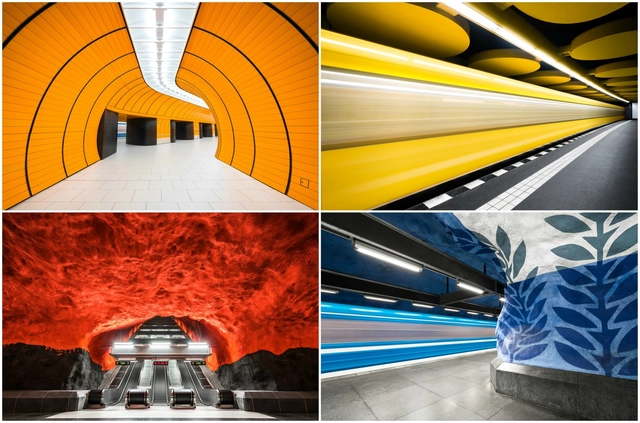
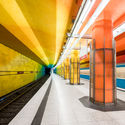
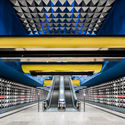
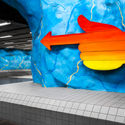
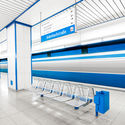
Photographer Chris Forsyth has released the latest images from his photo series Metro. Having previously gone underground to capture the surreal beauty of Montreal’s metro system, Forsyth traveled to Europe to shoot stations in Munich, Berlin and Stockholm. His photographic style portrays the stations in their best light – bright, clean, colorful and completely absent of people.
"Seeing the design strengths of various metro systems, from the hand painted cave-like stations in Stockholm, to the well-lit modern platforms of Munich’s U-Bahn, I really began to feel the how good design can change your day for the better,” says Forsyth. “Whether it be awe-inspiring or simply bright and colorful, I can only imagine how it feels to start your daily commute in one of these metro stations."
Continue after the break for a sampling of Forsyth’s favorite photos from the series.
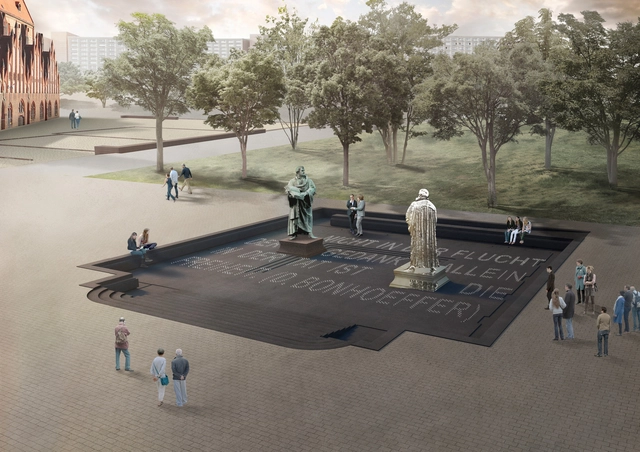
Zeller & Moye, working alongside artist Albert Weis, have been selected to design the new Martin Luther Memorial in Berlin. The competition, initiated by the Protestant Church of Berlin and the Berlin City Administration, asked entrants to design a memorial to Luther in central Berlin at the former Neuer Markt next to the St. Marienkirche—in the same location as a previous memorial to Martin Luther that was constructed in 1895 and destroyed in the Second World War. The brief also required designers to incorporate the existing statue of Martin Luther that survived from the earlier memorial.
In response to this brief, Zeller & Moye has envisaged a memorial based on the mirroring of the 1895 memorial: a negative form of the original plinth is carved into the ground in medium-gray concrete, while the statue of Luther is joined by a second, slightly abstracted replica, cast in aluminium with a mirrored finish.
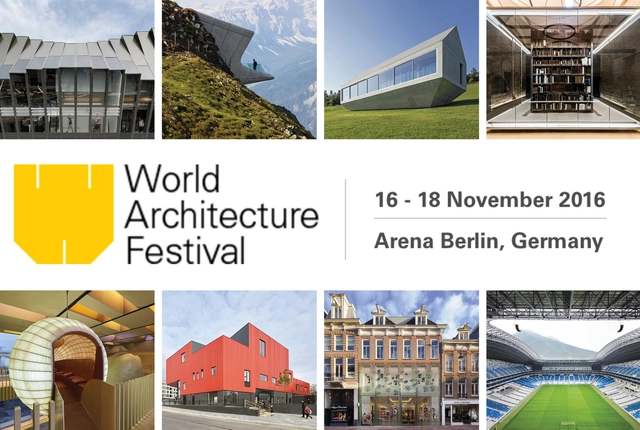
The World Architecture Festival have announced the shortlist for their 2016 awards, featuring 343 projects from 58 countries across 32 categories. As the world's largest architectural awards program, the shortlist contains completed and future projects from every corner of the globe.
All finalists will be invited to present their project live at the festival in November at the Arena Berlin in Germany to a "super jury" that will include Kai-Uwe Bergmann (BIG), Louisa Hutton (Sauerbruch Hutton), David Chipperfield, Ole Scheeren, and ArchDaily's co-founder and Editor-in-Chief David Basulto. A winner for each of the awards' 32 categories will be selected. From this, an overarching World Building or Future Project of the Year award will be selected. Tickets for the festival can be booked here.

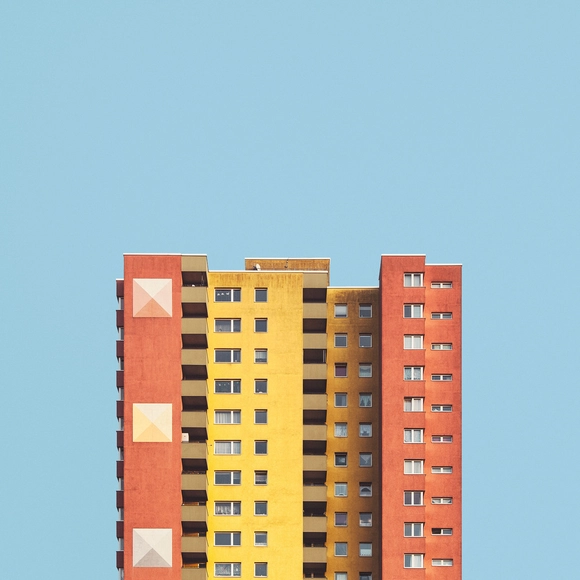
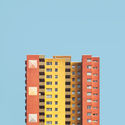
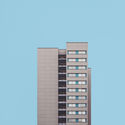
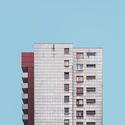
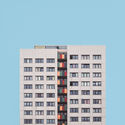
In this series, entitled Stacked, photographer Malte Brandenburg takes a closer look at the architectural merits of Berlin’s post-war housing estates. Captured against a flat blue sky, the images seek to strip away the historical and social burdens carried by the buildings, presenting them instead as pieces of pure architecture.
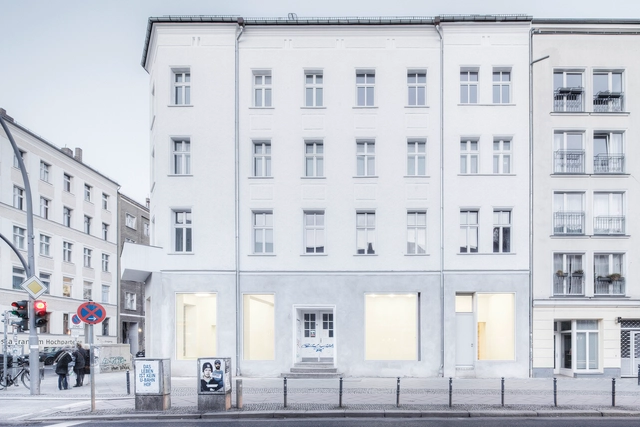
The World Architecture Festival (WAF), the largest annual international gathering of architects, is decamping from its four year home in Singapore for Berlin later this year. The annual event, consisting of awards, a conference, and an exhibition, recognizes outstanding projects in a variety of categories, and is attended by over 2,000 visitors from 65 countries. The venue for this year’s festival is the Berlin Arena, a bus terminal designed by Franz Ahrens in 1927 and repurposed as an event space in the 1990s. This is the ninth edition of the festival and the first to occur in Europe since 2011.

60 million people the world over have fled their homes. The dimensions of the refugee movement are becoming a major challenge for big cities in particular, where these displaced persons must be accommodated and provided for, given work and integrated into society in large numbers and in a short time. For this reason, it is necessary to quickly create adequate living space and interfaces between this living space and the urban realm in order to facilitate participation in urban life from the outset.

Art director and motion designer Sergej Hein has created an animated parody on the monotony of Soviet high-rise housing in Berlin.
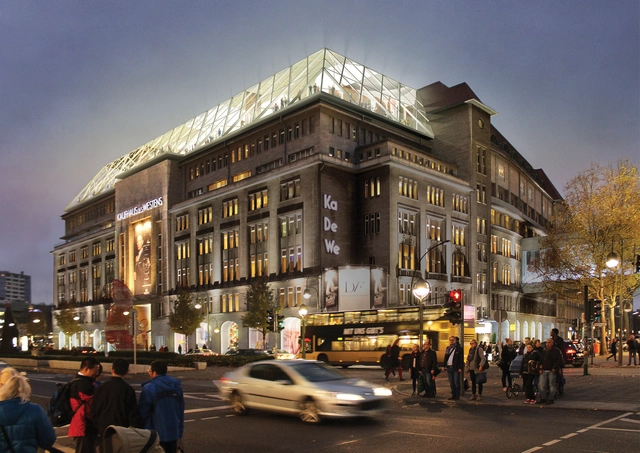
OMA has been selected to renovate Kaufhaus des Westens (KaDeWe), a historic department store in Berlin – and the biggest in continental Europe. Its giant size “makes it akin to a city: a three dimensional network of paths, squares, neighbourhoods, activitiies and views unfolding through its large extensions and providing opportunities for commercial, social and cultural encounters,” writes OMA.
To address the size, their design divides the department store into four quadrants, breaking “the original mass into smaller, easily accessible and navigable components.” Each quadrant will target different audiences and act as an independent department store. Learn more about the design after the break.

With a population of 3.4 million inhabitants, Berlin is the largest city in Germany and one of the major enclaves of power and culture in Europe. The division of the city during the Cold War doubled the cultural offer. Two theaters, two philharmonic and two stadiums were built generating a great amount of establishments that after the unification enrich the collective culture. Berlin is the cultural capital of the country by excellence. Despite the atrocities it suffered in the past, the city is known for its religious tolerance and multiculturalism. Today the city coexists exemplarily withdifferent religions and cultures from all around the world. Berlin is also home to the alternative youth culture. A great university city where young people from Germany and around the world come to study and socialize. Berlin is a city that has known destruction, division and reconstruction significantly, which transformed it into a laboratory for modern architecture and urbanism. The Berlin Wall divided the city and materialized it in two ways of living. The west side: western, compact and cosmopolitan differentiates from the east side: spacious, simple and Prussian. The multiple events suffered, set the Berlin to be doomed as the “not to be” city. Berlin does not have the museum beauty like other European capitals, but its people and its rich history make it a strong and vibrant city. The constant change is perhaps the only thing that remains stable in the German city.
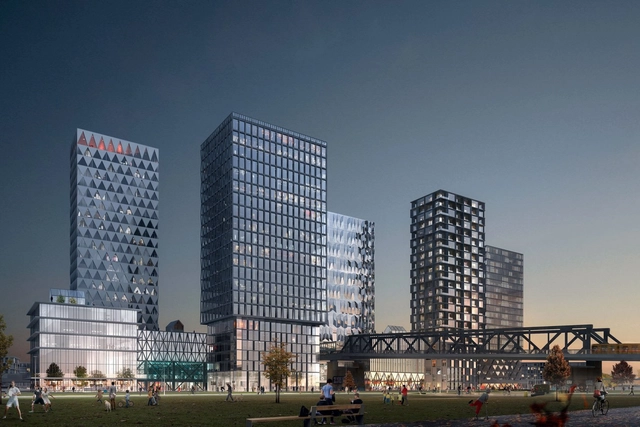
Collaborating with Man Made Land, Knippers Helbig and Mafeu Architektur Consulting, COBE Berlin has received 1st prize in an international competition to design Berlin’s “Urbane Mitte am Gleisdreieck,” a master plan located at the gateway to Gleisdreieck Park in Berlin, Germany.
Willebrand-0017.jpg?1468850946 "© Jens Willebrand")
Willebrand-0043.jpg?1468851013 "© Jens Willebrand")
Willebrand-0020.jpg?1468850961 "© Jens Willebrand")
Willebrand-0035.jpg?1468850992 "© Jens Willebrand")
Willebrand-0085.jpg?1468851086)