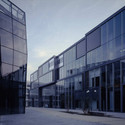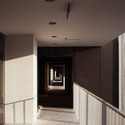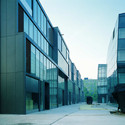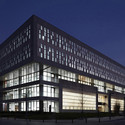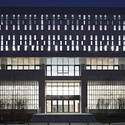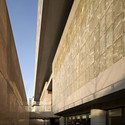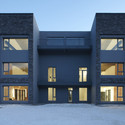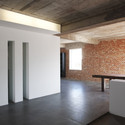


-
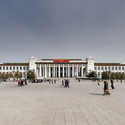
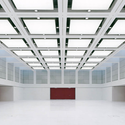
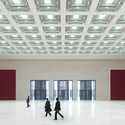
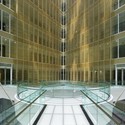
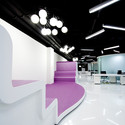
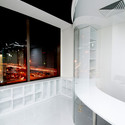
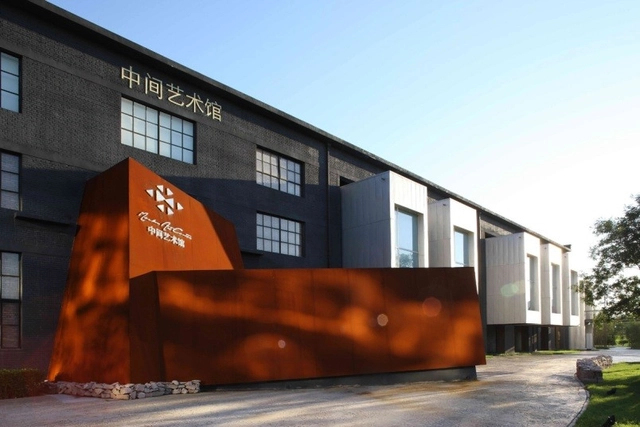
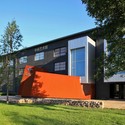
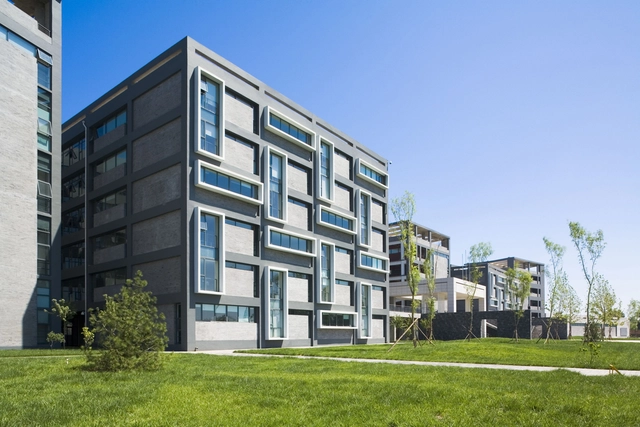
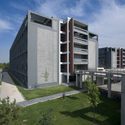
Architects: Synarchitects
- Area: 136000 m²
- Year: 2007



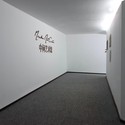
“You’re not going to find any of Ai Weiwei’s work being shown in Beijing”, said each Beijing gallery representative. That’s because the artist and agent provocateur has been detained for 80 days now was released today, from what the government is saying was based on “economic charges”. The name “Ai Weiwei” has joined a long list of sensitive words in this country, and associating yourself with the artist has become tantamount to asking for trouble. Just ask the Chinese curator who was questioned by authorities after putting Ai Weiwei’s name under a blank wall in Beijing’s Incident Art Festival.
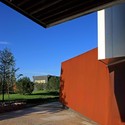
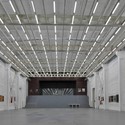
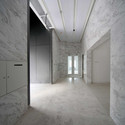
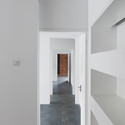
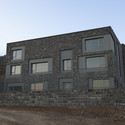
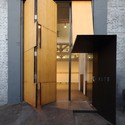
While Beijing’s lively art scene might currently be scrubbed clean of Ai Weiwei’s work, there’s one thing that’s a little difficult to “harmonize” away, as it’s known here. In 1999, Ai Weiwei began moving into the world of architecture, establishing his own architecture studio called FAKE design four years later. So Ai Weiwei’s artistic vision continues to stand in the form of buildings across the nation’s capital. The most concentrated of these is the artist district of Caochangdi, a few kilometres north of the more commercial art district called 798. It’s also the location of the artist’s studio and where he headed straight to after his release.
More after the break.

The Wangfujing Center in Beijing, China is a mixed-use space designed by Latitude Studio. The intention of the proposal is to design an architectural solution that provides a container for an endless possibility of experiences. To achieve this, Latitude Studio considered the role of the atrium in Roman architecture, which injects the space with light and air.
Read on for more on this project after the break.

The Beijing Central Business District (CBD) plan by SOM can now add 2011 AIA Institute Honor Award for Regional and Urban Design to its list. The ongoing 4,200,000 sqm project is the winning design from the international design competition expanding the Beijing CBD
The plan calls for the establishment of three new districts anchored by signature parks and green boulevards. New modes of public transportation are proposed, including express commuter rail service between the Beijing Capital International Airport, the CBD, and high speed rail service at Beijing South Station. A new streetcar system is proposed to conveniently link all areas of the CBD, and every street would be bicycle friendly. To establish a pedestrian-friendly scale for development, the plan calls for a network of small, walkable blocks.

Currently under development, OKRA’s Xiang’he Garden City, consisting of a masterplan for the Park of the Floating Gardens, defines challenging ambitions, turning the former clay pits into a water park. A new garden city of approximately 700 hectares will arise close to the future 7th ring of Beijing, China. The ambitions for the park are high and should create the perfect setting for the first housing development. The park should be a place for recreation, for running, for barbequing, for celebrations and more. It should also contribute to a sustainable environment, combining green design and water. More images and architects’ description after the break.


The Laboratory for Visionary Architecture [LAVA] has shared with us their proposal for the Home of the Future. Additional images and a project description are available after the break.

Architects: Atelier 11 Location: Beijing, China Design Director: Xu Lei Design Team: Ding Liqun, Gao Qinglei, Liu Heng, An Peng Construction Drawing: Xu Lei, An Peng, Gao Qinglei, Ding Liqun, Li Lei, Liu Heng, Zhu Yin, Jin Ding Client: Beijing Shi Ao Co., Ltd. Project area: 51,199 sqm Project year: 2009 – 2011 Photographs: Atelier 11


171 Students from around the world attended the one-week workshop at the Tsinghua University in Beijing, China. In association with the AA summer school and sponsored by Gehry Technologies the workshop taught students how to generate, parametrically control, and fabricate complex geometry.
After the break, you can see a few projects from the 37 Advanced Design studio students which Daniel Gillen co taught with Xu Feng, Nikolaus Wabnitz, Rob Stuart-Smith, Raymond Lau, Xiaowei Tong, and Zhang Xiaoyi.
Images and more information after the break.