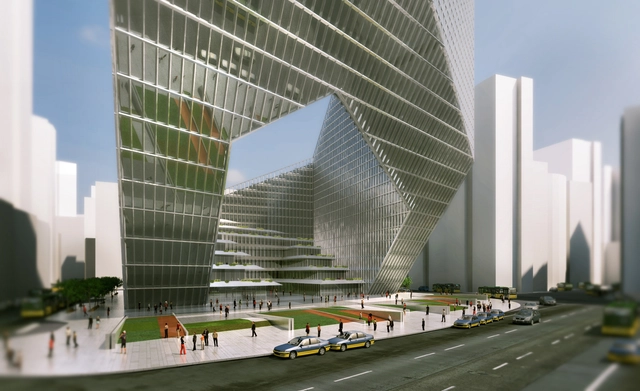
Invited to take part in the competition setup by the site’s promoter, GWA (Grow Wealth Assets) in March this year, DOS Architects’ proposal for the Mixed Use development in Beijing was just announced as the winner. With the challenge of producing a unique and iconic building, their ‘Cantilevering courtyard tower’ consists of 219,000 sqm of mixed-use space including a hotel, office space, retail and residential units. More images and architects’ description after the break.
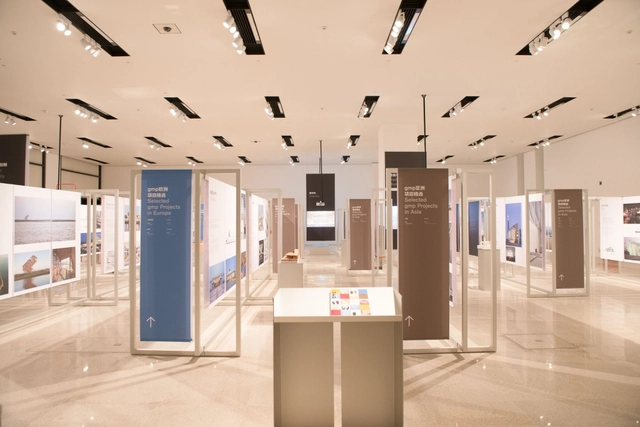
gmp Architekten's touring exhibition, 'Designing in Dialogue: The Architecture of von Gerkan, Marg and Partners' is currently being hosted by the Chinese National Museum in Beijing until August 25.In this exhibition, gmp will provide an overview of their work: sketches and drawings provide an idea of the conceptual thoughts, models present designs in three dimensions and photos document the completed buildings. The exhibited gmp projects are grouped regionally by continent and in six categories which cover important fundamental, practical and theoretical aspects of gmp’s work. More information after the break.
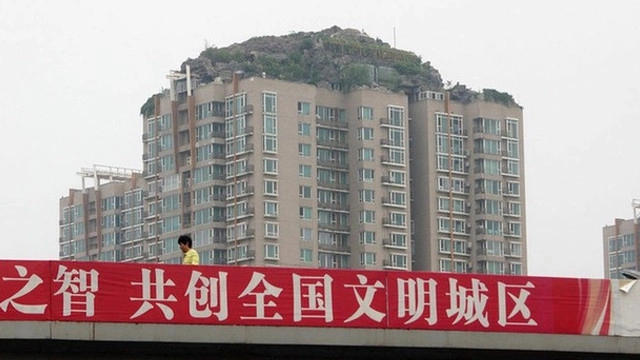
As architects, it's often difficult for us to accept that the users who inhabit our buildings will modify the design in ways we never intended (or wanted). Of course, one can usually reasonably suspect that, at the very least, an inhabitant will never do this: a Professor Zhang has spent the last six years building a two-story luxury villa (complete with surrounding rocks and trees) on the roof of a Beijing apartment building. Unfortunately for Zhang, however, who legally bought the penthouse apartment, but never requested the planning permission to subsequently doze it and re-build another structure entirely, the Authorities will demolish the villa in the next 15 days, claiming that it places a dangerous amount of extra weight upon the building and increases "the susceptibility of the construction to earthquakes or lightning strikes." Story via the Shanghaiist.
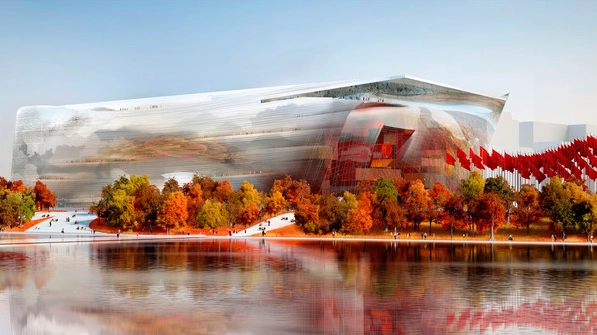
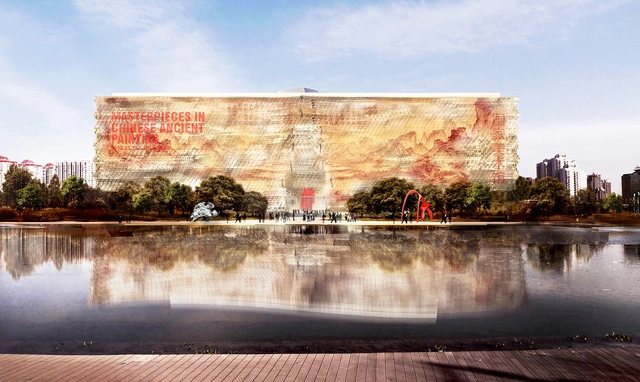
The rumors are true: Jean Nouvel has been selected as the official winner of the highly acclaimed National Art Museum of China (NAMOC) competition in Beijing. According to Dezeen, the news has been confirmed by Nouvel’s adviser, Oliver Schmitt. Though little has been released about the winning design, earlier reports have described it as a “vast structure” based on the simplicity of a single line - “a single brush stroke.”
In an interview with Financial Times, Nouvel quoted the Chinese artist Shi Tao (1642-1707): “A single line is the source of everything in existence. [...] We started with calligraphy. [...] Pupils used to spend half a year just on that first line with a brush. That first line contains all of Chinese culture – painting, writing and the energy of Chi.”
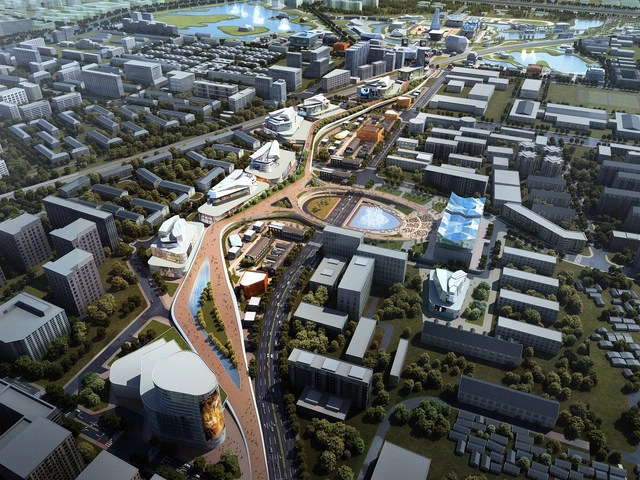
Aedas recently unveiled their master plan proposal for the CTS Temple of Heaven Performance Zone. Located in Beijing, their concept consists of a trio of urban, garden and lake environments while aiming to become the capital’s core cultural and commercial district and establish an international modern city life standard. More images and architects’ description after the break.
Gehry Partners have just released their highly anticipated proposal for the National Art Museum of China (NAMOC) in Beijing. Though rumors from last year reported Frank Gehry and Jean Nouvel as the competition’s top contenders, with Nouvel taking the lead, a winner has yet to be confirmed.
Gehry’s design, which is intended to promote cross cultural understanding and appreciation for Chinese contemporary art, aims at setting a new standard for 21st century Chinese architecture. Perhaps the most defining element of the design is the “translucent stone” facade, a new type of glass developed by Gehry Partners that is said to have the qualities of jade.
More images and the architect’s description after the break...
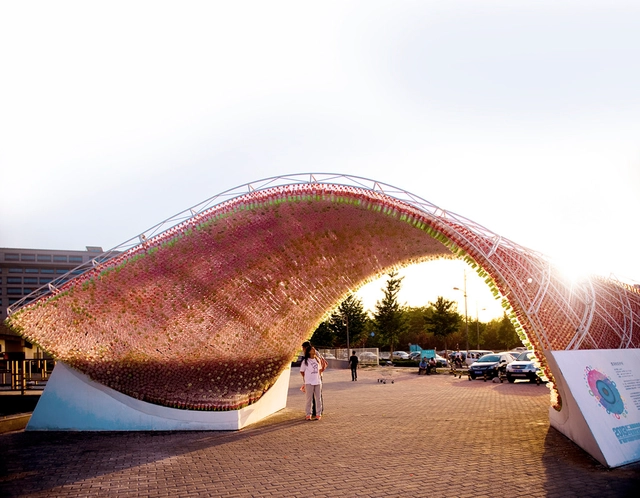
Designed by penda, the cola-bow installation is a public art installation made out of more than 17,000 recycled plastic bottles, which were braided to create a shape inspired by the swings of the Coca-Cola logo. Designed for the 2nd Beijing University Creation Expo, which turns into the Beijing Design Week, the installation aims to also serve as a statement against plastic pollution by taking trash and turning it into a shelter. More images and architects' description after the break.
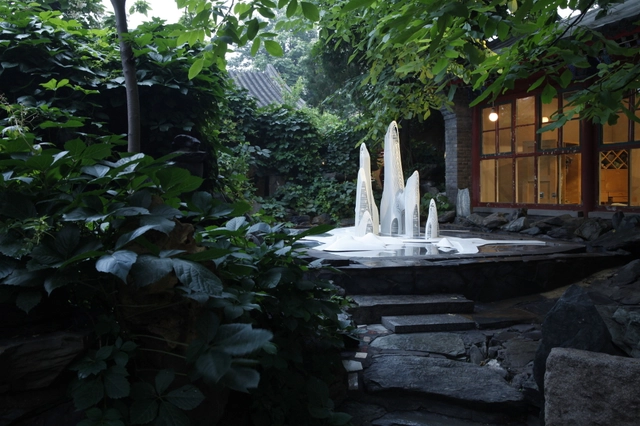
Displayed earlier this month in a Qing Dynasty courtyard garden at Wu Hao in Beijing, Ma Yansong's 'Shanshui City exhibition featured more than twenty architectural models and works of art that are scattered around the ancient courtyard. Among rocks, screen walls, bamboo groves, pools of water and beneath the sky, the scale of each piece varies and collectively they form a futuristic utopian urban landscape. The newly issued book "Shanshui City" - released simultaneously with the exhibition - is an important turning point for Ma Yansong's ten years of architectural practice and theory. More images and information on the exhibition after the break.
Courtesy of Thomas Batzenschlager and Clémence Pybaro
In cities around the globe, change happens almost instantly. Buildings rise, buildings disappear, and skylines morph before one’s eyes. There is no better example of this, of course, than China. From Ordos to Shanghai, Chinese cities are in a constant state of flux, as the Chinese people willfully abandon signs of the past and embrace the new.
Of course, it’s one thing to know this fact; it’s quite another to witness it firsthand, to experience this urgent impetus to demolish and demolish in order to build, build, build, and build. In the face of such large-scale, exponential urban development, it’s easy to feel powerless to suggest another path.
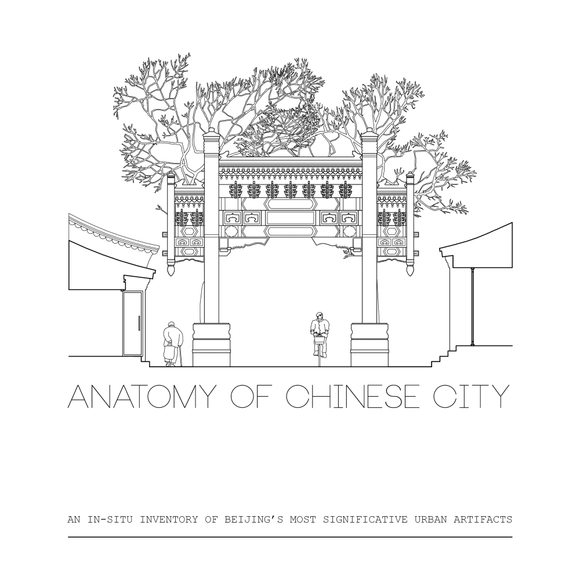
However, in publishing Anatomy of a Chinese City, that is exactly what two young architects have done. By taking the time to observe the “urban artifacts” that make a Chinese city unique, compiling over 100 drawings of everything from buildings to bicycles, Thomas Batzenschlager and Clémence Pybaro have preserved a piece of Chinese history that is quickly going extinct.
In a world where, in the race for progress, quotidian realities are erased unthinkingly, Anatomy of a Chinese City is not just a resource, but a call-to-action, reminding us to slow down and observe the very human context that surrounds us.
Read more about Anatomy of a Chinese City, after the break...


.jpg?1370581135)
.jpg?1370580957 "© SHU He")
.jpg?1370581077 "© SHU He")
.jpg?1370581153 "© SHU He")
.jpg?1370581189 "© SHU He")
.jpg?1370581135)















.jpg?1413928283&format=webp&width=640&height=580)

.jpg?1413928283)