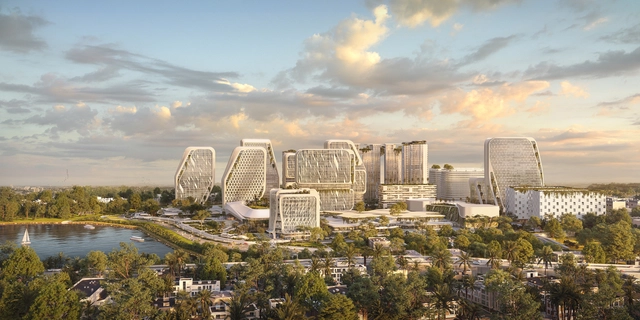
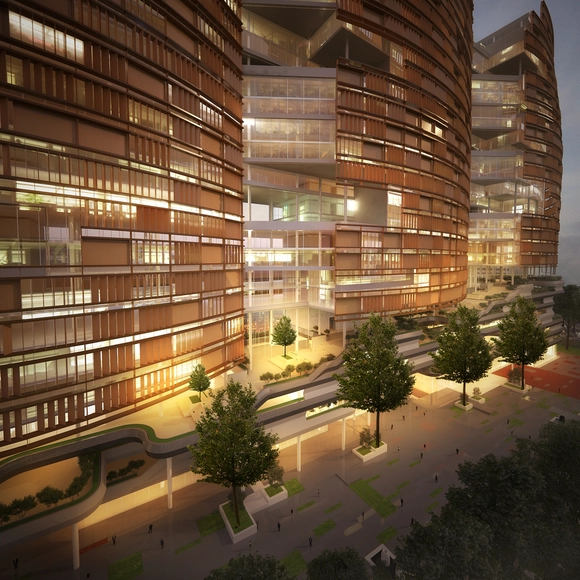
UNStudio has unveiled its design for Bangalore’s Karle Town Center Masterplan, a new innovation and tech campus for India. Situated in an area earmarked as the Silicon Valley of India, UNStudio’s scheme will also contain sensorial technologies designed by its tech company UNSense, collaborating with Karle Infra.
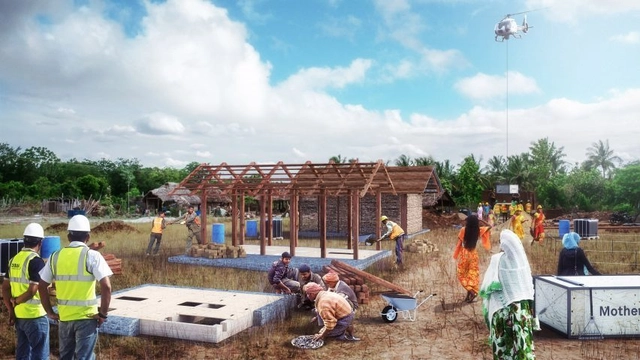
Livingboard. Image Courtesy of Carlo Ratti Associati
Architecture practice Carlo Ratti Associati has designed a low-cost prefabricated housing system for Indian non-profit WeRise. The new "Livingboard" system was made so that homeowners can build any structure they like on top of it. Made as a pilot project to encourage rural housing development, the system is being tested in a village outside Bangalore. As a portable "motherboard", the design provides homeowners prefabricated and flat-packed elements like waste management and water treatment systems.
A competition for the design of the Aurobindo Pharma towers in the center of Hyderabad, India has declared CnT Architects as the winner. The 300-meter site is located in the center of Hitech City of Hyderabad. Two options exist for the final towers: one intends to accentuate the building's verticality while the other amplifies the horizontality of the site.
All architecture remains a fantasy up until the moment when it is fully materialized and ready for its intended use. Testing new spatial possibilities is a never-ending process. Physical scale models and sophisticated computer-generated renderings are widely used by contemporary practitioners to explore this creative endeavor. Undoubtedly, these will remain necessary tools in architects’ investigative pursuits. They are efficient, effective, and convincing. Still, there is something particularly authentic and candid about traditional hand drawing that other techniques can’t quite capture. They transmit artistic visions with the right balance of clarity and interpretation, and engage our wildest imaginations helping us envisioning new ideas and dreams in architecture.
‘DESIGNURU’ organized by the Institute of Indian Interior Designers (IIID), Bangalore, will be a combined initiative of citizens of the city in making the public a part of an art and design based initiative. The festival aims to create a dialogue among the residents of the city through the lens of community and public interest based works on Design, Art and Architecture.
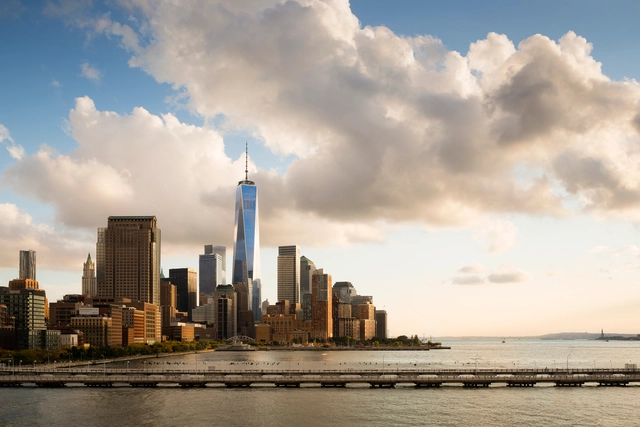
When comparing 44 major cities, Arcadis' 2016 International Construction Costs Index has found New York to be the world's most expensive city to build in. London came in as a close second, reporting cost of building prices (on average) 20 percent higher than Paris. In contrast, Taipei was labeled as the "cheapest" city for construction. According to the study, "strong currencies and significant resource constraints" were a result in higher prices. Read on for the complete lists of most expensive, and least expensive, cities for construction.
Architecture and Design Summit by The Economic Times
As we head boldly towards a more confident tomorrow, architects, designers and builders will play a crucial role in this progression and there is a strong need for these stakeholders to come together and lay out the vision on moving this industry to a level where India is able to retain its heritage architecture in structures to be built and thereby create an identity of its own on the global platform.
Prisons are often seen as problematic for their local communities. After centuries of correctional facilities discouraging economic growth and occupying valuable real estate as a necessary component of towns and cities, many of these institutions have been relocated away from city centers and their abandoned vestiges are left as unpleasant reminders of their former use. In fact, the majority of prisons built in the United States since 1980 have been placed in non-metropolitan areas and once served as a substantial economic development strategy in depressed rural communities. [1] However, a new pressure is about to emerge on the US prison systems: beginning in 2010, America's prison population declined for the first time in decades, suggesting that in the near future repurposing these structures will become a particularly relevant endeavor for both community development and economic sustainability. These abandoned shells offer architects valuable opportunities to reimagine programmatic functions and transform an otherwise problematic location into an integral neighborhood space.
Why repurpose prisons rather than starting fresh? The answer to this question lies in the inherent architectural features of the prison typology, namely the fact that these structures are built to last. People also often forget that prison buildings are not limited to low-rise secure housing units - in fact, prisons feature an array of spaces that have great potential for reuse including buildings for light industrial activity, training or office buildings, low-security housing, and large outdoor spaces. These elements offer a wide variety of real estate for new programmatic uses, and cities around the world have begun to discover their potential. What could the US learn from these examples, at home and overseas?








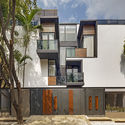
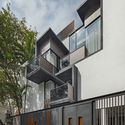
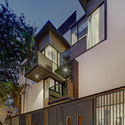

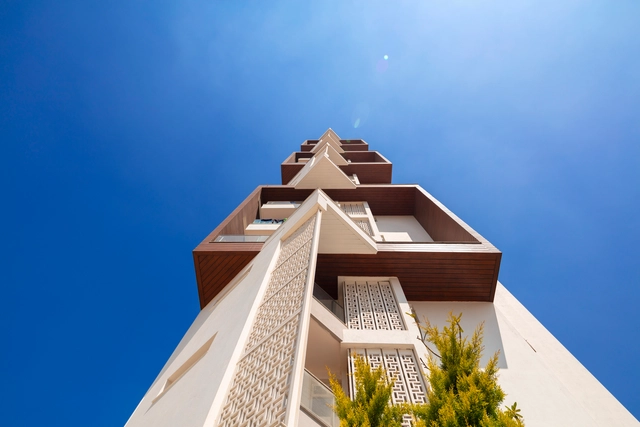




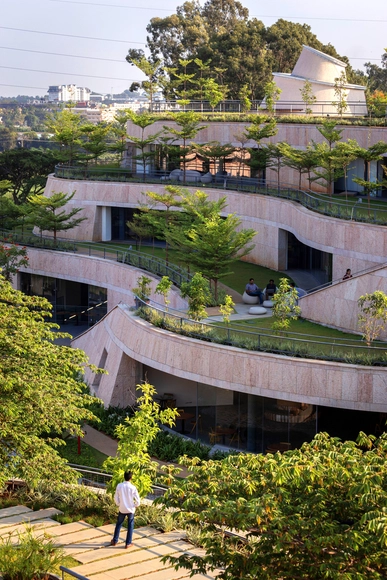


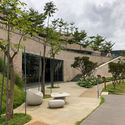




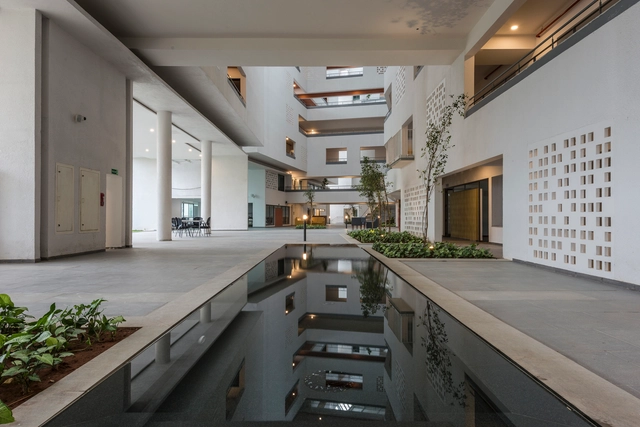
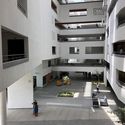


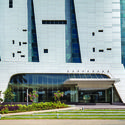
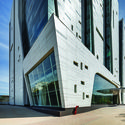
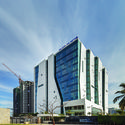





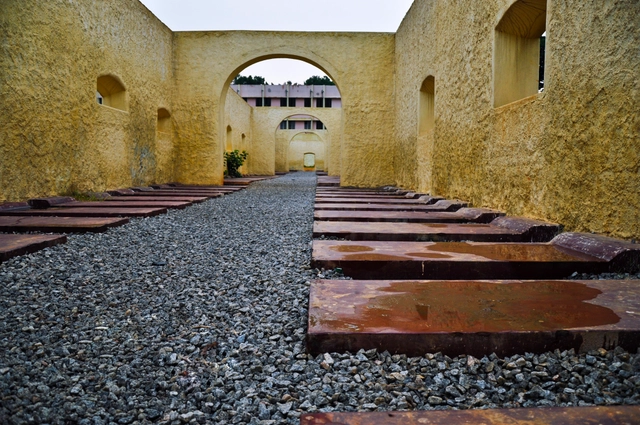



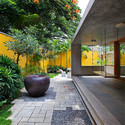



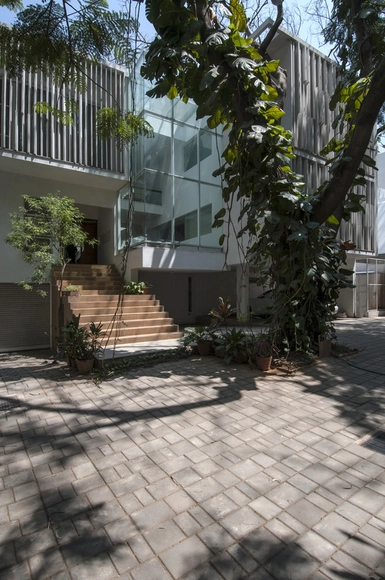

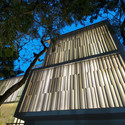



.jpg?1392253183&format=webp&width=640&height=580)
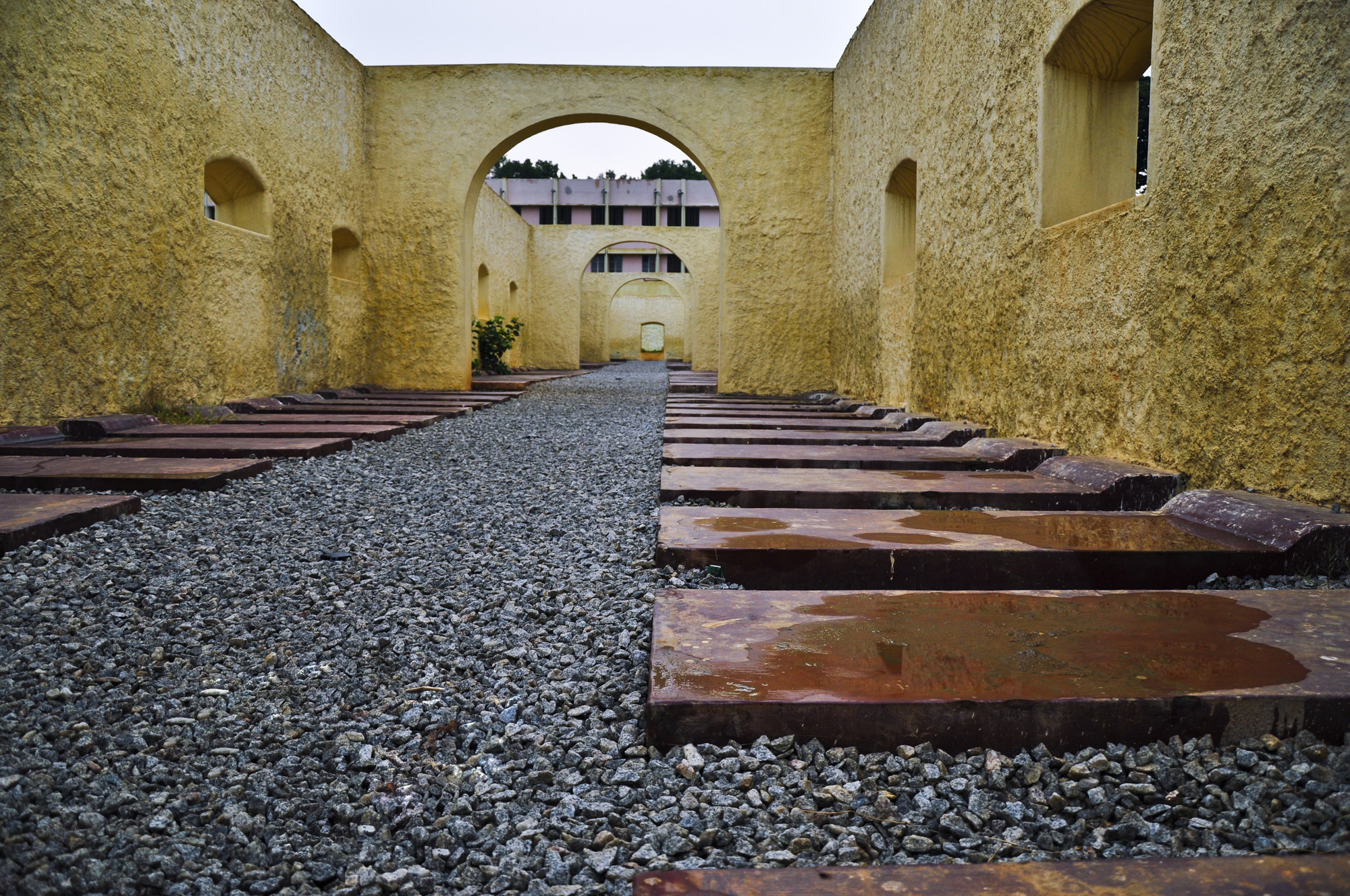
.jpg?1392253161 "© Shamath Patil J.")
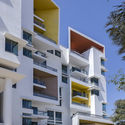
.jpg?1392252892 "© Shamath Patil J.")
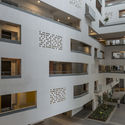
.jpg?1392252998 "© Shamath Patil J.")
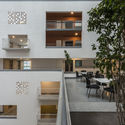
.jpg?1392252965 "© Shamath Patil J.")
.jpg?1392253183)