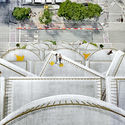
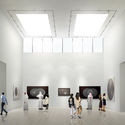
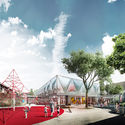
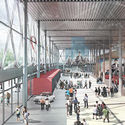
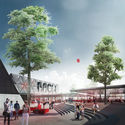
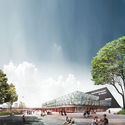
Within the framework of the recent election of Malta to the Presidency of the Council of the European Union—a position that will be held through June 2017—architectural photographer Danica O. Kus has created a photo series detailing Renzo Piano Building Workshop’s Valletta City Gate in Malta.
Completed in 2014, the project is composed of four parts: the Valletta City Gate and site, an open-air theater “machine,” a Parliament building, and landscaped space. Experience the project in beautiful detail though the photo series, after the break.
Following the success of their highly intricate Arabesque Wall, Benjamin Dillenburger and Michael Hansmeyer have once again achieved new levels of ornamental eye candy – this time, with a full-scale 3D printed grotto created from seven tons of sandstone. Commissioned by the Centre Pompidou in Paris, the grotto is an example of how the spatial expression of computational technologies can make for remarkable architectural experiences.
“Digital Grotesque II is a testament to and celebration of a new kind of architecture that leaves behind traditional paradigms of rationalization and standardization and instead emphasizes the viewer’s perception, evoking marvel, curiosity and bewilderment,” state Dillenburger and Hansmeyer.
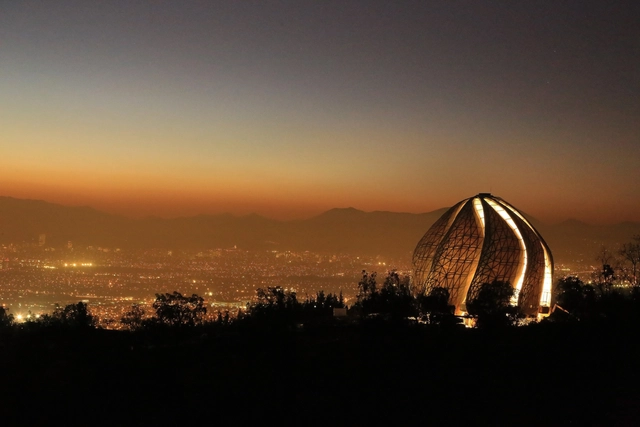
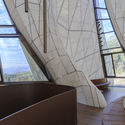
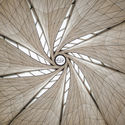
Located in the foothills of the Andes Mountains outside Santiago, Chile, the domed building was designed and built using computer modeling, measuring, and fabrication software, as well as custom glass, all of which culminated in nine monumental veils that frame an open worship space for up to 600 visitors. Completed in 2016, the project took 14 years to realize.
Courtesy of Flickr User Shashank Jain, licensed under CC BY 2.0
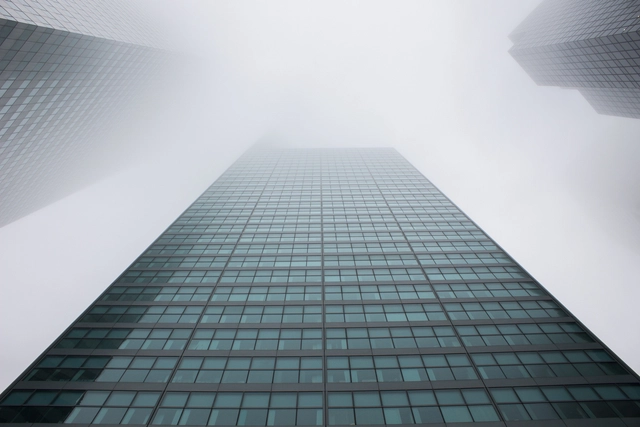
Have you been experiencing motion sickness, depression, sleepiness, and even fear, as you gaze out of your window from the 44th floor? If so, you may be prone to “Sick Building Syndrome” – the informal term for side effects caused by swaying skyscrapers, according to experts at the Universities of Bath and Exeter, who are launching a £7 million ($8.6 million) study into their causes and prevention through testing simulations.
“More and more people are living and working in high-rises and office blocks, but the true impact of vibrations on them is currently very poorly understood,” explained Alex Pavic, Professor of Vibration Engineering at the University of Exeter. “It will for the first time link structural motion, environmental conditions, and human body motion, psychology, and physiology in a fully controllable virtual environment.”
https://www.archdaily.com/868452/new-study-to-investigate-skyscraper-induced-depression-and-motion-sicknessesOsman Bari
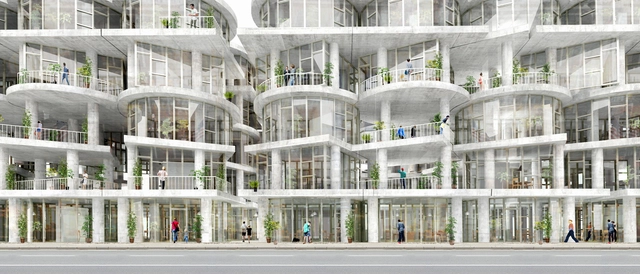
First Prize: The Table Top / Lap Chi Kwong, Alison Von Glinow . Image Courtesy of Bee Breeders
Bee Breeders have selected the winners of the New York Affordable Housing Challenge, inspired by barriers faced by the global population in our contemporary culture of housing scarcity and economic deprivation. The submissions provide various multifaceted architectural responses to scattered sites of various scales around New York City, “redefining the culture, economy, and experience of urban domesticity by means of space, material, morphology, or structure.”
A fire has broken out at a construction site near the Dubai Mall and Burj Khalifa in the United Arab Emirates. At around 6:30 am (02:30 GMT), flames broke out in the lower levels of the Address Residences Fountain Views towers, a complex of three towers, each 60 floors in height, being built by Dubai developer Emaar Properties.
Renderings have been revealed for Herzog and de Meuron’s new luxury loft residences in Miami, designed in collaboration with local developer Robert Wennett. In contrast to the firm’s acclaimed parking garage located nearby, which capitalized on Miami’s surrounding views, 1111 Lincoln Residences will be a far more inwardly-focused endeavor, with the 2,115-square-foot lofts opening onto a series of rooftop courtyards.
Located near the city’s bustling intersection of Alton and Lincoln, the complex accommodates a multi-level parking garage, over 100,000 square feet of interior office space, dedicated event space on the seventh floor, as well as 11 selected retailers on the ground floor. Notable tenants include Alchemist, Jo Malone, Rosetta Bakery, and Chotto Matte, in addition to the various restaurants available to residents along Lincoln Road.
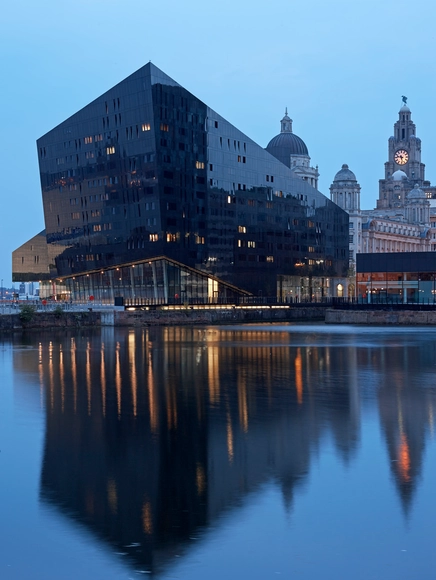
“At RIBA North, we have a building with museum conditions which will offer a magnificent opportunity to view RIBA’s world-renowned historic collections showing hundreds of years of the UK’s extraordinary architectural history,” explained RIBA President Jane Duncan. “We are particularly proud to strengthen our cultural and creative offering in the north of England, and to enable many more people to explore and understand the enormous impact that architecture and design has on all our lives.”
https://www.archdaily.com/868036/ribas-new-national-architecture-centre-will-celebrate-liverpools-architectural-historyOsman Bari
Described by Richard Meier as an architect whose "groundbreaking ideas" have "had a major impact on the thinking of designers and architects," Austrian artist, architect, designer, theoretician and Pritzker Prize laureate Hans Hollein worked in all aspects of design, from architecture to furniture, jewelry, glasses, lamps—even door handles. Known in particular for his museum designs, from the Abteiberg Museum in Mönchengladbach to the Museum of Modern Art in Frankfurt to Vienna's Modernism.
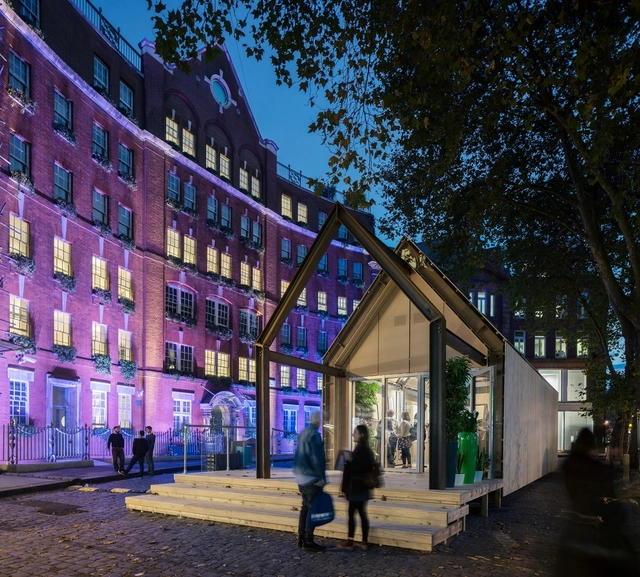
In a prototype developed for the 2016 London Design Festival, Arup Associates designed The Circular Building, one of the first buildings in the UK built to satisfy Circular Economy principles, in which “all components need to be implemented and utilized to their full potential and to the duration of their life cycle, while creating a comfortable and aesthetic environment for the user.”
In order to achieve these goals, designers and engineers worked together to refine the application of prefabricated construction techniques, producing details that utilize finely tuned engineering rather than mechanical fixings. Through this methodology, the team was able to create a low-waste, self-supporting, and demountable structurally integrated panel (SIPs) wall system (which used cladding provided by Accoya) with reusable clamp connections between the wall and recycled steel frame elements, as well as sustainably sourced, heat treated timber for the cladding and decking.
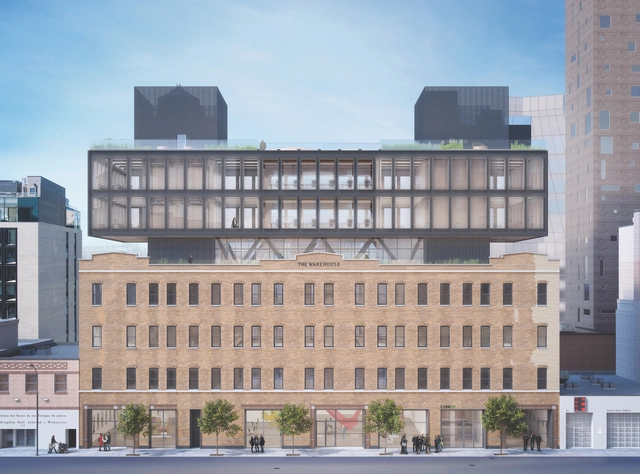
Elijah Equities, LLC has unveiled plans for the redevelopment of The Warehouse in New York City, a property currently occupied by car parking and art galleries, which will be transformed into 100,000 square feet of rentable office and retail space designed by Morris Adjmi.
Situated next to the High Line, the building currently at the site is a four-story, 65,000-square-foot former apparel-manufacturing warehouse. The redevelopment will add a three-story, steel-framed, cantilevered addition, resulting in a seven-story building with over 18,000 square feet of rooftop and outdoor amenity space.
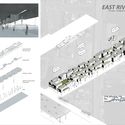
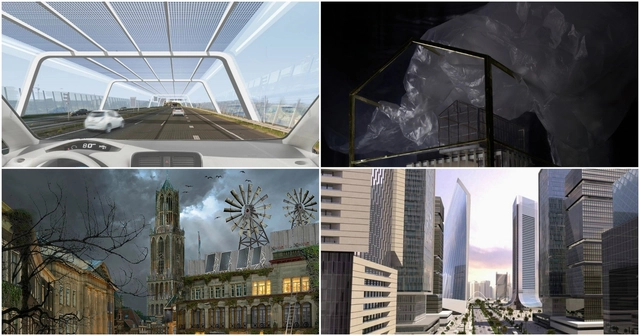
Utrecht University’s Urban Futures Studio have announced the 10 finalists for their Post-Fossil City Contest, judged by a jury which included MVRDV co-founder Winy Maas. Each of the successful submissions responded to the contest’s call for the design of a sustainable city no longer reliant on non-renewable energy sources. Designers and makers were invited to envision this new future, which “will reshape our cities and everyday lives so radically that it is hard to imagine what it might feel, taste, smell, and look like.”
Out of the 250 total entries, below are the 10 selected finalists along with a snippet of their proposed futures as described by the competition website.
https://www.archdaily.com/867678/post-fossil-city-contests-10-finalists-share-visions-of-a-sustainable-futureOsman Bari
Videos
Courtesy of Team Aesop (Josh Draper, Lisa Ramsburg, Powell Draper, Edward M. Segal, and Max Dowd)
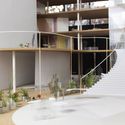
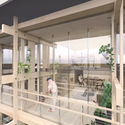
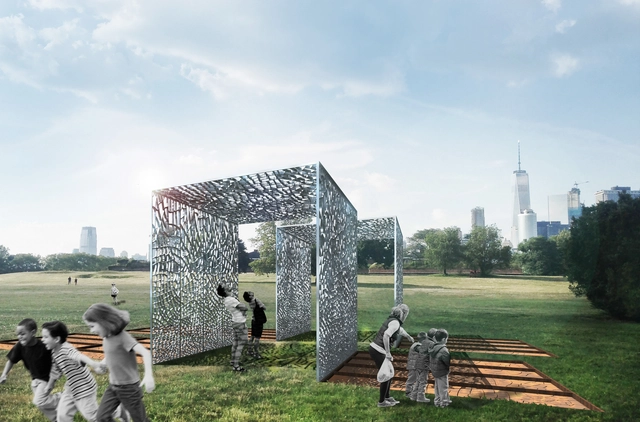
Cast & Place has been announced as the winner of the 2017 City of Dreamscompetition to create a pavilion for New York City’s Governors Island. Held by not-for-profit arts organization FIGMENT, the AIANY Emerging New York Architects Committee, and the Structural Engineers Association of New York, the competition called for a design to be the hub of FIGMENT’s free community arts festival during Summer 2017, based on questions of the future of New York, how design can confront environmental challenges, and how architecture can be built from recycled or borrowed material.
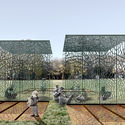
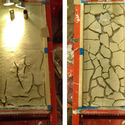
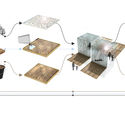
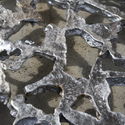
With these questions in mind, Cast & Place was conceptualized as a pavilion made entirely from waste. 300,000 recycled aluminum cans, cast into the cracks of dried clay, will form structural panels that assemble into shaded spaces for performance and play.
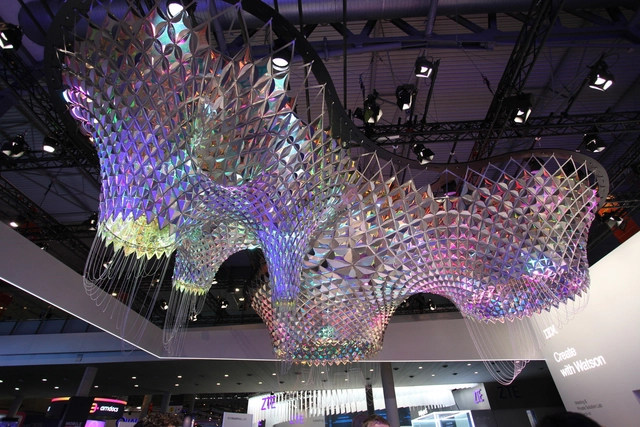
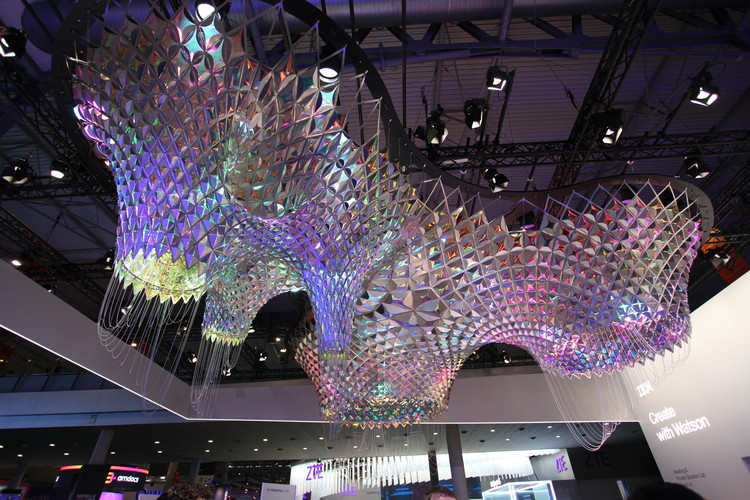
In order to help design the sculpture, Watson was taught about the history and style of Gaudí and the architecture of Barcelona through volumes of images, literary works, articles, and even music. From these references, Watson helped to uncover critical insights on patterns in Gaudí's work—like crabs, spiders, and color palettes—that the design team didn't initially associate with Gaudí. The resulting four-meter-tall sculpture features a structural surface made of over 1200 unique aluminum parts, and is unmistakably reminiscent of Gaudí’s work both in look and feel, yet entirely distinct.
The sculpture was on display from February 27 to March 2 at Mobile World Congress in Barcelona, where it interacted with visitors by changing shape in real-time, in response to sentiments from Twitter. To learn more about the sculpture, ArchDaily was given to opportunity to speak with IBMWatson Manager Jonas Nwuke.
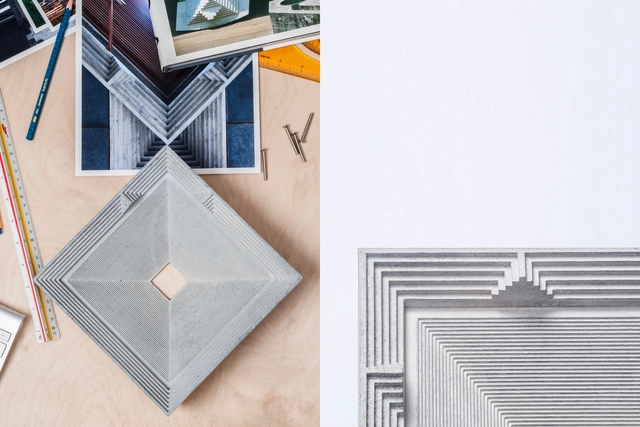
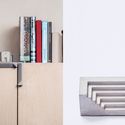
The MIRAGE series is made up of concrete handles, knobs, and robe hooks, all of which aim to create character through light and shadow. Some of the pieces, with a zigzag pattern, are meant to reduce the heaviness of the concrete material, making it seem light and delicate, while other pieces are meant to express a sense of solidity.
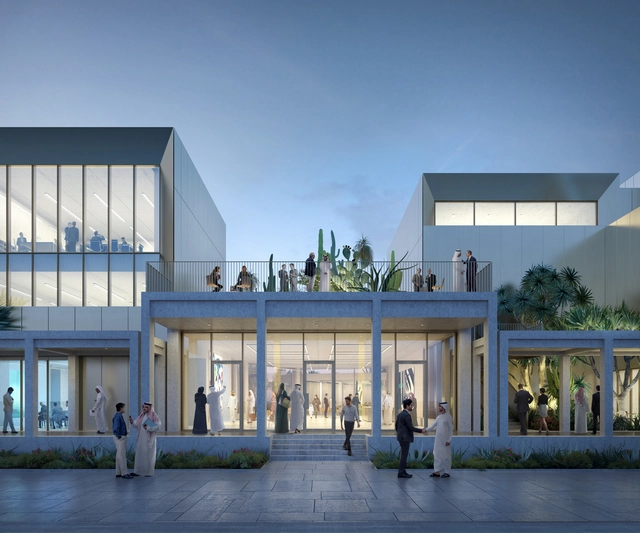
"Art complex, Pyeongchang-dong, Seoul will be a multiplex community hub that connects human, cultural organizations, schools and academic associations with the art archive as the medium and aims to be a space for creative and artistic social activities,” explained the architects.
The 10,000 square meter, three-story, multi-disciplinary space is designed to become a “hub for educational and research initiatives, while its wider programming embraces collaboration and partnerships with local, regional, and international artists, curators, and organizations.”
A competition for the expansion of the MCH Messecenter, Denmark’s largest exhibition hall, has been won by the team consisting of CC Contractor with Schønherr, Cubo Arkitekter, and engineering firm Midtconsult. Given the center’s importance within Herning, the competition called for a new approach to the site’s physical organization, to provide more coherent and functional relationships with the surrounding context in order to host larger events in the future and serve as an even bigger tourist attraction.
Within a masterplan created by Schønherr, a new admissions building designed by Cubo Arkitekter will incorporate a distinctive façade with a homogenous character to directs visitors from the new arrival area to the Jyske Bank Boxen arena, exhibition Hall M, and the arcade that extends towards the rest of the MCH Messecenter.