A new kind of architecture distinguished by unique regional characteristics emerged in the mid-1990s when in China, architects started practicing independently from government-run design institutes. The leading Chinese architects of this time succeeded collectively in producing a unique architectural body of work when so many buildings built around the world were no longer rooted in their place and culture.
In China Dialogues, Vladimir Belogolovsky charts a panorama of Chinese architecture through the words of its main participants, lifting the veil on a prolific new generation of designers, each sharing a highly intellectualized and conceptual understanding of architecture. Following the course of 21 interviews accompanied by over 120 photographs and drawings of beautifully executed projects uprooted throughout the country since the early 2000s, China Dialogues opens up the thinking process of the country's top architects, providing an insight into their ideas, intentions, and visions in unusually revealing and candid ways.
There’s a famous quote—it’s usually attributed to Winston Churchill—that goes, “History is written by the victors.” This cynical and largely erroneous belief could only be true if history was fixed, settled, static. It never is, and that’s precisely why we have historians. It might be more accurately said that history’s first draft is written by the victors. But first drafts, as any writer will tell you, are famously unreliable. So it is with architectural history. Women have played significant roles in the field since the start of the profession, but that is not how history has recorded it. A new book, The Women Who Changed Architecture (Princeton Architectural Press), a collection of more than 100 mini-biographies of important women architects, covering more than a century, hopes to take a step toward correcting that oversight. Recently, I spoke to Jan Cigliano Hartman, the editor of the volume, about creating the book, important and overlooked figures, and why this isn’t a definitive list.
Around the two-year anniversary of the start of the COVID-19 pandemic, there is little that looks the same as it did in March 2020, whether it’s how we work, how we study, or even how we move about our own homes. Many titles in this selection of spring architecture and design book releases show just how authors and design professionals are grappling with the major changes of our time. Volumes such as Debbie Millman’s Why Design Matters and Paola Antonelli’s Design Emergency share the diverse viewpoints and design solutions of some of the world’s leading creative voices; Otto von Busch’s Making Trouble and Max Holleran’s Yes to the City evaluate forms of DIY and housing activism; and Stephen Vider’s Queerness of Home and Suchi Reddy’s Form Follows Feeling tap into a more empathetic, human-centered approach to space. All of them, in some way, look at the past as a way to see clearly into the future of the built environment.
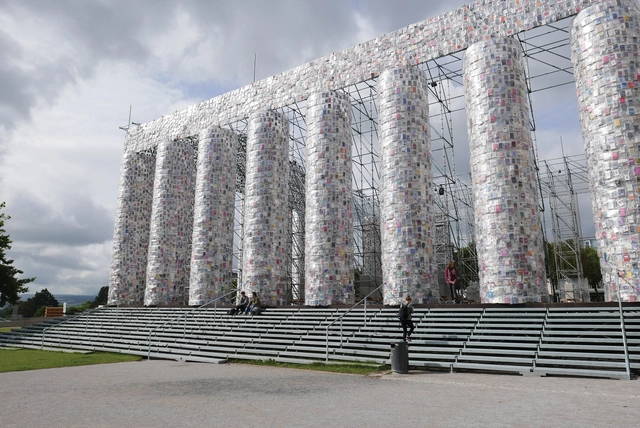
Marta Minujín, Parthenon of Books, Dokumenta 14, Kassel, Germany, 2017. Image by Anne-Catrin Schultz.. Image Courtesy of Real and Fake in Architecture–Close to the Original, Far from Authenticity?
The term “fake” has been in the media frequently in the early 21st century, referring to headlines and fictional statements that are perceived as real and are influencing public opinion and action. Replacing the historically more common term “propaganda,” fake news aims at misinformation and strives to “damage an agency, entity, or person, and/or gain financially or politically, often using sensationalist, dishonest, or outright fabricated headlines.” Tracing fake news and differentiating “real” information from personal opinions and identifying intentional (or unintentional) deceit can be complicated. It is similarly complex to trace the duality of fake and real in the built world. To explore the larger context of fake statements in architecture and environmental design, a look at the definition of fake and related terms might be necessary.
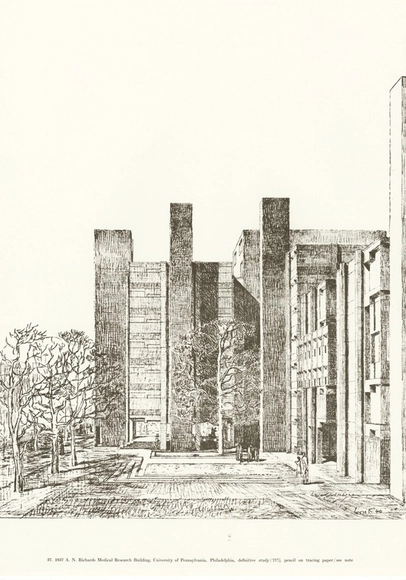
Market Street East (1960-62), Philadelphia Civic Center (1956-57).. Image Courtesy of Lars Muller Books, The Architectural Archives at the University of Pennsylvania, Sue Ann Kahn, and the Museum of Modern Art.
In an age of ebooks and web-first publishing, Louis Kahn: The Importance of a Drawing (Lars Müller Publishers) is a defiant throwback: a lavish, 500-plus-page book, very much an object befitting its subject, whose buildings had a weight, both literal and figurative, that was part of their power and appeal. Conceived and edited by Michael Merrill, the book is both a deep examination of Kahn’s creative process, as told through the medium of the hand drawing, as well as a revealing portrait of the man behind those buildings and illustrations. Merrill is an architect and educator and currently serves as director of research at the Institute for Building Typology at the Karlsruhe Institute of Technology in Germany. He’s also the author of two previous books on the master architect, Louis Kahn: Drawing to Find Out and Louis Kahn: On the Thoughtful Making of Spaces.
In this week's reprint, Metropolis editors have selected a variety of new and forthcoming architecture and design books, rounding up a compelling reading list for the season. The following titles range from monographs and theoretical inquires to essential knowledge works, from authors like Michael Sorkin, Robert A.M. Stern or Paul Dobraszczyk.
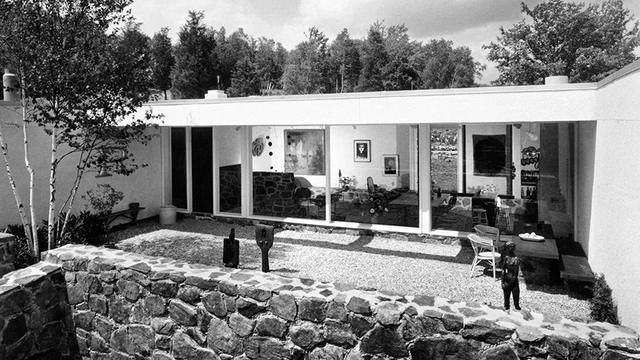
Stillman House II, courtyard with view into living area, 1966. Joseph W. Molitor. . Image Courtesy of Summitridge Pictures & Monacelli Press
Now that we are halfway through the year, what better time to prioritize your reading list? Whether you’re interested in the history of interior design, the relationship between architecture and health, or learning more about the 20th century’s forgotten architects, Metropolis editors have selected a variety of current and forthcoming titles that will be sure to get you through 2021.
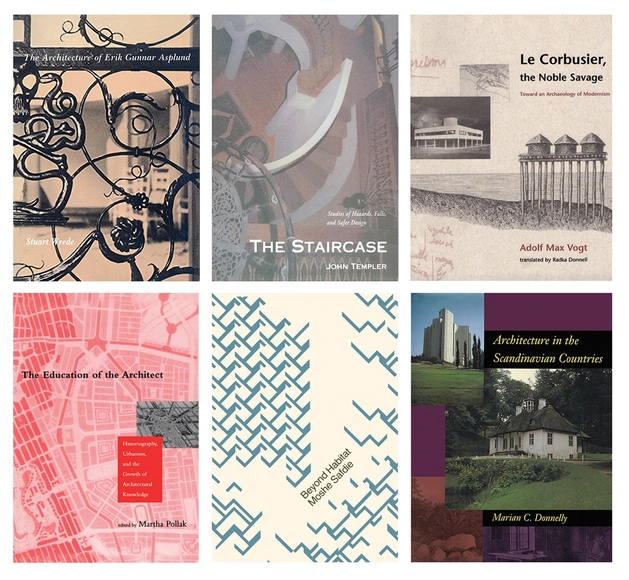
Funded by Andrew W. Mellon and the National Endowment for the Humanities foundations as part of the Open Book Program, a collection of classic books, published between 1964 and 1998 are now available online as open access e-books through the MIT Press Open Architecture and Urban Studies book collection.
The author or editor of over twenty books, Michael Sorkin was a renowned architect, urbanist, and writer. Principal and founder of Michael Sorkin Studios and president of the non-profit research group Terreform, a nonprofit urban research and advocacy center, Sorkin was especially famous for his writings for the Village Voice and the Nation. The Professor of Architecture and Director of the Graduate Program in Urban Design at the City College of New York who passed away earlier this year due to complications resulting from COVID-19 wrote the forward for Miró Rivera’s MonographMiró Rivera Architects: Building a New Arcadia.
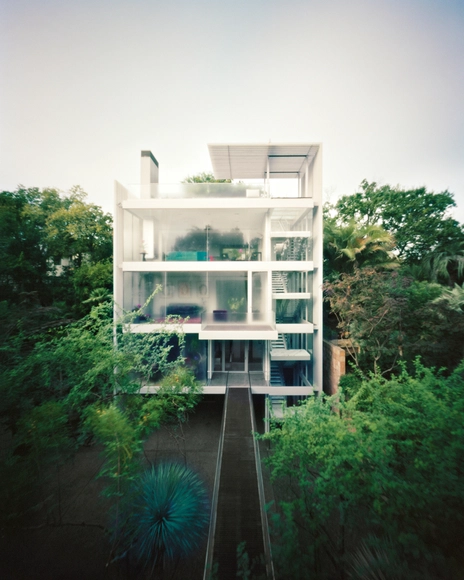
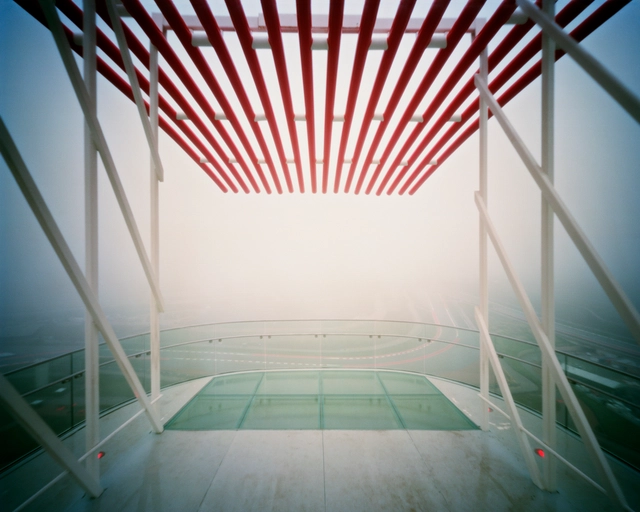
In documenting the body of work of Miró Rivera Architects, Belgian photographer Sebastian Schutyser employs a photographic technique never before used for the presentation of contemporary architecture. The soft, pictorial imagery produced with a pinhole camera perfectly showcases the dialogue between architecture and landscape which underlines the studio’s designs.
There are plenty of books about the buildings of late American architect Louis I. Kahn, including those he authored. But his drawings hold a special fascination for his peers and fans, which explains why the blog Designers and Books is launching a Kickstarter to fund the reissue of one 1962 compilation of his sketches, which has been out of print for decades.
Throughout history, drawing has been the essential medium of conveying architectural ideas, operating on multiple levels, from the practical application of serving the construction process to the more artistic quality of expressing a vision and providing an impression of what the architecture will be like. The book Architecture – Drawn, From the Middle Ages to the Present, authored by University of Stuttgart Prof. Dr. Phil. Klaus Jan Philipp, recounts the historical development of architectural drawings, exploring all the different inventions, revolutions and continuities spanning eight centuries of architectural representation.
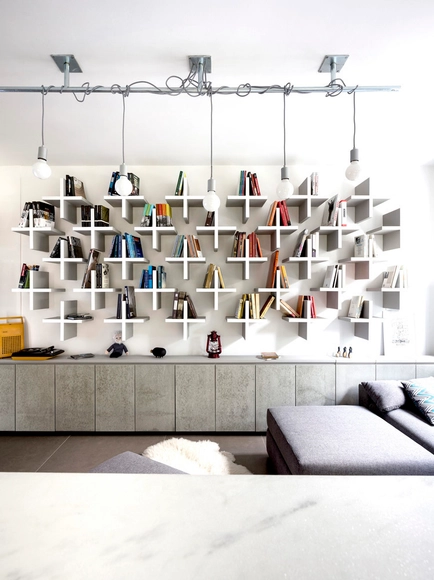
Sharing your shelf is, in a way, sharing yourself. Every element —from the titles you choose to the way you organize them— says something about your personality and your interests.
https://www.archdaily.com/897991/home-library-architecture-smart-and-creative-bookcase-designsArchDaily Team
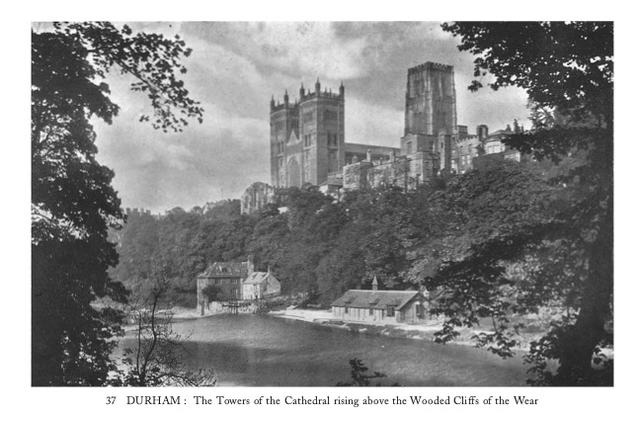
Durham Cathedral. Image Courtesy of Pavilion Books
The most recent edition of The Cathedrals of England brings to a new generation the classic 1930s Batsford guide to England’s religious architecture. Concisely written and speaking to a broad readership, the book serves as a practical guide today as it did almost a century ago, acting as a reference catalogue for every Church of England cathedral in the country at the time.
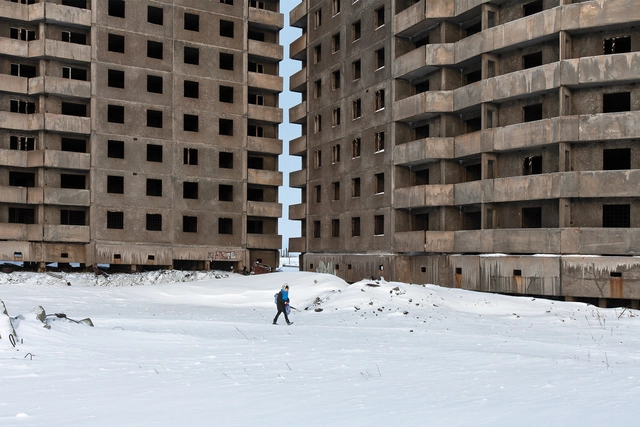
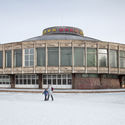
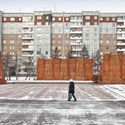
Over the past few years, a series of exhibitions and monographs have prompted a rediscovery of socialist modernism, its powerful expression and exoticism stirring significant interest. The recently published photo book Concrete Siberia. Soviet Landscapes of the Far North by Zupagrafika casts a new light on this relatively unexplored chapter of architecture history by showcasing the Soviet architecture of Siberia's major cities while providing an insight into a little-known landscape. The book presents the architecture and urban environment of six Siberian cities: Novosibirsk, Omsk, Krasnoyarsk, Norilsk, Irkutsk and Yakutsk, through the lens of Russian photographer Alexander Veryovkin, bringing about a new-found perspective on post-war architecture.
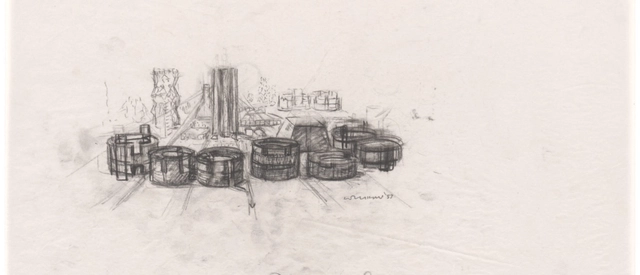
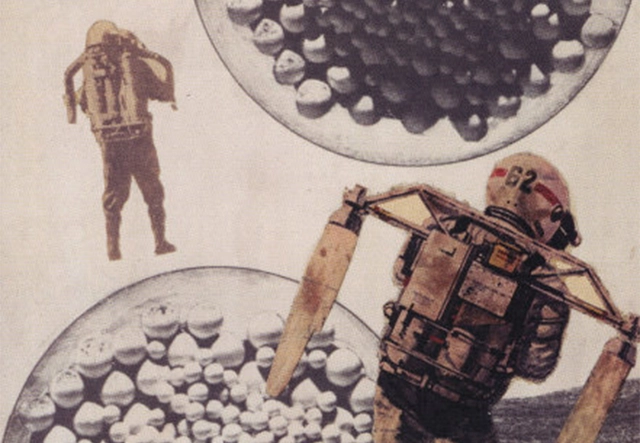
Raimund Abraham’s Air Ocean City. Image Courtesy of MIT Press
For more than a century, architects have been addressing the world as a project through speculative designs in an attempt to imagine the future and reframe global issues. Globalisation, the ever-increasing interconnectedness demands action on a worldwide scale and invites a reflection on the profession's responsibilities. The latter is precisely what the book The World as an Architectural Project achieves, through a compilation of world-scale speculative projects of the past century, making a compelling case for the agency of architecture.
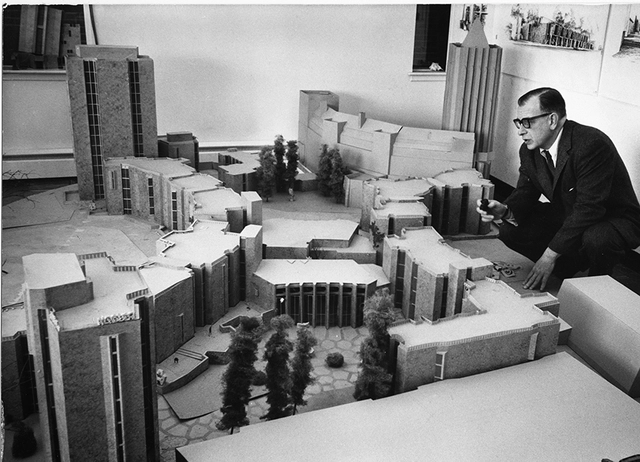
Photograph of Eero Saarinen with two Yale residential colleges. From "Living on Campus: An Architectural History of the American Dormitory". Image Courtesy of Metropolis Magazine
Modernism in Pittsburgh. Central Park. Space settlements. Interwar typography. What do these topics all have in common? They are the subjects of a new batch of architecture and design books released this past year – books that constitute Metropolis Magazine’s spring/summer edition roundup of architecture’s newest and most exciting publications.
https://www.archdaily.com/922326/new-architecture-and-design-books-to-read-this-summerLilly Cao
Why don’t architects often consider the ethics of what they do? Thomas Fisher’s new book, The Architecture of Ethics, digs into this topic in great depth and with engaging insight. At the recent AIA convention in Las Vegas, I sat down with Fisher—former dean of the University of Minnesota College of Design, and now a professor in urban design at the school, as well as director of the Minnesota Design Center—to talk about his book and the ethical dimension of designing and building in the context of contemporary practice.
https://www.archdaily.com/919412/thomas-fisher-on-the-ethics-of-architecture-and-other-contradictionsMichael J. Crosbie


.jpg?1650549341&format=webp&width=640&height=580)
Adam_Mork.jpg?1650549635 "MAD Architects, Harbin Opera House, Harbin, China, 2015. Image © Adam Mørk")


_schranimage.jpg?1650549533 "Studio Zhu Pei, Jingdezhen Imperial Kiln Museum, Jingdezhen, Jiangxi Province, China, 2020. Image © schranimage")
.jpg?1650549341)