9 Areas of Practice for Architects Beyond the Project

You may have heard an architect colleague say that he chose to study architecture because of the numerous possibilities of action that this degree allows. The field of architecture is, in fact, very extensive, through which it is possible to embark not only on the most “traditional” attributions, but also to venture into various specificities that comprehend the role of the architect and urban planner.

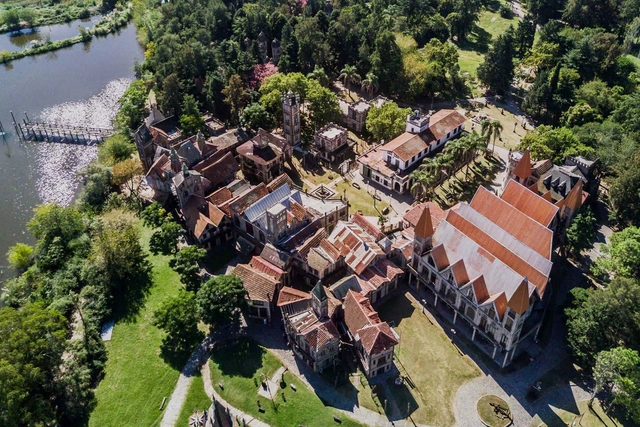
Architecture without Architects? Campanópolis, the Small Medieval Village Born from Recycling in Buenos Aires

Nowadays, the role of architects exceeds the limits of construction, reaching fields that are often unthinkable, but which nonetheless demonstrate a close relationship with the profession. If we go back in time, the fact is that many buildings, houses, monuments and even cities have been built intuitively without urban planning or renowned architects. Undoubtedly, today's architects are facing a great challenge that goes beyond demonstrating our skills and knowledge and extends to other areas that involve us, but we still don't know it. So we ask ourselves, what will be the profile of the architect of the future?

Architecture, Memes, and Social Media Influencers

According to a Harris Poll/Lego survey that questioned children across the United States, UK, and China, nearly one-third of children aged eight to 12 want to be a “YouTuber” when they grow up. That’s three times as many children who said that they wanted to be astronauts just a decade ago. The implications of how this generation of future influencers and content creators has a significant impact on the architecture and design profession begs the question- are we on the cusp of experiencing the rise of architecture influencers?

Architects Beyond the Traditional Practice: ArchDaily Editors Talk

Graduating with an architecture degree is often met with the expectations of working a 9-5 job at an office. However, the reality is that many fresh graduates are venturing into diversified careers and exploring fields such as architectural photography, writing, rendering, set design, and project management. In this Editor's Talk, ArchDaily's Founder and Editor in Chief, Director of Software Product Development, Managing Editors, and Social Media Editor share their experiences of graduating with a Bachelor's Degree in Architecture then finding themselves exploring different, yet very complimentary career paths post graduation, proving that there is a lot more to the architecture practice beyond designing built spaces.

“Our Architecture Is Very Hostile and Not Very Hospitable”: Interview With Father Júlio Lancellotti

An architectural project conceived from the neoliberal system can only be hostile. That's what Father Júlio Lancellotti, an active figure in actions to support homeless people in São Paulo, says. His work at the head of Pastoral do Povo da Rua has deservedly received the attention of national and international media, as well as being frequently published on his own social networks, drawing the attention of the public and authorities to urgent issues of inequality, invisibility of the most vulnerable and the hostility of our architecture and public spaces.

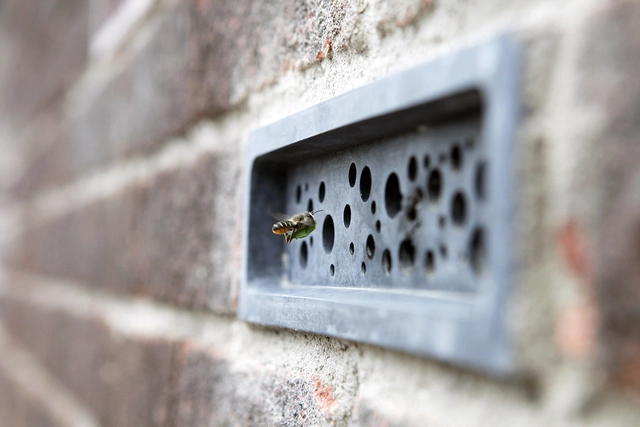
Giving Nature a Home in Cities: Bricks for Bees' Nests

Humanity's relationship with insects is ancient and complex. While they can spread disease and wipe out crops, they are also vital to our survival on Planet Earth, as pollinators and recyclers. Edward Osborne Wilson, a leading American biologist, stated in one of his articles that “If insects were to vanish, so would nearly all flowering plants and the food webs they support. This loss, in turn, would cause the extinction of reptiles, amphibians, birds and mammals: in effect, nearly all terrestrial animal life. The disappearance of insects would also end rapid decomposition of organic matter and thus shut down nutrient cycling. Humans would be unable to survive.”

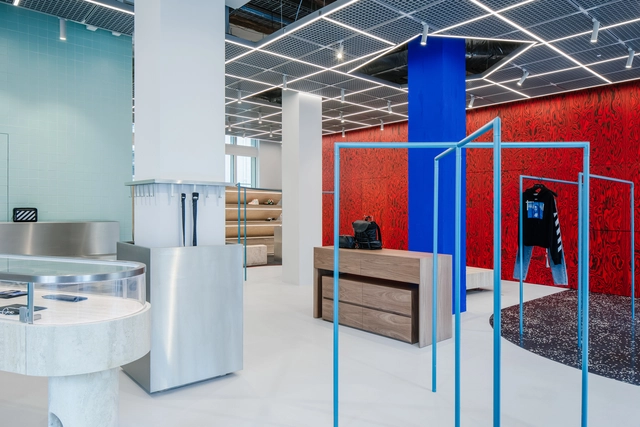
Architects that Transitioned into the World of Fashion Design

The term ‘Architect’ can be open to interpretation much like the reverence of an Artist. However, the universally recognized definition of the role is regarded as one who designs and plans buildings, a key member in terms of building construction. Architecture as a profession presents itself as a very diverse occupation. As an Art and Science in every sense, it offers insight into a vast range of subjects that can be applied to a range of different ventures.

Architecture Criticism: Cultivating An Understanding on the Practice

Michael Sorkin used to regard criticism as "a service profession", highlighting the field's ability to shape public opinion and the direction of architecture at large. Intellectually expansive architecture criticism not only evaluates the merits and shortcomings of a project but reveals how buildings are situated in relation to history and theory and how they contribute to current economic, social and environmental dilemmas. The following explores the field of architecture criticism, highlighting some of its key figures while reflecting on how this role has changed with the emergence of digital media.

The Methodology of the New Generation: They Are Architects, and They Are Not Architects

There is a group of young Chinese architects that define themselves in their own unique way and inform the public about the "new generation" of architects. They do not adhere to the definition and break the regulations. They think what they think and do in accordance with their beliefs. Besides from just being architects, they are also artists, painters, sculptors, and researchers. Identity is no longer unique among the new generation; the way they work is determined by what they pursue; and remaining on the route they choose will lead them to a new direction and a new life.

15 Contemporary Architects Who Design Chairs

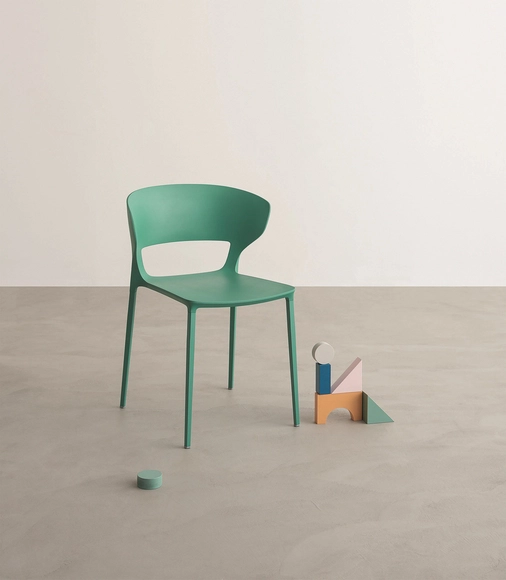
During their university years, architects acquire a wide range of skills apart from learning to design buildings. Some of these include creative problem solving, project management, high attention to detail, coordinating teams and accurately responding to consumer needs. Therefore, a degree often provides the necessary tools to design at any scale – from urban to product design – and to explore other creative fields, such as art, photography, journalism or industrial design. Of the many possibilities that open up, it is especially common for many to make the leap towards furniture design, particularly chair design, instead of following the traditional route.

Architectural Responses to Humanitarian Crises Beyond Designing Buildings

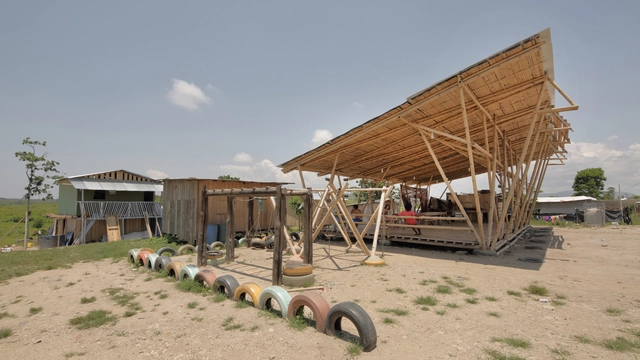
Following decades of ongoing socio-cultural and economic crises across the globe, the design community has realized that it is time to “design like they give a damn”. And with that, they embraced a movement that saw architects and designers use their acquired skills to develop design-based solutions to humanitarian crises, ranging from building modular housing and mapping landscapes, to developing mobile applications and documentaries, all from an altruistic standpoint. But since pro bono work is not yet ingrained in the ethos of architecture, how have architects broken out of the traditional model of “corporate” architecture and established a way to ensure ethical responsibility for human welfare?

The Graphic Novel as Architectural Narrative: Berlin and Aya

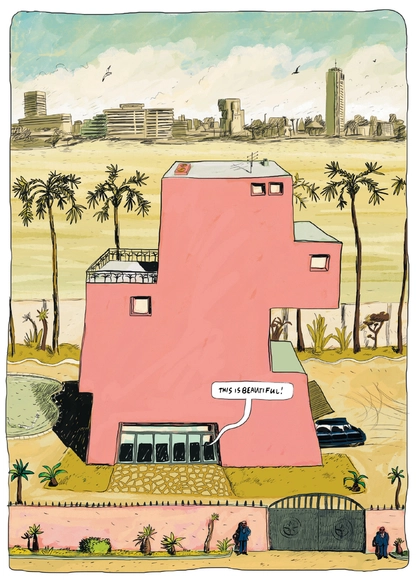
The comic strip, la bande dessinée, the graphic novel. These are all part of a medium with an intrinsic connection to architectural storytelling. It’s a medium that has long been used to fantasise and speculate on possible architectural futures, or in a less spectacular context, used as a device to simply show the perspectival journey through an architectural project. When the comic strip meshes fiction with architectural imagination, however, it’s not only the speculation on future architectural scenarios that takes place. It’s also the recording and the critiquing of the urban conditions of either our contemporary cities or the cities of the past.

Fashionable Experiences, Runway Art Direction as Seen in Haute Couture Shows

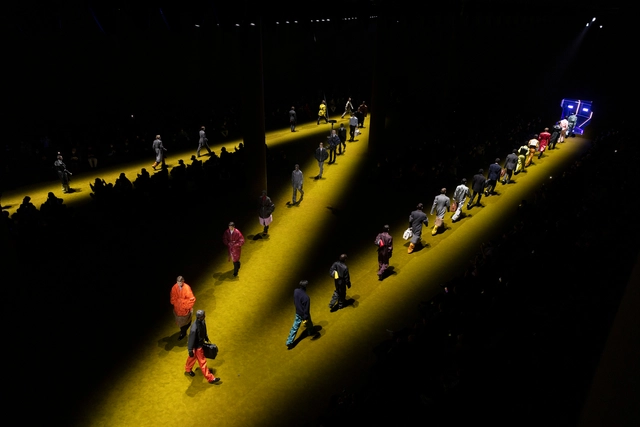
Architecture education is not only about learning how to design and construct buildings but it gives a whole new perspective on our built environment and on how design can contribute to create quality spaces and experiences. Moreover, a big percentage of this design thinking can be used by professional architects as a resource to create other spatial configurations that vary from the traditional building, opening up to a diverse world of possibilities in terms of spatiality and materials. 

The Architect-Researcher: Exploring New Possibilities for the Production of Architecture

While research seems intrinsic to the design process, architectural research is a professional path in itself, whose purpose is to highlight scientific evidence and explore alternatives outside of pre-established norms or empirical considerations. Its purpose is to create a framework of knowledge that can inform the design to reach objectively better outcomes. The following discusses the role and state of research in architecture, some prominent areas of inquiry, and the architects or institutions that dedicate their work to these subjects.

Building Beauty: When Artists Design for Architecture

Whether or not architecture is an art, buildings and spaces shape daily life. Pushing the boundaries of architecture and the categorization of art, contemporary investigations between disciplines are rethinking tradition. As transformations grounded in human experience, these installations and structures share qualities of purpose, function and creative expression. At the same time, they reorient the limitations and possibilities of each profession.

The Rise of the Design Thinking Movement and its Relation to Architecture

'Innovation' and 'design thinking' could possibly be two of the most extensively-used phrases both online and offline during the past decade. To respond to the global need of "changing the status quo", established companies, start-ups, and even universities have used this framework to generate novel ways of solving problems and create new products, taking into account their desirability, feasibility, and viability. And with that, a new archetype was conceived: the design thinker, someone who has the creative toolkit to generate something disruptive. So what is the meaning behind design thinking and what is its relationship with architecture?

Architecture is Human: But Beauty is Found Everywhere

If Nature had been comfortable, mankind would never have invented architecture. - Oscar Wilde

Forensic Architecture’s Samaneh Moafi on Tear Gas Use in Chile: “Toxic Gas Is Not Only Colonizing the Public Space of Our Cities”

On October 18, 2019, a 4-cent increase on Santiago's Metro fare caused an uproar on the streets of the Chilean capital. The citizens' anger escalated quickly, leading to demands of immediate structural changes in the Chilean economic and social system. Alongside the people's call for change, daily clashes between protesters and the police led to excessive use of tear gas by the latter across the country.