The archives of Álvaro Siza, whose drawings, sketches, and models have been exhibited in the most renowned cultural institutions around the world, may soon be transferred to the Canadian Centre for Architecture (Centre Canadien d'Architecture, CCA) in Montreal.
The architect confirmed on Wednesday to Portuguese paper PÚBLICO that he has been "in talks" with the CCA, as well as other un-named institutions from different countries, in order to "decide the future" of his archives.
“A painter is a magician that immobilizes time.” - Iberê Camargo
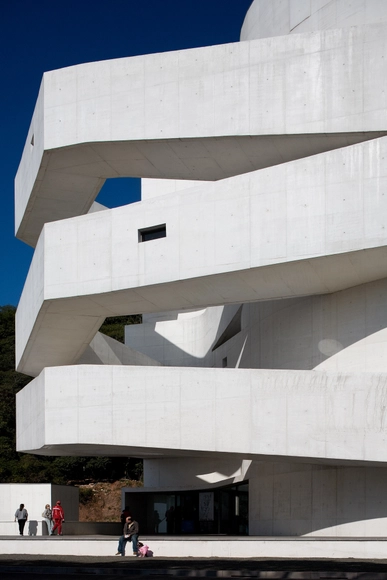
The Fundação Iberê Camargo, which received a Golden Lion at the 2002 Venice Biennale of Architecture, is Portuguese architect Álvaro Siza's first project in Brazil. It serves as an architectural exemplar not only for the city of Porto Alegre, but also for the entire country of Brazil. Defined by Siza as "quasi-arquitecture" -- with careful explorations of light, texture, movement and space--the building cultivates a direct relationship between the viewer and the artwork, and, in turn, allows visitors to richly come into contact with Iberê's (one of the great names of twentieth-century Brazilian art) work.
"Architects don't invent anything, they just transform reality." - Álvaro Siza
The first in Brazil to use white concrete--seen around the entire exterior-- the building does not use any bricks. The visitor is guided through a trajectory of descent throughout the building via ramps in the nine exhibition halls. The monolith is supported by massive slabs, pillars and beams. No detail escaped the hands of the architect; the furniture and signage were also designed by Siza.
With this news, we are presenting an extensive set of photos of this important project, realized and generously shared by one of the world's most important architecture photographers: Fernando Guerra of FG+SG - Últimas reportagens.
Story written by Joanna Helm for ArchDaily Brasil. Translated by Becky Quintal.
Scroll to see Guerra's beautiful images of the Fundação Iberê Camargo:
To determine the finalists, the five jury members - Francisco Liernur, Sarah Whiting, Wiel Arets, Dominique Perrault, and Kenneth Frampton - spent the last twelve days visiting projects, speaking with the architects, users and owners of the spaces, and entering into intense debate among each other.
As jury member Dominique Perrault noted, “There’s a lot of means by which to evaluate projects - models, drawings, images - but we took all opportunities to test the quality of the architecture. In the end, only by visiting can you sense the ‘touch of god’ - the presence of the building itself in the context.”
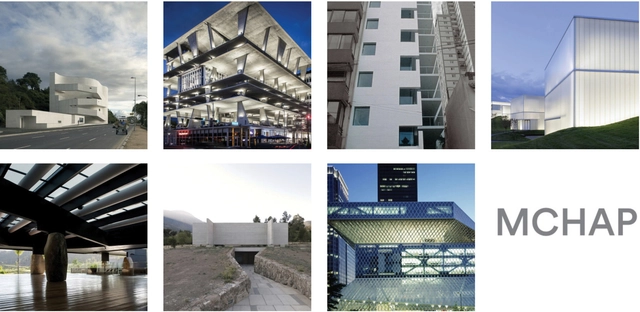
The resulting finalists show tremendous variety - in terms of scale, place, typology, program, materials, etc. - making the task of choosing a winner all the more challenging. See all seven finalists, as well as a video of Kenneth Frampton discussing the selection process, after the break.
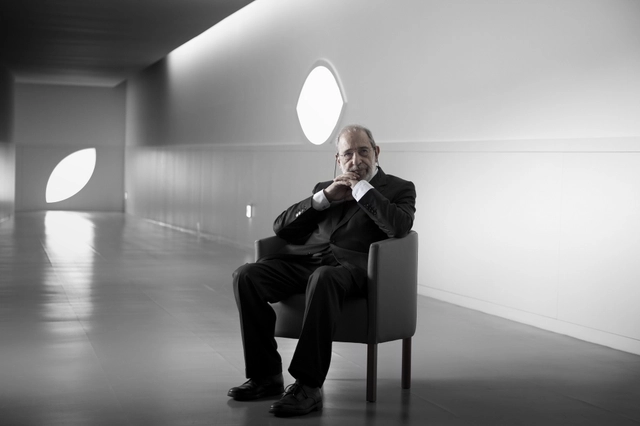
Today marks the 81st birthday of Portuguese modernistÁlvaro Siza. Originally slated to become a sculptor, Siza’s switch-over to architecture took place early in his career, after experiencing the work of Antoni Gaudí (whose birthday he shares). Since then, he has risen to become one of the most respected architects of the era, winning the Pritzker Prize in 1992.
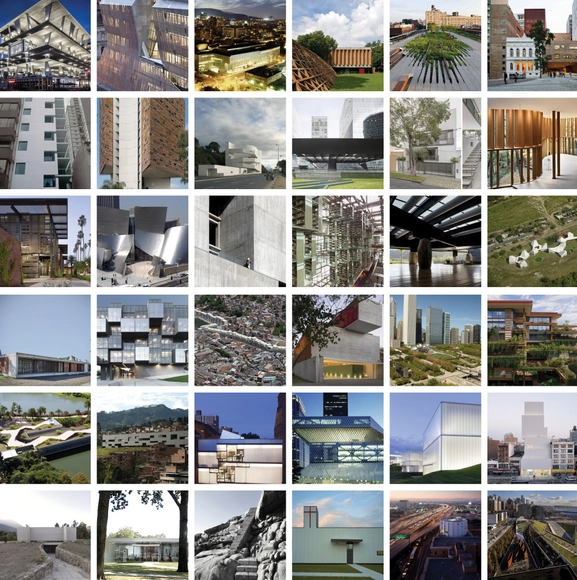
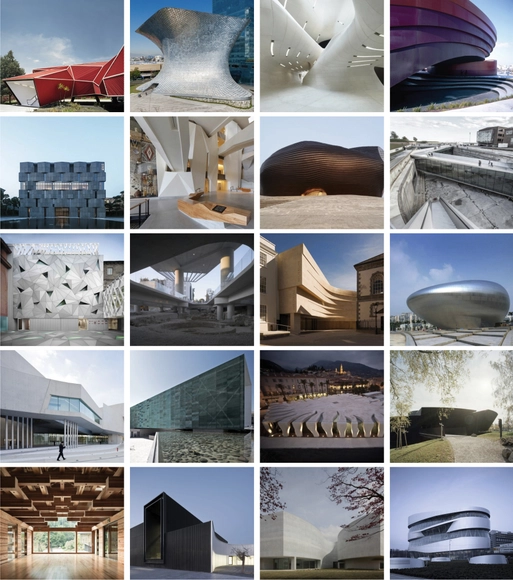
Wiel Arets, Dean of the College of Architecture at Illinois Institute of Technology (IIT) and Dirk Denison, Director of the Mies Crown Hall Americas Prize (MCHAP), have announced the inaugural MCHAP shortlist – 36 “Outstanding Projects” selected from the 225 MCHAP nominees.
“The rich diversity of these built works is a testament to the creative energy at work in the Americas today,” said Arets. “When viewed alongside the innovative work by the MCHAP.emerge finalists and winner, Poli House by Mauricio Pezo and Sofia von Ellrichshausen which we honored in May, we see the evolution of a distinctly American conversation about creating livable space.” See all 36 winners after the break.
In this video, produced by Hugo Oliveira, Portuguese architect Álvaro Siza denounces the "hyper-specialization" of architecture, outlining its academic roots as well as its practical implications for practice. Siza mentions how, in Portugal, a law was considered to limit architects to their specific specialities - exterior architects could not design interiors, for example. According to Siza, this tendency towards "hyper" or over specialization is unfortunate, as it gives rise to the segmentation of the discipline into subcategories - interior architecture, exterior architecture, landscape architecture, etc. - that undermine collaboration and team work.
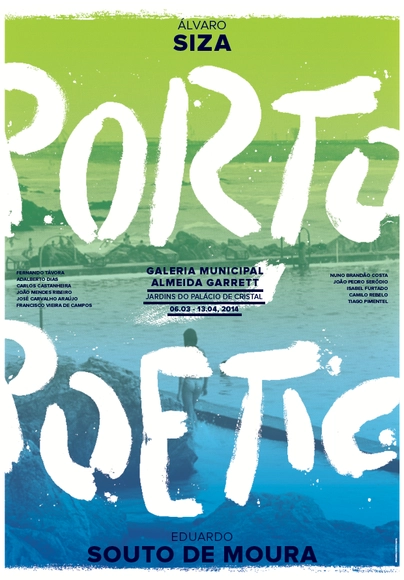
Porto Poetic, an exhibition covering the career and work of notable portuguese architects, started March 6 and will keep on going until April 13. The exhibition, which includes the work of Pritzker Prize winners Álvaro Siza and Eduardo Souto de Moura, will show sketches, plans, models and photographs of their most important work.
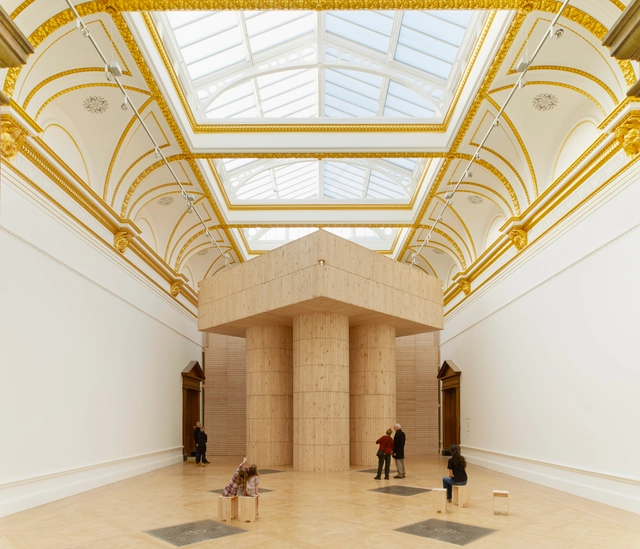
As an accompaniment to their ongoing Sensing Spaces Exhibition in London, the Royal Academy of Arts has produced six wonderful films interviewing the architects involved in the exhibition, unearthing what motivates and inspires them as architects, and what the primary themes of their exhibition projects are.
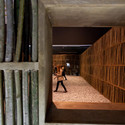
The above video features both Álvaro Siza and Eduardo Souto de Moura, who both designed their Sensing Spaces exhibits with the other in mind. Siza explains his preoccupation with the joints between the natural and the man-made through his Leça Swimming Pool complex, and the way the rock formations informed his interventions. He also introduces his one-time protégé Souto de Moura's Braga stadium as expressing the same understanding of the natural and man-made.
See videos from the 5 other Sensing Spaces participants after the break
Raimund Abraham's last project, a "stunning" design for a building atop an unused NATO missile base in Hombroich, has been realized four years after the architect's death. At the time of his passing, Abraham was working on this project as part of a unique outdoor art complex close to Düsseldorf, Germany. A competition has now been announced to determine the future for the space which has become an "an integral part of Hombroich's cultural sphere."
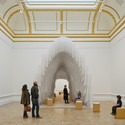
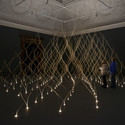
This past week London’s Royal Academy of Arts (RA) celebrated the opening of, what many claim to be, one of the most “epic” and “enchanting” exhibitions of 2014: Sensing Space: Architecture Reimagined. With a series of large scale installations by some of profession’s most acclaimed architects, such as Eduardo Souto de Moura, and Kengo Kuma, the immersive exhibition creates an atmosphere that encourages visitors to become part of the experience and open their minds to the sensory realm of architecture.
"Architecture is so often the background to our lives," stated curator Kate Goodwin. "We often don't think about it - it's practical and functional, but when does it do something more?"
ArchDaily got the chance to briefly speak with Pritzker-prize winning Portuguese architect Eduardo Souto de Moura when he (along with the Porto Metro Authority) received the Veronica Rudge Green Prize in Urban Design at the Harvard Graduate School of Design earlier this month. His design for the Metro system in Porto, Portugal garnered high praise from the jury, with member Rahul Mehrotra explaining that the project “shows generosity to the public realm unusual for contemporary infrastructure projects.” Upon receipt of the award, the head of the Porto Metro, João Velez Carvalho, thanked Souto de Moura for his efforts in this “urban revolution” and touted Porto as a destination in which people actively and enthusiastically seek out the architecture of Souto de Moura and fellow Portuguese architect Alvaro Siza.
Souto de Moura spent a few moments with us to describe both the challenges and rewards of working on a project that saw the completion of 60 new stations constructed in 10 years within the sensitive fabric of the city of Porto—a UNESCO World Heritage site.
ArchDaily: What is your opinion of architecture prizes?
Eduardo Souto de Moura: I won’t be modest, I like describing my opinion about them because the profession is so tough and difficult that is it complicated to achieve a high level of quality. So when you’re awarded a prize it’s like a confirmation of your effort. But the other thing is that a project is not the act of an individual, it’s a collective act. When there’s a prize, the press and the people, the “anonymous people,” go see the project and talk about it, critique it. That’s what gives me the motivation to continue in the profession. And every time it gets more difficult.
Concept image of environment by Li Xiaodong, commissioned by the Royal Academy of Arts, London, detail.Li Xiaodong
The Royal Academy of Arts’ (RA) in London will soon be transformed into a multi-sensory “architectural maze” with the construction of seven installations by seven world-famous architects for the exhibit, Sensing Space: Architecture Reimagined. Participants, handpicked by curators Kate Goodwin and Drue Heinz, include Alvaro Siza, Eduardo Souto de Moura, Pezo von Ellrichshausen and Kengo Kuma.
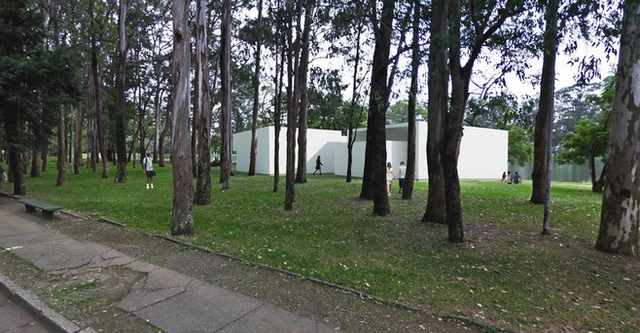
Thanks to Alvaro Siza and Eduardo Souto de Moura, Portugal's two Pritzker Laureates, Sao Paulo will soon have its own temporary summer pavilion - a la the Serpentine Gallery - in the city's most important green space: Ibirapuera Park.
In this interview by Hugo Oliveira, Álvaro Siza presents his ideas on the link between obsolescence and quality in architecture, and the role that a design's flexibility plays in this relationship. He argues that the convent is perhaps the best example of a typology which is both fit for purpose and very flexible, allowing myriad other uses when its lifespan as a convent has ended. He also laments the current tendency to design a building for a very short period of time - intended to last only as long as it is needed for its original function. He links this tendency back to the Futurists of the early 20th century, where the idea was that "each generation makes its own environment which is later destroyed", an idea he dismisses since "it also allows you to build badly because it only needs to last twenty years".
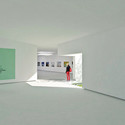
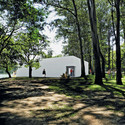
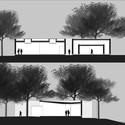
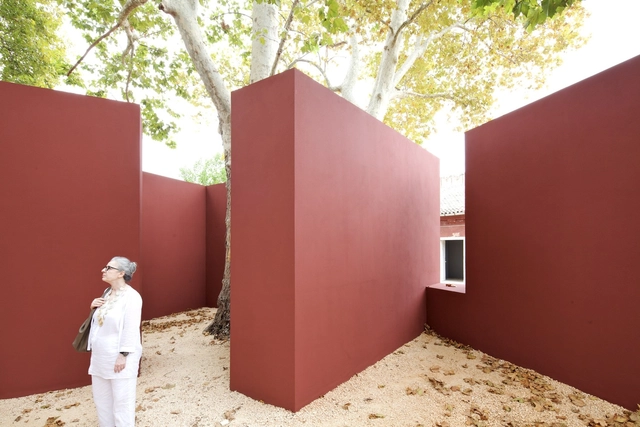
“Recognized by all for its efficiency,” the pavilion that Álvaro Siza designed for last year’s Venice Bienniale of Architecture will remain on display and be utilized as “additional space” by the new curators in 2014 and 2016.
Álvaro Siza. Viagem sem Programa, on display at the Fondazione Querini Stampalia through the duration of the Venice Biennale, narrates the most personal aspects of Álvaro Siza’s work in architecture and his concept of life. In response to Siza being announced as the recipient of the 2012 Golden Lion for Lifetime Achievement, curators Greta Ruffino and Raul Betti, along with organizer MedicinaMentis Cultural Association, began to work closely with the Portuguese master to put together this one-of-a-kind retrospective.
The exhibition features an exclusive collection of 53 works, personally selected by the architect himself, that were developed from travel notes and sketches, along with a 38-minute video interview.
Continue after the break for more images of Álvaro Siza. Viagem sem Programa and check out our previous coverage for more information.




.jpg?1391806773&format=webp&width=640&height=580)