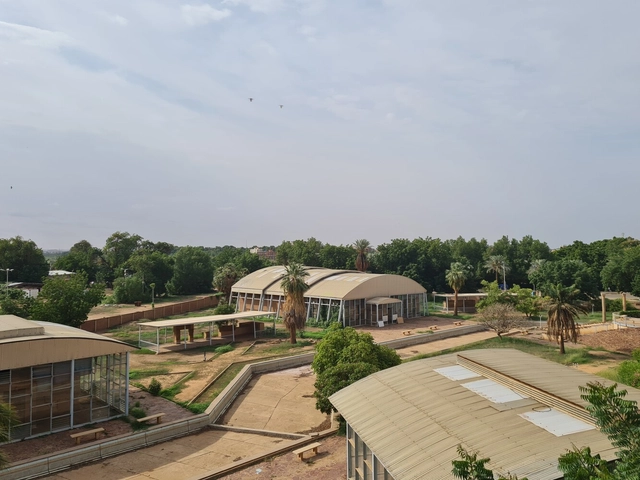
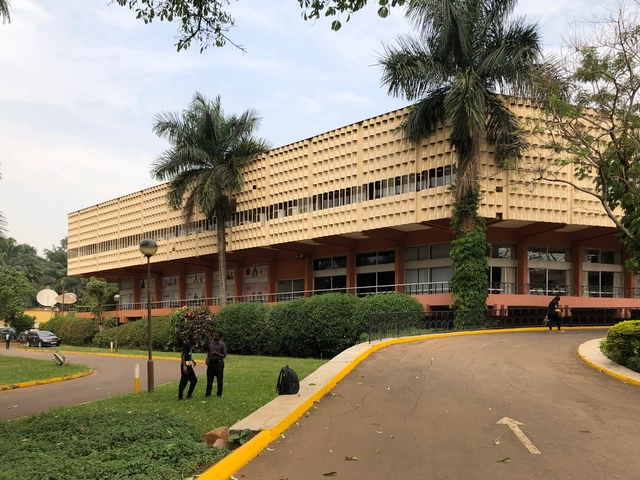
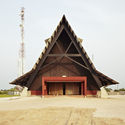
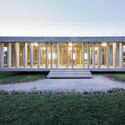
Two museums in Africa built in the mid-twentieth century carry the name 'National Museum.' They reflect the story of their respective nation's history and are tied to notions of national identity. Both are also examples of fine architecture built on the principles of Modernism, a movement associated with nation-building in Africa. However, their inception and purpose followed very different paths. This article explores the under-reported architecture of the National Museum of Ghana in Accra and the Sudan National Museum in Khartoum.
The middle of the Twentieth Century saw the independence of most countries on the African continent. Those euphoric times brought forward-looking sentiments and a wish to break with the past. As an architectural movement, Modernism was ideal for the day, and newly independent countries had extensive building programs to assert themselves as fully functioning nations.
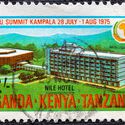
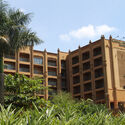
Hotels are one type of building that illustrates the complex architectural and political history of the times. Some were built specifically to host international delegations, others to boost tourism, while some were built as strong leaders' wishes. Although a marginal building type, several hotels across Africa stand as physical records of important parts of their respective country's history. Following an exploration of the histories of West Africa's Modernist Hotels, this second article turns to East Africa to uncover the ways in which this understated typology relates to larger histories of independence and national identity.
The middle of the Twentieth Century saw the independence of most countries on the African continent. Those euphoric times brought forward-looking sentiments and a wish to break with the past. Modernism, as an architectural movement, was ideal for the day, and newly independent countries had extensive building programs to assert themselves as fully functioning nations.
Hotels are one type of building that illustrates the complex architectural and political history of the times. Some were built specifically to host international delegations, others to boost tourism, while some were built as strong leaders' wishes. Although a marginal building type, several hotels across Africa stand as physical records of important parts of their respective country's history.
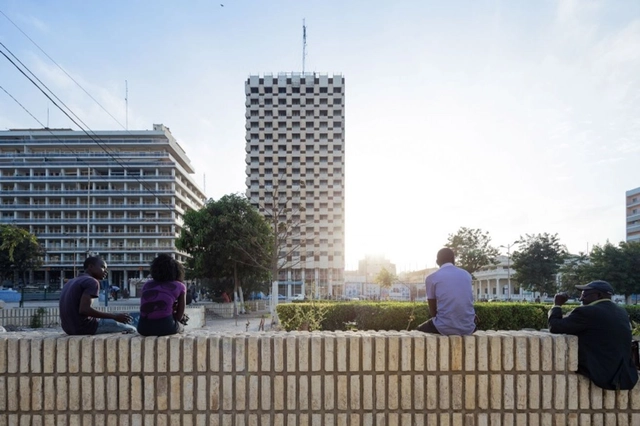
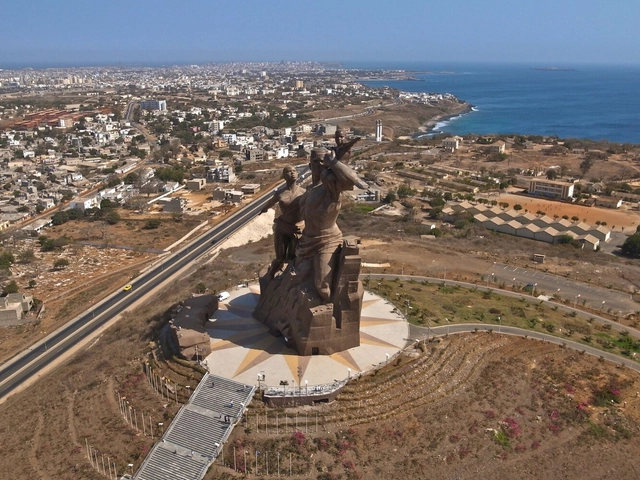
Dakar is a city of constant development. From colonial times, and on, the capital of Senegal has seen a lot of shifts in its societal definition which has, in turn, affected its architectural and urban fabric. Ever since the French mandate which somewhat forced a shift of local living traditions into a more 'European' lifestyle, the wheels of change have been set in motion. Afterward, a notable post-colonial attempt at re-defining Dakar was inevitable. It came about in many ways, still seen today, and it built a city of mixed architectural languages that defies most visitors' expectations.
Though the renowned African mid-century modernism was certainly present in the years after Senegal's independence in 1960, this was mostly due to its popularity with practicing architects in the region, not its relevance for the capital's rebuilding efforts. The modernist approach, which was mainly seen in the public, institutional, and cultural buildings, and which persists today in a more undefined contemporary style, was always aimed at showcasing Dakar to the world. It did not, however, reflect the reality of the city's development nor the way its dwellers live.
In an effort to refocus on Dakar, some of our more recent ArchDaily coverage has highlighted the many development and design efforts that look to provide a better means of living to inhabitants.
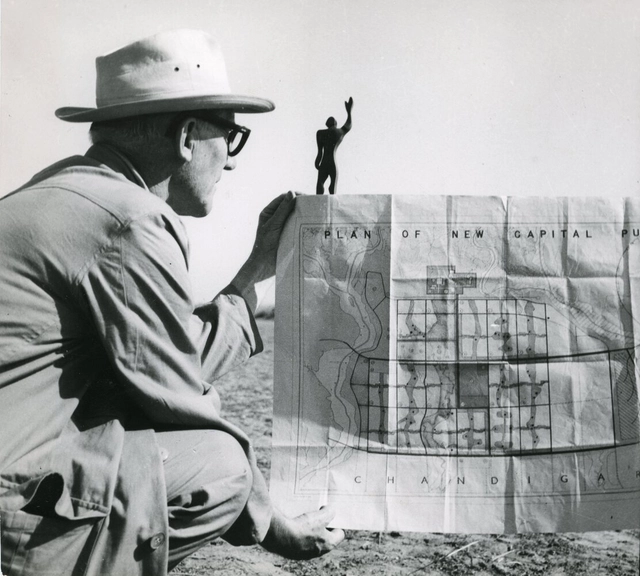
Courtesy of FDL, ADAGP 2014 | Le Corbusier in Chandigarh with the plan of the city and a model of the Modular Man, his universal system of proportion, 1951
The Victoria & Albert Museum is set to present an expansive exhibition focused on Tropical Modernism, an architectural movement that emerged in the late 1940s. British architects Jane Drew and Maxwell Fry were instrumental in developing this approach, combining modernism’s functional goals with local climate adaptations in warm and humid weather. This movement, which embodies Britain's unique contribution to international modernism, evolved against a backdrop of anti-colonial resistance, blending colonial architectural principles with local needs.
Since the advent of Modernism, architects have become schizophrenic in dealing with the reality of time. This is a problem, because time and gravity are two universal forces. Architects are exquisitely good at dealing with gravity—it is present in everything we design. We study it and engineer its unrelenting requirements. Gravity does a symbiotic dance with structure. No matter how a design feigns weightlessness, its mass cannot be denied. Architects must deal with gravity, whether it’s Frank Lloyd Wright’s sagging balconies at Fallingwater or today’s steroidally enhanced parametric buildings.
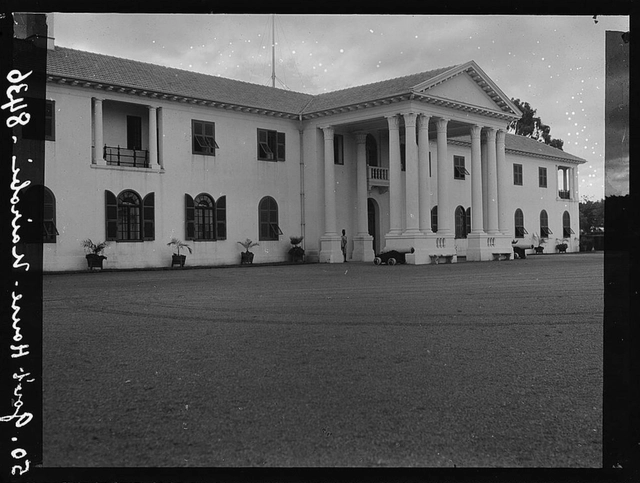
Known as the state house, the presidential palace, and an assortment of other terms — the building that hosts a country’s seat of government is usually quite architecturally striking. Frequently opulent, grand, and sometimes imposing, the state house is intended to function as a visually distinct marker of a nation — an extension of a state’s identity. In the African continent, a landmass that had seen a significant part of it colonized by European nations, this identity of statehood, in an architectural sense, is complex.
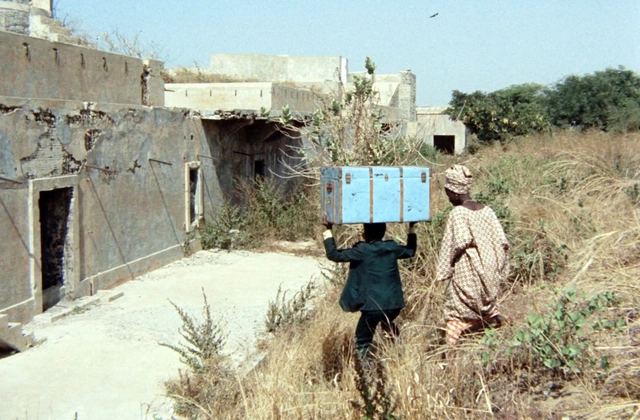
Abandoned house in "Touki Bouki". Image Courtesy of Janus Films
Simultaneously gripping, disconcerting, and chaotic, Djibril Diop Mambéty’s Touki Boukiis an exhilarating cinematic ride. The 1973 drama — the first full-length film by the Senegalese director — is the fantastical narration of a young couple in Dakar, eager to escape the Senegalese capital for the allure of Paris. It’s a character-driven film in many ways, primarily centered on the couple’s adventures, but it is also a subtle visual examination of the urbanism of post-independence Dakar, where the city and its architecture are essential fixtures in a surreal storyline.
The Ivory Coast is creating a new design language in West Africa. Located between Ghana and Liberia, Côte d'Ivoire is home to a range of modern architecture. Before colonization, the Ivory Coast was home to Gyaaman, the Kong Empire, and Baoulé, with ties that would shape its identity. Now, local architecture is rethinking past traditions to create a model for the future.















__by_Rinaldo_Olivieri__1973._Image_Iwan_Baan.jpg?1576526438&format=webp&width=640&height=580)
__by_Rinaldo_Olivieri__1973._Image_Iwan_Baan.jpg?1576526438)