-
Architects: People's Architecture Office
- Year: 2016


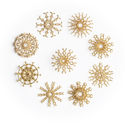
Brazil-based architects Estudio Guto Requena, working with digital product studio D3, has launched an app that collects emotions to create a unique piece of jewelry. That, and some 3D-printed craftsmanship direct from the design you generate via their new app. Coined the Aura Pendant, the final product is an intricately woven golden pendant that can be gifted to yourself or a loved one.

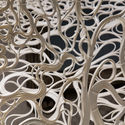
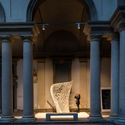
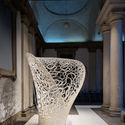
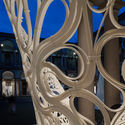
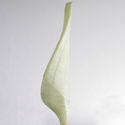
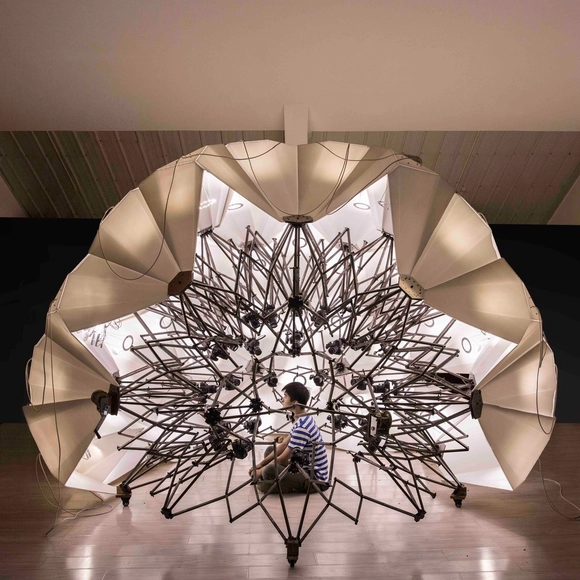
Zaha Hadid Architects unveiled a new experimental structure as part of Milan’s White In The City Exhibition during the city’s annual Salone del Mobile. Held at the Accademia di Belle Arti di Brera in the heart of Milan’s design district, the exhibition explored the contemporary use of white color in design and architecture across various locations in the city. Named the Thallus – after the Greek word for flora that is not differentiated into stem and leaves, the sculpture is the latest in ZHA’s investigations using 3D printing technology. Thallus continues Zaha Hadid Architects’ Computational Design (ZHA CoDe) group’s research into generating geometries through robotic-assisted design.

The brief is simple: show us your use of 3D printing in your architecture project. Whether it's a wild mockup of a future tech hub made of plastic or a treehouse prototyped in metal, we want to see how you're using 3D printing to help communicate your ideas.
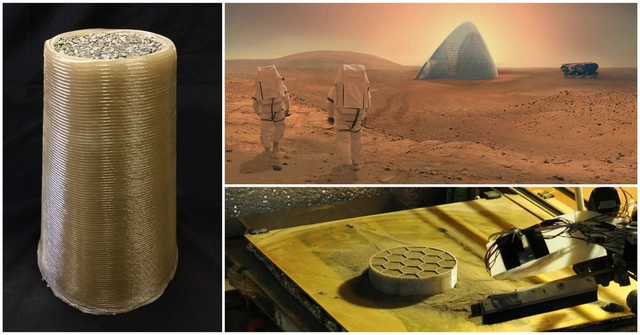
NASA has announced the completion of the initial printing stage of NASA’s 3D-Printed Habitat Challenge, awarding Foster + Partners | Branch Technology and the University of Alaska, Fairbanks as the two top-scoring teams from this round.
After Phase 1 of the competition (won by Clouds AO and SEArch) tasked architects and engineers from around the globe to imagine hypothetical concepts for the habitation of Mars, Phase 2 is challenging designers to manufacture actual, 3D-printed objects using techniques that could be employed to create shelters on a future mission to the red planet or beyond.
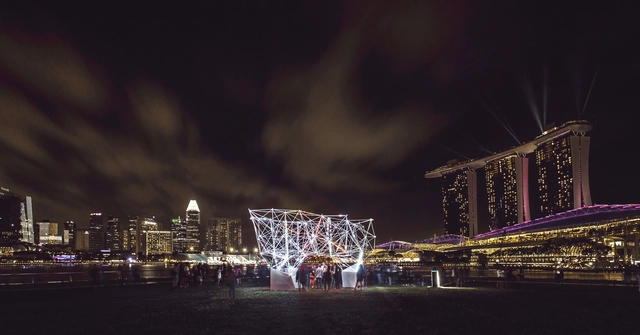
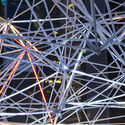
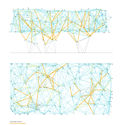
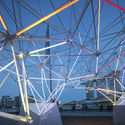
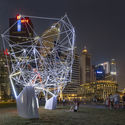
A luminous tetrahedral mesh spanning 10 meters, (Ultra) Light Network is the latest 3D printed innovation achieved by Singapore University of Technology and Design (SUTD) Professors Felix Raspall and Carlos Banon, who were also behind this mesh pavilion last year. Displayed at this year’s iLight Marina Bay in Singapore, the interactive light sculpture is an exploration of how full-scale 3D printed components can create a system to “address not only structural requirements but also power transmission, and information communication within a seamless and continuous aesthetic.”
Suspended over its visitors, the display engages the public through responses to their movements below, controlled by over 50,000 distinct LED pixels and their parent algorithm. This is made possible through five Teensy microcontrollers, working in conjunction with three ultrasonic sensors at the base of the structure, resulting in a lively and illuminating experience.

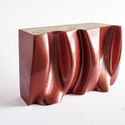
Following the success of their highly intricate Arabesque Wall, Benjamin Dillenburger and Michael Hansmeyer have once again achieved new levels of ornamental eye candy – this time, with a full-scale 3D printed grotto created from seven tons of sandstone. Commissioned by the Centre Pompidou in Paris, the grotto is an example of how the spatial expression of computational technologies can make for remarkable architectural experiences.
“Digital Grotesque II is a testament to and celebration of a new kind of architecture that leaves behind traditional paradigms of rationalization and standardization and instead emphasizes the viewer’s perception, evoking marvel, curiosity and bewilderment,” state Dillenburger and Hansmeyer.
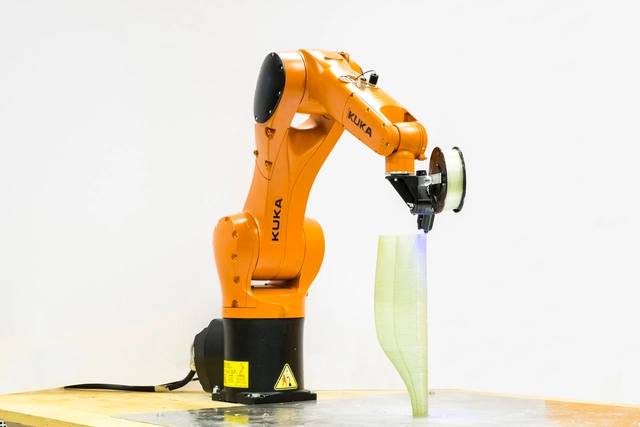
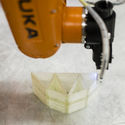
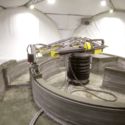
A team of architects and engineers at the Politecnico di Milano in Italy have unveiled Atropos, a six-axis robotic arm capable of printing continuous fiber composites. The one of a kind robot was developed by +Lab, the 3D printing laboratory at the Politecnico, who have taken inspiration from fibres found in the natural world. Through a technology known as Continuous Fiber Composites Smart Manufacturing, Atropos has the potential to create large, complex structures to aid the design and construction process.
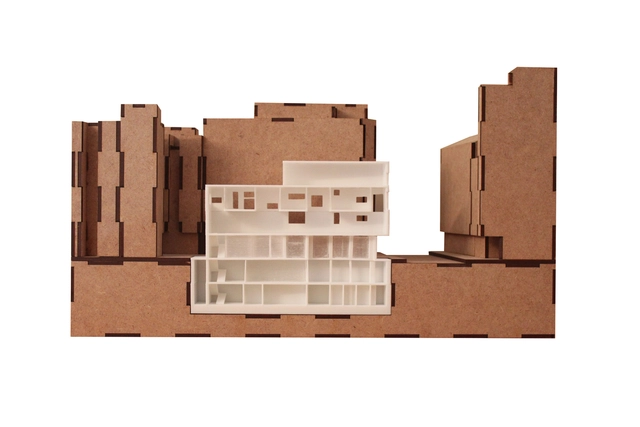
3D printing is here to stay. Every day we see articles that show us the latest accomplishment using 3D printers. From bridges printed entirely in 3D to 3D replicas of lost architecture or for something silly machines that print pizzas. We are fascinated and impressed by everything they can do, but still, regard them as something without real life application. In the field of architecture we see it as the next revolution that will save us the time spent on making models, but ... why limit it to only that?
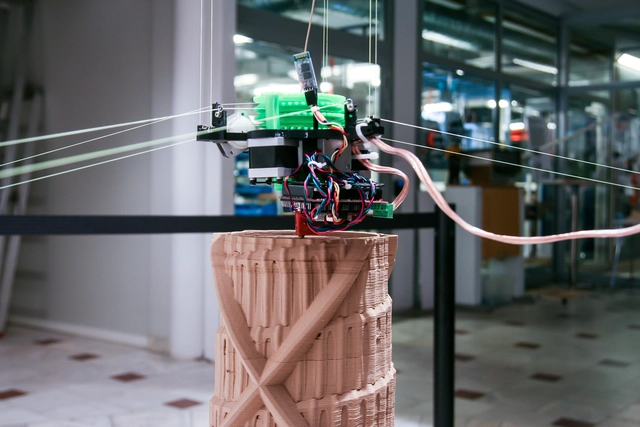
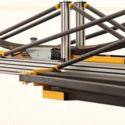
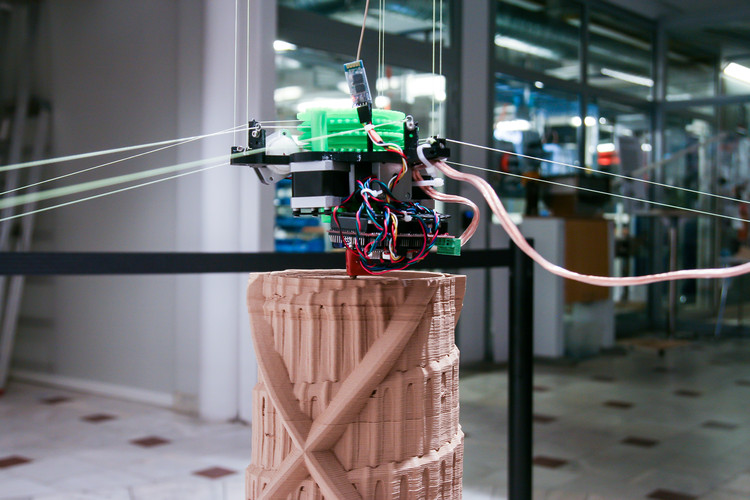
Sliperiet, Umeå Arts Campus has developed a new type of 3D printer that features increased printing flexibility at a lower cost. Called Hangprinter. The system is suspended by a series of thin fishing lines, it does not require a frame or rails, but rather, it can be attached to any stable surface, for instance, a ceiling.
As a part of the +Project innovation initiative, the Hangprinter is in the process of making a “Tower of Babel,” a project that currently measures almost three-and-a-half meters tall, making it the tallest object the system has made, as well as “much taller than the scope of any commercially available large format printer.”
Invented by Torbjørn Ludvigsen, who began the project while a student at Umeå University, the Hangprinter’s design was originally formulated to reduce costs. “The frame or box was almost half the cost of the final 3D printer, and I thought I could do without it,” said Ludvigsen. Hangprinter can be put together for about 200 Euros.


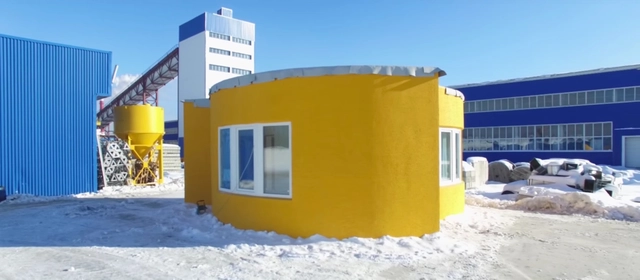
In recent times, 3D printing technology has made some great strides in its production content and quality, and now it has successfully printed the world’s first liveable house in Stupino, Russia. Responsible for this feat are San Francisco 3D printing startup Apis Cor, and Russian real estate developer PIK, who began the project in December of last year.
“Now we can say with confidence that with Apis Cor solution, the construction 3D printing has leaped to a new evolutionary stage,” said the project team. “The company and its partners are confident that the house in Stupino was the first step that can convince the world that 3D technology in the construction market is a reality.”
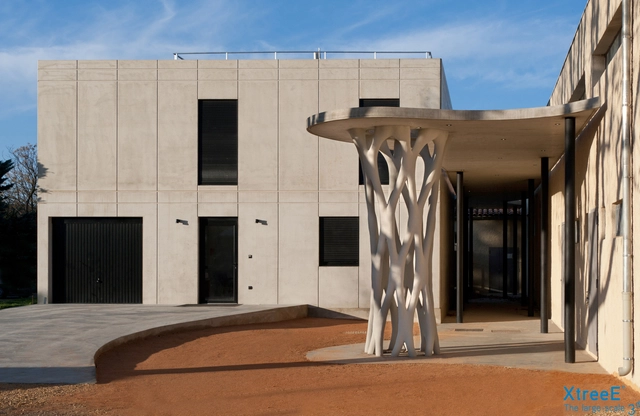
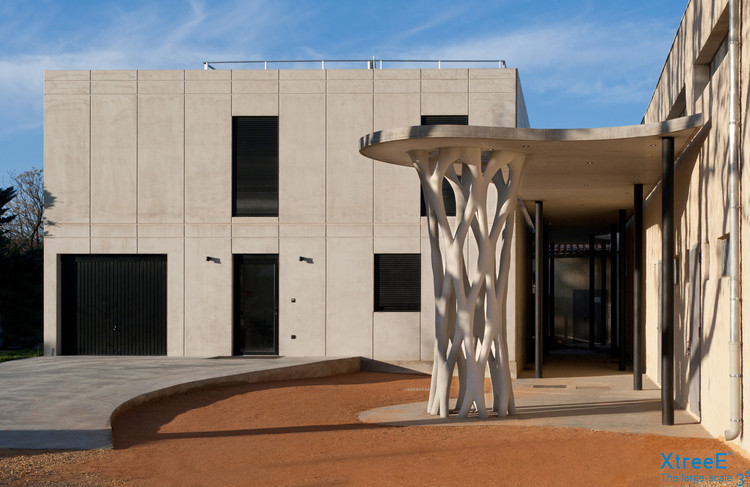
While large-scale 3D printing for architecture continues to be a busy area of research, France-based company XtreeE has been using 3D printed concrete in projects since 2015. Their latest creation is an organic truss-style support structure for a preschool playground in Aix-en-Provence.

One established 3D-printing technique is using laser to cure light-activated plastic, building up layers one at a time in a time-consuming process. But now tech start-up Daqri has discovered a way of speeding up that process: by using a 3-dimensional hologram.
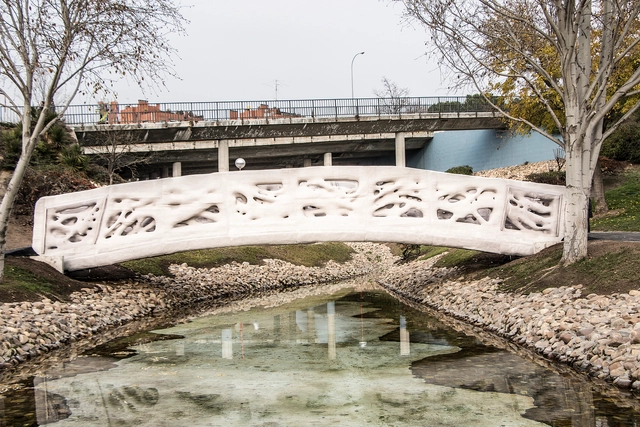
The first 3D printed pedestrian bridge in the world opened to the public on December 14 in Madrid. Led by the Institute of Advanced Architecture of Catalonia (IAAC) in a process that took a year and a half from its conception, the structure crosses a stream in Castilla-La Mancha Park in Alcobendas, Madrid.
Although similar initiatives have already been announced in the Netherlands, this is the first to have finished construction. The structure is printed in micro-reinforced concrete, and measures 12 meters in length and 1.75 meters wide.


Following last year’s introduction of MultiFab, a multi-material 3D printer, researchers at MIT’s Computer Science and Artificial Intelligence Laboratory has pioneered a system for designing multi-material objects. The new interface, Foundry, is meant to be accessible to non-programmers, whereas multi-material 3D printing technology has historically been prohibitive both with respect to cost and user-friendliness.
Glass can be molded, formed, blown, plated, sintered and now 3D printed. Neri Oxman and her Mediated Matter Group team has just unveiled their new glass printing platform: G3DP: Additive Manufacturing of Optically Transparent Glass. A collaboration with the Glass Lab at MIT, G3DP is the first of its kind and can 3D print optically transparent glass with stunning precision.
"G3DP is an additive manufacturing platform designed to print optically transparent glass," Oxman told ArchDaily. "The tunability enabled by geometrical and optical variation driven by form, transparency and color variation can drive; limit or control light transmission, reflection and refraction, and therefore carries significant implications for all things glass: aerodynamic building facades optimized for solar gain, geometrically customized and variable thickness lighting devices and so on."
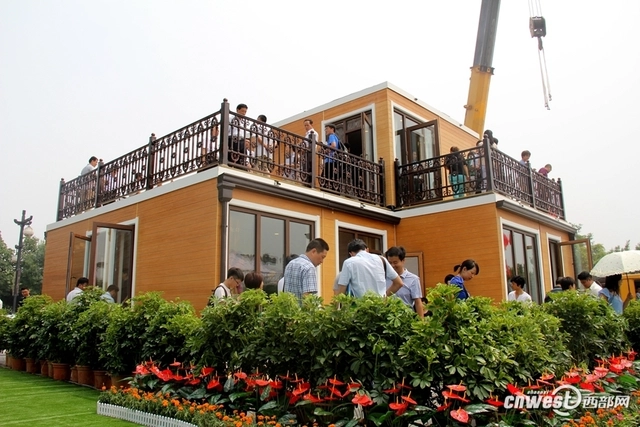
Chinese company ZhuoDa has assembled a two-story home in record speed; the modular house, comprised of six 3D printed modules, was assembled on-site in less than three hours. Likened to LEGO, the prefabricated home was 90 percent built off-site before its components were shipped to its permanent location. As Inhabitat reports, the home only took about 10 days to complete from start to finish.

This article is part of ArchDaily Essentials, a series of articles which give you an overview of architecture's most important topics by connecting together some of our best articles from the past. To find out more about ArchDaily Essentials, click here; or discover all of our articles in the series here.