1. ArchDaily
  2. 3D Printing

3D Printing: The Latest Architecture and News

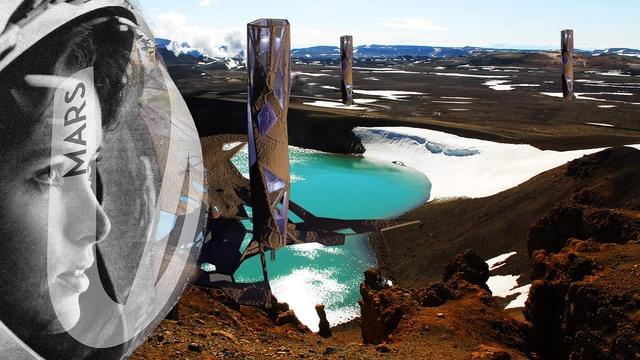
This Mars Colonization Proposal Would 3D Print Biodegradable Fungus Towers that Leave No Trace

Subscriber Access | 

After NASA’s discovery of water beneath the surface of Mars earlier this year, and the subsequent critical and popular success of the movie The Martian, it's safe to say that the planet named after the God of War is all the rage. Those revelations have led to speculative looks at how our neighboring planet could be colonized from numerous designers, such as Norman Foster.

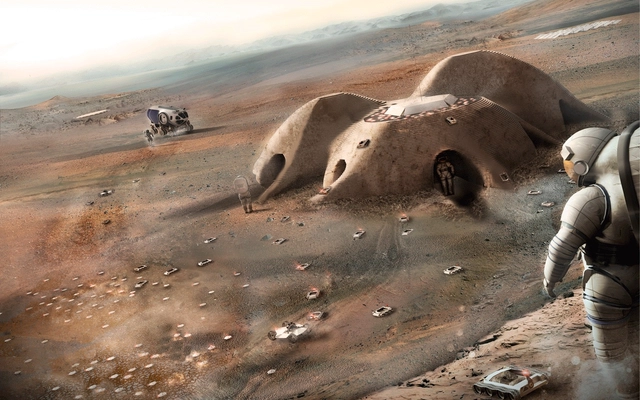
Many of those plans, including those of SpaceX founder Elon Musk, involve dumping Earthen construction materials onto the alien surface, potentially starting an inclination for pollution of our new world before it is even occupied. Spanish architect Alberto Villanueva of IDEA Architecture Office saw this as an opportunity for design to intervene. Using Martian soil and the fungus mycelium, Villanueva proposes a strategy utilizing 3D printing and bioluminescence that has gained the attention of both NASA and the European Space Agency.


This Mars Colonization Proposal Would 3D Print Biodegradable Fungus Towers that Leave No Trace - Image 1 of 4This Mars Colonization Proposal Would 3D Print Biodegradable Fungus Towers that Leave No Trace - Image 2 of 4This Mars Colonization Proposal Would 3D Print Biodegradable Fungus Towers that Leave No Trace - Image 3 of 4This Mars Colonization Proposal Would 3D Print Biodegradable Fungus Towers that Leave No Trace - Image 4 of 4This Mars Colonization Proposal Would 3D Print Biodegradable Fungus Towers that Leave No Trace - More Images+ 6

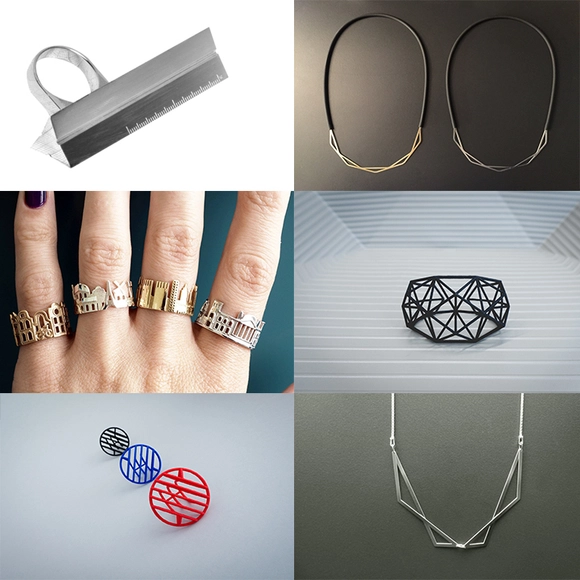
4 Architecturally Inspired Jewelry Lines

Fashion and architecture often intersect, with OMA/AMO designing runways for Prada, and architects, such as Zaha Hadid, designing swimwear and shoes. This time, we’ve rounded up four designers who have created jewelry lines inspired by the built world around them. From cityscape and protractor rings to wearable sculptures, check out the collections after the break.

Harvard Researchers Develop 4D-Printed Structures that React to Water

In 2013, Skylar Tibbits of the MIT Self-Assembly Lab introduced a new phrase to the architectural lexicon: 4D Printing. The concept, which built on the hype surrounding 3D printing and added the dimension of time, describes materials that can be constructed through 3D printing in such a way that they later react and change shape in response to an external stimulus such as heat or moisture.

Tibbits demonstrated his idea with a composite of two materials, but now researchers led by materials scientist Jennifer Lewis at Harvard have gone one better, creating a method that produces the same effects with just one material.

Bartlett Students Develop New Method for 3D Printing Concrete

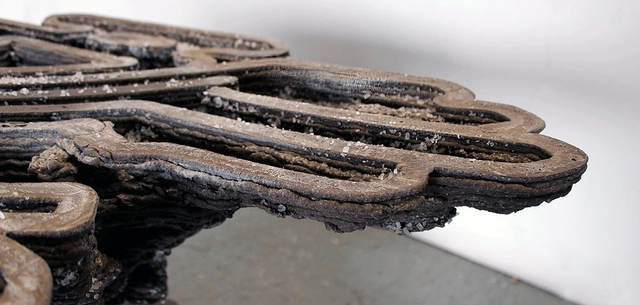
Four Masters students from Bartlett School of Architecture - Francesca Camilleri, Nadia Doukhi, Alvaro Lopez Rodriguez and Roman Strukov - have developed a new method for 3D printing large-scale, self-supporting concrete structures. With their project Fossilised, the team, known as Amalgamma, combined two existing concrete 3D printing methods - the extrusion printing method and the powder printing method - to create a form of supported extrusion that allows for "more volumetric" concrete structures.

"The supported extrusion method has therefore presented the opportunity to design forms that are more varied and more volumetric, as opposed to the very straight vertical forms so far achieved in 3D concrete practice," says Amalgamma. 

The Living's 3D Printed Airplane Partition is Designed to Mimic Bone Structure

Subscriber Access | 

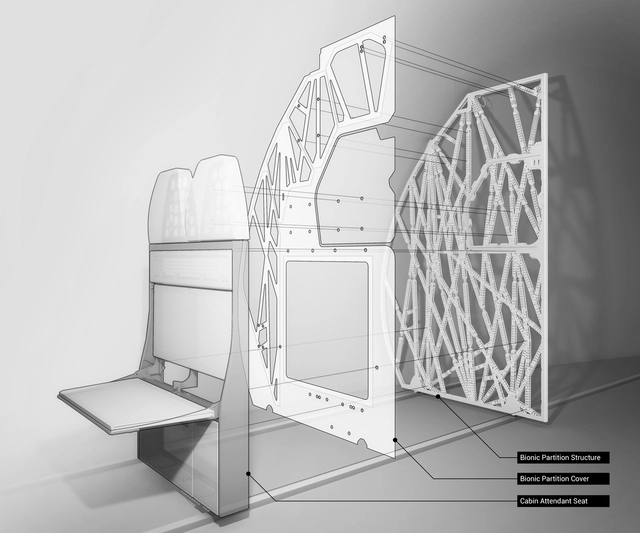
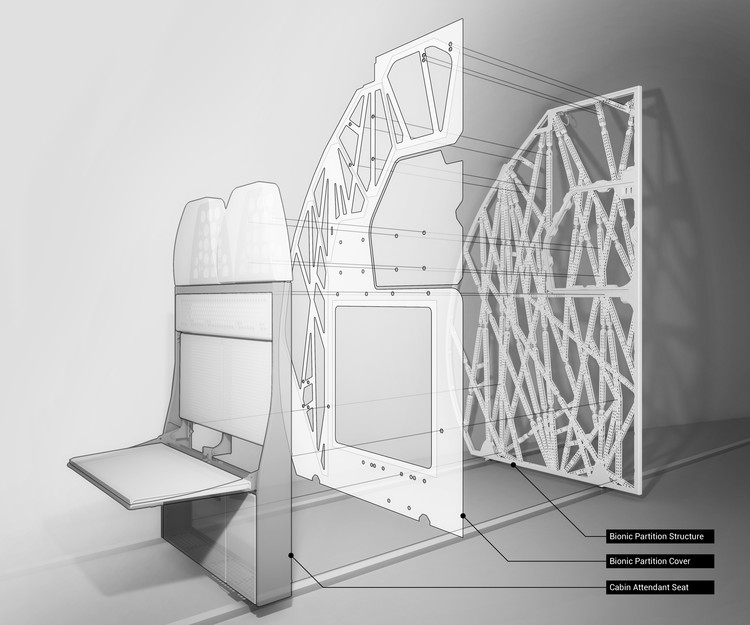
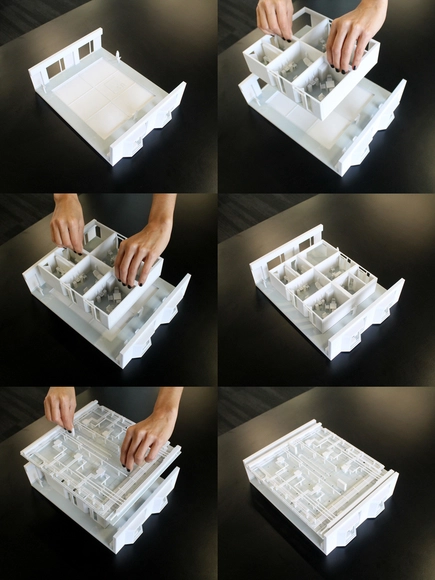
You’ve probably never given much thought to the seemingly basic interior partitions of an airplane, but building codes are a walk in the park compared to the exacting standards of aviation design. Those thin panels that separate the seats from the plane's galley must also be capable of supporting the weight of flight attendant jumpseats and providing a removable section to accommodate emergency stretchers - not to mention the rigorous safety standards and crash testing that aviation components must satisfy. With all of these challenges in mind, The Living, an Autodesk Studio, in collaboration with Airbus and APWorks, have developed the Bionic Partition Project, which harnesses generative design and 3D printing to maximize the structural efficiency of the panel, reducing the weight of an aircraft, and saving fuel. And while this particular application is specific to a single aircraft type, the technological advances could have far-reaching implications.

The Living's 3D Printed Airplane Partition is Designed to Mimic Bone Structure - Image 1 of 4The Living's 3D Printed Airplane Partition is Designed to Mimic Bone Structure - Image 2 of 4The Living's 3D Printed Airplane Partition is Designed to Mimic Bone Structure - Image 3 of 4The Living's 3D Printed Airplane Partition is Designed to Mimic Bone Structure - Image 4 of 4The Living's 3D Printed Airplane Partition is Designed to Mimic Bone Structure - More Images+ 6

Ittyblox Unveils Collection of Miniature 3D-Printed Parisian Buildings

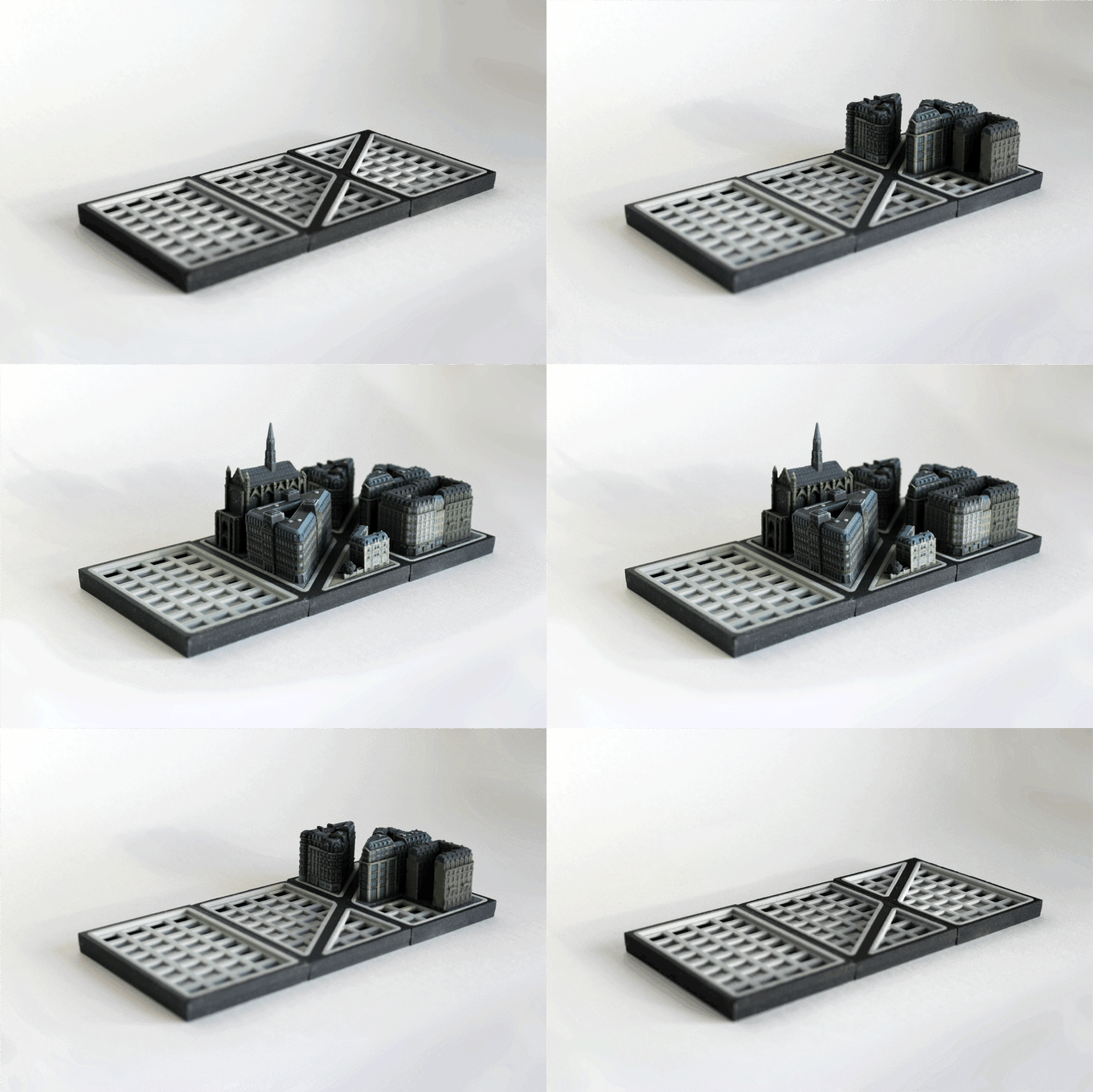
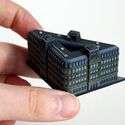
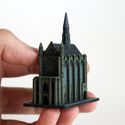
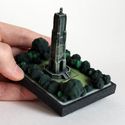
Netherlands-based Ittyblox has created yet another series of miniature 3D-printed buildings, this time featuring typical and iconic buildings and sites in Paris. Adding to their series of New York, London, and Chicago, among others, the new Parisian series follows suit as a 1:1000 scale model of customizable city blocks.

Ittyblox Unveils Collection of Miniature 3D-Printed Parisian Buildings - Image 1 of 4Ittyblox Unveils Collection of Miniature 3D-Printed Parisian Buildings - Image 2 of 4Ittyblox Unveils Collection of Miniature 3D-Printed Parisian Buildings - Image 3 of 4Ittyblox Unveils Collection of Miniature 3D-Printed Parisian Buildings - Image 4 of 4Ittyblox Unveils Collection of Miniature 3D-Printed Parisian Buildings - More Images+ 9

Vincent Callebaut Imagines "Oceanscrapers" 3D Printed from Recycled Trash

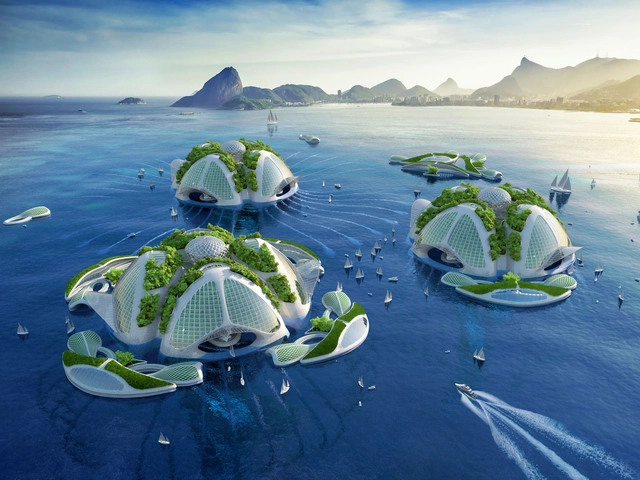
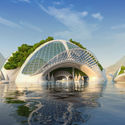
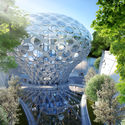
Vincent Callebaut Architectures has envisioned a radical underwater colony for "climate change refugees" 3D printed from recycled materials taken from the ocean's floating garbage patches. This particular proposal of "oceanscrapers" is sited off the shore of Rio de Janeiro. It's aim is to provide a sustainable habitat with 10,000 housing units, office and work space, sea farms, gardens, community orchards and much more, while fostering marine life.

Vincent Callebaut Imagines "Oceanscrapers" 3D Printed from Recycled Trash - Image 1 of 4Vincent Callebaut Imagines "Oceanscrapers" 3D Printed from Recycled Trash - Image 2 of 4Vincent Callebaut Imagines "Oceanscrapers" 3D Printed from Recycled Trash - Image 3 of 4Vincent Callebaut Imagines "Oceanscrapers" 3D Printed from Recycled Trash - Image 4 of 4Vincent Callebaut Imagines Oceanscrapers 3D Printed from Recycled Trash - More Images+ 25

Digital Craft: 3D Printing for Architectural Design

Subscriber Access | 

3D printing has been used in architectural practice since the 1990s, and while its use for producing design models continues to be adopted, the aesthetics and stylistic potential of its output remain unexplored by many architects. In his book “Digital Craft: 3D Printing for Architectural Design,” Bryan Ratzlaff examines the relationship between the architect, the model and the 3D printer, creating a better understanding of how when integrated, these entities can lead to a refinement in the communication of architectural design with 3D printing.

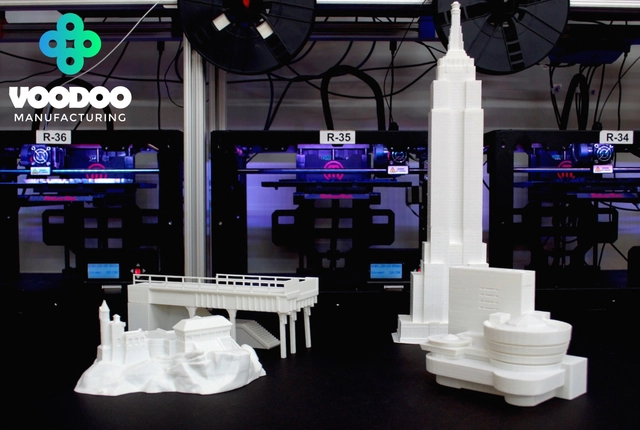
Help Voodoo Manufacturing Build a Massive 3D Printed City

W​ide Open Arts is hosting their annual curated exhibit from January 21-­24, 2016. This year the art fair will feature a massive 3D printed city of towers designed by hundreds of individuals from across the world. They are looking for artists, architects and designers to submit 3D designs of contemporary, modern and ancient towers.

See the Winners of the 2015 KRob Architectural Drawing Competition

Established in 1974 by the AIA Dallas Chapter, the Ken Roberts Memorial Delineation Competition (KRob) is “the world’s longest running architectural drawing competition of its kind”. Named after architect Ken Roberts, famous for his ink perspective drawings, the competition recognizes innovations in both hand-drawn and digital architectural drawing. The winners and shortlist each year serve as an inspiring reference for architects, and showcase the intersection between technology, design and culture.

In 2015, the new award for “Excellence in Architectural 3D Printing” was added, and with a total of 424 entries from 28 countries, this year’s competition was the largest to date. The 2015 jury consisted of Michel Rojkind, Paul Stevenson Oles and John P. Maruszcak. The competition culminated in an awards ceremony and panel discussion at Alto 211 in Dallas. See the winners after the break.

IaaC Student Develops 3D Printed "Living Screen" From Algae

"The debate linked to a more responsive architecture, connected to nature, has been growing since the 1960s," explains Irina Shaklova in her description of her IaaC research project Living Screen. "Notwithstanding this fact, to this day, architecture is somewhat conservative: following the same principles with the belief in rigidity, solidity, and longevity."

While Shaklova's argument does generally ring true, that's not to say that there haven't been important developments at the cutting edge of architecture that integrate building technologies and living systems, including The Living's mycelium-based installation for the 2014 MoMA Young Architect's Program and self-healing concrete made using bacteria. But while both of these remain at the level of research and small-scale experimentation, one of the most impressive exercises in living architecture recently was made with algae - specifically, the Solarleaf facade developed by Arup, Strategic Science Consult of Germany (SSC), and Colt International, which filters Carbon Dioxide from the air to grow algae which is later used as fuel in bioreactors.

With Living Screen, Shaklova presents a variation on this idea that is perhaps less intensively engineered than Solarleaf, offering an algae structure more in tune with her vision against that rigidity, solidity, and longevity.

IAAC Researcher’s Pylos 3D-Prints with Soil

Sofoklis Giannakopoulos, a researcher at the Institute for Advanced Architecture of Catalonia (IAAC), has designed Pylos, a 3D printer that utilizes a natural, biodegradable, cheap, recyclable and local material that everyone is familiar with: the earth.

In an effort to make 3D printing a “large scale construction approach” even in years of economic and environmental turmoil, Pylos explores the structural potential of soil, a material that has been widely used in vernacular architecture around the world, and particularly in the Global South.

Learn more about the printer after the break.

LCD's VULCAN Awarded Guinness World Record for Largest 3D Printed Structure

Guinness World Records has awarded the title of "largest 3D printed structure" to VULCAN, a temporary pavilion designed by the Beijing-based Laboratory for Creative Design (LCD). Made up of 1023 individually printed segments, the structure was 9.08 meters long and 2.88 meters tall, and took 30 days to print and a further 12 days to assemble. The pavilion was on display earlier this month at Beijing Design Week, located in Beijing's Parkview Green retail center.

LCD's VULCAN Awarded Guinness World Record for Largest 3D Printed Structure - Featured ImageLCD's VULCAN Awarded Guinness World Record for Largest 3D Printed Structure - Image 1 of 4LCD's VULCAN Awarded Guinness World Record for Largest 3D Printed Structure - Image 2 of 4LCD's VULCAN Awarded Guinness World Record for Largest 3D Printed Structure - Image 3 of 4LCD's VULCAN Awarded Guinness World Record for Largest 3D Printed Structure - More Images+ 14

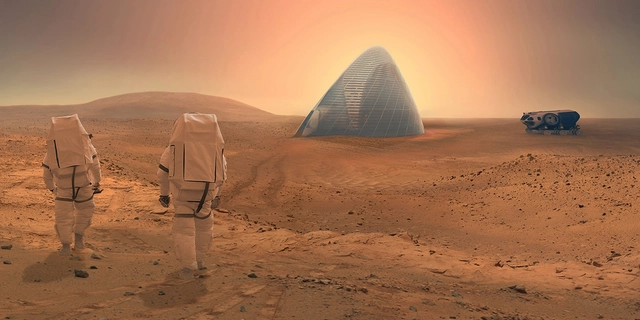
Clouds AO and SEArch Win NASA's Mars Habitat Competition with 3D-Printed Ice House

NASA, who recently confirmed evidence of flowing water on Mars, has deemed SEArch (Space Exploration Architecture) and Clouds AO (Clouds Architecture Office) winners of the 3D Printed Habitat Challenge for Mars. Sponsored by NASA and America Makes, the teams were asked to use indigenous materials and 3D printing techniques to build a habitat for four astronauts on Mars. SEArch and Clouds AO's first prize proposal, ICE HOUSE was awarded $25,000, ahead of 30 other shortlisted practices.

"Recognizing that water is the building block to life, the team used a ‘follow the water’ approach to conceptualize, site and construct their design," said SEArch and Clouds AO. "[Our] proposal stood out as one of the few entries not to bury the habitat beneath regolith, instead mining the anticipated abundance of subsurface ice in the northern regions to create a thin vertical ice shell capable of protecting the interior habitat from radiation while celebrating life above ground."

4 Experiments in Robot and Drone 3D Printing that Could Shape Architecture's Future

Subscriber Access | 

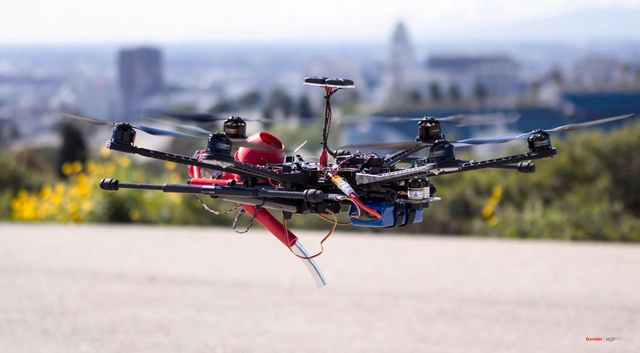
In manufacturing, the dramatic recent expansion in the capabilities of 3D printing has threatened to revolutionize the way that things are made. In architecture though, while 3D printing has been received with enthusiasm its translation to the increased scale of buildings has been challenging. Most solutions to this problem have focused on increasingly large printers and the incorporation of existing principles of prefabrication - however there is another way. In this article, originally published on Autodesk’s Redshift publication as "4 Ways a Robot or Drone 3D Printer Will Change Architecture and Construction," Zach Mortice looks at four examples of cutting-edge research into 3D printing that utilize robots or drones to navigate architecture's challenging scale.

Buildings simply aren’t made like anything else—that goes for sunglasses, furniture, appliances, and fighter jets. No other production process brings massive amounts of material to one place, constructs one item, and then hauls away the garbage. The inefficiencies are monumental.

Modular construction has promised a great deal of potential to reduce waste. But what if one answer is to do more intricate construction on-site, not less? 3D printers attached to robots and drones are demonstrating that they might have the versatility to finally bring the unruly building process to heel.

This 3D-Printed Building by SOM is Powered by a 3D-Printed Car

Skidmore, Owings & Merrill LLP (SOM) has unveiled their design for the U.S. Department of Energy’s Oak Ridge National Laboratory (ORNL): a 3D-printed building powered by a 3D-printed vehicle developed by ORNL. Dubbed AMIE, the project was developed in collaboration with ORNL, University of Tennessee (UT), Clayton Homes, General Electric, Alcoa, NanoPore and Tru-Design. SOM was able to take the design from concept to completion in less than a year.

Combining mobile power with energy-efficient design and photovoltaic (PV) panels, the AMIE presents possibilities for human shelter off-the-grid. Following previous work by SOM, demonstrating the use of 3D printing for complex, organic geometries, the new building combines structure, insulation, air and moisture barriers, and exterior cladding into one shell.

Foster Among 30 Shortlisted in NASA-Backed Mars Habitat Competition

Foster + Partners has been shortlisted among 30 other finalists in the 3D Printed Habitat Challenge organized by America Makes and NASA. The proposal calls for a 3D printed settlement built by pre-programmed, semi-autonomous robots who use regolith found on Mars' surface to construct dwellings that can house up to four astronauts each.

"The proposal considers multiple aspects of the project from delivery and deployment to construction and operations," says Foster. "The habitat will be delivered in two stages prior to the arrival of the astronauts."

3D Printed "Arabesque Wall" Features 200 Million Individual Surfaces

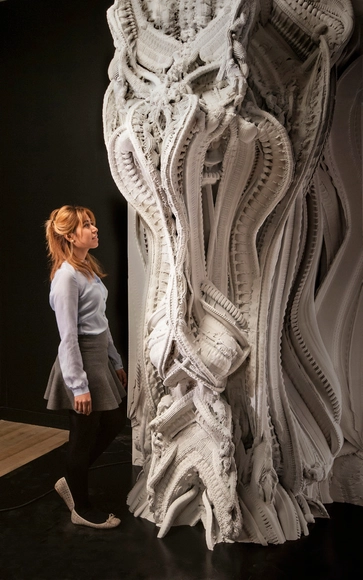
Standing 3 meters (10 feet) tall, Benjamin Dillenburger and Michael Hansmeyer's Arabesque Wall is an object of intimidating intricacy. 3D printed over the course of four days from a 50 Gigabyte file, the piece is a demonstration of the incredible forms achievable with algorithmic design and 3D printing - however with its overwhelming complexity it is also a test of human perception.

"Architecture should surprise, excite, and irritate," explain Dillenburger and Hansmeyer. "As both an intellectual and a phenomenological endeavor, it should address not only the mind, but all the senses - viscerally. It must be judged by the experiences it generates."

3D Printed "Arabesque Wall" Features 200 Million Individual Surfaces - Image 1 of 43D Printed "Arabesque Wall" Features 200 Million Individual Surfaces - Image 2 of 43D Printed "Arabesque Wall" Features 200 Million Individual Surfaces - Image 3 of 43D Printed "Arabesque Wall" Features 200 Million Individual Surfaces - Image 4 of 43D Printed Arabesque Wall Features 200 Million Individual Surfaces - More Images+ 6