-
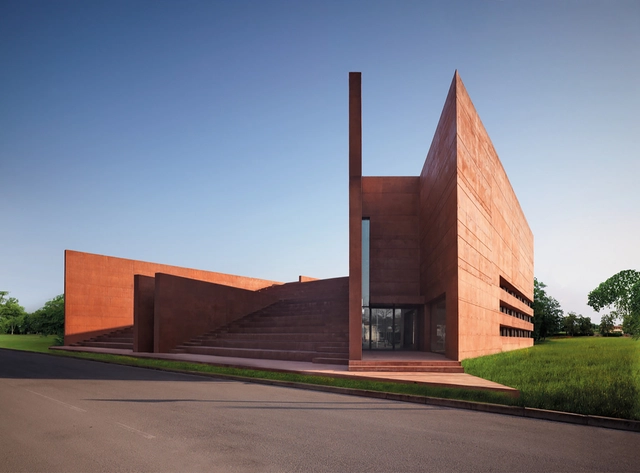
Architects: Tabuenca & Leache, Arquitectos
- Area: 6819 m²
- Year: 2008


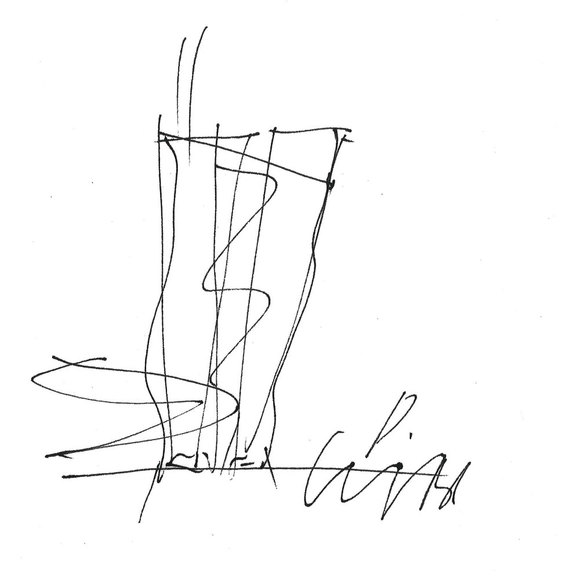
The napkin sketch has always had its place in architecture. In 2015, some of the world's more respected architects donated their very own conceptual doodles to the NewSchool of Architecture & Design and San Diego American Institute of Architecture Students (AIAS) in an effort that helped raise thousands to fund scholarships and programs for architecture students.
"The event was a big success,” said David Garcia back then, a NewSchool architecture undergraduate and fundraising chair for the AIAS event. “Personally, this project means a lot to me, and not just because of the time and involvement, but because this is a nice way to bring students and their favorite architects together, even if it's just through a sketch. Plus, since it's a fundraiser, the proceeds have been a great help to the success of the chapter.”
Take a look at all 17 napkin sketches from Bjarke Ingels, Wolf Prix, Thom Mayne, Robert Venturi, Zaha Hadid and others.

Presenting your model containing various assets can give your client a better understanding and vision of how everything would look in real life. There is no need for building 3D scene objects by yourself or pay a lot of money for them. For example, if you own an Enscape license you have access to many kinds of 3D models, such as people, furniture, vegetation, street items, vehicles and other accessories. Just by using drag and drop, you can put the assets into your model and scale them to the size you need.
In some cases, an experienced user would be able to create similar content using your CAD software or import it from other sources – but even then, those assets would demand a lot more resources. But if you would use unnecessarily complex and/or foreign geometry in your CAD, those assets would take a lot more resources and the 3D views would be much slower. Enscape content, instead, is represented by a simple placeholder in your CAD program (Revit, SketchUp, Rhino or ArchiCAD) and replaced with these high-quality components in Enscape’s real-time rendering environment. The web-based library is being updated regularly.
.jpg?1413947919&format=webp&width=640&height=580)
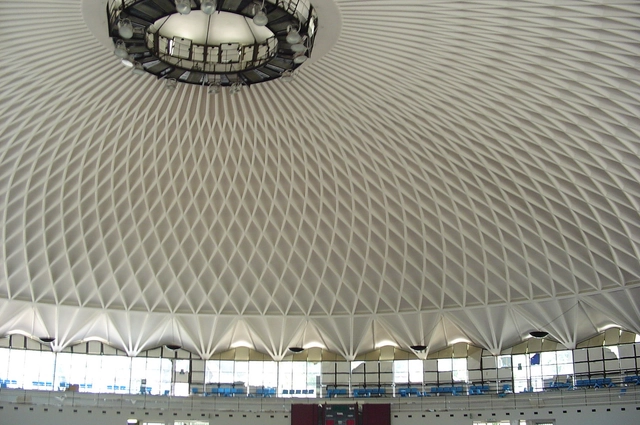
Known as both an architect and an engineer, Pier Luigi Nervi (June 21, 1891 – January 9, 1979) explored the limitations of reinforced concrete by creating a variety of inventive structural projects; in the process, he helped to show the material had a place in architecture movements of the coming years. Nervi began his career in a time of technological revolution, and through his ambition and ability to recognize opportunity in the midst of challenge, he was able to have an impact on several disciplines and cultures.












.jpg?1413947921 "© Relja Ivanić")
.jpg?1413947930 "© Relja Ivanić")
.jpg?1413947937 "© Relja Ivanić")
.jpg.jpg?1413947946 "© Relja Ivanić")
.jpg?1413947919)
.jpg?1437439810 "© Oki Hiroyuki")

.jpg?1437440394 "© Oki Hiroyuki")
.jpg?1437439972 "© Oki Hiroyuki")