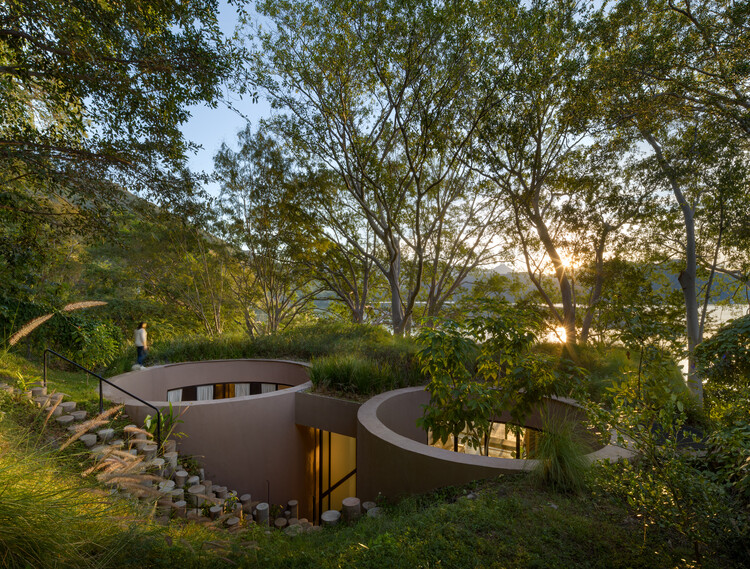
-
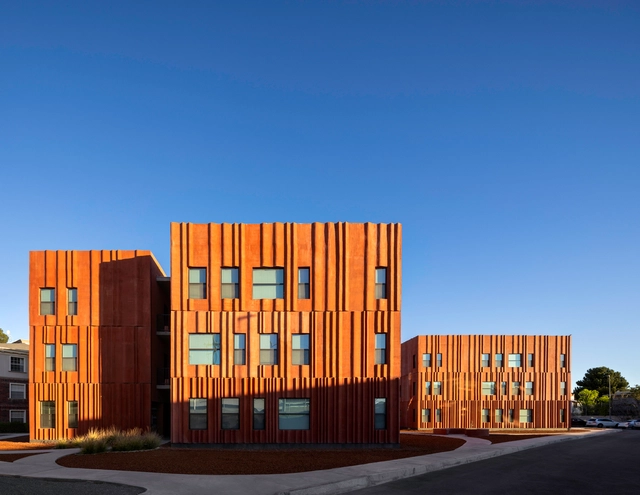
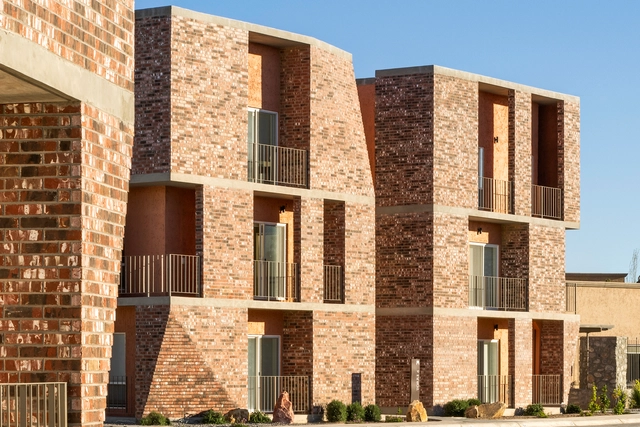
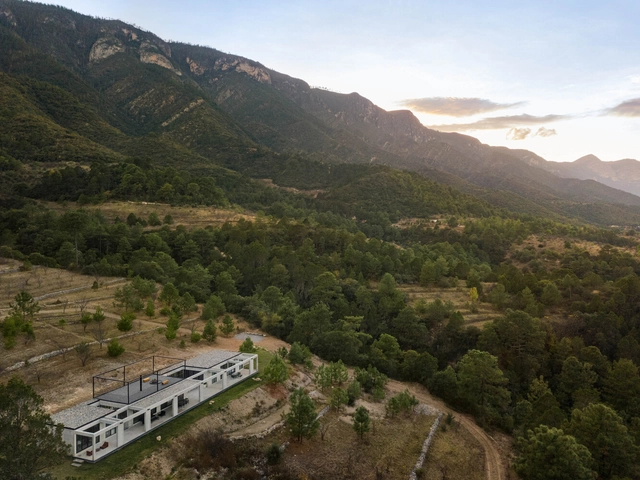
Architects: Mauricio Ceballos X Architects
- Area: 250 m²
- Year: 2022




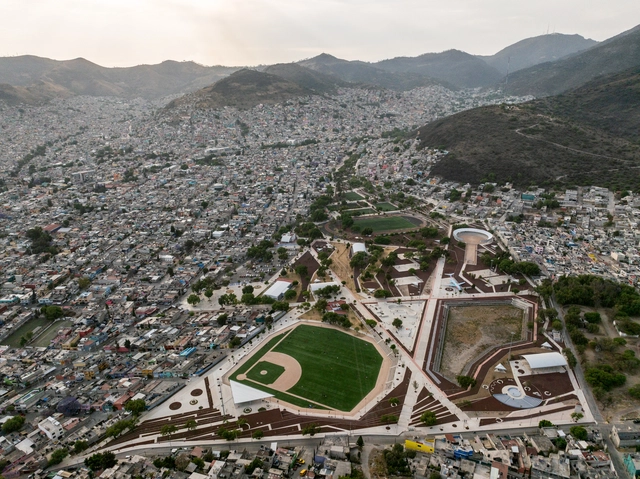
This week has been marked by the deliberate, rampant, and unjust destruction of war in Southeast Asia. As one of the most damaging manifestations of human abuse of power, we have witnessed the destruction of places that hold memories and sustain culture, as well as the loss and irreparable harm to the human lives that lend them their identity. With the expectation of offering brighter and more constructive scenarios in the future, we present, in contrast to this reality, a scenario of progress in the gender gap that characterizes architecture and its paths forward, a group of landmark projects of public and community interest moving forward from Türkiye to Mexico, and three major multimodal transport infrastructure projects improving the way we circulate and inhabit public space in Europe and the United States.

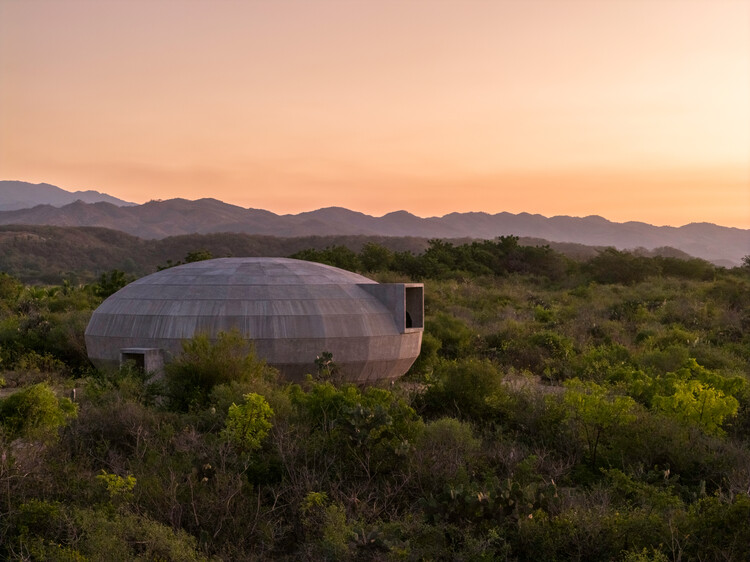
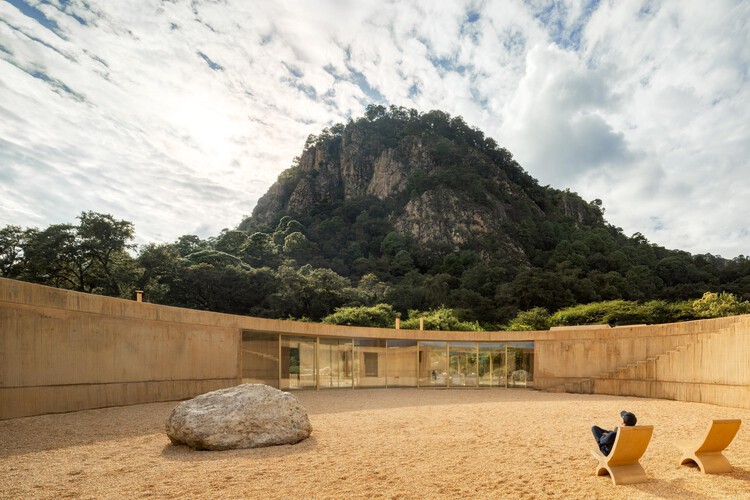
A domed, ellipsoidal pavilion for mushroom production designed by OMA for Fundación Casa Wabi opened on March 4, 2026. The building is located within Casa Wabi's 25-hectare site in Oaxaca, Mexico, on the Pacific coast, about 30 minutes from the city of Puerto Escondido. Casa Wabi is a foundation created by artist Bosco Sodi that promotes the exchange of ideas between artists of various disciplines and local communities. The foundation's flagship building was designed by Japanese architect Tadao Ando and completed in 2014. The OMA-designed pavilion adds a new space for cultivating mushrooms and fostering exchange between food, art, nature, and local communities to the foundation's facilities, which include a multipurpose palapa, six bedrooms, two enclosed studios, six open studios, a screening room and auditorium, a 450-m² exhibition hall, and various workspaces.

In the architectural history of the Mexican territory, the built environment has functioned not merely as a human stage, but as a biological infrastructure designed to organize proximity between species. The resulting spatial logic is not a solo performance, but a negotiated coexistence between human and animal bodies. To examine this heritage today is to shift the analytical focus away from stylistic authorship and toward a more fundamental phenomenon: the persistence of spatial practices that emerged to sustain shared forms of life.
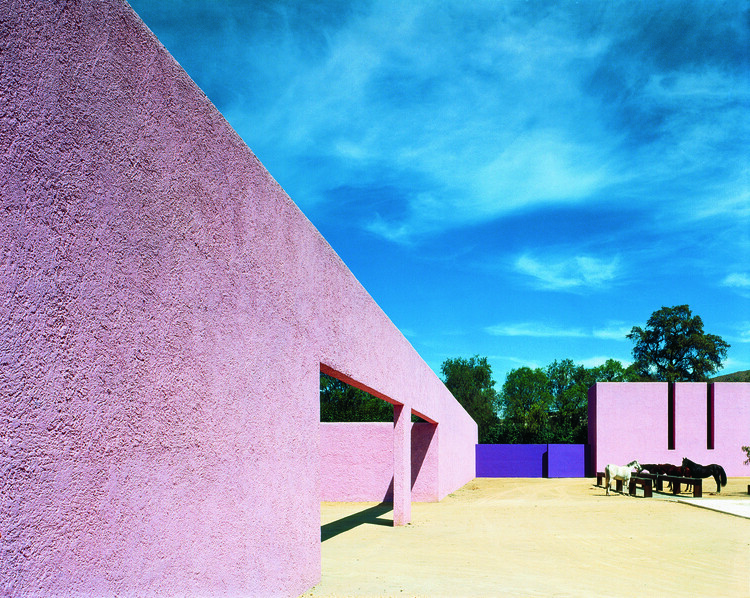
Many of the architectural features now interpreted as cultural or aesthetic markers — oversized thresholds, expansive patios, and durable surfaces — can be understood instead as material traces of an interspecies contract. For centuries, horses, mules, and livestock were not external to architecture but essential inhabitants whose physical presence shaped scale, circulation, and material choices. Their bodies left measurable imprints in space, from the height of entrances that accommodated mounted riders to paving systems designed to withstand hooves, friction, and biological wear. Nowhere was this contract more visible than at the ground level of the colonial house.


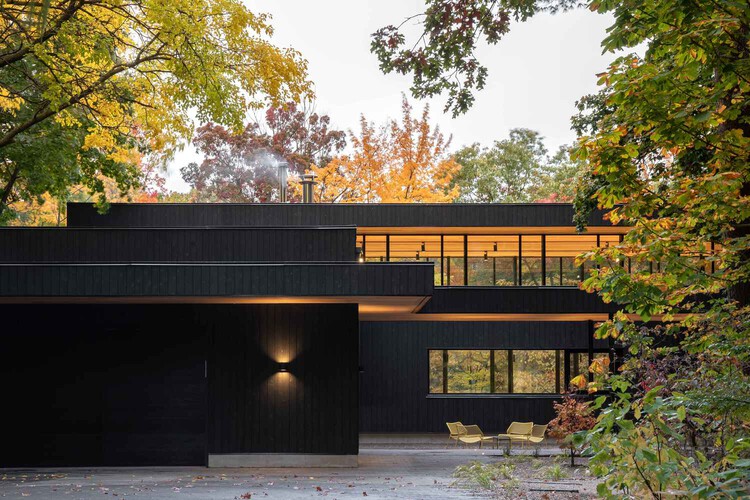
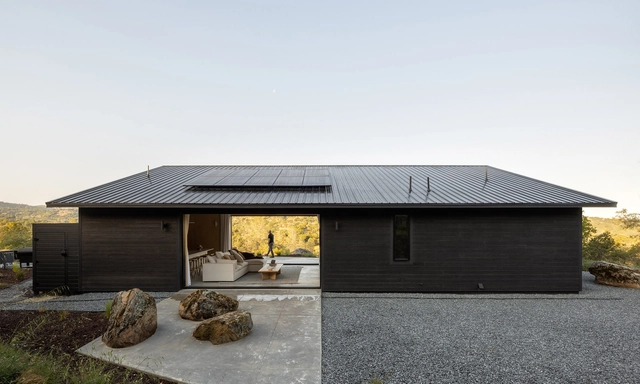
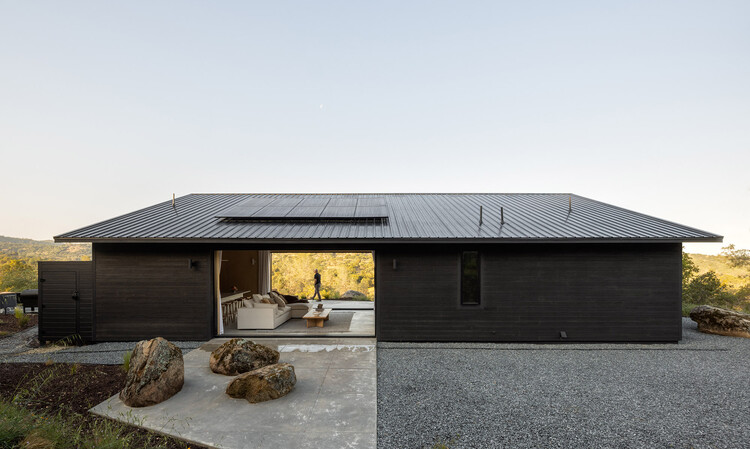
Shou Sugi Ban is a traditional Japanese technique for wood preservation that involves charring the surface of timber to create a protective layer. While its origins are rooted in practical durability, the method has been widely adapted into the modern built environment and shapes a unique and distinctive aesthetic. It is a material of contradiction: it remains bold in its visual language due to its dark tones, yet it simultaneously borrows from and complements its natural surroundings, allowing houses to settle quietly into their sites.
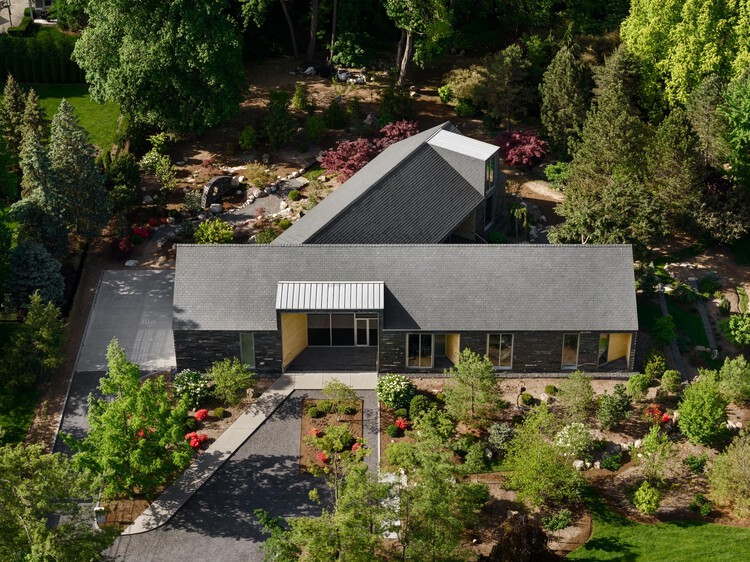
The charred finish among the 22 residences featured here across Canada and the United States serves as a common thread for navigating extreme climates. From humid lakefronts to dense forests, the carbonized skin acts as a resilient shield against diverse conditions. Beyond mere protection, these houses demonstrate how the material's texture changes with exposure to light, transforming from a flat matte in the shade to a silver-flecked, shimmering surface in direct sun. These projects also showcase the technique's ability to define architectural volumes, using the dark cladding to create sharp, monolithic silhouettes or to highlight the voids in a building's mass, such as recessed entryways and sheltered terraces.
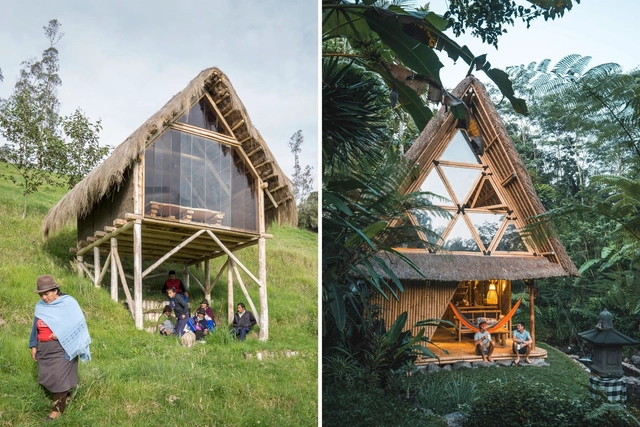
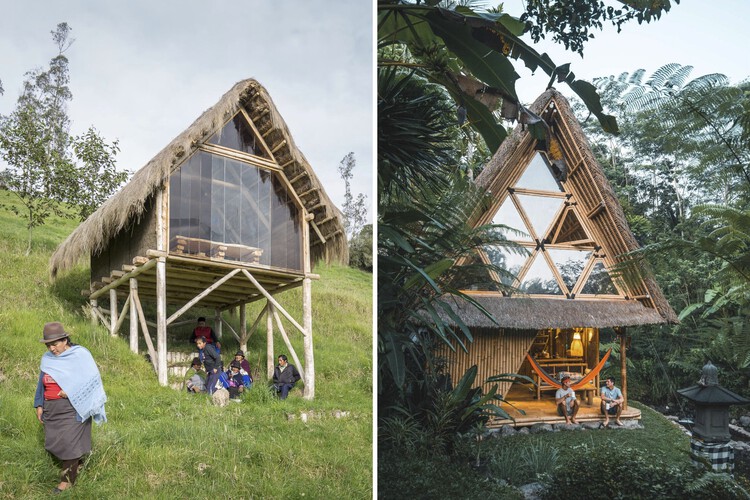
Thatching is a traditional building technique that has been reinterpreted in different ways in contemporary projects, allowing its value to continue to endure over time. As well as being a culturally and historically valuable technique, given its presence in humanity for centuries, it also has a number of other constructive advantages, such as its great environmental value, as it is an accessible renewable material.
The technique consists of grouping, intertwining, and overlapping dry vegetation, creating light surfaces with excellent thermal and sound insulation and which are cheap and relatively simple to build. In addition, flexibility is one of the technique's most prominent features, and it is particularly popular in roofing applications.
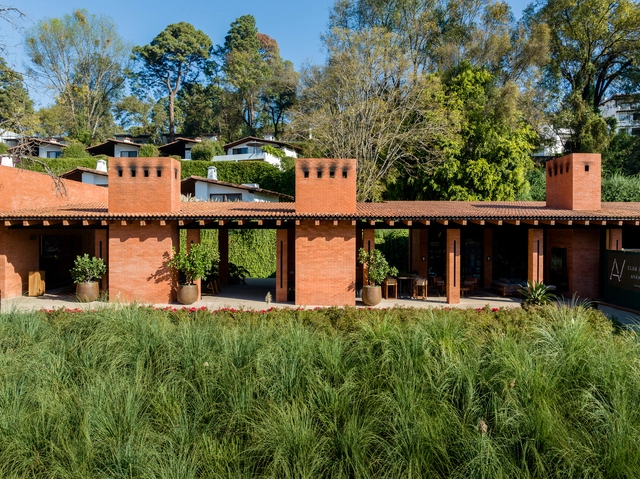
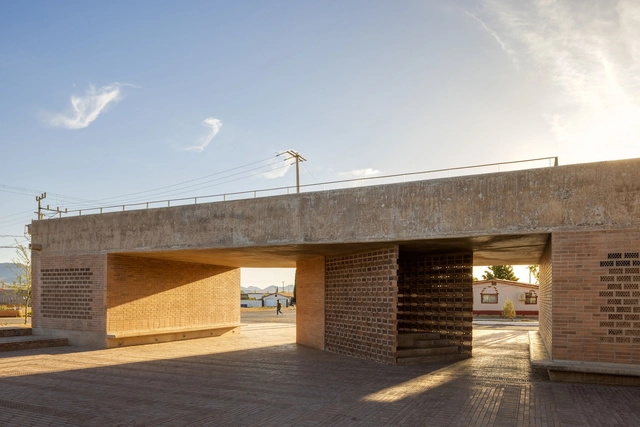
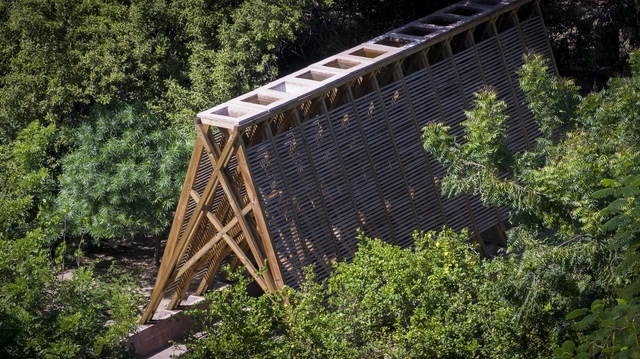
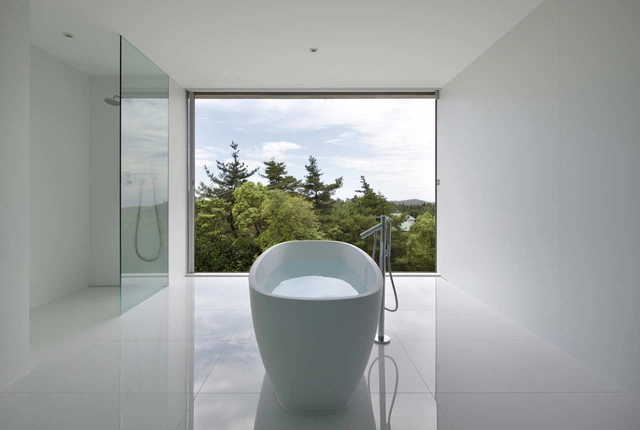
The private space is usually associated with hiding what goes on inside, allowing people to have certain moments of intimacy. Habitually, bathrooms have been designed for this purpose, reducing openings to a minimum or — sometimes — eliminating them completely.
However, being such an important space within a building, bathrooms have become an object of new exploration for architects. By blurring the limits of privacy — without losing it completely — these spaces are open to the outdoors, allowing the breeze to enter. How does this new experience feel? Check out 30 open bathrooms that play with the feeling of exhibitionism, without fully revealing what is happening inside.