World Architecture Day, celebrated on the first Monday of every October, was set up by the Union International des Architects (UIA) back in 2005 to “remind the world of its collective responsibility for the future of the human habitat”, coinciding with UN-Habitat's World Habitat Day.
https://www.archdaily.com/277569/happy-world-architecture-dayArchDaily Team
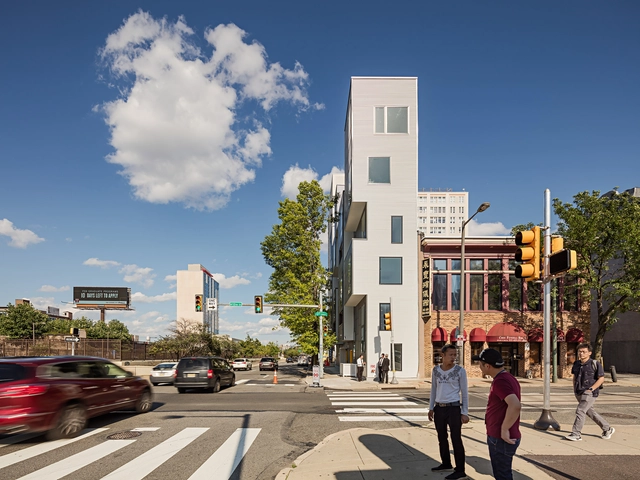
In all cities around the world, there are some forms of residual space, forgotten pieces of the urban fabric, remnants of overlapping layers of past development. This land whose conditions make it unsuitable for most types of conventional construction might be a fertile ground for architectural invention. Assigning a new value to vacant corner lots, dead-end alleys and strangely shaped plots opens up a new field of opportunities for inward urban development, expanding available living space and increasing amenities in densely populated cities. The following explores the potential for experiment and urban activation held by urban leftover space.
Density has long been an essential consideration for architects and urban planners, yet its importance has only increased as the world’s urban population skyrockets and cities become denser and denser. For much of the history of urban planning, this term has been plagued with negative associations: overcrowding, poverty, lack of safety, and so-called ‘slums.’ The garden city movement, initiated by Ebenezer Howard in 1898, sought to remedy these ills by advocating for greenbelts and anti-density planning. Le Corbusier’s Radiant City is one of the most well-known urban plans building from these ideals. Yet in the 1960’s, sociologist Jane Jacobs famously overturned these long influential urban planning concepts: she pointed out that density of buildings was not identical to overcrowding of people; suggested that some highly dense urban areas, like her neighborhood in Greenwich Village, were safer and more attractive than nearby garden city projects; and highlighted how America’s conception of ‘slums’ were often rooted in anti-immigrant and anti-Black ideologies. Density is not inherently bad, she suggested, but it has to be done well. Today, we continue to grapple with the question of how to design for our increasingly dense cities – how do we keep them open, but simultaneously private? Free, but controlled when necessary? In particular, how do we keep them safe – both from crime and, in the age of COVID-19, disease?
https://www.archdaily.com/945415/the-evolution-of-shared-space-privacy-versus-openness-in-an-increasingly-dense-architectureLilly Cao
Denise Scott Brown once said: “Architecture can’t force people to connect; it can only plan the crossing points, remove barriers, and make the meeting places useful and attractive.” Although it cannot control the outcome, architecture holds the potential to set the stage for chance encounters and social interactions, thus nurturing community building and influencing the fabric of our social culture. The following explores how architecture can improve the social capital of its surroundings through design strategies and thoughtful programming, creating the fertile ground for social interaction among different groups of people.
When reflecting on recycling, sustainability, measures to take, and innovative technological solutions, one cannot help but think that there are also familiar approaches that should be taken into consideration. In fact, when examining the impact of the built environment on the climate, one notes that in many countries, 80% of the buildings that will exist in 2050 have already been built. The most effective form of sustainability may, therefore, be saving energy by eliminating or minimizing new constructions, and by avoiding the demolition of existing structures.
That is what adaptive reuse stands for: instilling a new purpose on an existing “leftover building.” Nowadays, the refashioning process is becoming essential because of numerous issues related to the climate emergency, plot and construction costs, a saturation of land, and a change in living trends.
Because, for all the inspirational works across the world, we would be lost without the photographers dedicated to sharing this inspiration with us. Here we present to you the most influential architectural photographs of the year.
With the extensive list of acclaimed alumni of his firm, OMA, it is not a stretch to call Rem Koolhaas (born 17 November 1944) the godfather of contemporary architecture. Equal parts theorist and designer, over his 40-year career Koolhaas has revolutionized the way architects look at program and interaction of space, and today continues to design buildings that push the capabilities of architecture to new places.
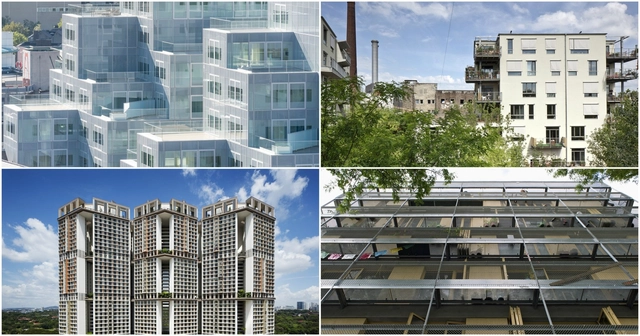
The challenges associated with the provision of adequate and affordable housing around the world demand that architects respond with original solutions that challenge traditional building forms, typologies and methods of delivery.
PLANE–SITE brought together the architects of four inventive housing projects. These projects represent a diversity of approaches to similar housing challenges across radically different global contexts. From the redensification of European urban centers to the rapid urbanization of the tropical Asian megacity, these radical housing models challenged existing paradigms in order to advance resident well-being as their principle design concern. In contrast to Schumacher’s divisive speech, the panel illustrated projects that were deliberately designed to promote community life and social interaction between residents – and in some cases also with other citizens in spaces that blur the line between public and private.
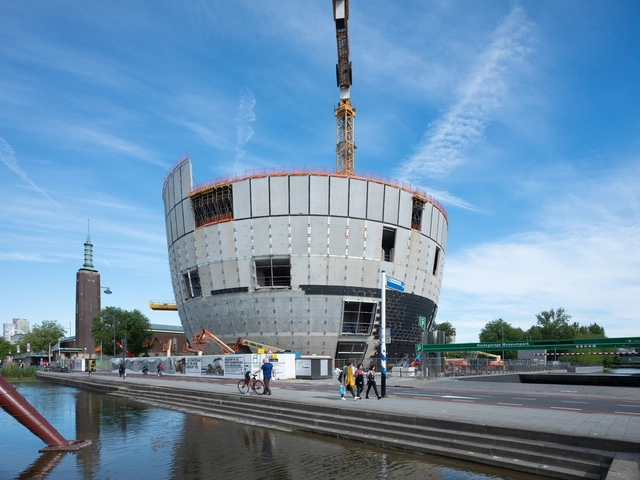
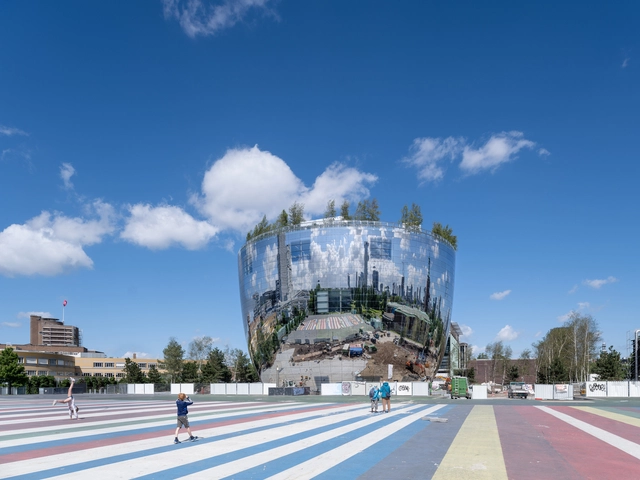
The world's first publicly accessible art depot by MVRDV has topped out in Rotterdam. Called Depot Boijmans Van Beuningen, the new archive building was celebrated with a ceremony by the Stichting Collectiegebouw consortium, which comprises the museum, the municipality of Rotterdam, and Stichting De Verre Bergen. The depot will host the museum’s archive of 151,000 artworks and will be fully accessible to the public.





_Hedrich_Blessing_015.jpg?1596657514&format=webp&width=230&height=230&crop=true)






.jpg?1549916737)
.jpg?1549917494&format=webp&width=230&height=230&crop=true)
.jpg?1549917457&format=webp&width=230&height=230&crop=true)
.jpg?1549917511&format=webp&width=230&height=230&crop=true)
.jpg?1549916809&format=webp&width=230&height=230&crop=true)
.jpg?1586817928)










.jpg?1570801605&format=webp&width=640&height=580)
.jpg?1570802154&format=webp&width=230&height=230&crop=true)
.jpg?1570801650&format=webp&width=230&height=230&crop=true)
.jpg?1570801685&format=webp&width=230&height=230&crop=true)
.jpg?1570802450&format=webp&width=230&height=230&crop=true)
.jpg?1570801605)