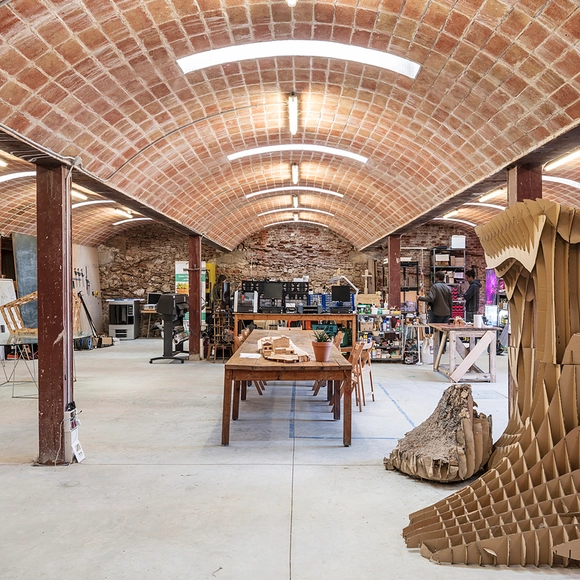
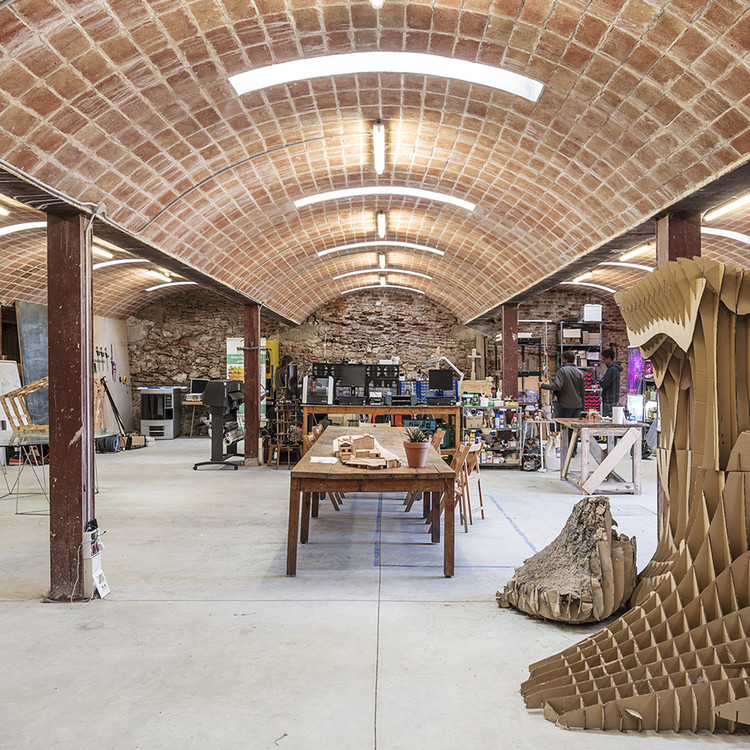
In some cases, a roof can become the shining centerpiece in a work of architecture. Catalan vault, also known as Valencian timbrel vault, became a fixture in Spanish architecture in the 19th century, popularized thanks to its low cost and ease of sourcing and assembly. With the ability to span over 30m per module, this technique is currently making a comeback, establishing itself as a go-to construction method in industrial architecture and can be seen in everything including workshops, factories, and warehouses.
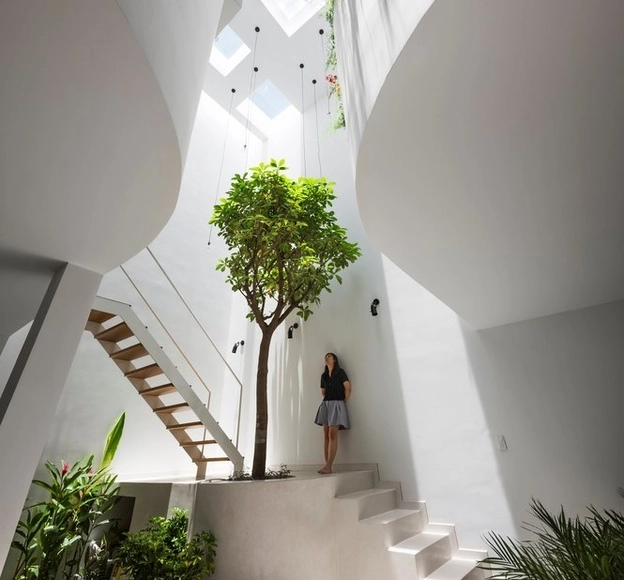
With most of the world living in cities and growing villages, people tend to spend the majority of their time indoors. When not at home, we are working, learning, or even engaging in fun activities in enclosed, built settings. All in all, 90% of our time is occupied inside. It is therefore essential to ensure a comfortable, productive, and healthy indoor environmental quality by following well-regulated parameters and design practices that consider temperature, lighting, noise pollution, proper ventilation, and the quality of the air we breathe. The latter is especially important, since contrary to what we might think, air pollution is much higher indoors than outdoor.
The purpose of architectural photography is to show a design in the best possible way, with the artform often characterized by perspective correction and atmospheric lighting. However, few architectural photographers have experimented with other artistic disciplines. Miguel de Guzmán, Paul Vu and Jules Couartou are among those who have challenged the limits of this form of photography, generating an interesting crossover between architecture photography, fashion and performances. In their images, the relationship between space and the user is shown through a scene designed to register an effect on the viewer. The results are images which are full of creativity.
Designing commercial spaces has historically been a challenge. In these environments, spatial distribution plays a fundamental role, even more so if we have a few extra square meters. With this being said, the study of these spaces in plan and section can be a great starting point. It not only allows us to analyze the logistics and circulation of customers but also helps us find efficient variations and innovations that will enable your store to stand out from the others.
Below, we've selected a series of 25 examples in plan and section that can help you understand how different architects faced the challenge.
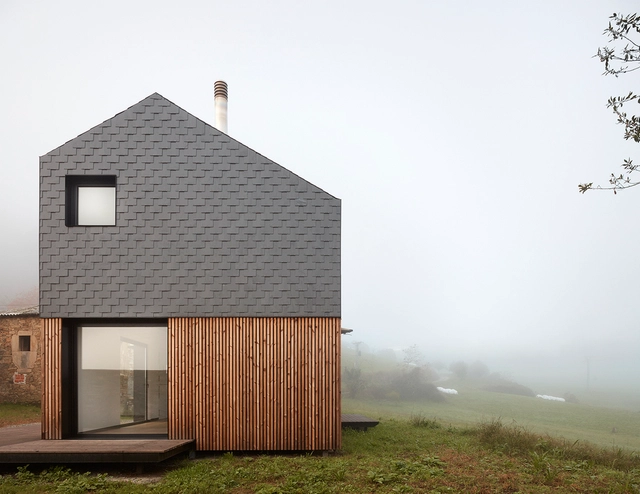
Slate is a mineral product, completely inert and ecological, with a simple and efficient production process. It is one of the most versatile natural products, adapting to any project as a coating material, from roof to floor and façade.
It is resistant to extreme temperatures, with a lifespan of 100 years and a high impermeability, slate guarantees a reliable performance in any climatic condition. Its diversity in shapes, sizes, and textures allow for a multiplicity of combinations inviting architects to awaken their creative side.
We've compiled a list of 7 exemplary homes that have used slate as a wrapping material.
Throughout history, markets have provided an important function in the exchange of foods, books, spices, everyday items, and even ideas. From Mexican Tianguis to North African Souks, they played an essential element in the configuration of urban spaces.
Different architects have approached this challenge, where spatial distribution plays a fundamental role in creating adequate logistics and circulation.
We've selected 20 markets and their plan and section to inspire your next project.










¸Mariela_Apollonio.jpg?1579724220&format=webp&width=640&height=580)
¸Mariela_Apollonio.jpg?1579724995&format=webp&width=230&height=230&crop=true)
¸Mariela_Apollonio.jpg?1579725737&format=webp&width=230&height=230&crop=true)
¸Mariela_Apollonio.jpg?1579724894&format=webp&width=230&height=230&crop=true)
¸Mariela_Apollonio.jpg?1579725043&format=webp&width=230&height=230&crop=true)
¸Mariela_Apollonio.jpg?1579724220)