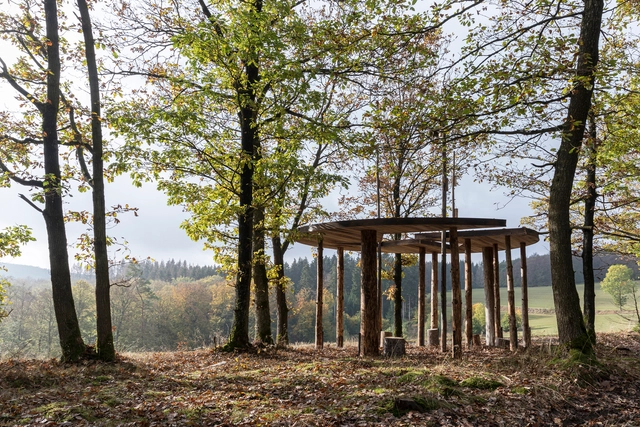


-
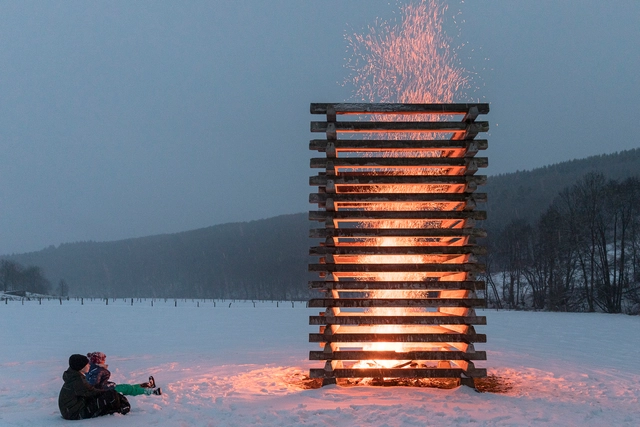
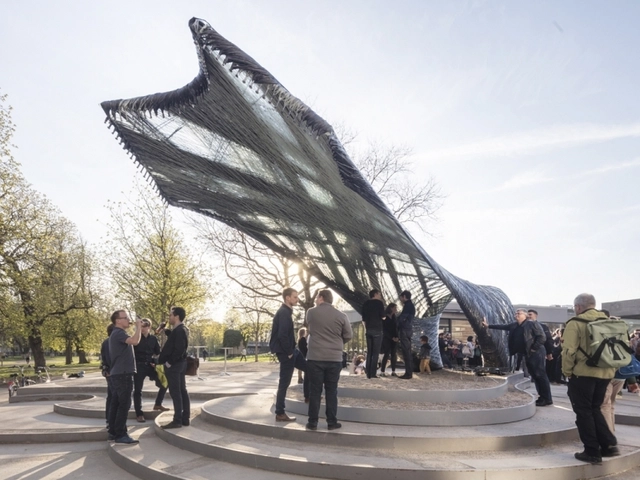
Architects: Christoph Hesse Architects
- Area: 40 m²
- Year: 2020


.jpg?1462182949&format=webp&width=640&height=580)
Ada Louise Huxtable once described him as “a poet who happens to be an architect.” Italian architect Aldo Rossi (3 May 1931 – 4 September 1997) was known for his drawings, urban theory, and for winning the Pritzker Prize in 1990. Rossi also directed the Venice Biennale in 1985 and 1986—one of only two people to have served as director twice.
.jpg?1548249670&format=webp&width=640&height=580)
The career of Gottfried Böhm (born January 23, 1920) spans from simple to complex and from sacred to secular, but has always maintained a commitment to understanding its surroundings. In 1986, Böhm was awarded the eighth Pritzker Prize for what the jury described as his "uncanny and exhilarating marriage" of architectural elements from past and present. Böhm's unique use of materials, as well as his rejection of historical emulation, have made him an influential force in Germany and abroad.
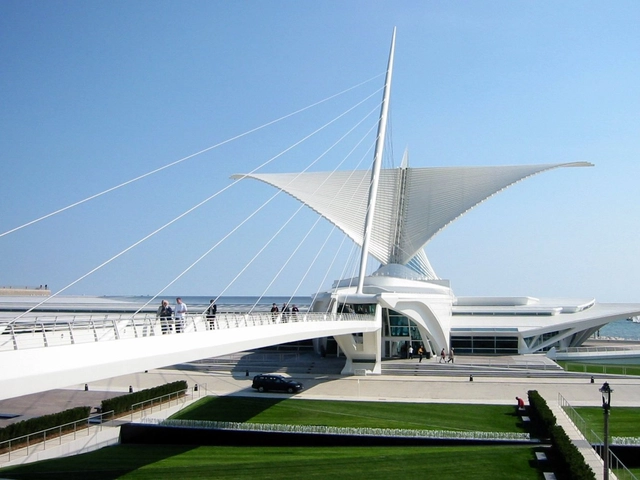
Known for his daring neo-futurist sculptural buildings and over 50 bridges worldwide, Santiago Calatrava (born July 28, 1951) is one of the most celebrated and controversial architects working today. Trained as both an architect and structural engineer, Calatrava has been lauded throughout his career for his work that seems to defy physical laws and imbues a sense of motion into still objects.

As founder of the “Do Tank” firm ELEMENTAL, Chilean architect Alejandro Aravena (born on June 22, 1967) is perhaps the most socially-engaged architect to receive the Pritzker Prize. Far from the usual aesthetically driven approach, Aravena explains that “We don’t think of ourselves as artists. Architects like to build things that are unique. But if something is unique it can’t be repeated, so in terms of it serving many people in many places, the value is close to zero.” [1] For Aravena, the architect’s primary goal is to improve people's way of life by assessing both social needs and human desires, as well as political, economic and environmental issues.
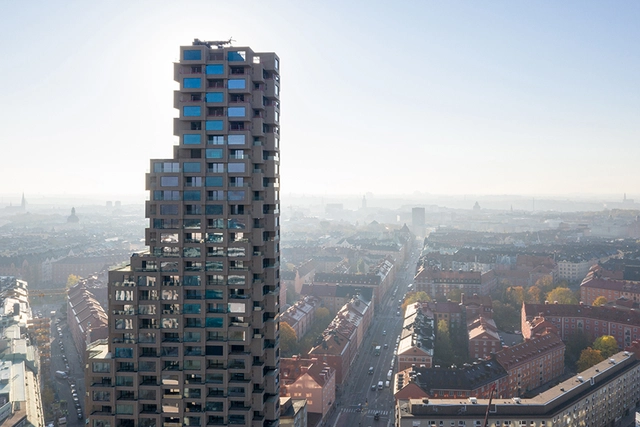
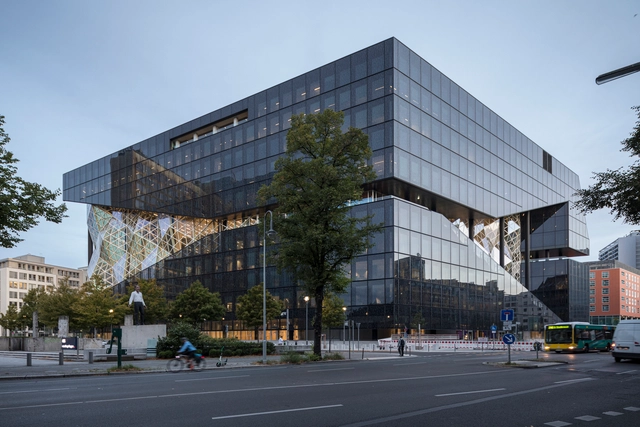
This article was originally published on Metropolis Magazine as "In His Latest Residential Building, OMA's Reinier de Graaf Doesn't Practice What He Preaches".
Last month in Stockholm, OMA partner Reinier de Graaf took a not-so-sly swipe at Bjarke Ingels: “I’m not a reincarnation of Harry Potter,” he said to a packed lecture theater at Stockholm’s KTH University.

.jpg?1467325496&format=webp&width=640&height=580)
Editor's Note: This article was originally published on 30 June, 2016. While the debate surrounding the terms of the UK's exit from the European Union continues to rage, the Tate remains a steady icon for London and the UK. But the building has also become a symbol in a new fight: one between the capital's elites and the general public. As the political sands in Britain continue to shift, it may be interesting to see how - and with whom - the building aligns in the future. - Katherine Allen, Managing Editor
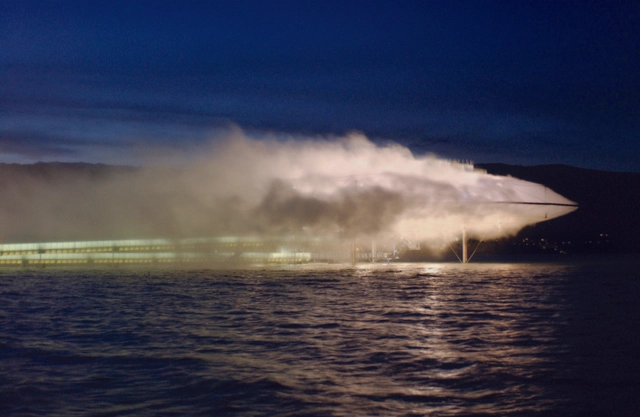
Architecture is a profession deeply dependent on the visual. It’s imagined, sold, critiqued and consumed almost entirely on the strength (or lack thereof) of drawings. We pick and prod at images presented at angles we’ll never be able to see, admiring the architectonic qualities of elements we’ll never actually experience.
.jpg?1487999073&format=webp&width=640&height=580)
On August 15, 1947, on the eve of India’s independence from the United Kingdom, came a directive which would transform the subcontinent for the next six decades. In order to safeguard the country’s Muslim population from the Hindu majority, the departing colonial leaders set aside the northwestern and eastern portions of the territory for their use. Many of the approximately 100 million Muslims living scattered throughout India were given little more than 73 days to relocate to these territories, the modern-day nations of Pakistan and Bangladesh. As the borders for the new countries were drawn by Sir Cyril Radcliffe (an Englishman whose ignorance of Indian history and culture was perceived, by the colonial government, as an assurance of his impartiality), the state of Punjab was bisected between India and Pakistan, the latter of which retained ownership of the state capital of Lahore.[1] It was in the wake of this loss that Punjab would found a new state capital: one which would not only serve the logistical requirements of the state, but make an unequivocal statement to the entire world that a new India—modernized, prosperous, and independent—had arrived.
For this year's annual city listings, Metropolis Magazine took an unusual approach: they took the analysis to the streets, surveying nearly 100 design professionals across the globe to get their opinions. The result? A list that boasts not just the cities you'd expect (Milan, London, Berlin) but the under the radar powerhouses you might not have anticipated.
.jpg?1498231225&format=webp&width=640&height=580)
Following the opening of the 2017 Serpentine Pavilion, designed this year by Diébédo Francis Kéré (Kéré Architecture), photographer Laurian Ghinitoiu has turned his lens to London. Designed to mimic a tree, or a canopy of trees, the wooden structure has been designed to fuse cultural references from Kéré's home town of Gando in Burkino Faso with more "experimental" construction techniques. His ambition is that the pavilion becomes a social condenser – "a symbol of storytelling and togetherness."
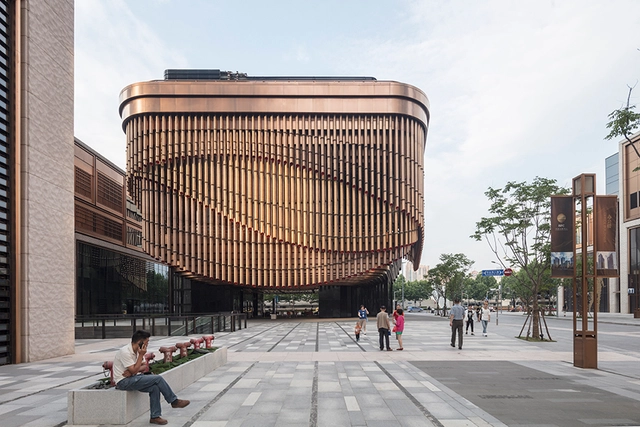
Located in central Shanghai, this multifunctional arts and culture complex is part of the Bund Finance Centre – a joint project between London-based practices Heatherwick Studio and Foster+Partners. Sitting between the old town and the new financial district, this new space combines exhibition and events spaces with a performance venue inspired, according to the architects, "by the open stages of traditional Chinese theatres." Of most visual interest is the building's mechanical "moving veil," captured here by photographer Laurian Ghinitoiu.
.jpg?1494811811&format=webp&width=640&height=580)
Located in Tokyo's Sumida Ward, in which Sumida Hokusai (Katsushika Hokusai) was born and spent the majority of his life, this museum—completed in November 2016 to designs by Kazuyo Sejima—is a temple to the Japanese artist's work, including the likes of The Great Wave off Kanagawa and Red Fuji. Sejima, who was awarded the Pritzker Prize in 2010, is commonly known as one-half of SANAA (alongside Ryue Nishizawa). This project, while seeking to celebrate Hokusai's work, has also been designed as a cultural beacon. In this photoset, photographer Laurian Ghinitoiu has turned his lens to the new cultural landmark.
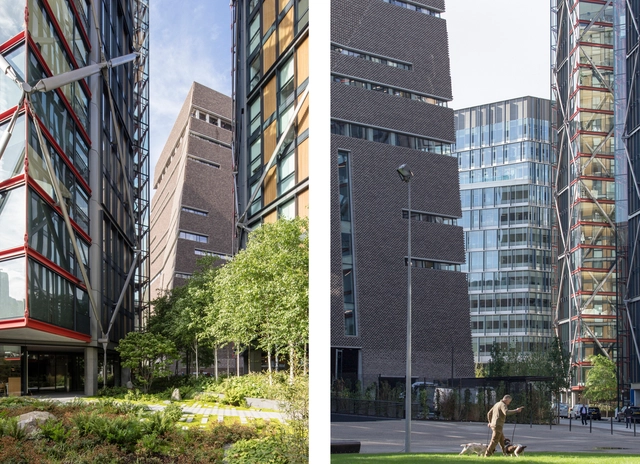
Residents of London's Neo Bankside residential building—a luxury complex of apartments designed by Rogers Stirk Harbour + Partners—have launched a legal bid against the Tate Modern to close one side of a public viewing platform, designed by Herzog & de Meuron and completed in 2016, which overlooks their properties. As reported by the Architects' Journal, "the applicants say that their human rights are being breached due to ‘near constant surveillance’ from visitors to the neighbouring attraction." The claim goes as far to argue that visitors to the Southbank gallery "constantly view their flats through binoculars, and post photographs and film of their homes on social media sites."


.jpg?1601987008&format=webp&width=230&height=230&crop=true)


.jpg?1462182949)
.jpg?1484858103&format=webp&width=230&height=230&crop=true)
.jpg?1484858092&format=webp&width=230&height=230&crop=true)

.jpg?1548249663&format=webp&width=230&height=230&crop=true)
.jpg?1548249670)




.jpg?1487999184&format=webp&width=230&height=230&crop=true)
.jpg?1487999406&format=webp&width=230&height=230&crop=true)
.jpg?1487999574&format=webp&width=230&height=230&crop=true)
.jpg?1487999153&format=webp&width=230&height=230&crop=true)
.jpg?1487999073)
.jpg?1498229448&format=webp&width=230&height=230&crop=true)
.jpg?1498229480&format=webp&width=230&height=230&crop=true)
.jpg?1498231266&format=webp&width=230&height=230&crop=true)
.jpg?1498229491&format=webp&width=230&height=230&crop=true)
.jpg?1498231225)
.jpg?1496649420&format=webp&width=230&height=230&crop=true)
.jpg?1496649355&format=webp&width=230&height=230&crop=true)
.jpg?1496649434&format=webp&width=230&height=230&crop=true)
.jpg?1496649213&format=webp&width=230&height=230&crop=true)
.jpg?1496649193)
.jpg?1494811608&format=webp&width=230&height=230&crop=true)
.jpg?1494811764&format=webp&width=230&height=230&crop=true)
.jpg?1494811990&format=webp&width=230&height=230&crop=true)
.jpg?1494811979&format=webp&width=230&height=230&crop=true)
.jpg?1494811811)


