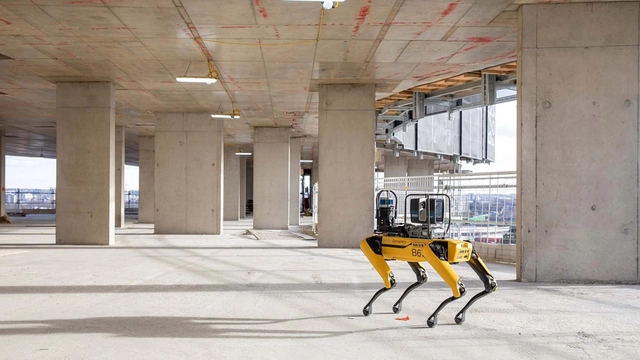
For several years, the construction sector has been facing a labour shortage, generating a growing interest in automation. The health crisis has only exacerbated the trend, prompting automation companies to turn their focus from car manufacturing to the construction industry, for which automation is expected to grow up to 30% within the next few years. The following explores present capabilities and future possibilities of automation within the construction process, its integration within the mainstream practice and the impact on design.
In Her, a 2013 film directed by Spike Jonze, a lonely writer develops a love affair with the virtual assistant of an operating system. Brave New World, a book written in 1932 by the English author Aldous Huxley, fabricates a dystopian society whose cult of efficiency and rationality creates a humanity that ignores hardship and pain but also represses love and freedom. In Mary Shelley's 1818 book Frankenstein, considered the first science fiction novel, a life is artificially created, producing a monster with human characteristics: wills, wishes, and fears. Whether describing the fear of artificial intelligence, the uncertainty produced by industrialization, or the limits of science, science fiction works reveal less about the future and much more about the moment in which they were created; they speak of the fears and hopes of their own time.
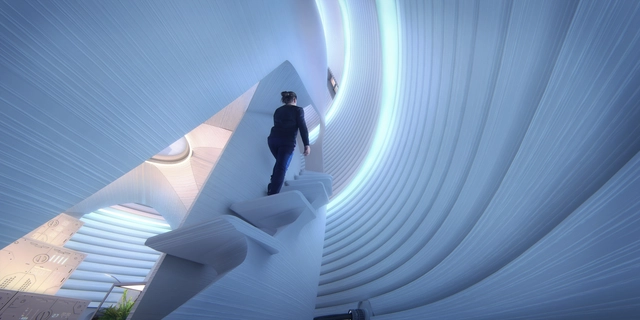
When we explore urban visions of the past anticipating the future, it is common to find exaggerated and even funny predictions. As for the promises of architecture and, consequently, of our cities, it is not an easy task to predict future developments clearly either. By looking at industry trends and using all of our imaginations, could we tell what cities will be like in tens or hundreds of years? Their materials, their appearance, their way of building and thinking? Will it be a more pristine and minimalist future or a more organic and complex future? How will new technologies and building materials affect the shape, aesthetics, and prosperity of the cities of tomorrow?
In a recent interview by Louisiana Channel, German architect Anna Heringer talks about the recently inaugurated Anandaloy centre in Bangladesh, a social space which became a catalyst for local development. The architect shares her commitment to sustainability and touches on the importance of the transfer of know-how to local communities through participatory building processes.
The incorporation of the human figure is one of the most effective tools used in architectural photography: it helps the viewer decipher the scale of work and assess its amplitude. While it successfully communicates a rough idea of the measurements of the elements in the picture, it also helps architecture become more relatable and accessible. People engage better with the built environment when it is populated, mainly because the human sense of society and community is the cornerstone of our civilization. With this in mind, we are showcasing a selection of our favorite photographs where the human figure takes center stage, enhancing our reading of architecture.
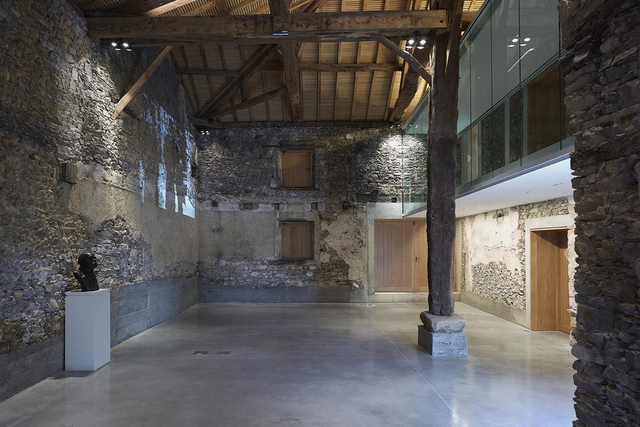
When reflecting on recycling, sustainability, measures to take, and innovative technological solutions, one cannot help but think that there are also familiar approaches that should be taken into consideration. In fact, when examining the impact of the built environment on the climate, one notes that in many countries, 80% of the buildings that will exist in 2050 have already been built. The most effective form of sustainability may, therefore, be saving energy by eliminating or minimizing new constructions, and by avoiding the demolition of existing structures.
That is what adaptive reuse stands for: instilling a new purpose on an existing “leftover building.” Nowadays, the refashioning process is becoming essential because of numerous issues related to the climate emergency, plot and construction costs, a saturation of land, and a change in living trends.
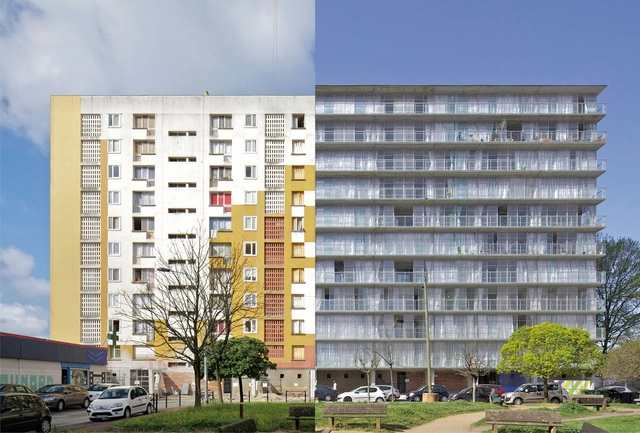
Last year’s granting of the Mies van der Rohe Award to a social housing refurbishment project brought into the spotlight a topic of interest for many European cities: the moral and physical rehabilitation of post-war housing blocks.
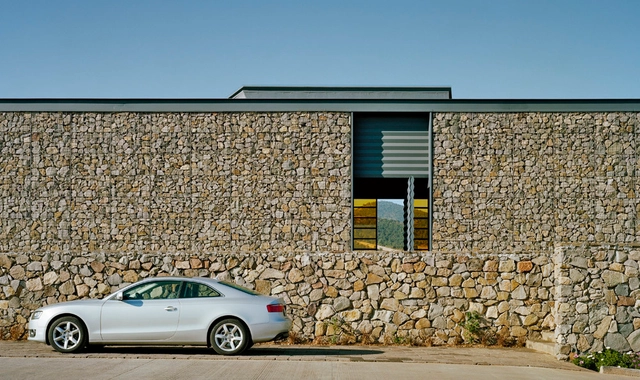
Widely used in infrastructure, gabion walls are structures made of mesh metal cages filled with stones. These permeable walls use galvanized steel wire to withstand outdoor conditions.
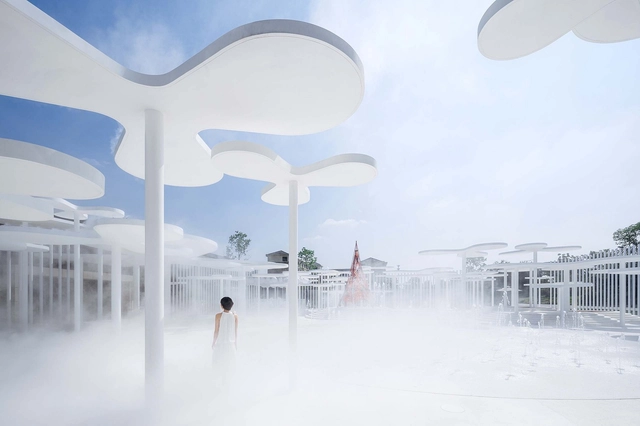
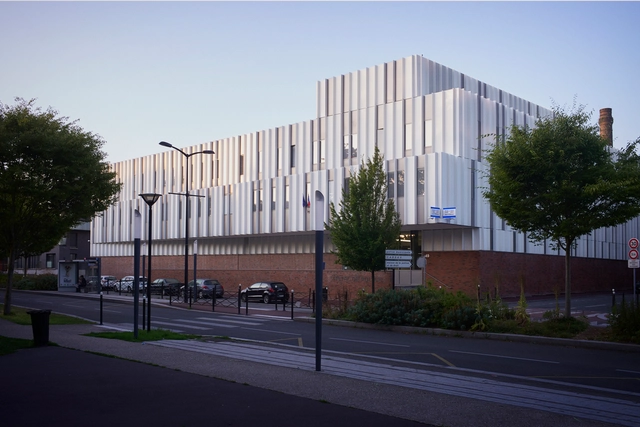
Founded in 1995 by architects Kazuyo Sejima (born 29 October 1956) and Ryue Nishizawa (born 7 February 1966), SANAA is world-renowned for its white, light buildings grounded in the architects’ Japanese cultural origins. Despite the white exteriors, their architecture is far from modernist; the constant incorporation of ambiguity and doubt in SANAA’s buildings is refreshing and playful, taking the reflective properties of glass and brightness of white to a new level.
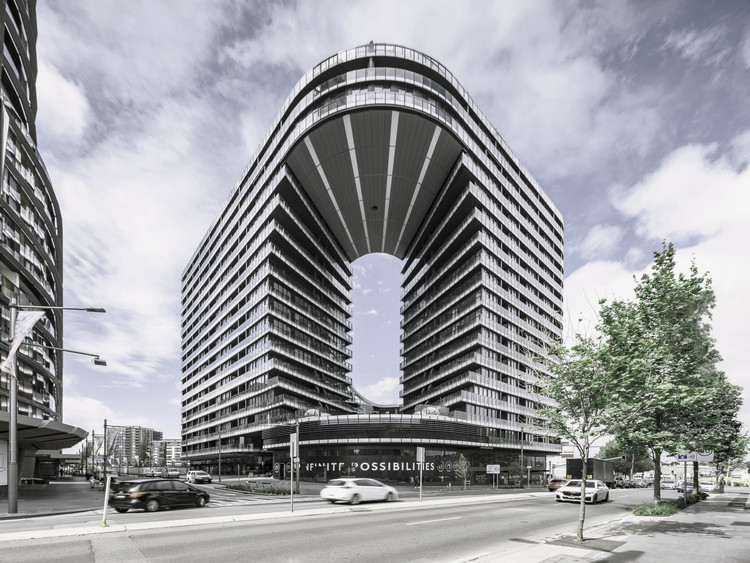
The winner of the Wolf Prize in 2005 and the Pritzker of 2008, French architect Jean Nouvel has attempted to design each of his projects without any preconceived notions. The result is a variety of projects that, while strikingly different, always demonstrate a delicate play with light and shadow as well as a harmonious balance with their surroundings. It was this diverse approach that led the Pritzker Prize Jury in their citation to characterize Nouvel as primarily "courageous" in his "pursuit of new ideas and his challenge of accepted norms in order to stretch the boundaries of the field."












.jpg?1604419667&format=webp&width=230&height=230&crop=true)




![Haduwa Stage / [applied] Foreign Affairs, Institute of Architecture, University of Applied Arts Vienna - Exterior Photography, Public Architecture](https://snoopy.archdaily.com/images/archdaily/media/images/5f90/2f95/63c0/17c6/6500/0258/slideshow/Com_Ghana_Apam_Haduwa_20160205-14378.jpg?1603284875&format=webp&width=640&height=580)


![Haduwa Stage / [applied] Foreign Affairs, Institute of Architecture, University of Applied Arts Vienna - More Images](https://images.adsttc.com/media/images/5f90/2f95/63c0/17c6/6500/0258/newsletter/Com_Ghana_Apam_Haduwa_20160205-14378.jpg?1603284875)




_JULIEN_LANOO.jpg?1585364962&format=webp&width=230&height=230&crop=true)
_JULIEN_LANOO.jpg?1585364826&format=webp&width=230&height=230&crop=true)
_JULIEN_LANOO.jpg?1585365071&format=webp&width=230&height=230&crop=true)
_JULIEN_LANOO.jpg?1585364940&format=webp&width=230&height=230&crop=true)



_Dean_Kaufman.jpg?1477582154&format=webp&width=640&height=580)
_Dean_Kaufman.jpg?1477582154&format=webp&width=230&height=230&crop=true)


.jpg?1477667050&format=webp&width=230&height=230&crop=true)
_Dean_Kaufman.jpg?1477582154)
JULIEN_LANOO_74_BD.jpg?1571416721&format=webp&width=640&height=580)
JULIEN_LANOO_53_102019_BD.jpg?1571416597&format=webp&width=230&height=230&crop=true)
JULIEN_LANOO_43_BD.jpg?1571416482&format=webp&width=230&height=230&crop=true)
JULIEN_LANOO_46_102019_BD.jpg?1571416539&format=webp&width=230&height=230&crop=true)
JULIEN_LANOO_54_102019_BD.jpg?1571416641&format=webp&width=230&height=230&crop=true)
JULIEN_LANOO_74_BD.jpg?1571416721)



CopyrightsMurrayFredericks.jpg?1439374362&format=webp&width=230&height=230&crop=true)


