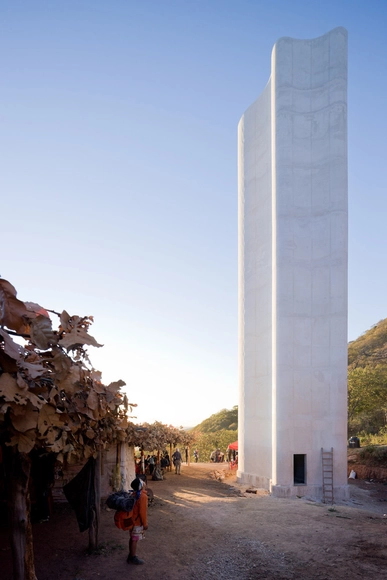
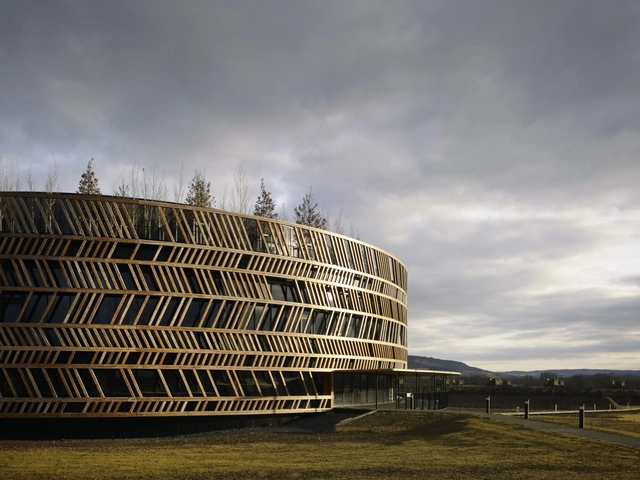
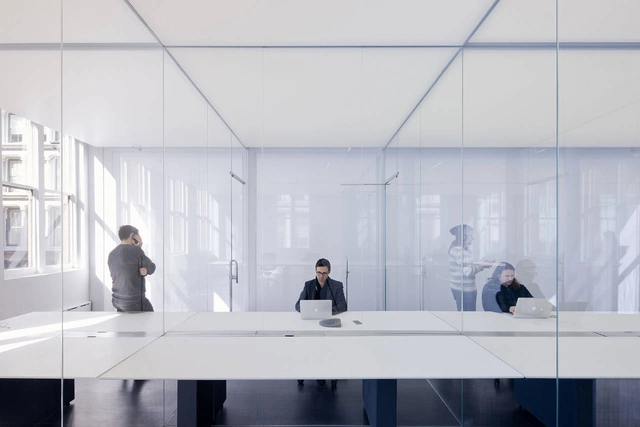
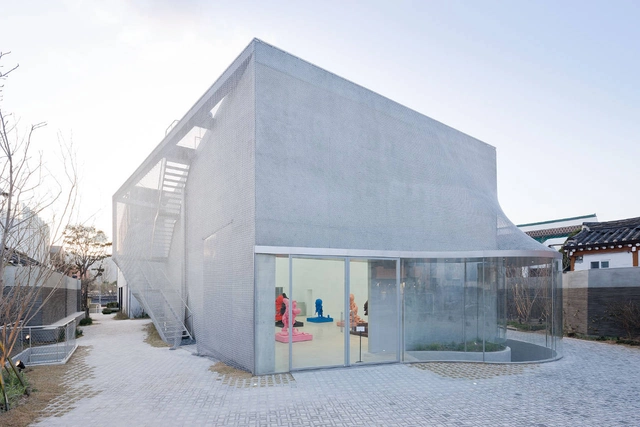
The overall winner of the Prize, as well as the 'special mention' award for best emerging architect, will be announced in May, with an award ceremony on June 6th at the Mies van der Rohe Pavilion in Barcelona, Spain. See all 5 finalists, after the break...
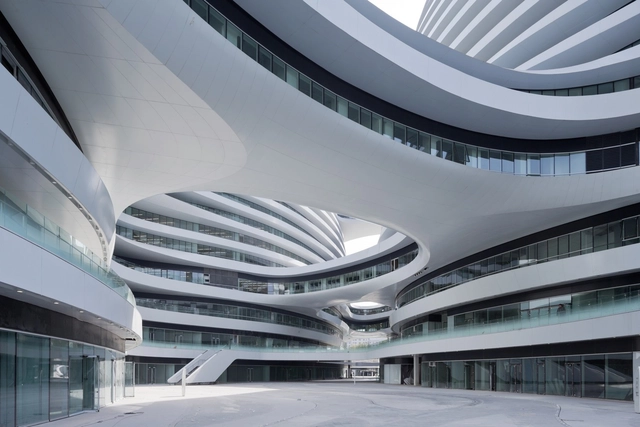
Four years after breaking ground, Steven Holl Architects’ have completed the Sliced Porosity Block in the heart of Chengdu, China. Located at the intersection of the first Ring Road and Ren Ming Nam Road, visitors are able to access the three million square foot complex without using private transport means as it is directly connected to Chengdu’s public transportation system. Stimulating a micro urbanism, the five towers offer offices, serviced apartments, retail, a hotel, cafes, and restaurants. Rather than being designed as object-icon skyscrapers, the Sliced Porosity Block identifies itself as a metropolitan public space with large plazas and a hybrid of different functions.
More on Steven Holl’s Sliced Porosity Block after the break.
At almost a mile long Superkilen wedges through one of the most ethnically diverse and socially challenged neighborhoods in Denmark creating a truly unique urban space with a strong identity on a local and global scale. The park is divided into three zones: the red square, the black market and the green park and is conceived as a giant exhibition of urban best practice - a collection of global everyday objects from the 60+ home countries of the local inhabitants. Initiated by the City of Copenhagen and Realdania Foundation, the project started construction in 2009 and opened to the public in June 2012. The American Institute of Architects (AIA) has selected Superkilen as one of the winners of the 2013 Institute Honor Awards, the profession’s highest recognition of works that exemplify excellence in architecture, interior architecture and urban design.
Each of this year's winners of the Curry Stone Design Prize are incredible examples of the powerful, and truly varied reach, of Public-Interest Design - which is why we're sharing these short films, by Room 5 Films, on each of the winning projects. From the Butaro Hospital in Rwanda designed by MASS Design Group to the "Liter by Light" project (that recycles plastic bottles to bring a safe source of light to the slums of the Phillippines), each of these films are inspiring snapshots into the work and worlds of each of these winners.
In honor of Rem Koolhaas’ birthday today, we are bringing you all things Koolhaas: 14 Fun Koolhass quotes; a fabulous article by former New York Times critic, Nicolai Ouroussoff; this ArchDaily original editorial; and, later today, a Round-Up of all of OMA's latest works. Stay tuned!
Imagine London, but not the way you know it. Imagine it physically separated, much like Berlin once was, into two zones: one of pleasure and one of practicality. Consider how the city would eventually appear as inhabitants rushed to the pleasure zone; how the zone of practicality would eventually, inevitably become bereft.
This is the London of a young Rem Koolhaas’ imaginings, written for his Thesis at the Architectural Association School in London in the late 60s. Before Delirious New York, before OMA, and much before the CCTV Tower, Koolhaas was inspired by this idea of the divided city - and it’s a fitting image to start thinking about the ever provocative, often controversial Rem: a man who stands with one foot in the world of desire and the other, reluctantly, in that of practicality; a man who would perhaps prefer the title of urban thinker, despite clearly being one of architecture’s great masters.
It’s exactly this in-between-ness, this reluctance to fit into one supposed role, that has been Koolhaas’ greatest asset, that has allowed him to approach the profession from such unlikely angles. Using the city’s freedoms as his inspiration, and rejecting as given the expectations of what architecture is(even questioning its relevance at all), Koolhass, the “reluctant architect,” is also the most radical of our time, and the most vital for our future.
We got in touch with Iwan Baan to ask him how on earth he got that incredible aerial shot of a Sandy-struck New York City for New York Magazine; he told us what it was like to face the frenzy and fly into the storm itself. Read his incredible story, after the break...














.jpg?1413941963&format=webp&width=230&height=230&crop=true)