Starting an architecture firm may sprout from one’s love for and interest in the discipline, but running a competitive business requires more than just a tendency to enjoy the work. BIM could be the edge a firm needs in order to stand out from the crowd. There are many ways a firm can make use of BIM to become more profitable on their projects and successful in winning those projects in the first place; read on to find out more about six of them.
https://www.archdaily.com/799864/6-ways-bim-can-make-your-architecture-firm-more-competitiveAD Editorial Team
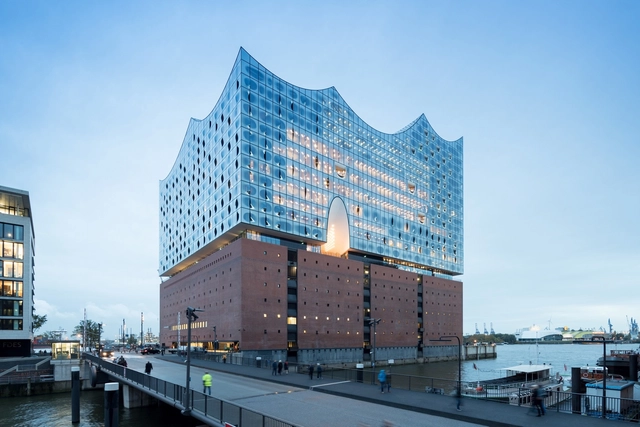
The Plaza of Herzog & de Meuron’s Elbphilharmonie has opened to the public. The concert hall’s observation deck, located 37 meters (121 feet) above ground level, is designed around a public square concept and is accessed via a 82 meter (269 foot) long, curving escalator, providing visitors to panoramic views of the city and harbor.
To mark the event, the Elbphilharmonie has released a new set of photographs by Iwan Baan, showing off the newly completed interior spaces. The full building is set to officially open to the public on January 11 and 12, 2017.
Jeanne Gang, the founder of Studio Gang Architects, has made a name for herself as a designer who can design both show-stopping skyscrapers and sensitive small-scale buildings. From her breakout 2009 Aqua Tower project, to the hypothetical “Polis Station” proposal presented at last year's Chicago Architecture Biennial, Gang has established herself as perhaps Chicago's leading architect.
Gang is also included as part of Vladimir Belogolovsky's ongoing City of Ideas exhibition tour, representing Chicago among 9 other significant architects, each from a different global city. With the exhibition currently in Gang's home city at the Chicago Design Museum until February 25th, here as part of his City of Ideas column on ArchDaily Belogolovsky presents a shortened version of the interview featured in the exhibition.
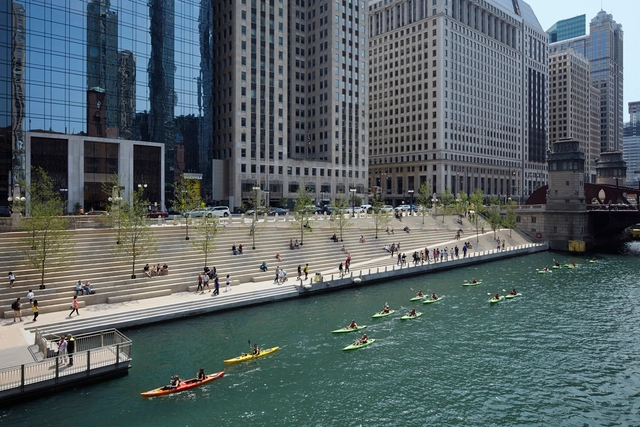
The third and final phase of the ChicagoRiverwalk is officially open to the public. Designed by Sasaki and Ross Barney Architects, the 1.5 mile long promenade revitalizes an underutilized industrial area into an active public space featuring restaurants, cultural activities and amenities while reconnecting the Chicago River to the urban fabric of the city.
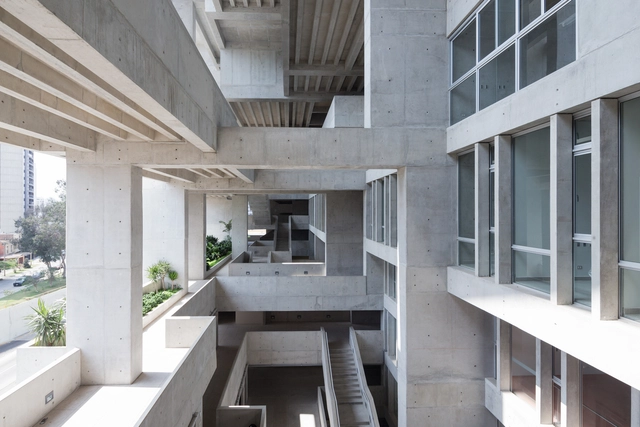
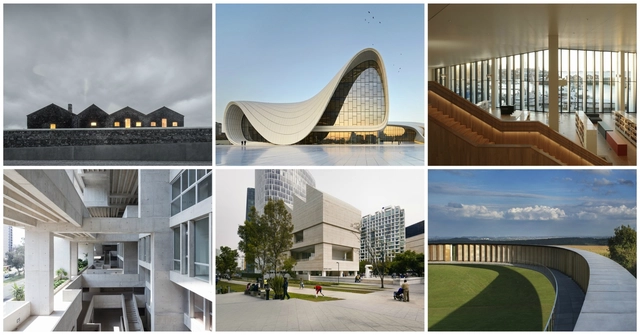
The Royal Institute of British Architects (RIBA) has announced the shortlist of six finalist projects in the running for the inaugural RIBA International Prize. The first RIBA Award open to any qualified architect in the world, the International Prize seeks to name the world’s “most significant and inspirational” building. Criteria for consideration include the demonstration of “visionary, innovative thinking and excellence of execution, whilst making a distinct contribution to its users and to its physical context.”
The six finalists were named from a longlist of 30 buildings, from which a further selection of 21 projects have been recognized by the jury for the RIBA Award for International Excellence. The jury has also named the winner of the RIBA International Emerging Architect prize recognizing “the achievement of architects in the earlier stages of their career who are working on global projects.”
"Our panel of jurors have been particularly impressed by the way in which each building reacts to, resolves and assimilates into the varying geographies and contexts - from dense urban cities to a small town in the Arctic Circle," said RIBA President Jane Duncan on the naming of the finalists. "Each project resolves the complex demands of its context with ingenuity, exceptional detail and finishing and a sensitivity to the needs of the users and communities which will inhabit these spaces."
“Among a strong group of projects Grace Farms emerged as a clear winner for the clarity and consistency of its architectural solution,” said Stan Allen, MCHAP Jury President.
“The jury was struck by the radical way in which the line between architecture and landscape is blurred by the ‘River’ building. The firsthand experience of the building reveals a confident realization and the immediacy of its detailing. Finally, the Grace Farms project uniquely demonstrates architecture’s capacity to make a place for an innovative new institution.”
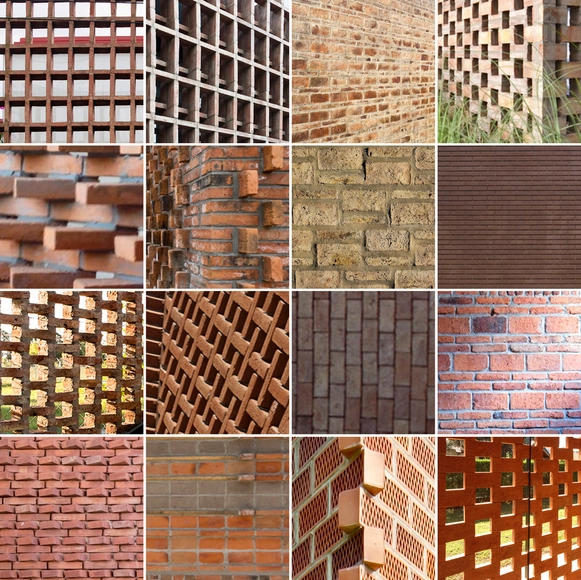
The wide range in which pieces of masonry can be arranged allows for multiple spatial configurations. Born in a furnace, the brick adorns and reinforces, protects and—to various degrees—brings natural light into spaces that need slight, natural illumination.
Throughout history, traditional brick-laying consisted of predetermined arrangement of parts, and lines of rope to guide the consistency and placement of each individual brick. But there are many other ways to exploit this multi-faceted, timeless material, so we've selected 16 projects that demonstrate the potential of the humble brick.
Below find 16 construction details from projects that use bricks in ingenious ways.
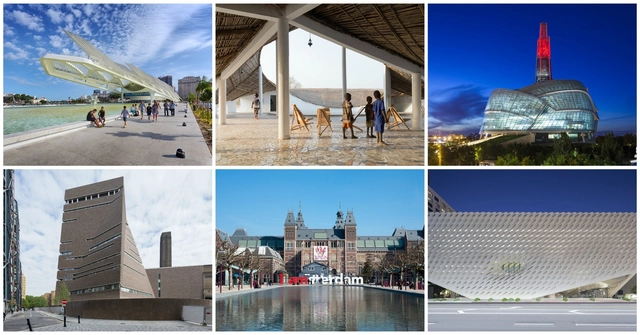
The winners of the 2016 Leading Culture Destinations Awards have been announced. Presented this past weekend at a ceremony in London, the LCD Awards are given annually to recognize the success of “museums, art organizations, and cultural destinations from around the world [that] are investing in iconic architecture, cross-sector collaborations, [and] audacious programming […] to diversify the experiences offered to visitors and establish their global reputations.”
This year, awards were presented in four categories: Leading Cultural Destination of the Year; Best New Museum of the Year (for museums opened in the past 15 months); Best Soft Power Destination of the Year (a new award for 2016, given to destination who exhibit 'excellence, relevance, transparency, accountability and sustainability'); and the Traveller’s Award for Best Place to Visit.
A recent article published in Nature makes a bold claim: we're analyzing our cities completely wrong. Professors David Wachsmuth, Aldana Cohen, and Hillary Angelo argue that, for too long, we have defined sustainability too narrowly, only looking at environmental impact on a neighborhood or city scale rather than a regional or global scale. As a result, we have measured our cities in ways that are inherently biased towards wealthy cities, and completely ignored the negative impacts our so-called "sustainable," post-industrial cities have on the rest of the world.Metropolis editor Vanessa Quirk spoke with Professor Wachsmuth to learn more about the unintended knock-on effects of going "green," the importance of consumption-based carbon counting, and why policy-makers should be more attentive to the effects of "environmental gentrification."
The award, now in its ninth year, “celebrates design that promotes or delivers change, enables access, extends design practice or captures the spirit of the year.” Nominees are selected in six categories, including Architecture, Digital, Fashion, Graphics, Product and Transport. An exhibition on the projects will be on display from 24 November 2016 – 19 February 2017.






_Hedrich_Blessing_015.jpg?1478169991&format=webp&width=640&height=580)
_Hedrich_Blessing.jpg?1478166602&format=webp&width=230&height=230&crop=true)
_Iwan_Baan_01.jpg?1478167148&format=webp&width=230&height=230&crop=true)
_Hedrich_Blessing_012.jpg?1478167596&format=webp&width=230&height=230&crop=true)
_Hedrich_Blessing_012.jpg?1478166992&format=webp&width=230&height=230&crop=true)
_Hedrich_Blessing_015.jpg?1478169991)


_Dean_Kaufman.jpg?1476889757&format=webp&width=640&height=580)
_Iwan_Baan_%E3%81%AE%E3%82%B3%E3%83%92%E3%82%9A%E3%83%BC.jpg?1476888073&format=webp&width=230&height=230&crop=true)

_Iwan_Baan.jpg?1476888027&format=webp&width=230&height=230&crop=true)
_Iwan_Baan_%E3%81%AE%E3%82%B3%E3%83%92%E3%82%9A%E3%83%BC.jpg?1476887986&format=webp&width=230&height=230&crop=true)
_Dean_Kaufman.jpg?1476889757)











.jpg?1449943376&format=webp&width=640&height=580)
.jpg?1449943359&format=webp&width=230&height=230&crop=true)
.jpg?1449943503&format=webp&width=230&height=230&crop=true)
.jpg?1449943456&format=webp&width=230&height=230&crop=true)
.jpg?1449943472&format=webp&width=230&height=230&crop=true)
.jpg?1449943376)