Federico Cairoli

BROWSE ALL FROM THIS PHOTOGRAPHER HERE

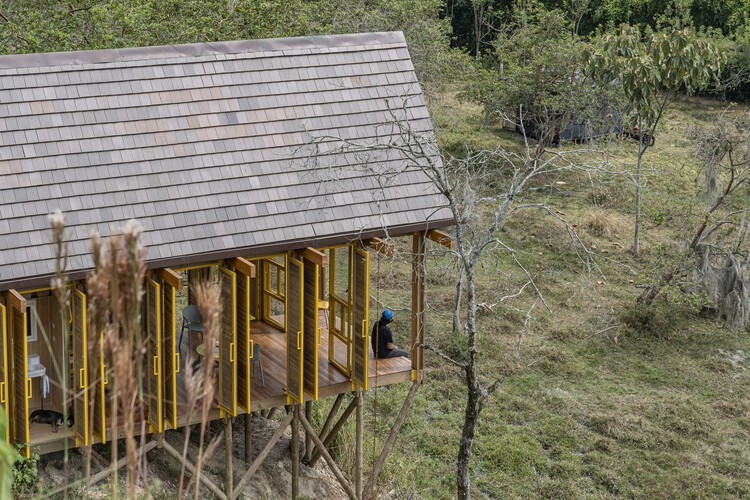
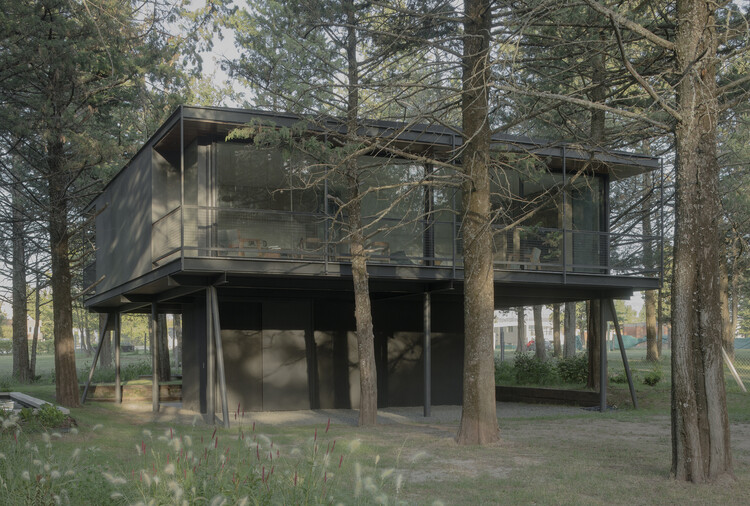
Above Water, Slope, and Forest: Elevated Architecture in Latin America

In Latin America, the ground is rarely just a surface to build on. It can be a river edge, a steep slope, a humid forest floor, a floodable landscape, or a territory under ecological pressure, and in many cases, it carries a history of communities that already knew how to respond to it, building on stilts, on platforms, over water, long before contemporary architecture asked the same questions.

These projects continue that conversation. They engage with conditions that move, absorb, erode, and grow, rather than treating the ground as something to level or control. Elevation allows architecture to adapt without fully taking over: water can pass below, vegetation can remain, and slopes can keep their original condition. In each case, the decision to rise is tied to something specific: water, humidity, topography, vegetation, or ecological recovery, and the knowledge of how to build within it and not against it.

Above Water, Slope, and Forest: Elevated Architecture in Latin America - More Images+ 12

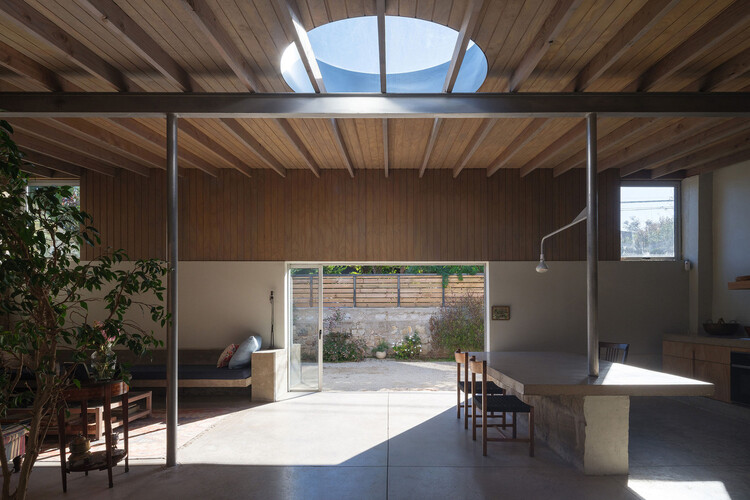
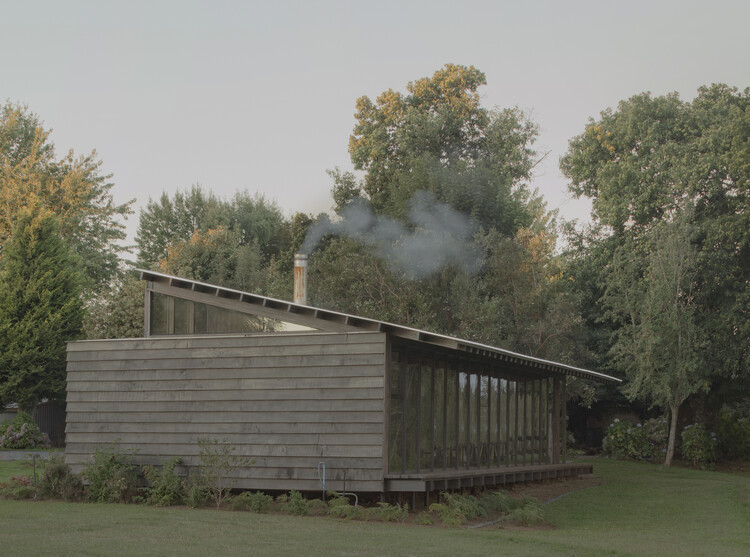
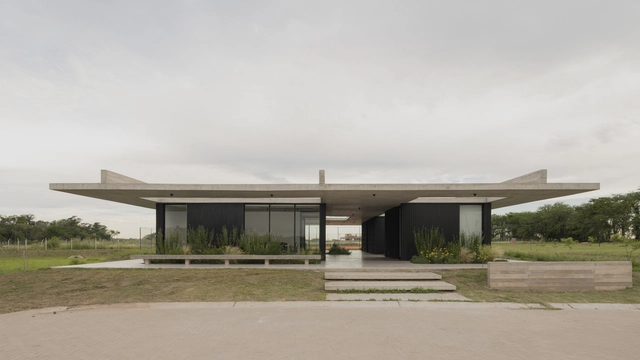
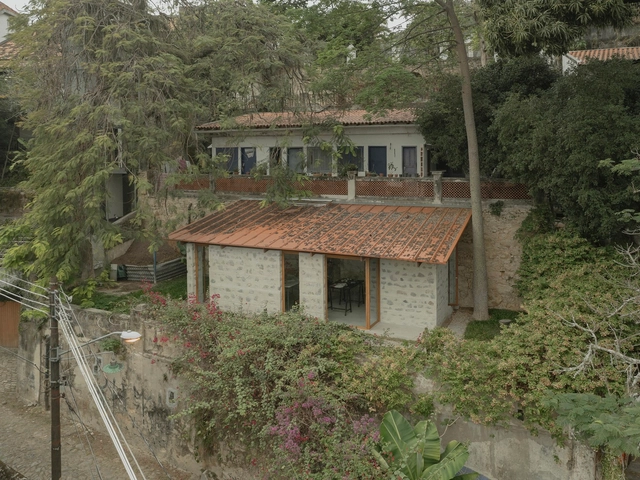
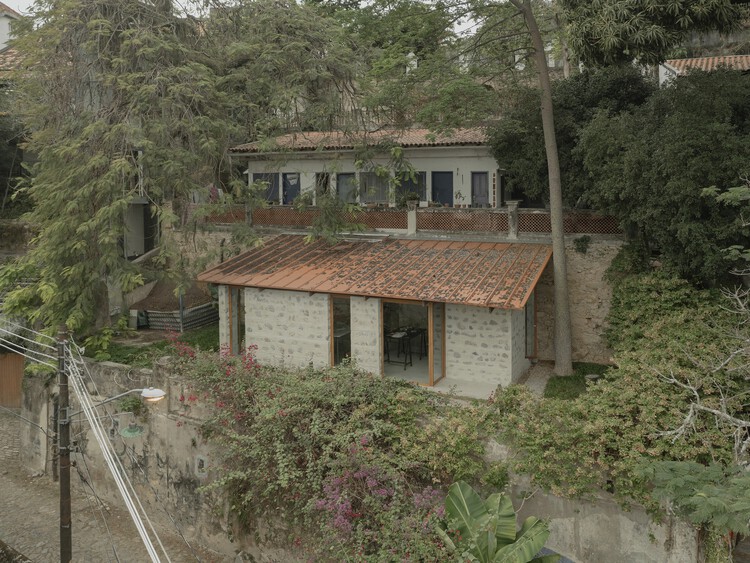
La Florida II House / Lezaeta Lavanchy

La Florida II House / Lezaeta Lavanchy - More Images+ 12

Trapiche, Argentina
  • Architects: Lezaeta Lavanchy
  • Area Area of this architecture project Area:  110
  • Year Completion year of this architecture project Year:  2023
  • Manufacturers Brands with products used in this architecture project
    Manufacturers:  El Irani Ventanas

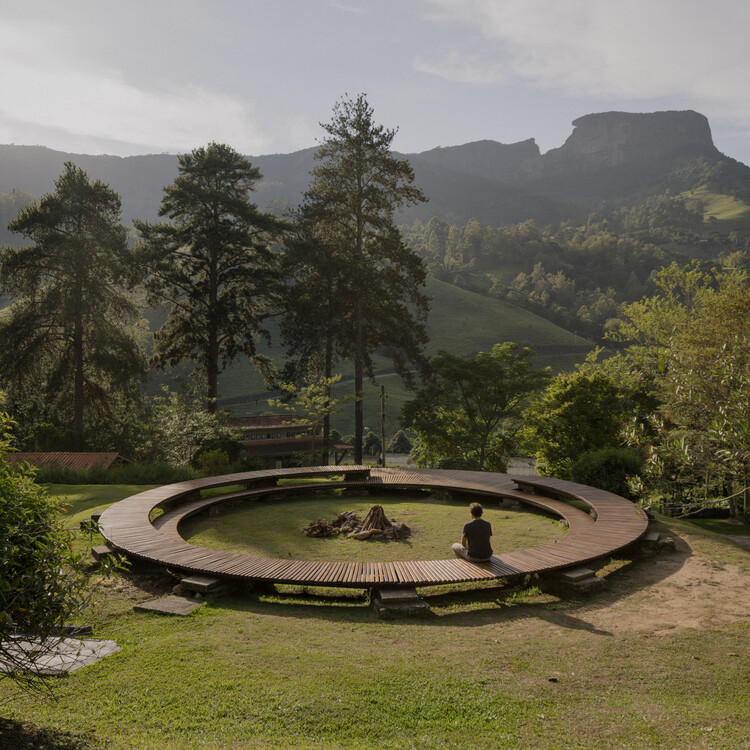
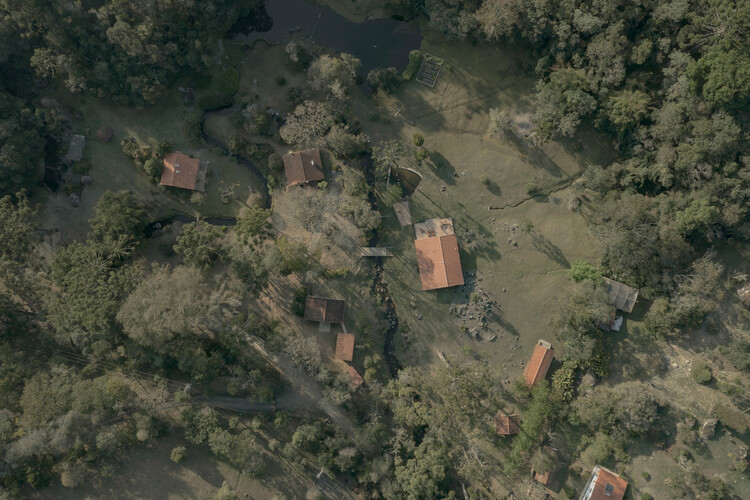
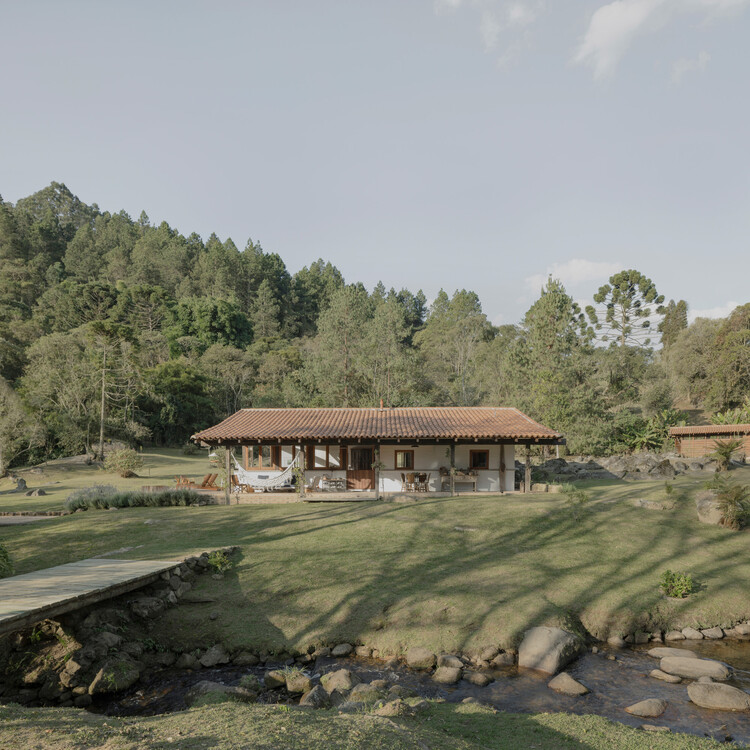
Compass Bonfire / messina | rivas

Compass Bonfire / messina | rivas - More Images+ 14

São Bento do Sapucaí, Brazil
  • Architects: messina | rivas
  • Area Area of this architecture project Area:  210
  • Year Completion year of this architecture project Year:  2025

Legacy in Matter: Material Traditions in South American Architecture

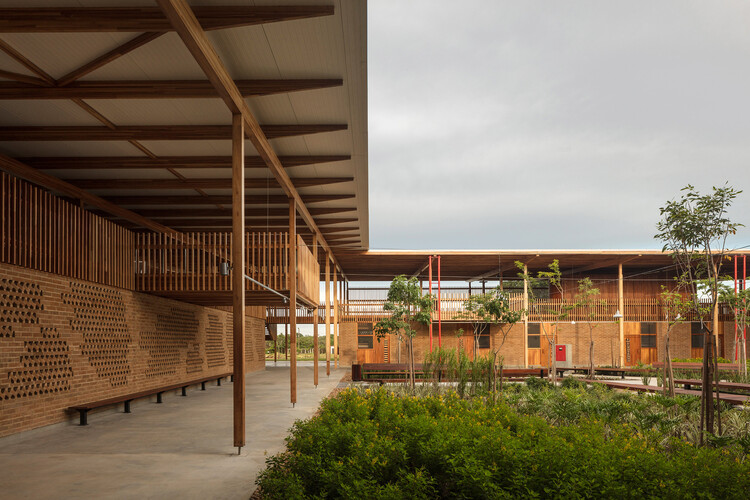
Across South America, architecture endures through the materials it uses, those that persist over time. Bamboo, brick, wood, and concrete appear across regions, connecting climate, labor, and culture in ways that ensure their persistence through generations. Their continuity does not depend solely on preservation or heritage. It depends on use.

In this context, cultural memory does not reside primarily in monuments or images, but in practice. It survives in repeated gestures: laying bricks, tying guadua joints, assembling wood frames, casting slabs that anticipate another floor. These actions are transmitted less through manuals than through participation. Over time, they form systems of knowledge embedded in habit and necessity. Materials endure not because they symbolize the past, but because they continue to work.

Legacy in Matter: Material Traditions in South American Architecture - More Images+ 12

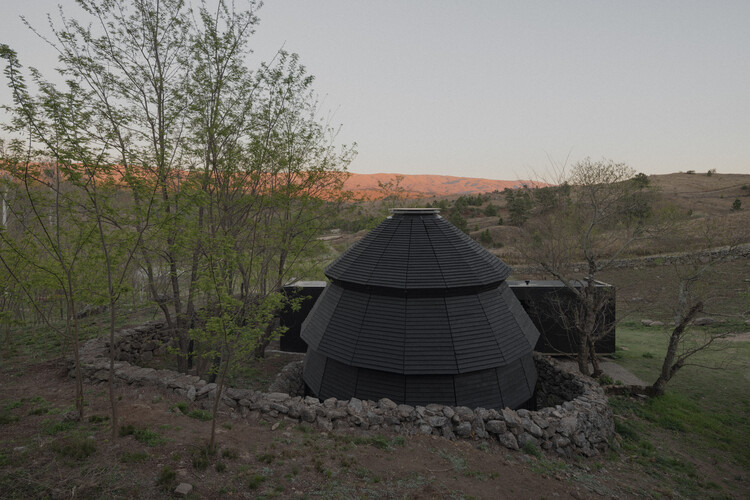
Pavilion in El Durazno / Nicolás Oks

Pavilion in El Durazno / Nicolás Oks - More Images+ 39

  • Architects: Nicolás Oks
  • Area Area of this architecture project Area:  70
  • Year Completion year of this architecture project Year:  2024

Introducing the 75 Finalists of the 2026 ArchDaily Building of the Year Awards

Two weeks and over 85,000 nominations later, the finalists of this year's Building of the Year Awards are in. The selection is much like the ArchDaily audience that chose it: diverse in geography, generous in ideas, and precise in intent. With projects from 46 countries, in a variety of typologies and scales, they present a beautiful snapshot of the current architectural moment.

We invite you to sit back, browse, and vote for your ultimate favorites. Below, you will find all of the 75 finalists in their respective categories. Voting is open until February 18th at 18:00 EST. Thank you—your participation is key to making this the world's largest community-driven architecture award.

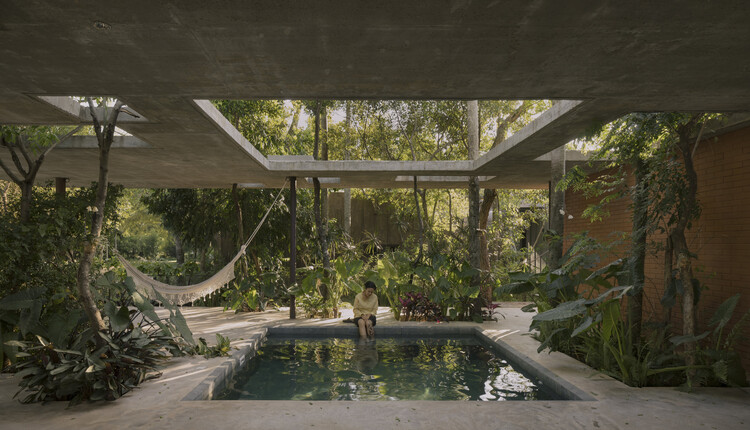
A Forest in the House / Equipo de Arquitectura

A Forest in the House / Equipo de Arquitectura - More Images+ 18

San Bernardino, Paraguay

Environmental Comfort as an Interior Condition in South American Architecture

Subscriber Access | 

Across South America, environmental comfort is understood not as an interior condition, but as one shaped through space. In regions marked by heat, humidity, intense sunlight, and seasonal variation, architecture has long relied on spatial decisions to moderate climate and support daily life. Comfort emerges from how interiors are opened, shaded, ventilated, and inhabited over time.

Rather than isolating interior spaces from their surroundings, many contemporary projects across the region cultivate comfort through depth, porosity, and intermediate zones. Light is filtered rather than maximized, air is guided through aligned openings and voids, and thresholds become active spaces of use rather than residual edges. These strategies do not seek uniform environmental control, but produce interiors that remain temperate, adaptable, and closely attuned to changing climatic conditions. In this context, environmental comfort becomes inseparable from spatial experience.

Environmental Comfort as an Interior Condition in South American Architecture - More Images+ 12

New Port House / Lezaeta Lavanchy + Tomás Tironi

New Port House / Lezaeta Lavanchy + Tomás Tironi - More Images+ 9

Lago Ranco, Chile

Services Pavilion / VDV ARQ

  • Architects: VDV ARQ
  • Area Area of this architecture project Area:  360
  • Year Completion year of this architecture project Year:  2023

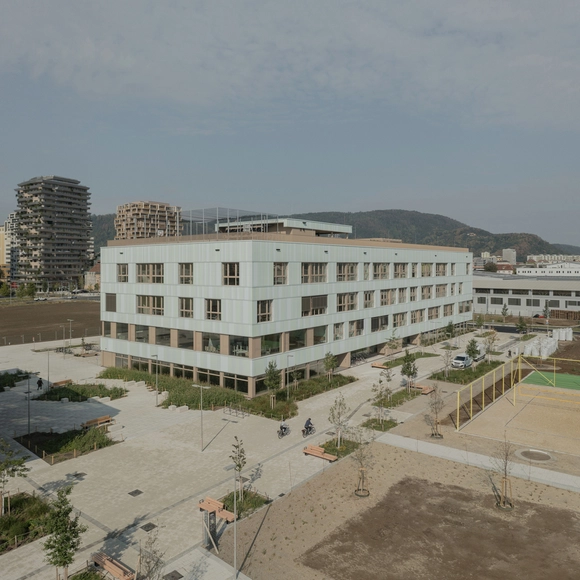
AHS Reininghaus Secondary School / j-c-k

AHS Reininghaus Secondary School / j-c-k - More Images+ 67

Graz, Austria

From Legal Constraint to Local Craft: Four Adaptive Projects by messina | rivas in Cunha

The municipality of Cunha, located in the state of São Paulo, Brazil, is a region known for its inland landscape, hilly terrain, and, especially, a major production of nationally renowned ceramics. It is within this context that the office messina | rivas has been working since 2017, with a set of projects located on a farm. Their work, which integrates design and construction in an indissociable manner, results in interventions that reveal a sensitive approach to pre-existing conditions and their surrounding environment.

The relationship between the office, led by architects Francisco Rivas and Rodrigo Messina, and the site began with a small renovation of a guest house for hosting friends. The project resulted in the transformation of two existing bedrooms into suites and the creation of an external kitchen. Since then, growing demands and the need to adapt existing buildings have driven the design of other projects distributed across the same site.

From Legal Constraint to Local Craft: Four Adaptive Projects by messina | rivas in Cunha - More Images+ 9

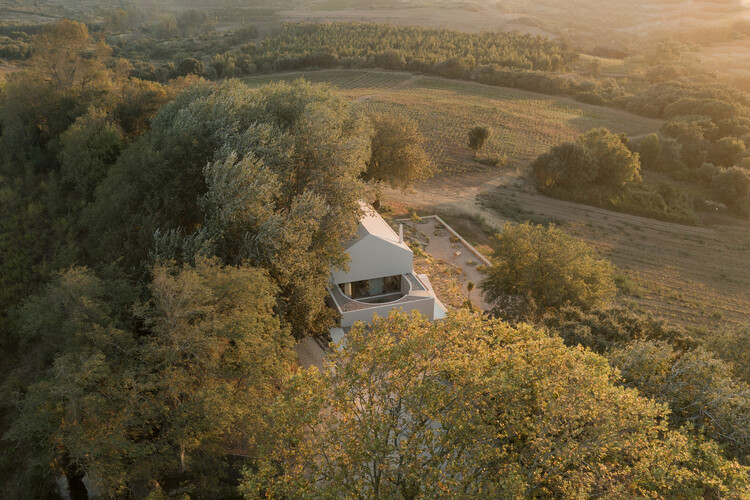
House for two DJs / Atelier Matteo Arnone

House for two DJs / Atelier Matteo Arnone - More Images+ 26

  • Area Area of this architecture project Area:  500
  • Year Completion year of this architecture project Year:  2025
  • Manufacturers Brands with products used in this architecture project
    Manufacturers:  Gaggenau, Hunter Douglas Architectural, Secil, Viabizzuno, a catedral

Community-Centered Architecture: Redefining the Role of Architects in South America

Subscriber Access | 

Across South America, architecture is increasingly being understood as a collective act. Rather than imposing external views, many studios and designers are building with and for communities, learning from their local practices, materials, and ways of inhabiting. These projects are repositioning the architect's role from an author to a facilitator, transforming design into a participatory process that centers collaboration, care, and mutual respect.

What unites these efforts is not style or scale, but a shared belief: architecture emerges from collective dialogue, not imposition. From rural Ecuador to the urban peripheries of Brazil, Colombia, and Paraguay, these projects reveal how social engagement and local making produce spaces that are sustainable not only environmentally but also socially. They respond to inequality not through top-down solutions, but through co-authorship, offering spaces that reflect the needs, knowledge, and agency of the people who use them.

Community-Centered Architecture: Redefining the Role of Architects in South America - More Images+ 15

Sewing Atelier Studio / Atelier 77 + Matéria Base

Sewing Atelier Studio / Atelier 77 + Matéria Base - More Images+ 28

Rio de Janeiro, Brazil
  • Area Area of this architecture project Area:  45
  • Year Completion year of this architecture project Year:  2024
  • Manufacturers Brands with products used in this architecture project
    Manufacturers:  Kingspan - ISOESTE

Main House / messina | rivas

Main House / messina | rivas - More Images+ 38

Cunha, Brazil
  • Architects: messina | rivas
  • Area Area of this architecture project Area:  120
  • Year Completion year of this architecture project Year:  2024

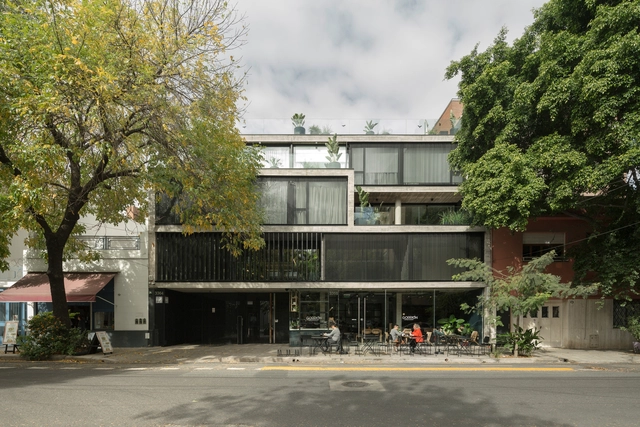
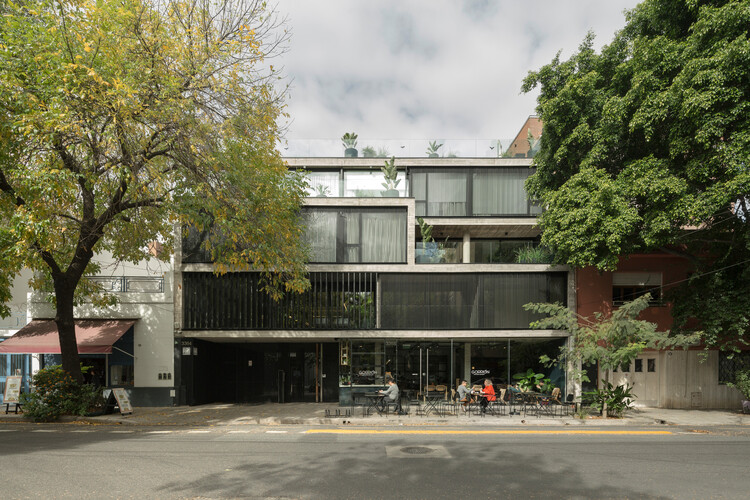
Newbery Urban Homes / Dieguez Fridman

Newbery Urban Homes / Dieguez Fridman - More Images+ 21

Buenos Aires, Argentina
  • Architects: Dieguez Fridman
  • Area Area of this architecture project Area:  2200
  • Year Completion year of this architecture project Year:  2021

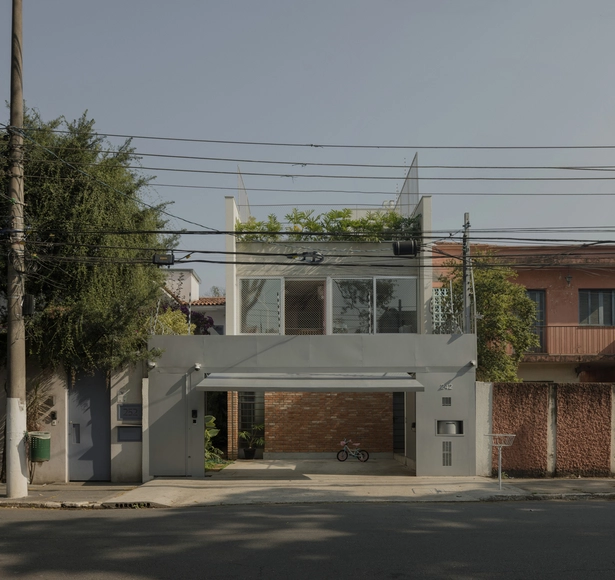
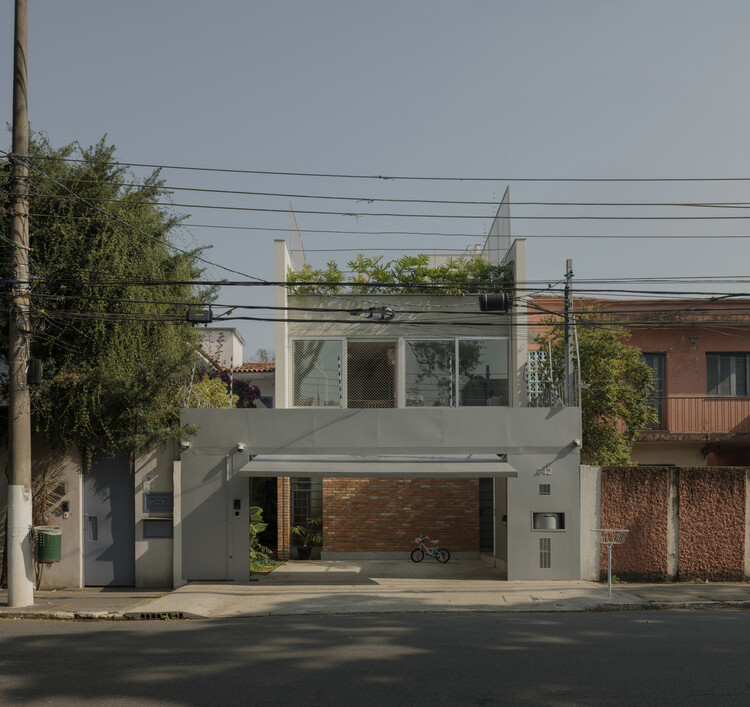
Jardim Paulista House / Messina Rivas

Jardim Paulista House / Messina Rivas - More Images+ 21

Sao Paulo, Brazil
  • Architects: Messina Rivas
  • Area Area of this architecture project Area:  200
  • Year Completion year of this architecture project Year:  2024