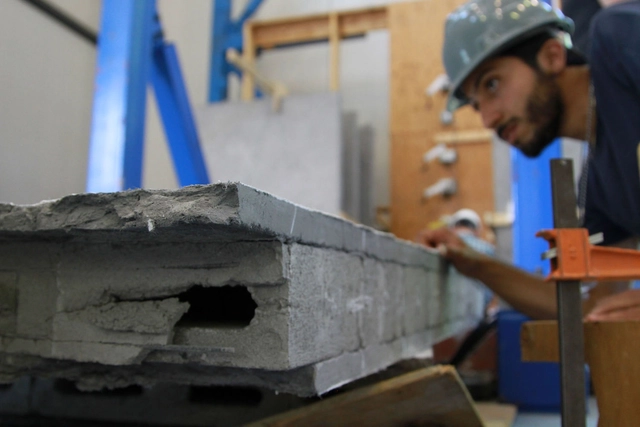
The history of concrete dates back to ancient Rome, approximately 2,000 years ago. The so-called “Roman Concrete” is composed of limestone, volcanic ash, and seawater and it permitted the construction of aqueducts, highways, and temples; many of them still stand to this day. Some time ago, this original mix was discovered to form a mineral called aluminum tobermorite, which gets stronger as time goes by.
In the context of the AIA Conference on Architecture 2019, Turkish architect Emre Arolat (EAA) gave ArchDaily some insights about technologies in architecture, how will the future role of the architect evolve, and the importance of the materials in his projects.
https://www.archdaily.com/920301/you-dont-choose-the-material-the-material-appears-itself-with-the-idea-in-conversation-with-emre-arolatAD Editorial Team
Terrazzo is made by combining a cement base (sand, water, and cement) with a mixture of ground minerals - like marble, granite, and quartz - and can be applied to almost any surface, vertical or horizontal. The technique, produced using a completely hand-crafted method, was used worldwide in the construction of modern buildings and is noted for its durability, resistance (to water and abrasion), and easy maintenance. This made it a go-to material in the creation of flooring for houses and the common areas of residential and office buildings.
Today, terrazzo is experiencing a revival as one of the key trends in contemporary architecture. Here, we will discuss the whats and hows of terrazzo and illustrate some of its uses in current projects.
As architects, we are on an endless journey of discovery, open to new experiences that fuel our creativity. We explore our surroundings and beyond, we travel to expand our views and open our mind, being often exposed to the unexpected. All these experiences are stored in our mental hard drive until the inspiration moment comes, drawing random non-linear connections between them and putting us into a state of divergent thinking, from where new ideas appear.
According to a statement published on the UNESCO page, the UNESCO World Heritage List is a legacy of monuments and sites of great natural and cultural wealth that belongs to all of humanity. The Sites inscribed on the World Heritage List fulfill a function of milestones on the planet, of symbols of the awareness of States and peoples about the meaning of those places and emblems of their attachment to collective property, as well as of the transmission of that heritage to future generations.
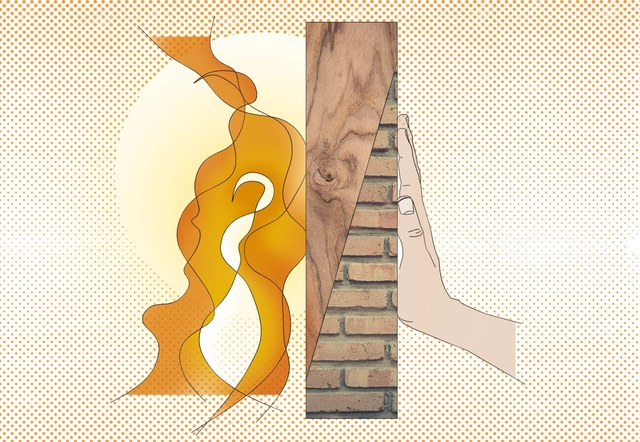
In case of fire, protecting the lives of people is the most important. All occupants of the building should have the opportunity to evacuate on time, and the time available depends largely on the materials chosen and their behavior during fire exposure.
In order to facilitate and optimize this process, the European Union has adopted the Standard EN 13501[1], introduced in the 2000s, which specifies a series of classes that determines the anti-fire properties of different materials. Their classifications are unified and compared based on the same test methods, and are currently used as a reference in many countries around the world.
Because of the architect’s role in choosing materials for projects, we have compiled the most important nomenclature to better understand the level of security of our built environment.
Mariam Kamara is the founder and director of Atelier Masōmī in Niamey, Niger, an architecture firm whose interests lie in designing solutions relevant to spatial problems inherent in the developing world, in a cultural, historical and climatic way. She is a founding member of the united4design collaborative office in Seattle, where she worked on two major projects in West Africa. Her tenure as Associate Associate Professor of Urban Studies at Brown University began in the spring of 2017.
As users of ArchDaily demonstrate certain affinities and greater interest in particular subjects, these topics emerged as trends. Inclusive Architecture was one of the most searched concepts on ArchDaily in 2018.
https://www.archdaily.com/915588/trends-report-march-2019-inclusive-designAD Editorial Team
As users of ArchDaily demonstrate certain affinities and greater interest in particular subjects, these topics emerged as trends. Gender Equality is one of the trends that will influence urban and architectural discussion in 2019.
https://www.archdaily.com/915576/trends-report-february-2019-gender-equalityPola Mora
ArchDaily has become the most consulted architecture website in the world and the volume of our traffic reveals key data about the topics that architects consider relevant. In the past few months, user behavior has shown a growing interest in various concepts related to comfort in architecture.
Founded in 1996 by Buenos Aires-born Martin Rein-Cano, TOPOTEK 1 has quickly developed a reputation as a multidisciplinary landscape architecture firm, focussing on the re-contextualization of objects and spaces and the interdisciplinary approaches to design, framed within contemporary cultural and societal discourse.
The award-winning Berlin-based firm has completed a range of public spaces, from sports complexes and gardens to public squares and international installations. Significant projects include the green rooftop Railway Cover in Munich, Zurich’s hybrid Heerenschürli Sports Complex and the German Embassy in Warsaw. The firm has also recently completed the Schöningen Spears Research and Recreation Centre near Hannover, working with contrasting typologies of the open meadow and the dense forest on a historic site.
https://www.archdaily.com/871052/topotek-1-s-martin-rein-cano-on-superkilens-translation-of-cultural-objectsOsman Bari
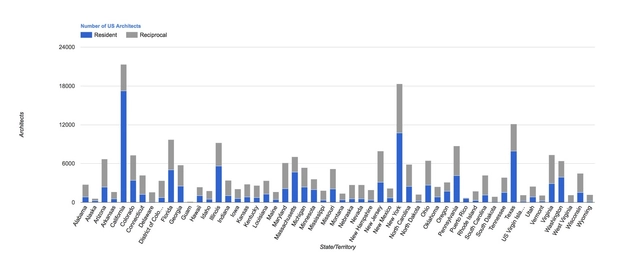
As architects around the country gather for the 2017 AIA Convention in Orlando, the National Council of Architectural Registration Boards (NCARB) has decided to share some initial results from their 2016 nationwide Survey of Architectural Registration, specifically, the number of architects licensed in each state.
The data tracks both the number of resident licenses and reciprocal licenses (licenses for a particular state held by a resident of another state). The 2016 survey found that the number of architects working in the US has held steady, and that architects are working across state lines more than ever before. While the total number architects dropped slightly from the previous year (0.4 percent) to 109,748, the number out-of-state licenses grew a full 3 percent to 126,554.
Spread the love and send these Valentines to your favorite architects, because nothing says “I love you” more than cheesy puns. View them all, after the break.
“We wanted to offer the local residents an internationally important museum that would help promote the development of China’s creative industries and further progress design in China,” stated China Merchants Group (CMG) vice president Sun Chengming. CMG is collaborating with London’s V&A to realize the project.
Ehrlich Architects, a Los Angeles-based practice dedicated to the philosophy of Multicultural Modernism, has been selected to receive the American Institute of Architects (AIA) 2015 AIA Architecture Firm Award. The award celebrates Ehrlich Architects' 35 years of practice, which, as the AIA notes, has become renowned for “fluidly melding classic California Modernist style with multicultural and vernacular design elements by including marginalized design languages and traditions.”
The firm, originally founded by Steven Ehrlich in 1979 after working with the Peace Corps in Africa, is now led by four diverse partners: Ehrlich, alongside Takashi Yanai, Patricia Rhee, and Mathew Chaney. You can preview some of their most notable projects and watch an interview with Ehrlich, after the break.
Fundamentals, the title of the 2014 Venice Biennale, will close its doors in a matter of days (on the 23rd November). From the moment Rem Koolhaasrevealed the title for this year’s Biennale in January 2013, asking national curators to respond directly to the theme of ‘Absorbing Modernity 1914-2014’, there was an inkling that this Biennale would be in some way special. Having rejected offers to direct the Biennale in the past, the fact that Koolhaas chose to act not only as curator but also thematic co-ordinator of the complete international effort, was significant. This announcement led Peter Eisenman (one of Koolhaas' earliest tutors and advocates) to state in one interview that “[Rem is] stating his end: the end of [his] career, the end of [his] hegemony, the end of [his] mythology, the end of everything, the end of architecture.”







_13.49.37.jpg?1552593271&format=webp&width=640&height=580)