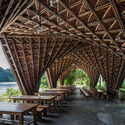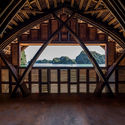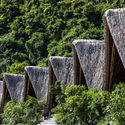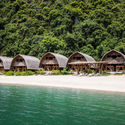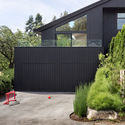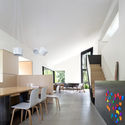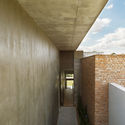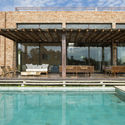


-
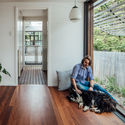
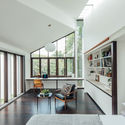
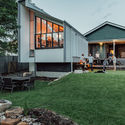
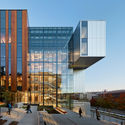
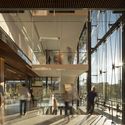
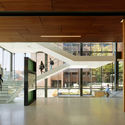
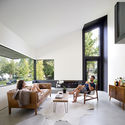
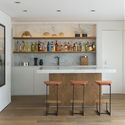
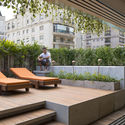
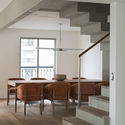
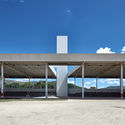
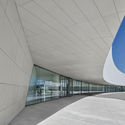
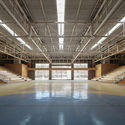
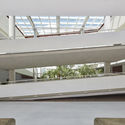
Architects: Atelier 100s+1
- Area: 1875 m²
- Year: 2016




22 years after its foundation, ALA-Assoarchitetti announces the eleventh edition of the Dedalo Minosse International Prize for Commissioning a Building.


Ennead Architects has won the international design competition to design the new Shanghai Yangtze River Estuary Nature Preserve in China. Located on an island at the mouth of the Yangtze River, the design was made to raise public awareness around the impact of pollution and construction. The nature reserve aims to rescue critically endangered species and restore biodiversity while allowing visitors to immerse themselves in a natural setting outside the dense urban core of Shanghai.

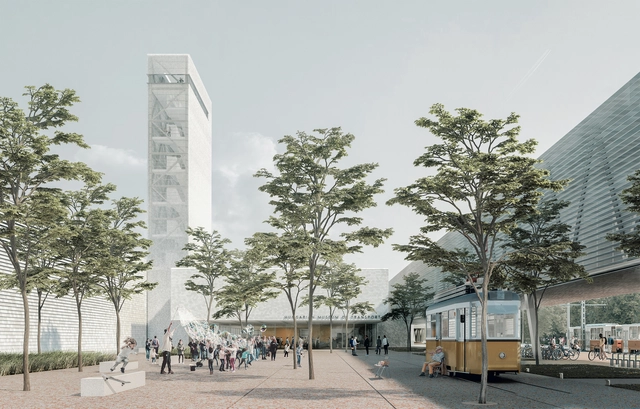
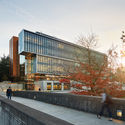
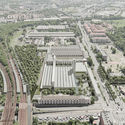
Hungarian firm Építész Stúdió has revealed their design for the New Museum of Transport in Hungary, a scheme which was placed third in an international competition won by Diller Scofidio + Renfro. The Építész Stúdió scheme imagined a new structure placed perpendicular to the existing building on the site, with the two buildings intertwined into one system.
The new series of structures manifest as a virtual continuation of the former head building on the street side, with a band-like entrance canopy linking the old and new units on the railway side. Intersecting the old and new buildings, a “Recreation Bridge” connects to the existing static volume to the dynamic additions.


The 2019 Royal Institute of British Architects (RIBA) Norman Foster Travelling Scholarship opens today and welcomes applications from architecture students enrolled in schools of architecture around the world. A £7,000 grant will be awarded to one winner by a panel of judges which will include Lord Foster and RIBA President Ben Derbyshire.

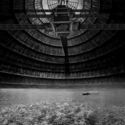
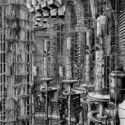
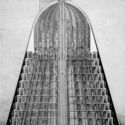
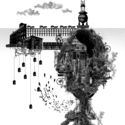
London-based artist and architectural designer Yunil Nam has developed an illustrated project inspired by Jules Verne’s science fiction novel “20,000 Leagues Under the Sea.” The project, titled “The Reef of Silence” explores a “funerary venue and coral cultivation facility within an underwater structure alongside an investigation into cultural and environmental issues in the Indian Ocean.”
The fictional scheme is designed to revitalize endangered vultures preying upon dead human bodies, alongside its religious function. The “Tectonic Vultures” burial process consists of new techniques in body decomposition such as freeze-drying and liquefaction, transforming the human body into nutrients in the form of powder or liquid.
.jpg?1552384741&format=webp&width=640&height=580)
Morpholio has unveiled AR Sketchwalk, a new augmented reality tool geared towards helping architects bridge the gap between model and reality. Released today, AR Sketchwalk allows designers to use augmented reality to dive into their sketches to give both their clients and themselves a truer sense of the space.

More than 80,000 votes were cast over the last two weeks and, after careful review, the results of the 2019 ArchDaily Building of the Year Awards presented by Unreal are in. Building of the Year, which itself celebrated ten years this year, is the largest peer-based crowdsourced architecture award in the world, showcasing the projects chosen by you, our readers, as the most significant of the year.
This is no mean feat. More than 4000 projects were in contention this year, challenging readers to carefully consider a wide variety of projects across type, scale, and location. 4000 projects were whittled to 75 finalists; 75 have now been reduced to the 15 winners - one for each typological category.
The results are as diverse as the architecture itself. Well-known names are, as in years past, present among the bunch, among them Zaha Hadid Architects, MVRDV, and Heatherwick Studio. For London-based Heatherwick, their win marks the second consecutive year they have taken top honors for a refurbishment-based project. But less-renowned names dominate the ranks of the winners this year. Innocad’s serenely simple office building for a real estate company elevates what corporate architecture can be while the technical and material mastery of Sameep Padora’s Maya Somaiya Library is enough to make any architect look twice. The library is, in fact, one of two Indian projects to take top honors this year - a strong first year showing for the nation whose design talent seems finally to be coming to the fore.
But for all their many beautiful differences, the winners share a crucial element in common: they represent the values of our mission, to bring inspiration, knowledge, and tools to architects everywhere. Building of the Year - indeed, ArchDaily itself - would not be possible without the generosity of firms and readers as invested in our mission as we are. We give our profound thanks to all who participated this year, no matter the form. Congratulations to all the winners!

This article was originally published on CommonEdge as "Rob Walker on the Mistakes of Brad Pitt's Make it Right."
I will start with a confession: I was part of the fawning media swarm that lauded and applauded the accomplishments of Make It Right, Brad Pitt’s bold attempt to rebuild a portion of the Lower Ninth Ward in New Orleans. The project was, it seemed once, one of the few post-Katrina success stories coming out of that flood-ravaged community.