Laurent Troost is a Belgian architect with a vast history of projects in the Netherlands, Spain, and Dubai. He made the decision to move to Brazil in 2008, settling in the city of Manaus. In this region filled with challenges and inspiration, Troost developed a unique architectural practice by combining his experiences in designing luxury buildings abroad with structures in the heart of the Amazon. His work gained international recognition and has been honored with multiple awards. On September 4th, 2023, he was in Florianópolis for a lecture at the NCD Summit, where we had the opportunity to discuss his work and his views on architecture and sustainability.
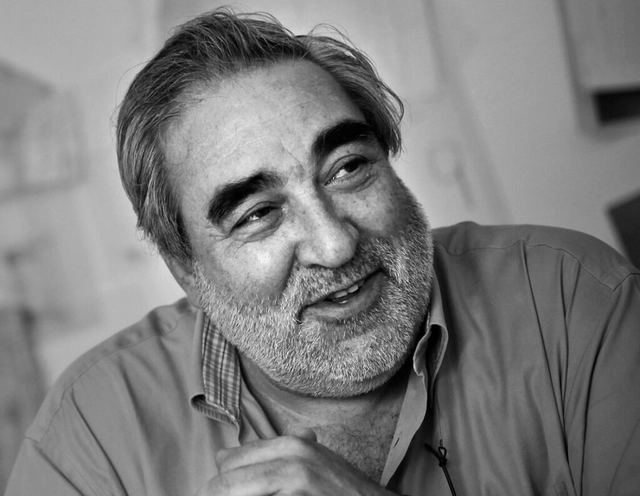
Eduardo Souto de Moura. Image via CAU/BR, divulgação
The Portuguese architect Eduardo Souto de Moura will receive yet another international recognition for his career. On October 20th, the Circle of Fine Arts of Madrid or Círculo de Bellas Artes de Madrid (CBA) will award the architect the Gold Medal, its highest distinction. This tribute not only adds to Souto de Moura's extensive list of accolades, which includes the 2011 Pritzker Prize and the 2013 Wolf Prize, among others but also represents an expression of appreciation from the world of culture and the arts for a career and body of work that transcend architecture and "reach the dimension of poetry through the acceptance of the technical demands of buildings
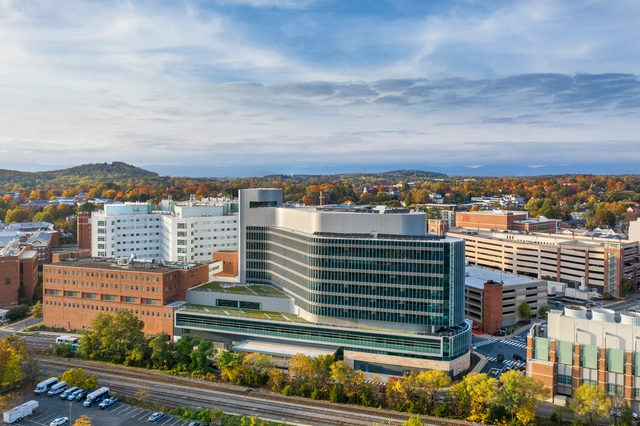
The announcement of the establishment of a new university campus is one of celebration, marking economic opportunities and urban growth. The United States is home to over 700 college towns that have witnessed prosperity through the inauguration of educational institutions like the University of Colorado’s Boulder, and Chapel Hill, home to the University of North Carolina. With this development, gentrification has unfortunately become a contentious issue in college towns across the country. While the transformation of these towns brings economic expansion and cultural vibrancy, it often comes at the cost of displacing long-time residents, erasing historic character, and altering the essence of these towns. American college towns offer a unique perspective on how cities can strike a balance between progress and preservation.
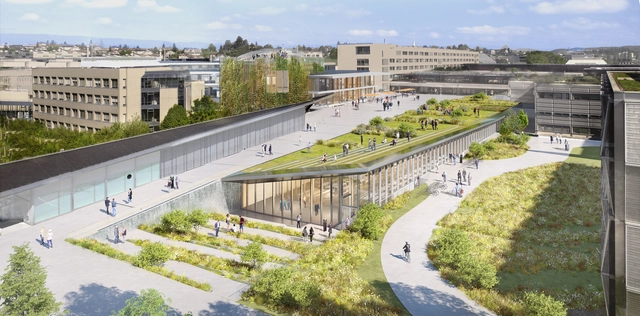
Following an international competition, the team led by Dominique Perrault Architecture has been commissioned to reimagine and rehabilitate the Esplanade-Coupole area in École Polytechnique Fédérale de Lausanne (EPFL)’s Campus in Switzerland. The winning project includes the addition of a new building and the renovation of the Coupole to increase its capacity, as well as improvements to the public spaces. The intervention reuses the former Esplanade underground car park, taking advantage of its central location within the campus and creating a new topography to seamlessly integrate the new additions into the dense fabric of the complex. The project, including the new additions and the renovation of existing structures, is set to be built between 2025 and 2028.
Housing is a fundamental aspect of architecture, providing shelter, which is essential for everyone. In urban environments, addressing the housing challenge is both urgent and complex. Social housing initiatives aim to provide a substantial portion of the population with access to this fundamental architectural concept: a home.
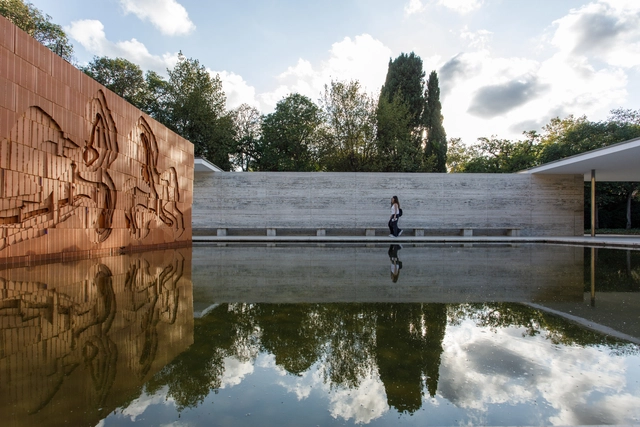
From September 14th to October 8th, 2023, "Psicoarquitectura" will be showcased at the German Pavilion, designed by Mies Van der Rohe and Lilly Reich, located in the city of Barcelona. The Mies van der Rohe Foundation, in collaboration with LAB 36 and Senda Gallery, is hosting this temporary artistic intervention by the artist and architect Oscar Abraham Pabón. This intervention explores the materiality of this iconic work of the Modern Movement, delving into its interpretative and psychological dimensions.
Cognitive decline is a growing public health concern that affects millions of people around the world. Amid an aging population, strategies that help prevent or mitigate cognitive deterioration become increasingly relevant to support healthy aging and maintaining independence for longer. Studies in the field of neuroscience applied to architecture (neuroarchitecture) have shown that the physical environment, both internal and external, public and private, plays a fundamental role in this aspect [1]. In this sense, architects and urban planners can direct their projects to create solutions that significantly contribute to this objective.
https://www.archdaily.com/1007274/architecture-for-preventing-cognitive-decline-contributions-from-neuroscience-to-healthy-agingAndréa de Paiva
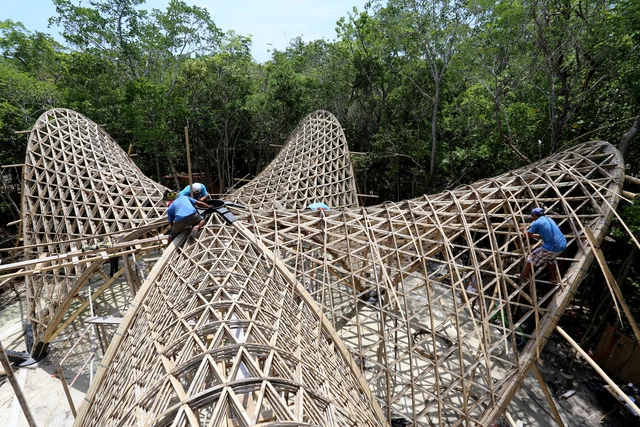
Aerial perspective of the Luum Temple under construction, revealing the network of bamboo elements. Image Courtesy of CO-LAB design office
In a world grappling with environmental challenges, forward-thinking architects and engineers are increasingly leaning towards more sustainable solutions. While steel and concrete have long dominated the construction industry, bamboo is now stepping into the limelight as a compelling alternative. Thanks to its potent mix of strength, flexibility, and eco-friendliness, bamboo is fast becoming the go-to material for those keen on pushing the boundaries of sustainable architecture.
Bridging this transformative moment in sustainable design is the timely arrival of the "Bamboo Structures" eBook series, which this article is based on. Acting as a touchstone in the field, the first volume focuses on the structural design process behind the Luum Temple—a masterclass in bamboo engineering. The guide serves as more than just a theoretical text; it is a comprehensive manual teeming with real-world insights, cutting-edge research, and practical expertise.
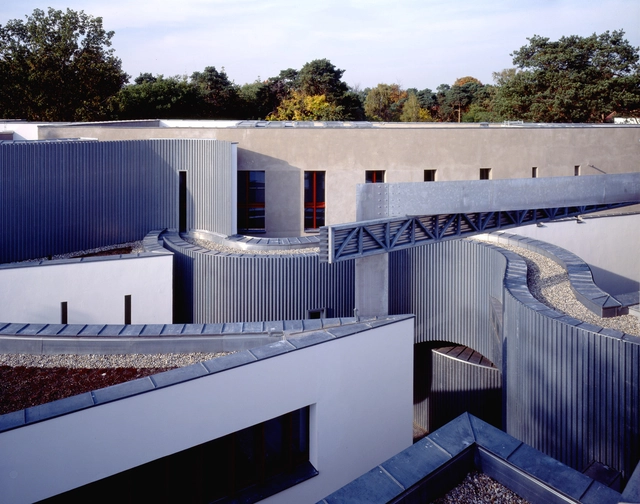
Polish-Israeli architect Zvi Hecker, internationally recognized as an influential figure of Modernism in Israel, as well as a painter, illustration artist, and furniture designer, has passed away at the age of 92, as reported by Moderne Regional. Throughout his career, Hecker combined geometry and modularity with asymmetry and spiraling complex compositions inspired by the pattern of sunflower seeds, a recurring inspiration for his work. His complex geometric explorations are exemplified in a variety of projects on various scales and programs, including the Spiral Apartment House in Ramat Gan, Israel (1981–1989), the Heinz-Galinski-Schule in Berlin, Germany (1992–1995), and the crystal-like Synagogue in the Negev Desert, Military Academy, Israel, (1969).
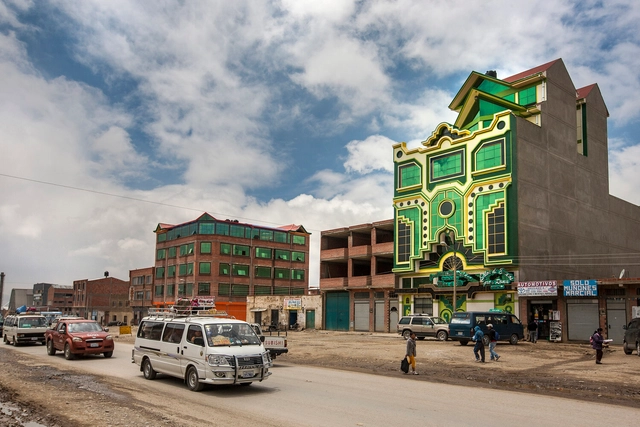
Maximalism is an artistic movement that stands in stark contrast to minimalism. While minimalism famously preaches "Less is more," maximalism embraces the opposite mantra of "More is more."
Within the broader context of the postmodern movement, which encompasses the social and aesthetic shifts occurring after World War II, maximalism can be characterized by its rejection of rigid values and rules. Instead, it celebrates imprecision, embraces diversity, blurs the lines between reality and fantasy, encourages spontaneity, and champions freedom of expression.
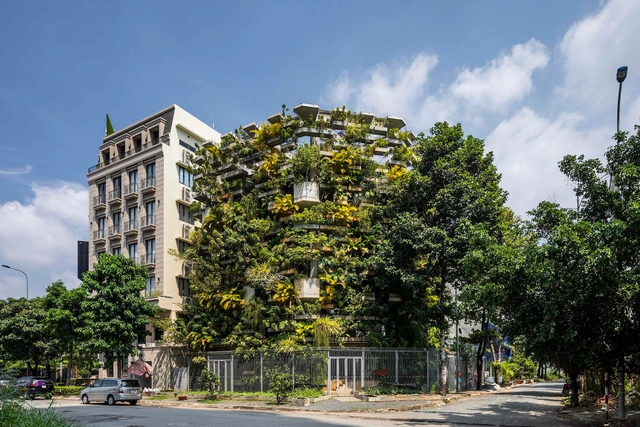
Increasing in both size and number, cities worldwide are experiencing accelerated growth. With green land regularly lost to either urbanization or its effects – such as rising sea levels or natural disasters – and expanding populations meaning more mouths to feed, the farming and agricultural industries are in crisis. Viewed by many as the solution, vertical farming is the practice of stacking layers of crops atop each other, using humanity’s latest design and engineering tech to grow more with less space.
More traditional horizontal farmland, however, does more for the environment than simply growing our food. The open-air green spaces often serve as natural habitats, air filtration, and temperature control for the surrounding area. By stepping up the concept of vertical farming into the world of architecture, we can bring all the goodness of the farm, straight to our doorstep.
Equipe do Estudio Guto Requena. Photo Courtesy by Guto Requena.
During July, we delved into the Design Process as our monthly topic. Inspired by practices that intersect various uncommon layers in their creations, we talked with architect Guto Requena. When designing, his studio experiments with different digital technologies through a sustainable lens and with a keen eye on social issues, aiming to deliver innovative and emotional experiences. Today, the architect boasts numerous national and international awards, including the ArchDaily Building of the Year and the UNESCO Prix Versailles.
In the interview, Requena shares his journey, highlighting the diversity of his team as a critical innovation point in his firm. He also addresses crucial questions about fostering innovation and creativity with new materials in architecture, among other topics.
Each year, the Trust for Public Land (TPL) issues its ParkScore, which ranks the park systems of the 100 most populated cities in the U.S. This year, the organization also explored the positive health outcomes of top-scoring cities, looking at more than 800 innovative programs and practices that integrate park and healthcare systems.
https://www.archdaily.com/1007296/urban-parks-should-be-a-greater-part-of-the-healthcare-systemJared Green
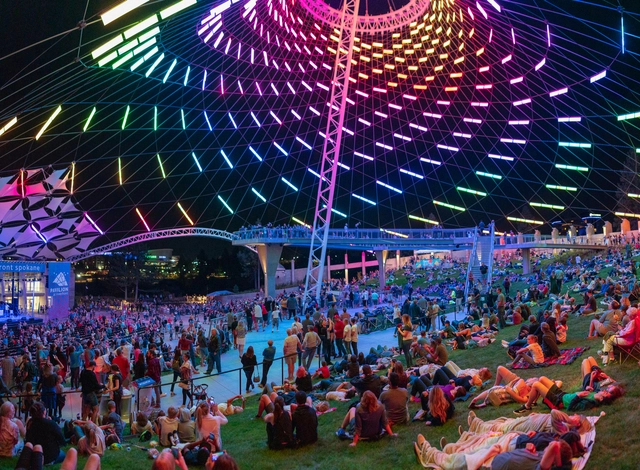
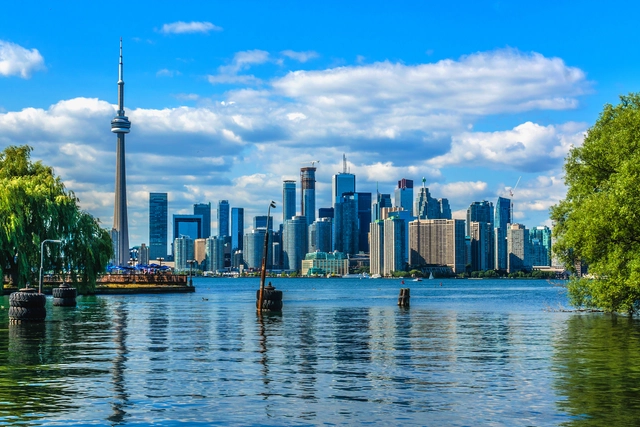
Whether rain or shine, Toronto is a yearlong bustling city, the largest in Canada and the fourth largest in North America. It’s become a cosmopolitan center with its renowned business district and cultural venues/ events that come alive during the summer and early fall nights. Toronto suggests a beautifully diverse urban setting between shimmering high rises and smaller brick houses, intertwining residential and vibrant commercial areas, public parks, and even beaches. All become part of the city's striking skyline, crowned by the iconic CN tower.
Toronto’s ongoing sprawl and constant urban development are noticeable as new projects spread through the city, weaving themselves into the existing buildings, from 19th-century landmarks such as the Gooderham Building to modern and contemporary major works like the Aga Khan Museum. These new constructions include increasing adaptive reuse and retrofitted projects throughout the city as more efforts and incentives are provided to reduce carbon emissions.
Welcome to West Hollywood and to episode 9 of Opening up. Talking through his passion project is Denis Devin Donner from the Los Angeles-based company Rudin Donner Design. This transformation started with a mansion lacking a defined entrance and reached its culmination with a gate that frames a beautiful view.
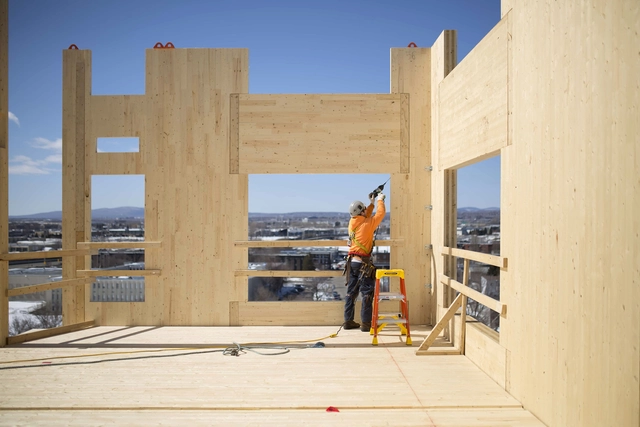
The growth of the world's population has led to an increase in housing and building construction around the globe. Considering that today the construction industry is responsible for 40% of the planet's CO2 emissions, and according to the Chilean Chamber of Construction, by 2035, Chile will need housing for 2.6 million people, it is necessary to guide this sector toward an environmentally friendly alternative. The answer to this challenge can be found in nature itself, where there are various efficient and sustainable construction solutions. Such is the case with wood: a noble and renewable material capable of capturing CO2 and contributing to a better environmental future.
Today, thanks to technological advances, engineered wood or laminated wood, composed of layers of structural wood oriented perpendicularly to each other, has positioned itself as a trending construction material worldwide, and Chile should not be the exception.
Ahmadreza Schricker is an architect whose journey was shaped by his work with Herzog & de Meuron and his time with the well-renowned OMA. His studio ASA North, is well known for its award-winning adaptive reuse of the Argo Contemporary Art Museum & Cultural Center, a former distillery that was awarded at the 2020-2022 Aga Khan cycle. It is a testament to the work ASA North does, bridging gaps between past and future, traditional and contemporary. The interview also goes beyond ASA North, looking into its sister company, ASA South. Based in the virtual world, ASA South challenges conventional boundaries and reimagines architectural practice in the digital age.
In this Barcelona guide, we have rounded-up the architecture of probably the best known and most influential architect from the beginning of the century in Spain, Antonio Gaudí. Gaudí spent most of his life in Barcelona and the city boasts the largest concentration of his works in the world. His style is unique, often imitated but never matched.
The Second Studio (formerly The Midnight Charette) is an explicit podcast about design, architecture, and the everyday. Hosted by Architects David Lee and Marina Bourderonnet, it features different creative professionals in unscripted conversations that allow for thoughtful takes and personal discussions.
A variety of subjects are covered with honesty and humor: some episodes are interviews, while others are tips for fellow designers, reviews of buildings and other projects, or casual explorations of everyday life and design. The Second Studio is also available on iTunes, Spotify, and YouTube.
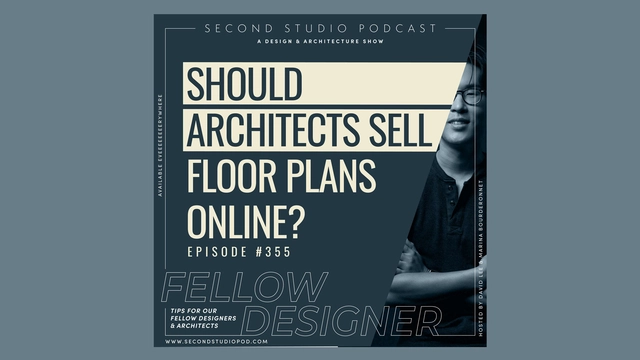
This week David and Marina of FAME Architecture & Design discuss whether or not architects should sell their floor plans online. The two cover the financial benefits of selling plans, making good floor plans accessible to more people, the downsides of selling partial services, quality concerns, the future of the profession, prioritizing speed and efficiency in design, why architects are often not used on projects, and more.
https://www.archdaily.com/1007008/the-second-studio-podcast-should-architects-sell-floor-plans-onlineThe Second Studio Podcast
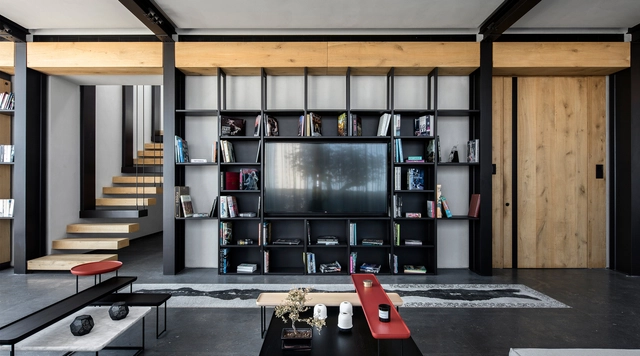
There are a series of multiple factors to take into account when deciding where to place a TV, including —but not limited to— the dimensions of both the furniture and the TV, image resolution, height, design, and so on.
In this article, we share some recommendations to achieve the comfort and well-being of the users avoiding possible problems of visual fatigue or unfortunate body postures.
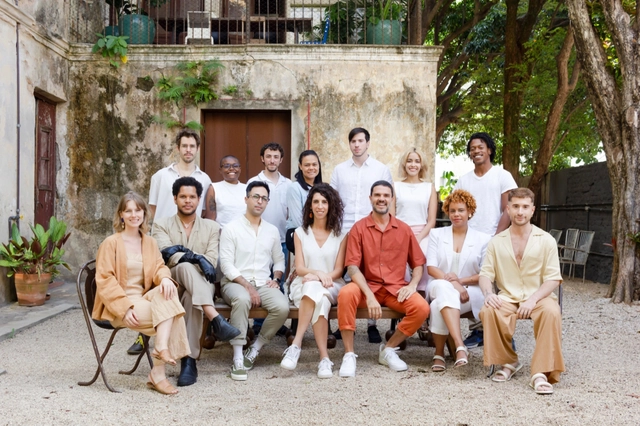
For the fourth consecutive year ArchDaily is running a global survey to detect and showcase those who are taking architecture in a new direction: the ArchDaily New Practices 2024 ranking. Our team is already surveying and curating through hundreds of practices from around the world, of all types and sizes: architects, architecture offices, designers, build-tech startups, curators, exhibition designers, collectives, interior designers, software developers, material scientists, new media platforms, think tanks, entrepreneurs, critical writers, activists, performers, media designers, landscape architects, and anyone whose work is in an early or developed stage, on a clear decisive path to reshape architecture. For this call, new doesn’t necessarily mean just young, but innovative, fresh and forward-thinking.
We invite you to help us widen our global perspective by nominating practices that have the potential to be part of the ArchDaily New Practices 2024 ranking, using the form below. To have a better idea on what we are looking for, you can see the winners of 2020, 2021, 2023.
Tropical Africa boasts vast forests that cover 3.6 million square kilometers of land in West, East, and Central Africa. These forests provide valuable timber resources that significantly impact sectors, such as the furniture, fuel, and paper industries. However, interestingly, timber is seemingly absent in the contemporary architecture of the countries in this region. While architectural taste plays a role, the main reasons for this absence can be attributed to the wood industries' inability to meet the requirements of availability, affordability, aesthetic appeal, durability, and climatic and structural performance of timber. The wood industry in tropical Africa is mainly composed of informal and small-scale operations, focused primarily on sawing logs rather than refining wood for architectural or structural purposes. Despite this, the large number of informal enterprises in the region presents an opportunity to reshape the wood industry and utilize the local forestry resources to construct timber buildings.





























.jpg?1497901399&format=webp&width=640&height=580)