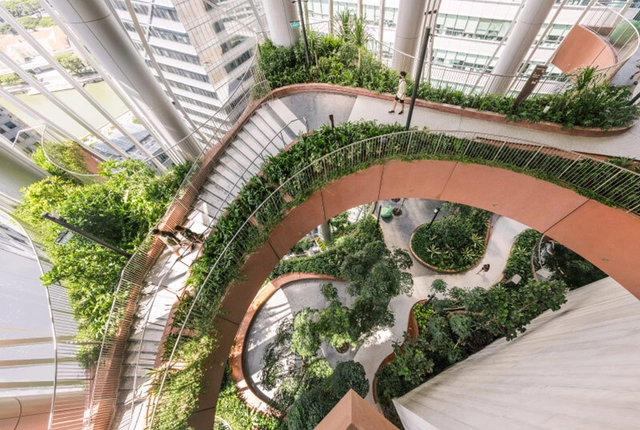
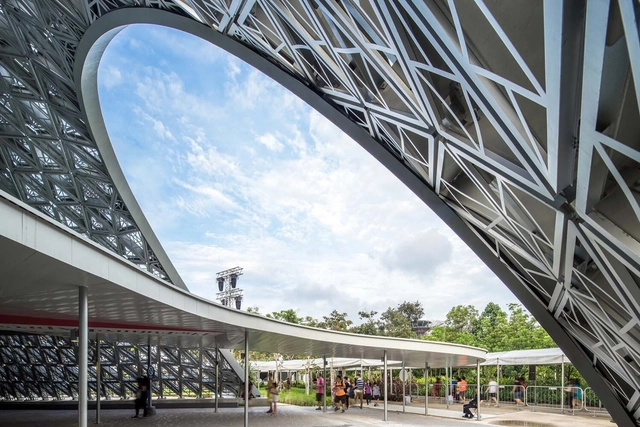
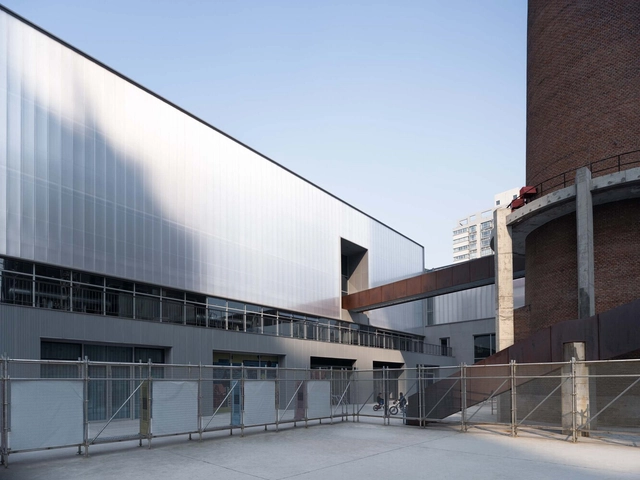
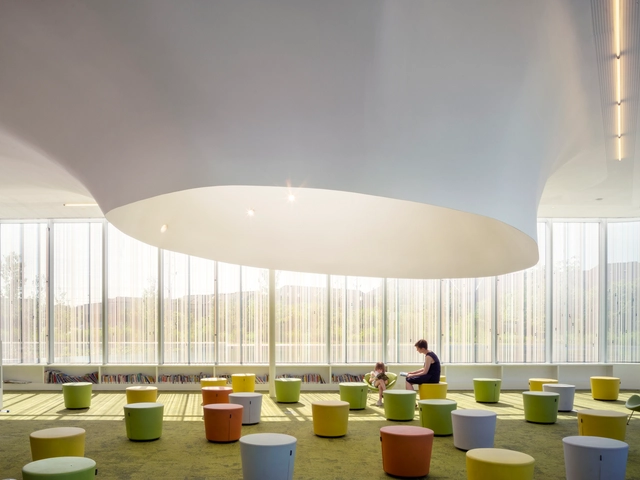
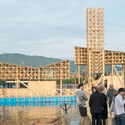
Last week, the President*s Design (P*DA) Award chose 8 winning recipients for its 2023 edition. The award that honors designers making a transformative and positive impact on the lives of Singapore’s society and the broader global community recognized Henning Larsen, BIG, and the Singapore Pavilion for Expo 2020 Dubai.
The P*DA presented two categories: Designer of the Year and Design of the Year. Organized jointly by the DesignSingapore Council and the Urban Redevelopment Authority (URA), the biennial award was given to two “Designer of the Year” and six “Design of the Year” recipients. Beyond the excellence of their design execution, the honorees demonstrated a genuine sense of purpose and mission that is consistent with P*DA's core values. The outstanding designs of this year tackle fundamental and systemic issues like consumerism and circularity, dementia and caregiving, climate change and sustainability, and show how Singapore is developing its best design practices that are applicable to enhancing lives worldwide.
Cities are a canvas for architectural creativity and the dynamism of urban life. In recent years, they have taken on an additional role: that of living laboratories for innovative architecture and urban design. International cities have become experimental grounds for architectural technology, sustainable practices, and human-centered design principles to be tested and refined. This paradigm shift has not only transformed the physical aspects of urban environments but has also redefined the relationship between architecture, community, and the built environment.
Almost two decades ago, in the downtown corridor of Columbus, Ohio, the century-old landmarked Lazarus Building underwent an extensive renovation to save the department store and restore it to its former glory. Sixty million dollars went into its restoration and transformation into a retail and office complex. During the construction, workers recycled nearly 5,000 pounds of steel, 2,000 pounds of concrete, and significant amounts of carpeting, ceiling tiles, and various wood- keeping 22,000 pounds of debris out of Ohio’s landfills. They also saved more than $25 million dollars by implementing this rigorous recycling process.
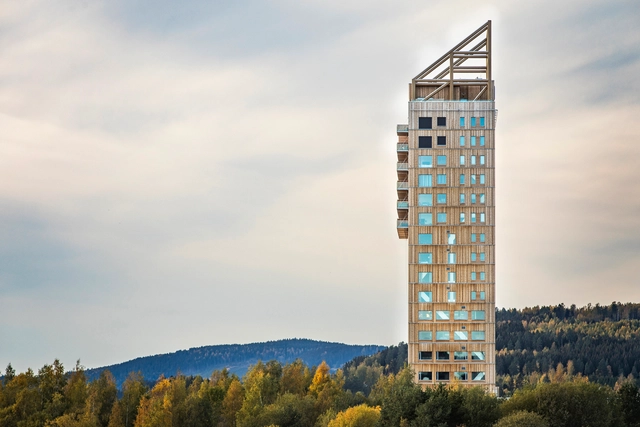
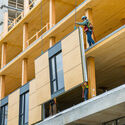
Wood is the concrete of the future. As timber construction becomes increasingly popular, you have probably heard this phrase. However, we are not talking about traditional construction techniques using timber, but rather about this well-known material combined with cutting-edge technology.
Cities are complex ecologies of intersecting natural systems and urban infrastructure. Environmental degradation has brought attention to the asymbiotic relationship between man-made and natural systems. A new economy is emerging where interdependence and environmental stewardship are valued. Designing for a circular economy requires consideration of human habitats not as towns or cities, but as bioregions.
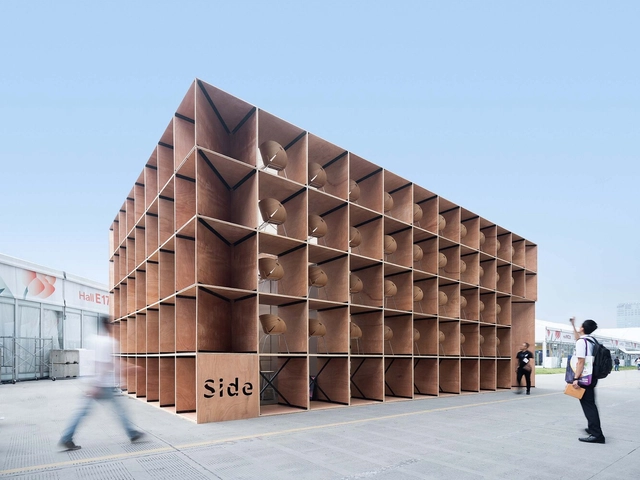
Temporary pavilions and installations, such as those used in events, exhibitions, or festivals, present themselves as a great challenge when addressing the circular economy in architecture due to their ephemeral condition. It seems contradictory to address resource management and try to extract the maximum value from the materials and minimize waste and pollution while designing a structure that is meant to be used for a limited period of time. However, there are several strategies to rethink the way we are designing these structures in order to promote circularity.
These days, the architecture industry cannot disregard how significant the challenge of sustainability has become. One strategy for achieving sustainable development is a circular economy, based on a sustainable life cycle. This strategy minimizes resource usage and extends the useful life of buildings from a design perspective. Moreover, another challenge is how to increase the usability of the building itself, in addition to how we've incorporated building disassembly into the cycle. This requires that designers take the future into account when making design decisions, integrating the requirements of the present with the potential outcomes of what has not yet happened.
Videos
WasteBuild Zero will take place at the NDSM in the heart of Amsterdam’s architectural and circular economy hotbed
WasteBuild Zero is a 2-day event that unites the built environment to showcase the latest materials, techniques, solutions and innovators that are helping to deliver low carbon and circular construction schemes today. Our aim is to support the transition towards a circular and regenerative built environment and in the process to tackle the climate emergency.
Subscriptions are quickly becoming an integral part of everyday life. For example, streaming platforms have completely replaced the need to own video cassettes, while ride-sharing services partially cover the need to own a private car. Subscriptions have been largely understood as digital services, but a new trend suggests that the same concept could be transferred to physical objects in the near future. Instead of owning a fridge, a washing machine, or even light bulbs, one could acquire a subscription to ensure the freshness of produce, clean clothes, and a well-lit home.
The concept is known as the “subscription-based economy,” a variant of the “circular economy” notion. It postulates that instead of owning some of the objects used every day, one could subscribe to a service to gain access to the same benefits, but without the need to own, maintain or dispose of the object in question. Consumers no longer buy products; they buy access to services. Sometimes, it would mean simply leasing the object instead of purchasing it, but the model goes one step further. It inscribes a shift of responsibility and mentality. Because consumers no longer own the objects, the responsibility to reuse and recycle falls to the producers, who are now in charge of the entire life cycle of the objects they create.
Sustainability needs to go further beyond inspiring speeches and promises, with visible, concrete actions. In order to see this change, it is essential for individuals, companies and governments to take responsibility and act in a sustainable manner in their daily lives and practices. By taking into account the environmental and social impacts of their decisions and seeking more conscious and responsible alternatives, they can take steps to ensure a sustainable future for the next generations. In the construction industry this is even more urgent. Responsible for a large amount of solid waste and greenhouse gas emissions, it is essential for this industry to adopt sustainable practices, such as recycling, to minimize environmental impacts.
However, even though product recycling processes have significantly advanced in recent years, there are still certain challenges associated with the use of recycled materials. This is due to a variety of factors, such as performance and durability, or even due to the difficulty of obtaining suitable raw materials. But there are also successful examples that show the possibilities of recycled materials.
In the contemporary context, as has been said a multitude of times, we seem to be living in what is classified as a digital age. A worldwide pandemic has enhanced the popularity of digital avenues to communicate — such as Microsoft Teams and Zoom, and the multiplatform messaging app WhatsApp is reported to have over 2 billion active users. From an environmental standpoint, we see the migration of businesses to the “cloud” heralded as a sustainability win. In simplified terms and to pick out a specific example, companies can refrain from storing data on external hard drives, opting instead to store their data on online file hosting services.
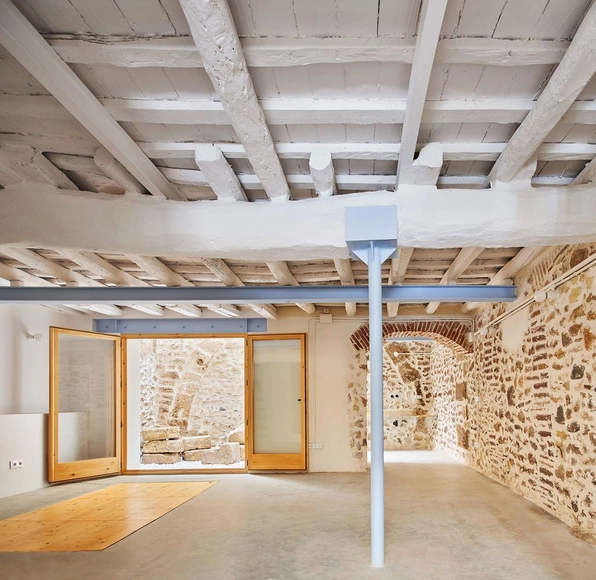
Form and function. Terms that accompany several definitions that belong to architecture, but more is needed to summarize the practice in 2023. Nowadays, building involves understanding the cycles of materials and how each action can be linked to the extraction of natural resources and their damage to the environment. We live in an urgent need to review the way we produce built space. In this search for models that move away from linear systems and provide a constant process of transformation and redistribution of matter, strategies arising from the circular economy emerge as a possible path. Its application in architectural heritage – for maintenance or restoration – can incentive the necessary changes toward a more sustainable society.
“Our planet is choking in plastic,” states the United Nations. While the man-made material has many valuable uses, our addiction to single-use plastic products has led to severe economic, health and environmental issues. Roughly one million plastic bottles are purchased every minute, and five trillion plastic bags are used every year worldwide –used just once, then thrown away. Plastics and microplastics have found their way into every corner of our natural environment, from the peaks of the highest mountains to the depths of the deepest oceans. So much so, that they have become part of the Earth’s fossil record and created an entirely new marine microbial habitat known as the “plastisphere.”
Carbon footprint, circularity and environmental sustainability are terms that are increasingly present in many professional fields, but what do they mean? How do they relate to architecture and the built environment? We spoke with civil, environmental and sanitary engineer Lucas Rosse Caldas about these and other emerging architectural issues.
Lucas is a professor at the Graduate Program in Architecture at the Federal University of Rio de Janeiro and the Civil Engineering Program at the same institution. He participated in chapter 9 of the sixth report of the Intergovernmental Panel on Climate Change (IPCC) on buildings. He wrote several scientific and technical articles about architecture and sustainable construction.
A widely discussed topic lately, the circular economy encompasses a whole production and consumption system which pursues the reuse of existing materials as long as possible. However, how does this ongoing concept involve architecture, design and its aesthetics? Joining the shift towards a circular future, architecture is discovering how circular operations and the reuse of materials can result in new aesthetics, as well as in an overall improvement of its environmental impact.
Learning how circularity (and material reuse) creates distinctive aesthetics, the following article analyzes the way projects are reinterpreting their design process throughout three strategies: detachable, rustic and malleable architecture.
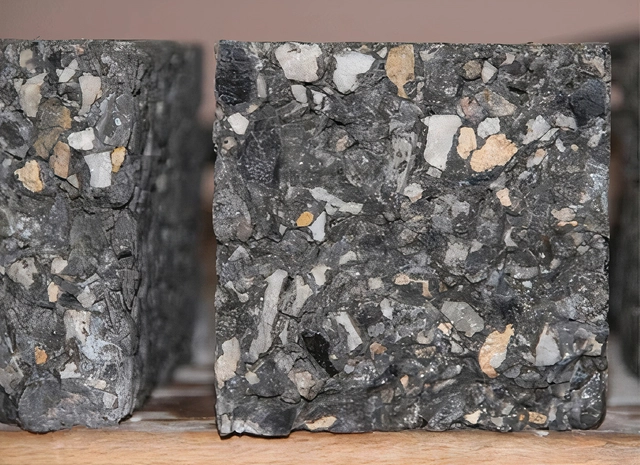
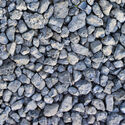
No-Fines Concrete with Steel Slag Samples by L.Korat et al. (2015). Image via ResearchGate. Licensed Under CC BY-SA 3.0
The construction industry is one of the largest in the world, and cement and concrete are literally the building blocks of its success. Evolving from prehistoric caves to today’s towering skyscrapers, concrete structures have and will continue to be vital components of modern civilization, providing long-lasting, reliable support for buildings, roads, bridges, tunnels and dams. So much so that concrete is the most consumed material on Earth, second only to water, while the steel used to reinforce it is by far the most commonly used metal. But this doesn’t come without high environmental costs: concrete accounts for 8% of global CO2 emissions, much of which come from the extraction and transportation of aggregate materials such as sand, gravel and crushed stone.
Add cabbage leaves, orange peels, onions, bananas and a few slices of pumpkin to get... cement. That's right, researchers from the University of Tokyo in Japan have developed a technique through which it is possible to produce cement from food waste. Besides being used in construction, the innovative initiative is edible as well. You can make boiled cement into a delicious meal by adjusting flavors, adding seasonings, and breaking it into pieces.
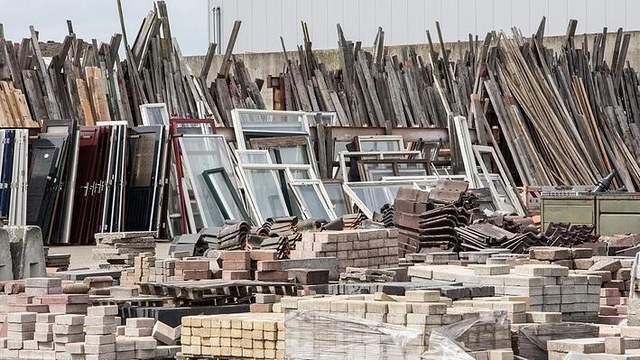
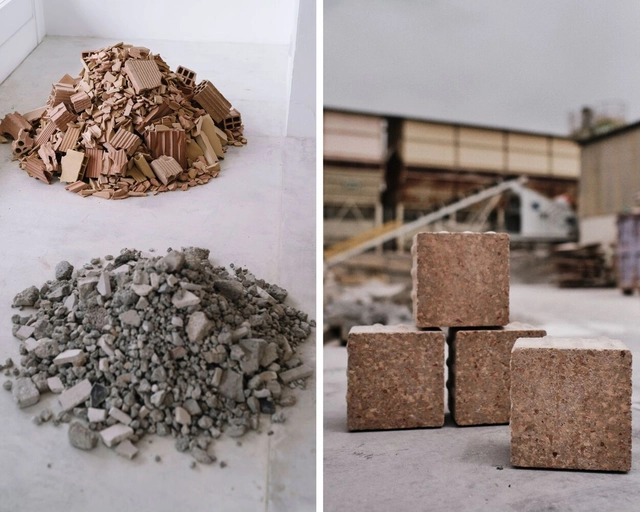
Cities are filled with waste materials and the need to reuse existing resources has become key in fighting the increase in waste production. More than a third of all the waste generated in the EU comes from construction and demolition, containing different materials such as glass, concrete, bricks and ceramics. But how to manage this staggering amount of waste production from construction? According to the Spanish Law on Waste and Contaminating Soils, concrete and ceramic waste with no considerable processing can both be reused in construction . By combining reused material waste with technology, architectural design can create innovative solutions that contribute to minimizing environmental impact.