Rethinking Urban Cooling: A Case for Low-Energy Radiant Technology

Subscriber Access

When exposed to heat, the body activates several physiological mechanisms to maintain thermal homeostasis. However, these natural defenses are often overwhelmed in our modern cities. In an urban environment defined by heat-absorbing asphalt, concrete, and a lack of green spaces, these mechanisms become inefficient. If the surroundings are excessively hot, humid, or poorly ventilated—conditions amplified by the Urban Heat Island effect—the core body temperature begins to rise, and the risk of serious complications increases, ranging from cramps and exhaustion to potentially fatal heat strokes.
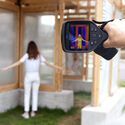
Rethinking Urban Cooling: A Case for Low-Energy Radiant Technology - Image 2 of 19Rethinking Urban Cooling: A Case for Low-Energy Radiant Technology - Image 3 of 19Rethinking Urban Cooling: A Case for Low-Energy Radiant Technology - Image 4 of 19Rethinking Urban Cooling: A Case for Low-Energy Radiant Technology - Image 5 of 19Rethinking Urban Cooling: A Case for Low-Energy Radiant Technology - More Images+ 14

Content Loader

Image gallery

See allShow less
About this author
Cite: Eduardo Souza. "Rethinking Urban Cooling: A Case for Low-Energy Radiant Technology" 30 Sep 2025. ArchDaily. Accessed . <https://www.archdaily.com/en/1034438/rethinking-urban-cooling-a-case-for-low-energy-radiant-technology> ISSN 0719-8884

You've started following your first account!

Did you know?

You'll now receive updates based on what you follow! Personalize your stream and start following your favorite authors, offices and users.